This 15-day journey through Central and Western Tibet combines cultural immersion, pilgrimage, and high-altitude landscapes. Beginning in Lhasa, the tour allows for gradual acclimatization while visiting Tibet’s most important monasteries and sacred sites, including Drepung, Sera, Jokhang, Reting, and the Potala Palace. Traveling westward, the route passes turquoise lakes, historic towns, and ancient monastic centers such as Gyantse, Shalu, Sakya, and Shigatse. The journey’s spiritual climax is the three-day kora around Mount Kailash, followed by time at Lake Manasarovar, revered across multiple spiritual traditions. Designed for travelers seeking depth and meaning, this itinerary offers an authentic encounter with Tibet’s spiritual heritage and dramatic Himalayan landscapes.
Itinerary
Welcome to Lhasa! Transfer to your hotel and get settled.
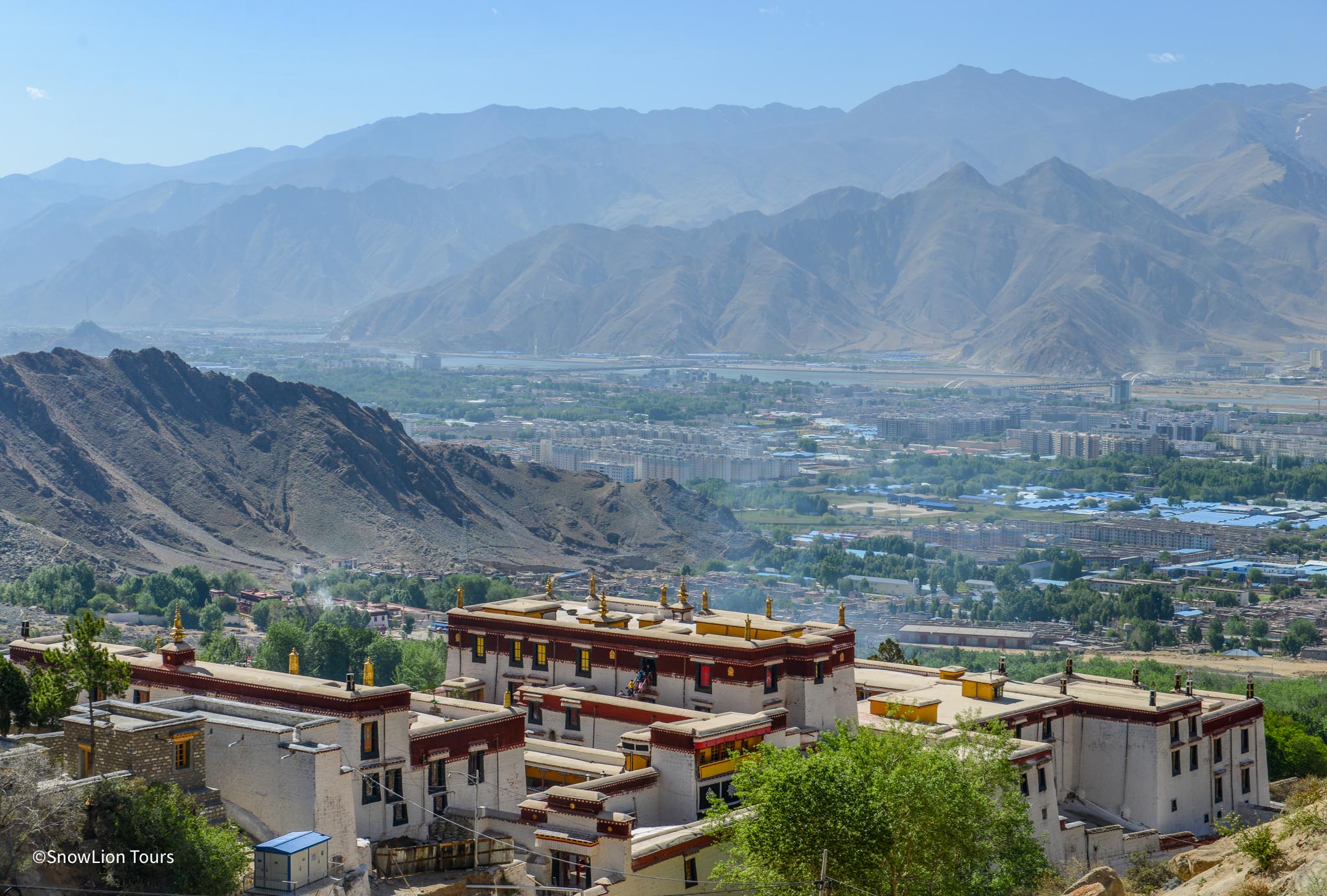
Visit Drepung, one of the three most famous monasteries in Lhasa. Drepung is located just outside Lhasa on Gambo Utse Mountain. Once home to as many as 10,000 monks, the enormous monastic complex is the site of many prayer halls, dormitories, and temples. Just below the monastery is the Nechung temple, the former home of the state oracle. Afterwards, visit Sera Monastery, where you can watch monks debate in the courtyard. If you enjoy hiking, walk the hour-long circumambulation path around the monastery complex.

The view of Lhasa city from Drepung Monastery
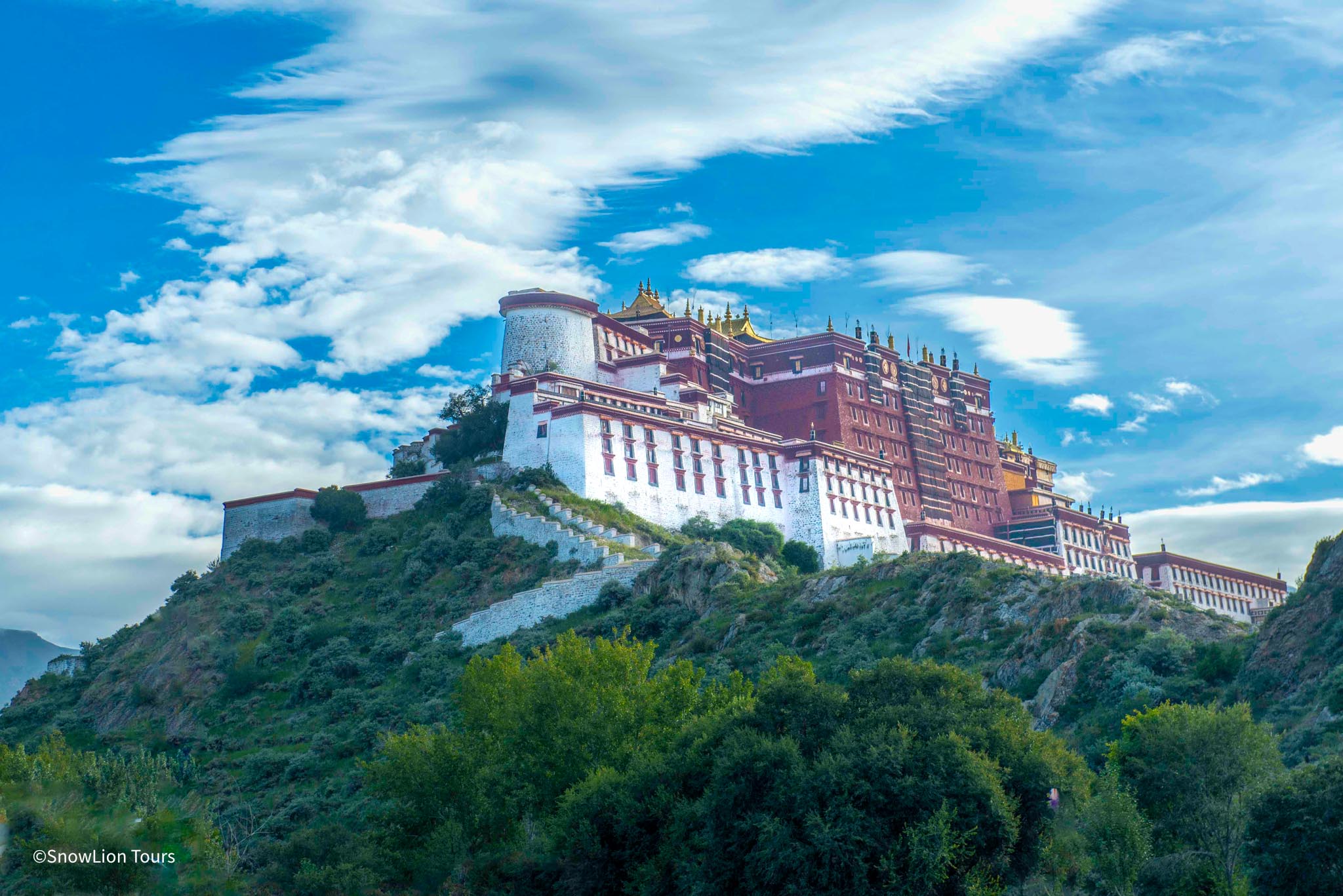
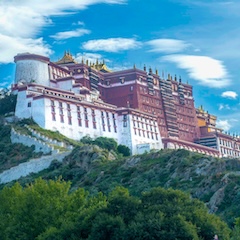
In the morning, visit the Potala Palace, the greatest monumental structure in all of Tibet. Also visit the Jokhang Temple, which is located in Barkhor Square in Lhasa. The Barkhor is a famous shopping street filled with goods and souvenirs from Tibet, Nepal, and India. Pilgrims from all over Tibet visit the Barkhor to pray in front of the Jokhang. Afterwards, visit Ramoche, a small monastery located in the city center.

Potala Palace in Tibet
Visit the famous Reting Monastery, founded in 1056 by Dromtönpa, the principal Tibetan disciple of Atisha. Here, at the age of 45–46, Je Tsongkhapa composed his Great Treatise on the Stages of the Path to Enlightenment, known in Tibetan as Lamrim Chenmo. In the upper part of the complex, you will see the retreat cave of Rendawa Shönnu Lodrö, the temple where Lamrim Chenmo was written, and the temple where this text was first taught to disciples. Of particular value is the collection of Kadam school stupas containing Atisha’s rosary. The lower part houses the main assembly hall and the Manjushri Temple.
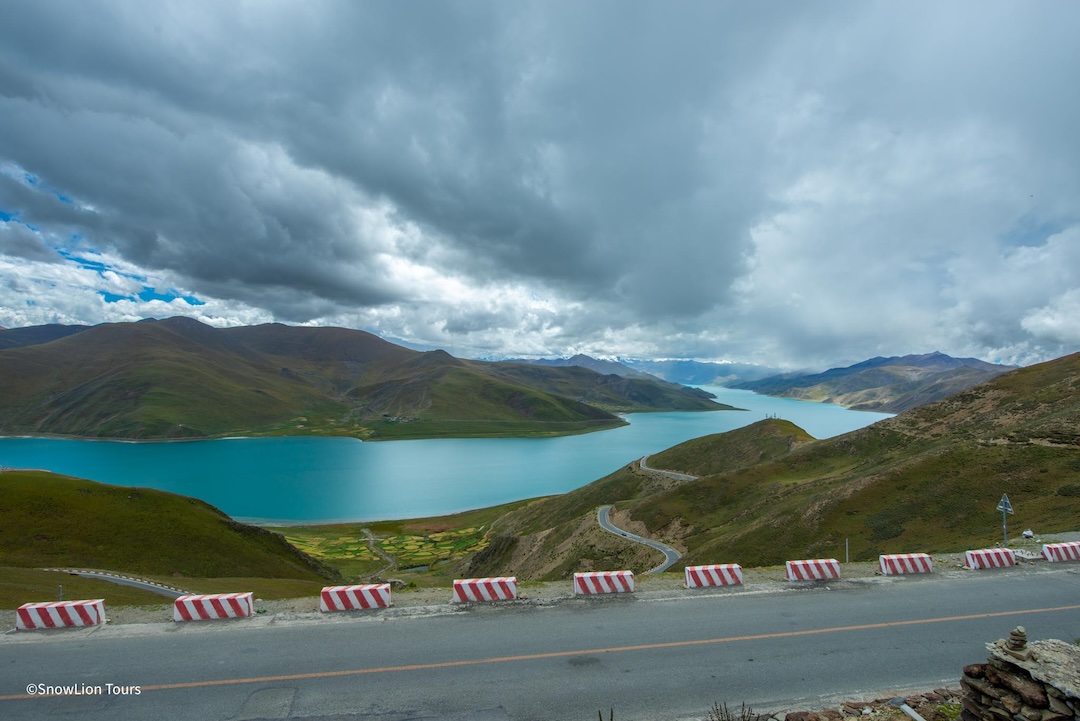
In the morning, drive to Yamdrok Yumtso, one of the four most sacred lakes in Tibet. On the shore of the lake, visit the small Samding Monastery. Its abbess represents the first and most famous female tulku (reincarnate lama) lineage.
Continue via the Karola and Simila passes to the town of Gyantse. Visit the famous Pelkor Chöde Monastery with its ancient Kumbum Stupa, built in the 15th century in the northwestern part of the town. Pelkor Chöde was once the largest non-sectarian Buddhist educational center; today only two main temples remain. Next to the main temple stands the largest stupa in Tibet—the Kumbum—with numerous chapels that can be visited while ascending clockwise from one level to another. Overnight in Gyantse.

Yamdrok Yumtso Lake in Tibet
In the morning, drive to Shigatse, the second-largest city in Central Tibet. En route, visit the small Shalu Monastery, located 78 km west of Gyantse and 22 km south of Shigatse, founded in 1003 by the 11th-century Tibetan abbot and teacher Sherab. Shalu became one of the earliest major monasteries and educational centers during the great renaissance of Buddhism in Tibet and an important center of the Sakya tradition.
In the afternoon, continue to Sakya Monastery (11th century), the principal monastery of the Sakya school of Tibetan Buddhism, around which a small town developed. The Sakya school played a crucial role in Tibetan political life from the 13th century onward.

Drive over the Tso-la Pass (4,500 m) and Gyatso-la Pass (5,252 m) to Rongbuk Monastery (around 5,000 m), a Nyingma monastery and the highest monastery in the world. From here, there are breathtaking views of Mount Everest. You will have time to explore the monastery and meditate while gazing at the world’s highest peak from among the stupas and prayer wheels.
The road passes through a picturesque valley with magnificent views of mountain peaks and vast valleys where herds of yaks and sheep graze. As you move southwest, the landscapes change, revealing sand dunes, rocky mountains, and snow-capped peaks. Depending on the season, you may encounter nomads and traveling traders in colorful traditional clothing.
Lunch stop in Paryang, one of the highest towns in the world, where the sky seems within arm’s reach. The town has several Tibetan and Chinese restaurants and small shops selling snacks and drinks.
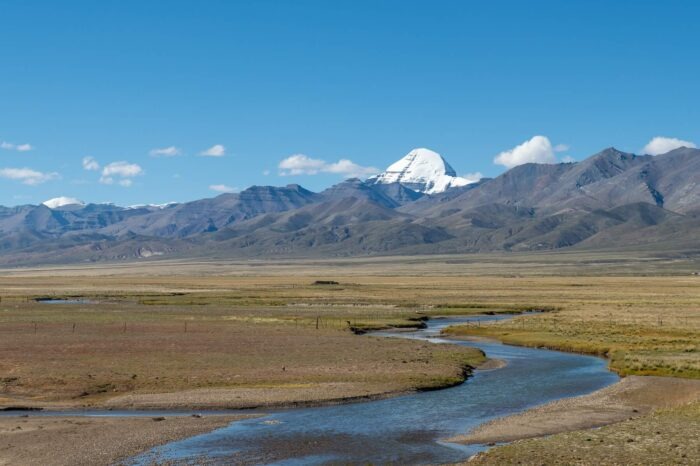
Toward evening, the sacred Lake Manasarovar and Mount Kailash come into view for the first time. Arrival in Darchen by the end of the day. Preparation for the Kailash kora.

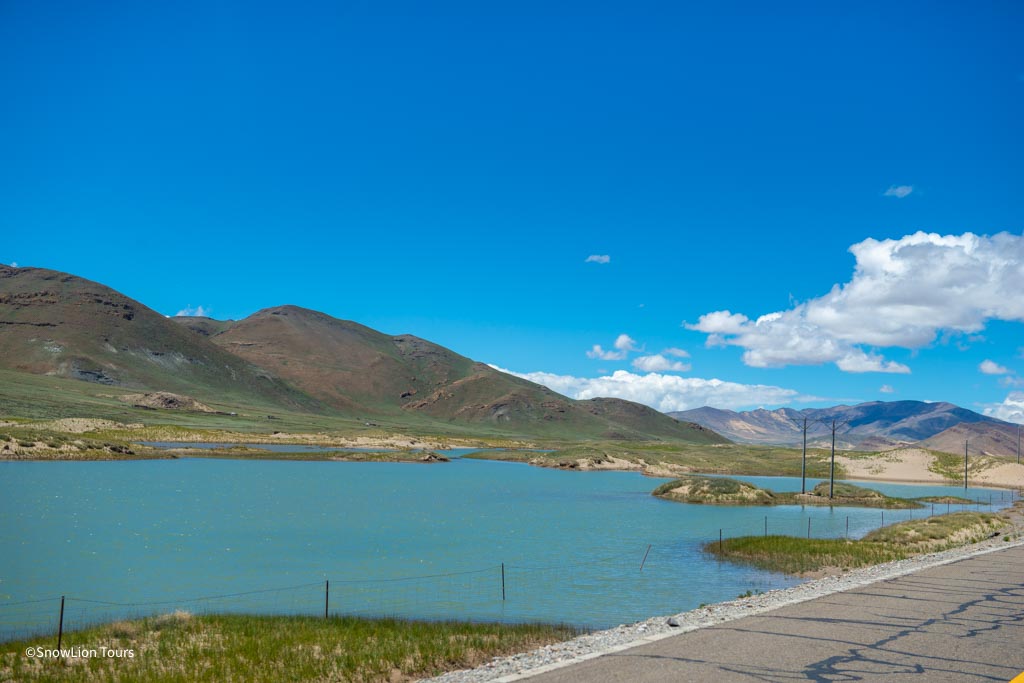
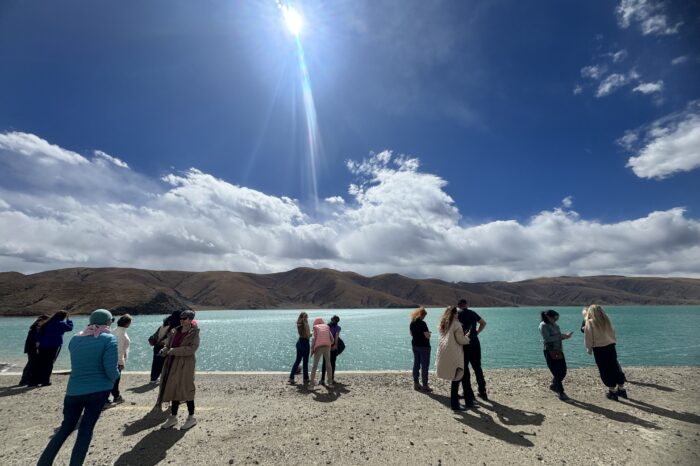
A lake at the road side on the way to Mount Kailash.
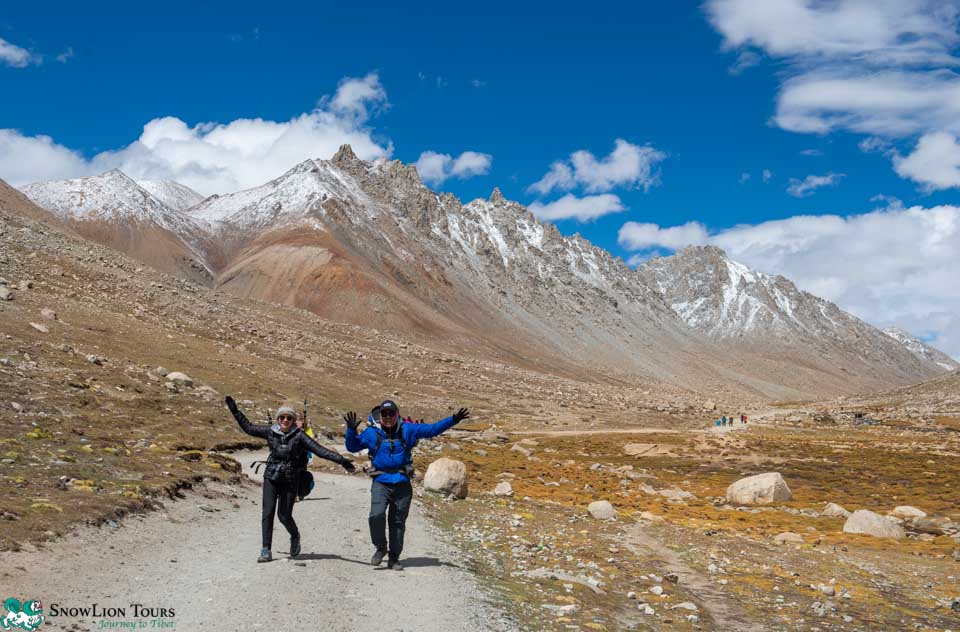
The full circumambulation (kora) around Mount Kailash is 53 km long. The first day of the pilgrimage is relatively easy. The trail passes the “Cemetery of the 84 Mahasiddhas,” and on the left hillside stands Choku Monastery of the Kagyu school, which houses a sacred relic—a conch shell of the great master Naropa.
In the afternoon, reach Dirapuk Monastery for an overnight stay. Here is the historic cave of Gotsangpa (of the Drikung Kagyu lineage). According to legend, the goddess Senge Dongma, taking the form of a female yak, led him here to save him from a heavy downpour. Dirapuk lies directly opposite the north face of Mount Kailash, and from the monastery roof opens a majestic view of the sacred mountain in all its power.
On the northern slope, you may see Hindus praying to Shiva. In Hinduism, Kailash is believed to be the abode of Shiva and a reflection of Mount Meru, the cosmic mountain at the center of the universe. For Buddhists, Kailash is the abode of Buddha Shakyamuni in the form of the wrathful deity Chakrasamvara, the patron of one of the highest Vajrayana tantric practices.
Overnight in a guesthouse at the monastery.

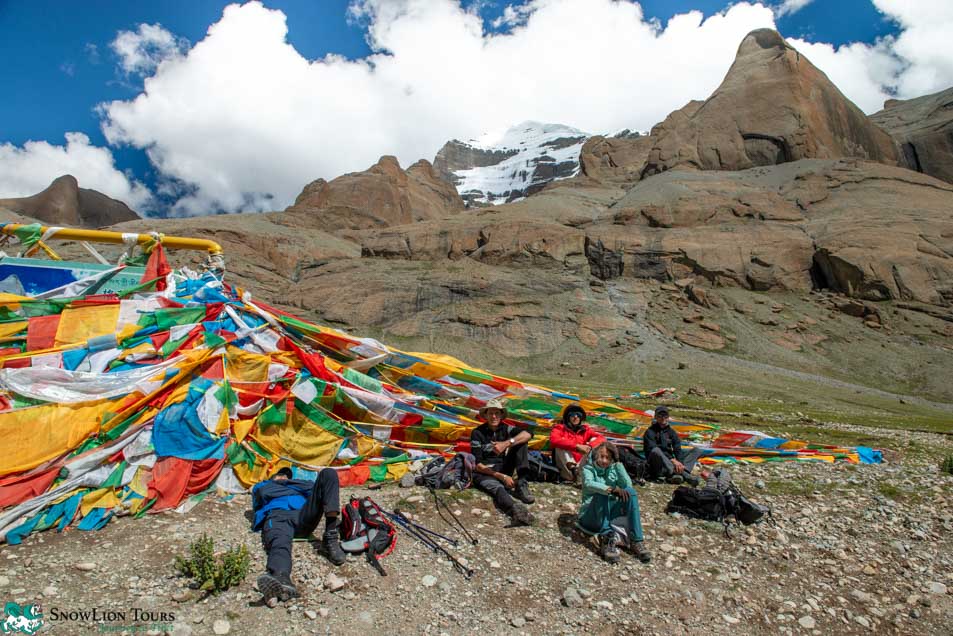
The second day is the most challenging, involving the ascent to Dolma-la Pass (5,637 m). The pass is dedicated to the goddess Tara (Dolma in Tibetan) and is considered one of the most sacred points of the pilgrimage route. At the top, thousands of prayer flags flutter in the wind, carrying prayers for the benefit of all beings.
From the pass, the trail descends to Zutulpuk Monastery (“Cave of Miracles”). This site is famous for the cave where the great yogi Milarepa meditated. According to legend, impressions of his shoulders and upper back remain in the rock. One can also see marks traditionally attributed to Padmasambhava, Yeshe Tsogyal, the legendary King Gesar, and his horse. Overnight in a guesthouse at the monastery.

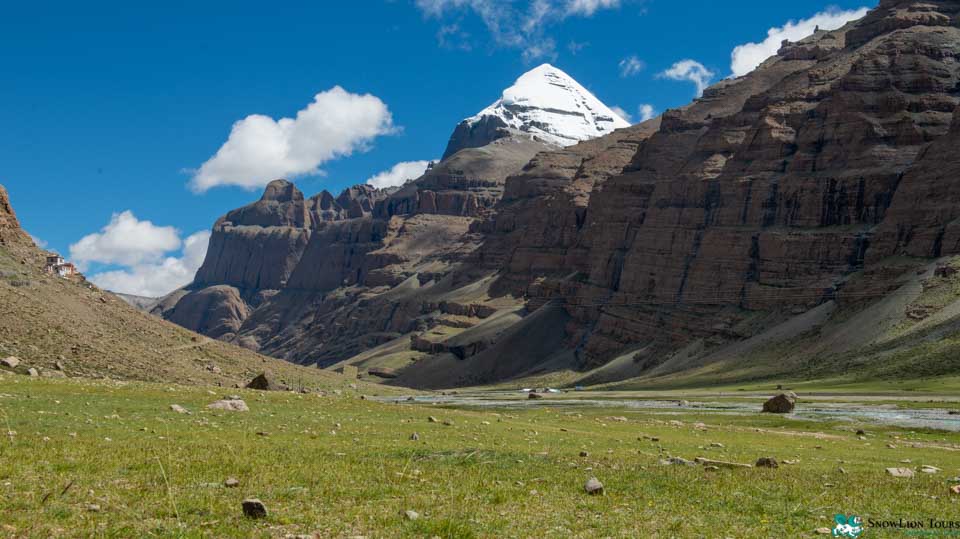
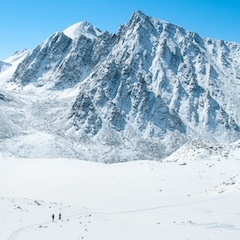
The third day begins with a walk along one of the purest rivers you may ever see. The trail is gentle and the vegetation more abundant. At the end of the valley, before turning right, a stunning view opens onto the snow-capped peak of Naimona’nyi (7,728 m).
After completing the kora around Mount Kailash, we will have a snack in Darchen and then set out on an exploratory trek toward the South Face of Kailash and the Gyandrak and Serlung monasteries—the starting point of the mysterious Inner Kora. Although the Inner Kora has long been closed, we will be able to approach its beginning as closely as possible.
If this trek is closed, the group will instead visit the Tirtapuri Monastery and its hot springs. Overnight at Lake Manasarovar.

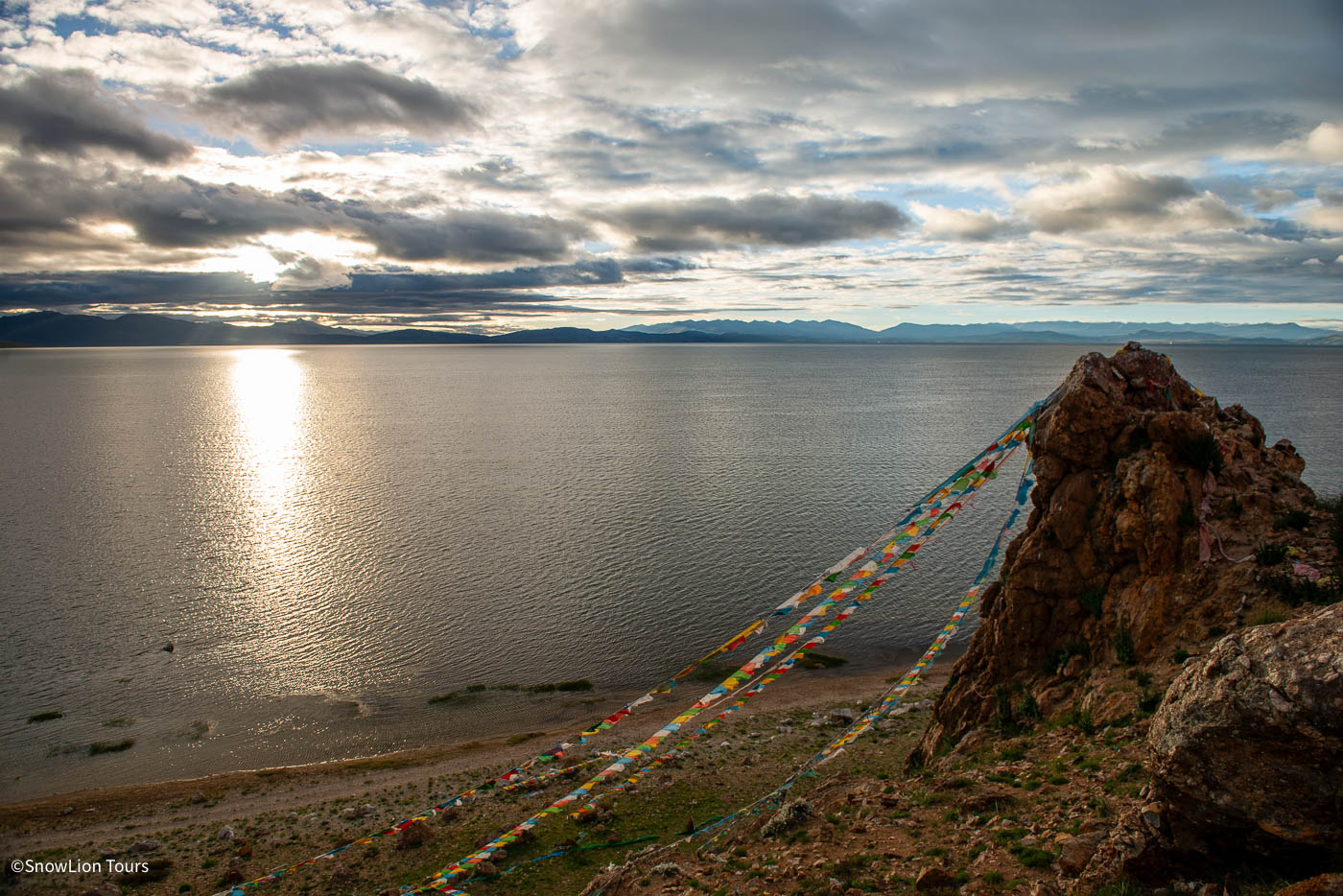
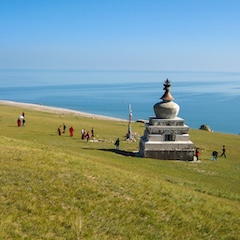
The morning is spent at Lake Manasarovar, one of the highest freshwater lakes in the world. This turquoise lake is rich in fish and swans. Tibetans regard it as sacred and call it “Mapham Tso,” the Invincible Lake. Manasarovar is also sacred to Hindus. Surrounding the lake are two sacred mountains—Kailash and Gurla Mandhata—and nearby lies Lake Rakshas Tal, shaped like a crescent. This lake is almost always windy, cloudy, and wavy, with no fish or vegetation. Locals consider it the dark principle—the negative and unknown side of consciousness. On a hill by the lake stands Chiu Monastery, an ancient Drukpa Kagyu monastery. When Guru Rinpoche (Padmasambhava) brought Buddhism from India to Tibet, he remained in the Land of Snows for 55 years. Before leaving Tibet, he meditated for a week in a cave near Lake Manasarovar; later, Chiu Monastery was built on this site. In the afternoon, drive back to Saga.

The return journey from Western Tibet offers unforgettable panoramas. You will spend the entire day on the road due to speed restrictions, with short stops for walks and photography. Arrival in Shigatse late in the evening.
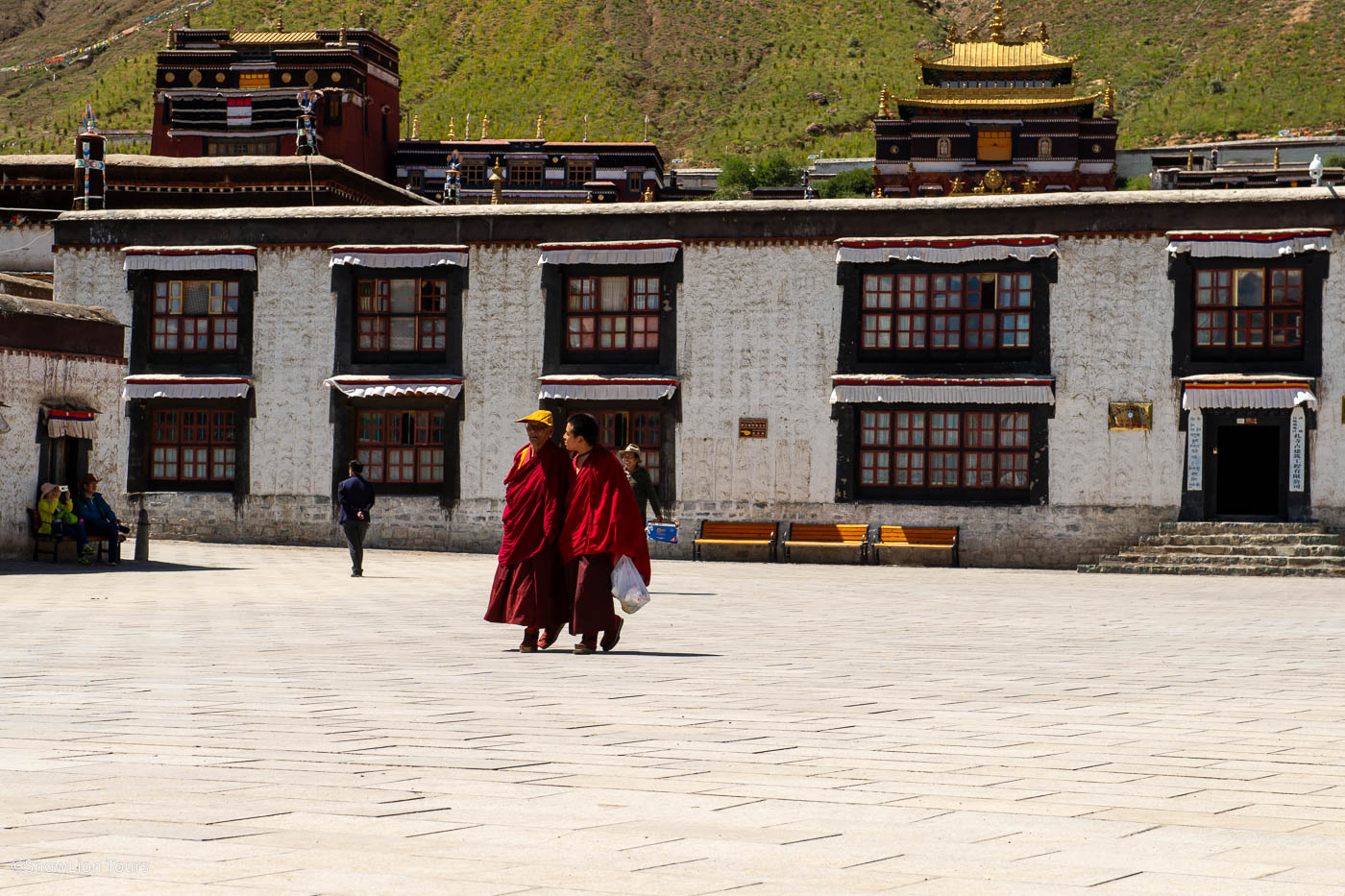
In Shigatse, visit Tashilhunpo Monastery, the seat of the Panchen Lamas. Here stands a colossal 26-meter statue of Maitreya Buddha (the Buddha of the Future), adorned with gold and precious stones. Founded in 1447 by the First Dalai Lama, Tashilhunpo is one of the four main monasteries of the Gelug school. Its walls house unique murals, ancient manuscripts, sacred relics, and the gilded tombs of the Panchen Lamas. In the evening, return to Lhasa for free time for shopping, restaurants, and teahouses.

Transfer to the airport or railway station. Farewell to Tibet!
Explore more! Join to get updates on Tibet tours and departures.
Mount Kailash pilgrimage tour from Kathmandu, featuring Lake Manasarovar and the three-day kora
Lhasa ➔ Yamdrok Lake ➔ Everest Base Camp ➔ Peikutso Lake ➔ Kyirong ➔ Kathmandu
A deeply immersive pilgrimage and overland journey from Kathmandu to Mount Kailash, weaving sacred landscapes, ancient kingdoms, high-altitude trekking, and profound spiritual encounters across Western Tibet.