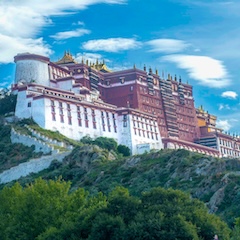
Tedrum Nunnery & Hotspring
Tedrum Nunnery and Tedrum Hotspring
Tedrum Nunnery (also spelled Tidrum Nunnery) is a Tibetan nunnery located close to the Drigung Til Monastery, about 13 km northwest of the monastery and approximately 110 km from Lhasa. Tidrum Nunnery is situated on a beautiful hill between two valleys, with numerous hermitages and caves in the surrounding hills.
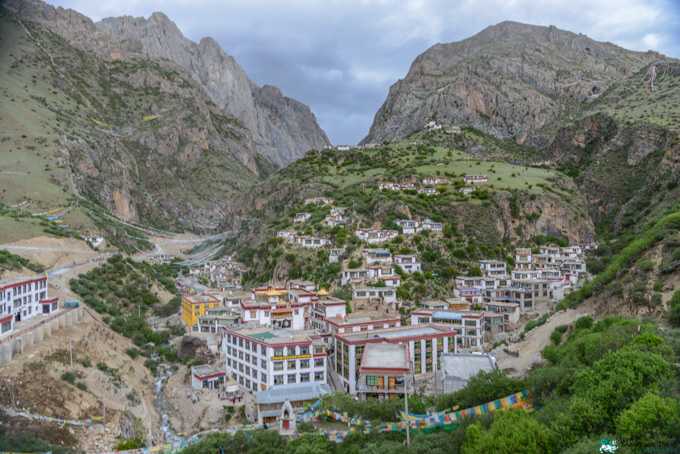
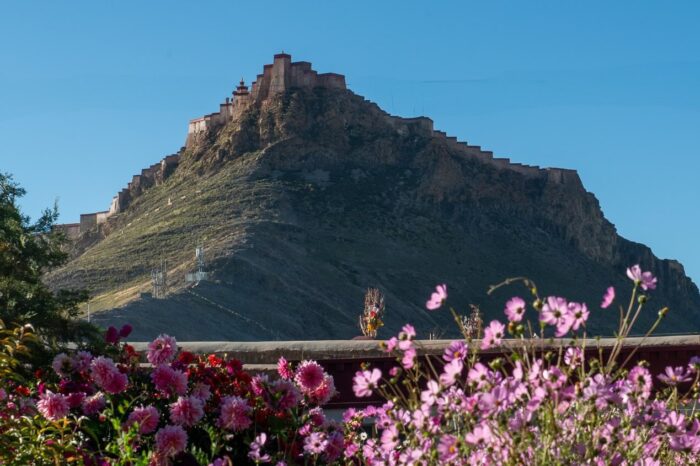
The overlooking of Tedrum nunnery.
The nunnery is small but serves as home to a hundred nuns. Pilgrims from across Tibet and other places like China and Mongolia visit Tidrum for its famous hot springs. The nunnery sits at an incredibly high elevation of 4,350 meters above sea level.
The nunnery has a connection and history linked with Guru Rinpoche (Padmasambhava), the thirty-seventh King Trisong Detsen, and his wife Yeshe Tsogyal—especially associated with Yeshe Tsogyal. It is said that they found their way to Tidrum because she loved its beauty, and therefore chose to meditate here for many years. The Khandro-la, the resident spiritual leader of Tidrum Nunnery, is considered a reincarnation of Yeshe Tsogyal. It is said that many scriptures and religious objects were revealed in the caves above the nunnery, which Padmasambhava had concealed.
The nunnery complex was reconstructed in the 11th century. The complex survived the Cultural Revolution with little destruction. Starting in the 1980s, the nuns from Tidrum Nunnery restored the small chapels in the complex.
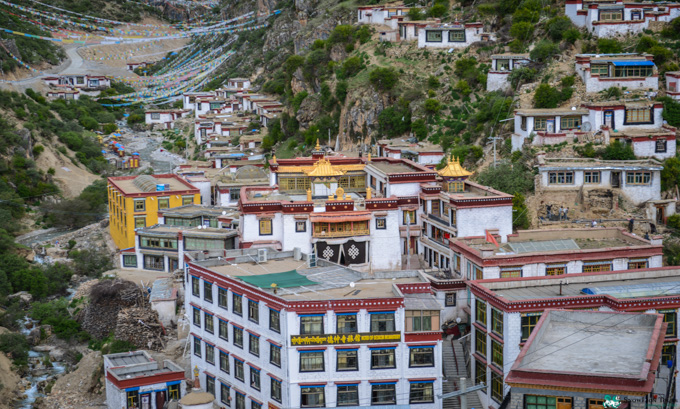
The main temple of Tidrum nunnery
The Shambala Hotel, located 10 km away from Tidrum Nunnery, offers worthwhile accommodation for experiencing such a high altitude in Tibet. The shower water in each room comes directly from the Tidrum hot spring, and the rooms are decorated in delicate Tibetan style. Tidrum Nunnery also offers some stunning day hikes around the monastery. A day hike around the caves of Yeshe Tsogyal would be a special way to spend a day at Tidrum Nunnery.
Hot Spring
Tidrum Hot Spring may seem like normal hot water that comes out of springs as you can find anywhere in Tibet, but the Tidrum hot spring has a long history of 1,300 years. The water from the spring was not hot in the past; Guru Padmasambhava is said to have subdued the energetic problems of the place so that the spring turned into a hot spring. From then on, the hot spring became a good place for people to bathe.
There are three hot spring pools divided by a wooden bridge, with the main section being about five meters wide. The water in the two pools is waist-deep and maintains a temperature of approximately 40 degrees Celsius year-round.
The water contains multiple types of minerals beneficial to human health, such as sulfur, gypsum rubrum, tussilago, and coal. Therefore, frequent bathing in the spring benefits the treatment of visceral diseases like gastric ulcers, bone diseases like rheumatoid arthritis, and skin diseases like scabies.
Due to the mineral changes in the stratum, the water of Tidrum Hot Spring usually appears pale blue but shows white, yellow, or red on auspicious occasions. Springs of different colors vary in their medical values. Moreover, when the temperature is high enough, medicine snakes appear—they have never hurt anyone for the past thousand years but instead increase the healing powers of the spring water. The medicine snake is a rare and unique species that inhabits rock caves or heaps in the vicinity of plateau springs and can be seen in both summer and winter.
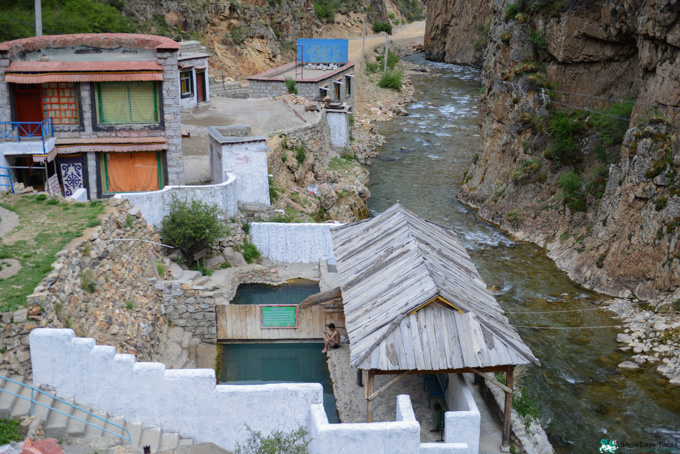
The hotspring pool view inside guesthouse in Tidrum.
If you stay overnight at Tidrum Nunnery, you can use the guesthouse pool, which offers more privacy, but there is also a public pool shared with local pilgrims.
The best way to travel to Tidrum Nunnery and hot spring is to take a two-day tour from Lhasa covering both Ganden Monastery and Drigung Til Monastery. If the timing is right, you may be able to see another rare wildlife species—the black-necked crane, which exists only on the Tibetan Plateau.
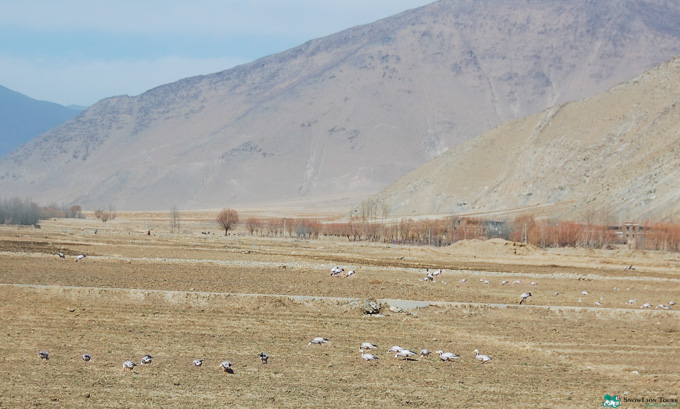
A flock of blacknecked crane on the way to Tidrum nunnery from Ganden.
The Shambala Hotel, located 10 km away from Tidrum Nunnery, offers worthwhile accommodation for experiencing such a high altitude in Tibet. The shower water in each room comes directly from the Tidrum hot spring, and the rooms are decorated in delicate Tibetan style. Tidrum Nunnery also offers some stunning day hikes around the monastery. A day hike around the caves of Yeshe Tsogyal would be a special way to spend a day at Tidrum Nunnery.
Recent Posts
- Mount Kailash Kora updates
 September 26, 2026
 - Tibet Travel Permits
 September 24, 2026
 - Update on China / Tibet–Nepal Land Border Crossings
 September 24, 2026
Related Tours
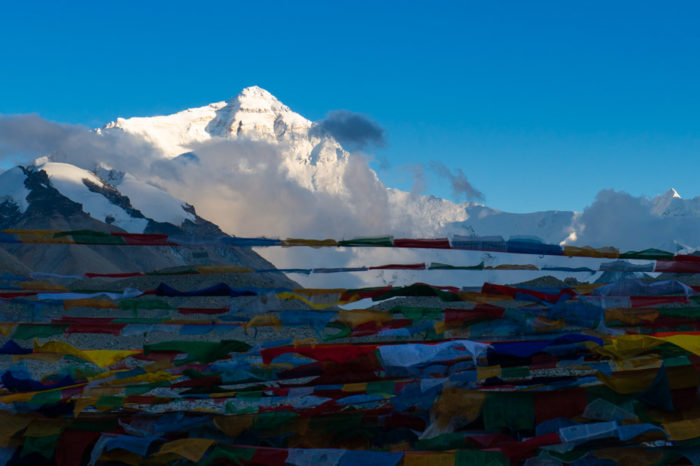
Incredible Everest
Travel from Lhasa to Yamdrok Lake, Gyantse, Shigatse, and Everest Base Camp with Tibetan monasteries, high passes, and Himalayan views.
Splendours of Tibet
Journey through the Himalayas, traveling from Lhasa all the way to the Nepal border. Starting in the Tibetan capital, explore the countless rooms of the grand Potala Palace, receive a blessing from the Jowo Buddha …
Eastern Tibet Discovery
Grand exploration of Amdo and Kham regions of Eastern TibetJoin in the expedition to Eastern Tibet! This is a unique opportunity to explore all main sights of Amdo and Kham regions: holy mountains, glacier lakes, …
Expedition to the East
Starting in Lhasa, discover the famous Potala Palace, watch the monks debate at Sera Monastery, and sip tea on a rooftop overlooking the bustling Barkhor market square. Follow the Nyang River out of Lhasa to …
Sacred Cities and Heavenly Lakes
In the sacred city of Lhasa, visit the grand Potala Palace, the holy Jokhang Temple, and the colorful Barkhor Square. Watch monks debate at Sera Monastery and join pilgrims in exploring the temples and prayer …
Heritage of the Holy City
In the sacred city of Lhasa, visit the grand Potala Palace, the holy Jokhang Temple, and the colorful Barkhor Square. Watch monks debate at Sera Monastery and join pilgrims in exploring the temples and prayer …
We are recommended by
We are committed to providing authentic, high quality, environmentally sustainable travel services. Join us and experience once in a lifetime holiday.
Recent Trips
.jpg "amdo monlam festival tour")