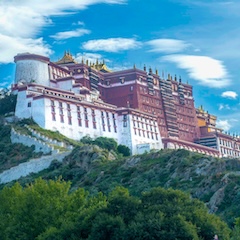
Lhasa to Kathmandu
Monasteries on the way to Kathmandu via Mount Everest
When you travel to Tibet, you will see many monasteries on your tour. This is because almost all Tibetans are believers of Buddhism, so it’s the best place to learn and experience the culture and religion of Tibet. The other reason is that pilgrimage sites are the foundation of tourism in Tibet. Tibet opened to tourists in 1985. There was no tourism industry before then, but we did have pilgrimage sites where pilgrims traveled from one pilgrimage site to another for centuries.
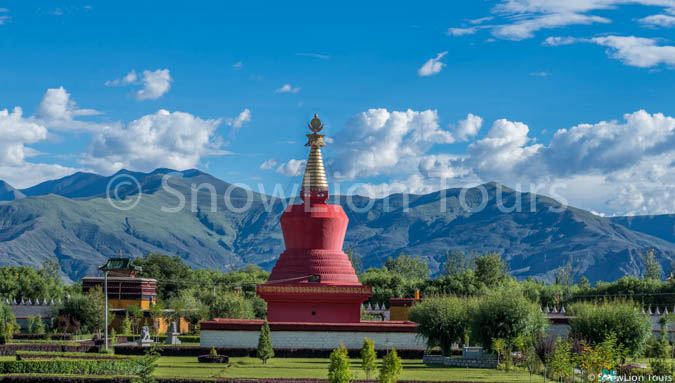
The red stupa in Samye Monastery.
When Tibetans choose a location for a monastery, they normally choose the most beautiful place in the region as the site to build the monastery. This is the reason why we include monasteries in tours. Here are some monasteries on the way from Lhasa to Mount Everest and continuing to Kathmandu.
Samding Monastery The Samding Monastery is located 115 km southwest of Lhasa at an altitude of 4,423 m / 14,511 ft. It sits on a rocky hill north of Yamdrok Yumtso Lake. The monastery is only 10 km east of Nagartse, a truck stop town where many tourists have lunch. It is said that the monastery was originally built in the 13th century following the Shangpa Kagyu lineage. This is also home to a famous female incarnate lama in Tibet – Dorje Phagmo. Today, there are over 20 resident monks. The female lama lives in Lhasa, holding a government position.
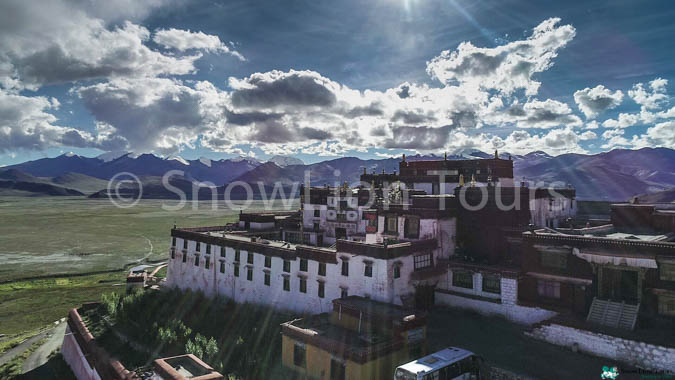
Samdingling Monastery in Tibet
Ralung Monastery Ralung Monastery is about 200 km from Lhasa. On the way to Gyantse, after crossing Kora La Pass, you will reach Ralung Monastery 6 km east from the main road between Nagartse and Gyantse.
This monastery was first founded in 1193 by Drogon Tsangpa Gyare. “Ra” means goat and “lung” means prophecy in Tibetan. Therefore, Ralung literally means “The Prophecy of Goat,” as it was believed that the site was prophesied by a white goat to build a monastery.
The main school of Ralung Monastery is the Kagyu sect of Tibetan Buddhism. There are many chapels, each having main statues of different buddhas and dharma-protecting deities respectively.
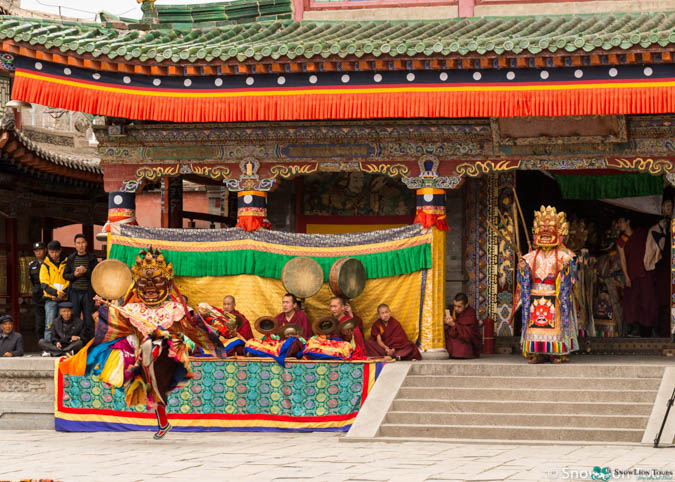
Monastery Festival in Tibet
Old Gyantse County Old Gyantse County was situated in the middle of Gyantse town, slightly elevated on a hilltop. It has a unique and beautiful view from far away. The old and ancient style of the county was first initiated around 976 by King Palkhor, a relative of the last imperial lineage of Tibet, after whom Tibet was divided into small princely states.
The county was further expanded during the overlord political role of Phakdrupa (Sakyapa order). Earlier it used to have four temples in every four directions of the county, but presently we have the east temple with repaired mural paintings inside. On every 10th and 25th lunar date, it was open for locals to visit.
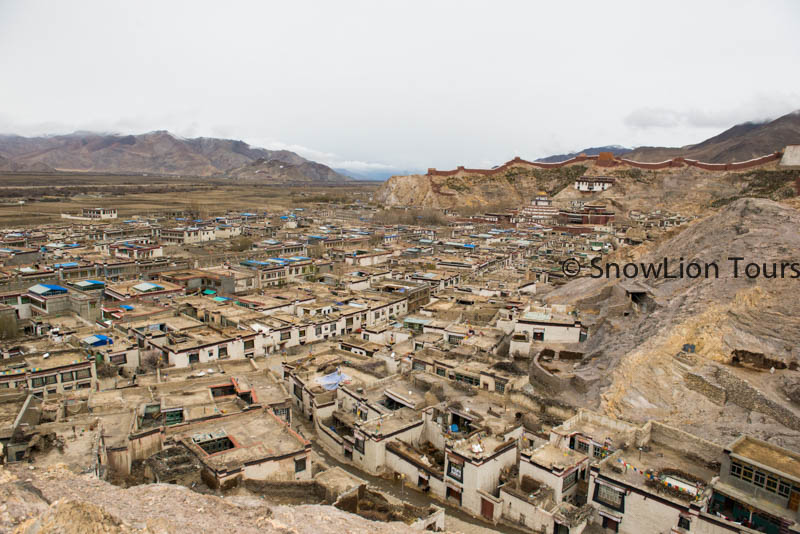
Gyantse town view from Gyantse Dzong
Gyantse Palkor Choede Palkor Choede is a small monastic school 90 km east-south of Tashilhunpo Monastery from the main road of Gyantse County and 230 km away from Lhasa. Gyantse Palkor Choede was founded in 1418 by Rabten Kunsang, who had once been a sheriff of Gyantse County. The assembly hall is the main part to explore, and it was built with 8 tall pillars and 48 short ones. The supreme statue of the shrine or hall was that of Jowo Mahabuddhi. Instead of usual wall paintings and large wheel of life murals, the entrance is decorated with the four guardian kings. The first chapel to the left was the house of five Jinas. The east chapel consisted of a statue of Jampa (Maitreya) as the central image, and beside it was the statue of Avalokiteshvara; surrounding them were Manjushri, Vajrapani, Guru Rinpoche, and the trio of Dharma Kings.
In every fourth lunar month, the monastery holds a religious festival during which monks perform a tantric dance as well. On the 18th day, there is an unveiling of a huge thangka of Buddha for which hundreds of devotees visit for blessings. There are also other activities like Gyantse horse racing and arrow contests which make the day more festive.
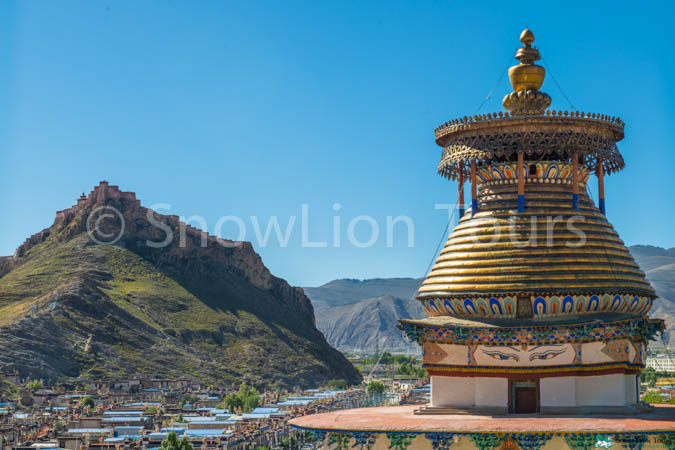
Gyantse Kumbum Stupa and Gyantse Dzong in Tibet
Tashi Gomang Pagoda of Gyantse Palkor Choede This huge and unique Tashi Gomang stupa was built by Rabten Kunsang in 1476. It was eleven stories tall with four levels. The first level has four big gate doors in each direction: at the south was Gautama Buddha, Buddha of infinite life at the west, Dipankara (Buddha of the past) at the north, and the future Buddha at the east. Similarly, each of the other three levels has four main doors in each direction—east, west, north, and south—respectively dedicated to different buddhas. This tower-like stupa consists of hundreds of Buddha icons, making it a significant feature of Palkor Choede Monastery, and overall it has 90 chapels in layers.
Shalu Monastery Shalu Monastery is a small monastery 22 km south of Shigatse City. Founded in 1040 by Jetsun Sherab Jungnay, an eleventh-century Tibetan abbot and scholar, he wished to found a monastery under his name and asked his tutor for guidance. The tutor asked him to fire an arrow and trust in the goodness and wisdom of Buddha that it would find the perfect location. Where the arrow landed would become the most central point of the monastery’s foundations. Therefore, the arrow landed on the present site of the monastery. So the monastery was originally built with the initiation of a small temple called Yumlhakhang, enshrined with scripts of 12 Yum manuscripts and the statue of the 41st king Tri Ralpachen. In 1329, a devastating earthquake demolished the temple of Shalu, but it was later rebuilt in 1333 by local lords under the counsel of the Mongol Emperor. Later, Shalu Temple was owned by the 11th Abbot Boton Rinchen Drub, who lived from 1290–1364. He expanded the monastery with many monastic schools and successfully ran the Shalu monastery for almost 36 years. His activities in Shalu Monastery inevitably attracted a great deal of attention to the monastery and brought in other Buddhist intellectuals from around Tibet. Shalu became the first among the major monasteries and learning centers during Tibet’s great revival of Buddhism and an important center of the Sakya tradition.
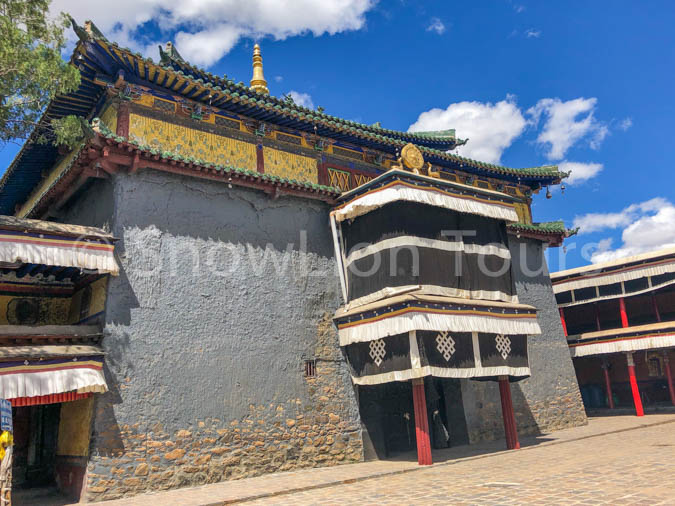
Main assembly hall in Shalu Monastery in Tibet
Narthang Monastery Exiting 10 km south of the main road from Tashilhunpo to Samye is Narthang Monastery. It was founded in 1153 by one of the disciples of Atisha. Narthang was first famous for its scriptural teaching and monastic discipline, and it produced many Tibetan scholars around Tibet. In the 12th century, many scholars collected and arranged three sacred manuscripts of Tibetan Buddha’s teachings. After the fourteenth century, it gained great eminence as the oldest of Tibet’s three great printing centers, the others being Potala and Dege Printing House. In 1732, under the patronage of some local lords, the monastery carved 100 Kangyur scripts and 200 Tengyur scripts in wooden printing blocks and hundreds of other scripts. Originally it had 13 chapels and two monastic schools. The printing house contained 130,000 woodblock prints. The assembly hall has the history of gathering ten thousand monks at a time. The 108-pillared hall was enshrined with Maitreya Buddha, Bodh Gaya or Mahabodhi Temple, and a gold-brass statue of Buddha.
Presently, in a restored 12-pillared assembly hall, there are statues in place of the earlier ones, and out of 13 chapels, you can visit most of them in restored style. There are about 8,000 woodblock prints today.
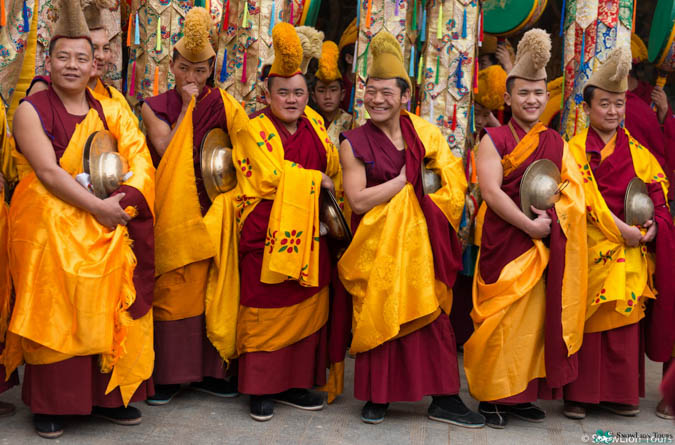
Monks in Tibet
Gharu Nunnery
In 1987, Gharu Nunnery was founded by Mr. Thupten and other devotees. It was built upon a small hill pass called Gharu La Pass, which is how the nunnery got its name. The nunnery was built under the good deeds of Bikshu Uthpal (a fully ordained monk). Initially, a stupa was built with the garments of Bikshu Uthpal as relics inside and an image icon of Guru Rinpoche. Later on, beside this, another three stupas were also built. And then the nunnery was founded with the image of Avalokiteshvara and the Trio of Spiritual Father and Son as the main icons in the congregation hall.
Tashilhunpo Monastery
Tashilhunpo Monastery was founded in 1447 by Gendun Drup, the first Dalai Lama. The monastery was the traditional seat of successive Panchen Lamas. The construction of Tashilhunpo Monastery was financed by donations from local nobles and benefactors. It was during the fourth Panchen Lama’s time that major expansions were made to the monastery. Since then, all Panchen Lamas have resided at Tashilhunpo and have managed to expand it gradually. Tashilhunpo Monastery has four major monastic schools under its command. The main chanting hall contains the throne of the Panchen Lama with two connected chapels, one for Sakyamuni and one dedicated to Tara the protector deity.
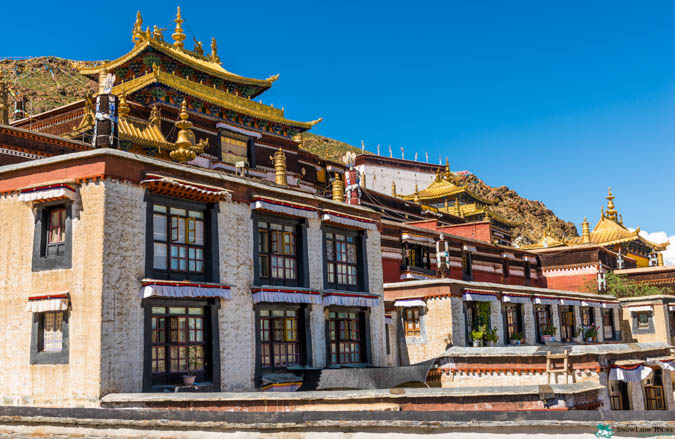
Temples in Shigatse Tashilhunpo Monastery in Tibet
Dechen Portrang
The full name is Dechen Kelsang Protang. Dechen Protang was the seat palace of the Panchen Lama lineage. It was about one kilometer south from Tashilhunpo Monastery. This palace was built in place of Kunkyop Protang (the seat palace before Dechen Protang), which was completely flooded in 1954. So starting the project in 1955, Dechen Protang was successfully built by professional architects specially invited from Beijing and Tibetan professional craftsmen under the full advice and visions of the 10th Panchen Lama. The palace has schools, offices, chapels, and sacred rooms which all made it a very special palace in entire Tibet.
Sakya Monastery
Sakya Monastery is the most sacred Sakyapa monastery, situated 25 km southeast of Gyatso La Pass, which is about 140 km west of Shigatse on the road to Tingri. It was the seat of the Sakyapa school of Tibetan Buddhism, founded in 1073 by Konchok Gyelpo, who was enthroned as the first Sakya Trizin (the throne holder of Sakyapa tradition). The monastery has about 108 temples and chapels. Since 1262, Drogon Chogyal Phagpa (the fifth leader of the Sakyapa school) played his overall political role of the Sakyapa order in Tibet and made major improvements and expansions of the monastery.
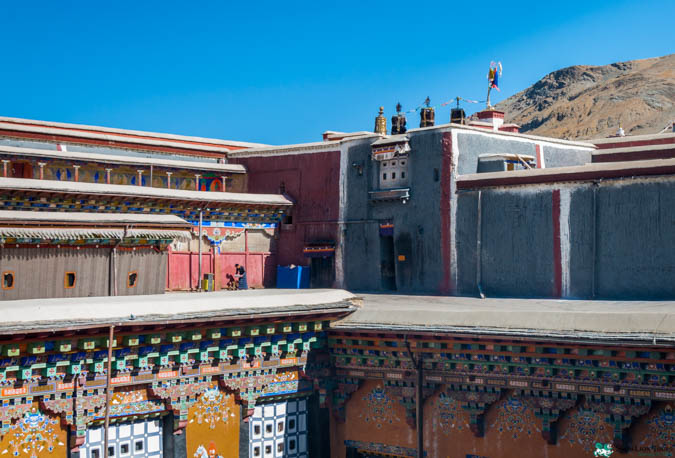
Sakya Monastery in Tibet
Ogen Lhakhang
Ogen Lhakhang Monastery is 2-3 km southwest of the Sakya Monastery. It was founded in the 8th century by Nyodup Palbar. This monastery holds one of the four most sacred images of Guru Rinpoche in entire Tibet. Ogen Lhakhang Monastery was originally a Nyingmapa tradition; however, it is a Sakyapa monastery today.
Shelkar Choede Monastery
Shelkar Choede Monastery was about 46 km away from the main old Shelkar County. This old monastery had a history back to the 14th century, around which time the monastery was founded as a small temple with its first initiation. It was built by a southern lord, Situ Rinchen, whose father was a local lord who fought with a local northern king, was defeated and conquered by the northern lord. Situ Rinchen was enslaved by the northern lord but later fell in love with the daughter of the northern king, so he became part of them and owned a small county called Tashi Dzong. Later on, he also founded the old Shelkar County.
Since he was a devoted person, he honored a great saint who stayed there at the site of present Shelkar Choede Monastery. Therefore, under the words of his devoted guru or saint, Situ Rinchen founded the Shelkar Choede Monastery. At the first initiation, there were around 15 monks, but later on it expanded into monastic schools within it—Sakya sect, Kadhampa sect—with 800 monks. However, there was controversy among different sects. During the 17th century, at the time of the 5th Dalai Lama, the monastery was confirmed and authorized as a monastery of the New Kadhampa sect. Since then it became a monastery of the Gelugpa sect with around 300 monks in it. The monastery has 21 chapels housed for different deities, Buddha images, and icons.
The site of the monastery was highly recommended for its beautiful surroundings. At the bottom, there flow four big rivers; to the east was Sakya Monastery and to the south was Mount Everest. Also, there were print houses and hermitages that can be visited 24 km from the monastery.
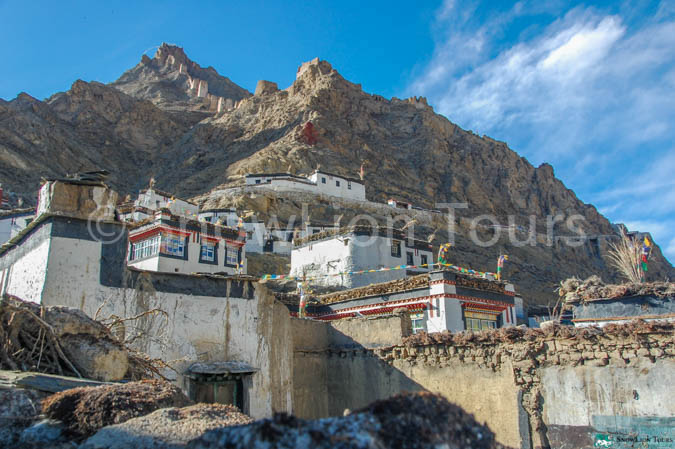
Shegar Dzong in Tibet
Lhatse Choede
Lhatse is a county next to Shigatse City, and Lhatse Choede is a small Gelugpa monastery in Lhatse County about 11 km from Dangmoche town. Lhatse Choede was founded in the 17th century under the counsel of the fifth Dalai Lama. It follows the traditions of Deyang Monastic School of Drepung Monastery at Lhasa, and their abbotship was also appointed from Deyang College. During the 6th Dalai Lama Jampal Gyatso’s time, Lhatse Choede came under Tashilhunpo Monastery at Shigatse. Before, it had around 500 monks and followed both the philosophical and practical traditions of Tibetan Buddhism. The main icon in the assembly hall was a gold-brass statue of the Medicine Buddha. And there is a clay image of Maitreya Buddha in Jamkhang (the chapel of Maitreya).
About 5 km walk from the monastery to the east, there are temples, other small monasteries, and a repaired tomb of kings that can be visited.
Rongbuk Monastery
Rongbuk Monastery is the highest monastery in the world, elevated at 5,100 m above sea level. The monastery is about 90 km from its nearest Shelkar town and 8 km from Everest Base Camp. The initial and historical site of Rongbuk Monastery is 4 km from the present Rongbuk beside the route to Mount Everest. Where Guru Padmasambhava stayed one month and seven days there, his meditation cave can be seen these days as well. During his stay, he subdued five evil spirits and established them to be protectors of Dharma. Later on, this site had been a holy place of many masters and meditators; about 108 caves had been built respectively.
The original Rongbuk Monastery was founded by Nyingmapa Lama Ngawang Tenzin Norbu (root lama of Rongbuk Monastery) in an area of meditation huts and caves that had been in use by communities of nuns since the 18th century, and gradually it became a monastery of about 900 monks and nuns. However, present Rongbuk is not as original as it had to be. Rongbuk Monastery was completely destroyed by 1974, and it was repaired upon the ruins left. Presently there are only about 20 nuns and 10 monks, although previously there were about 500 monks and nuns living here.
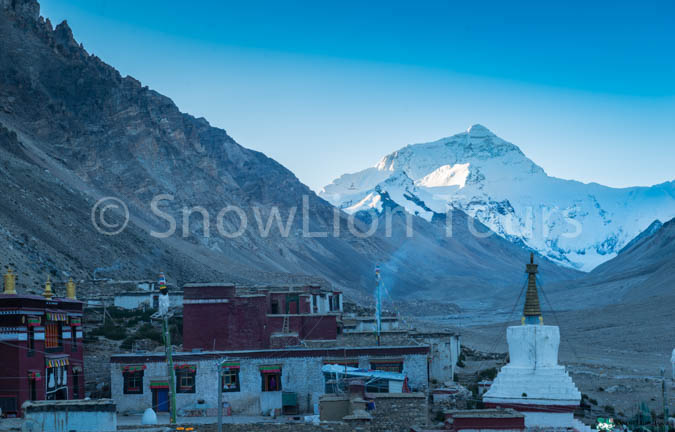
Rongbuk Monastery Everest Base Camp in Tibet
Gyetong Monastery
Gyetong Monastery can be visited 30 km south from the main road to Tingri. The monastery was founded by a great saint, Bhivaka. During the overall role of Sakyapa in Tibet, Drogon Choegyal Phagpa, a great master who founded the Sakyapa sect of Tibetan Buddhism, came to visit the monastery and he built the root of the Sakyapa school in Gyetong Monastery. Later on, the monastery practiced the Nyingmapa principles as well. The assembly hall was noble and sacred for its naturally appeared image of Bhivaka on a stone and golden-built icon of Drogon Choegyal Phagpa.
Nowadays, after its repaired constructions, there are huge thangka images of Bhivaka, clay figures of Drogon Choegyal Phagpa, and brass-golden icons of Jowo. And in the upper chapel of Jampa, there was a clay icon of Maitreya Buddha. Every year, on the 19th of the 9th lunar month, the monastery performs the Buddhist tantric dance. And about one hour’s walk from the monastery, there is a nunnery called Red Cliff Nunnery that you can visit.
Pakpa Lhakhang
Pakpa Lhakhang is one of the monasteries built to guard the border town of Kyirong. It was built by King Songtsan Gampo for Princess Bhrikuti from Nepal. Its architectural style is mainly in accordance with the format of Nepali temples. The monastery is located around 30 meters near the eastern side of Kyirong Town, at an altitude of 2,850 meters. The main statue in this monastery is a copy of the Arya Wati Zangpo, one of three statues of Phakpa Lokeshvara (a form of Chenresig) said to have arisen naturally from a single piece of sandalwood.
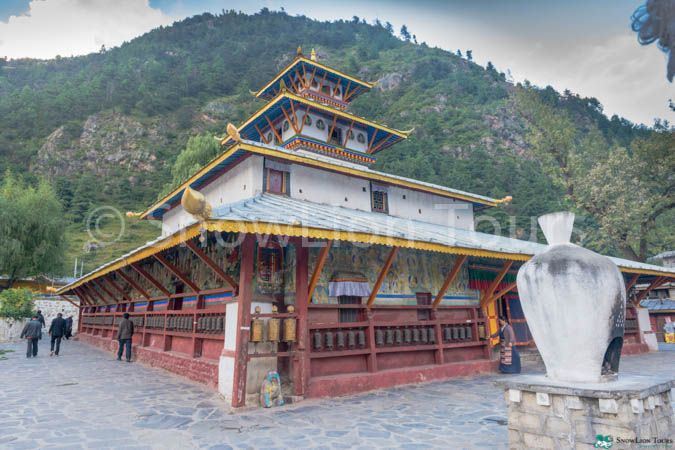
Pakpa Lhakang in Kyirong town at the border of China and Nepal
Recent Posts
- Mount Kailash Kora updates
 September 26, 2026
 - Tibet Travel Permits
 September 24, 2026
 - Update on China / Tibet–Nepal Land Border Crossings
 September 24, 2026
Related Tours
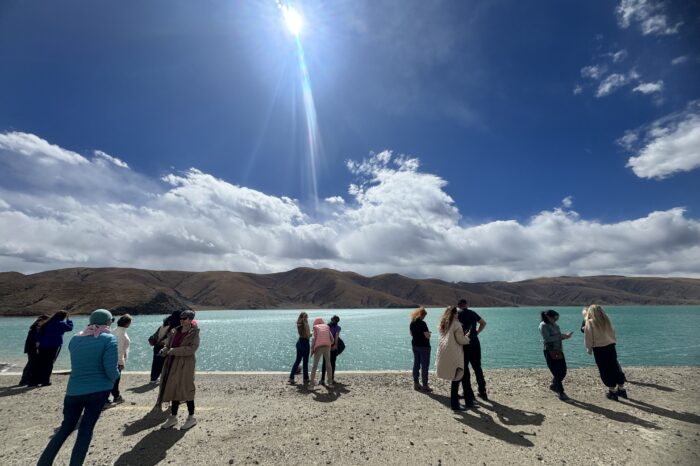
Kathmandu to Mount Kailash Tour
Journey from Kathmandu to sacred Mount Kailash and Lake Manasarovar, crossing the Himalayas into western Tibet, completing the legendary three-day Kailash Kora, and experiencing breathtaking landscapes, ancient monasteries, and profound spiritual traditions.
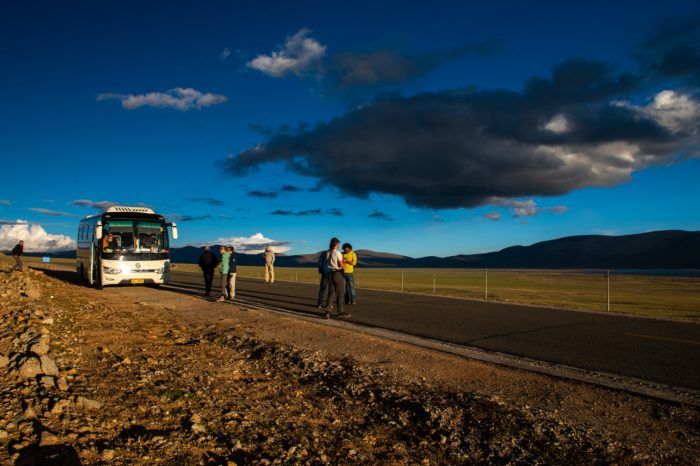
Kathmandu to Lhasa Tour
Travel overland from Kathmandu to Lhasa via Everest Base Camp, sacred lakes, and historic monasteries. A carefully paced Nepal–Tibet journey with experienced Tibetan guides.
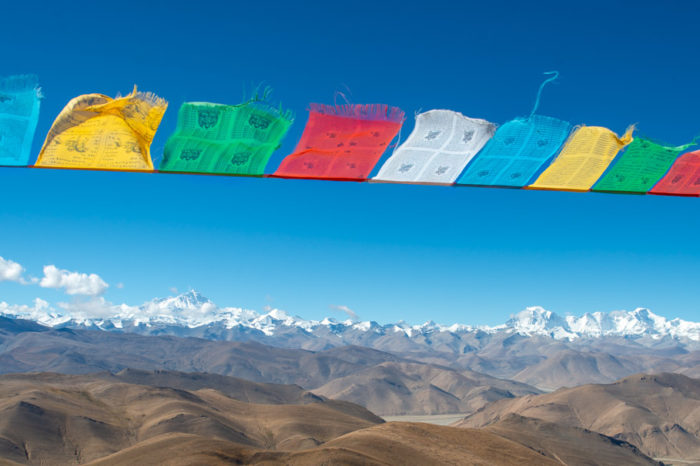
Himalayan Journey
Journey from Lhasa to Everest Base Camp and Kathmandu, crossing dramatic Himalayan landscapes, turquoise alpine lakes, ancient monasteries, and the spectacular Kyirong Valley, where Tibetan culture and breathtaking mountain scenery create an unforgettable adventure.
We are recommended by
We are committed to providing authentic, high quality, environmentally sustainable travel services. Join us and experience once in a lifetime holiday.
Recent Trips
.jpg "amdo monlam festival tour")