Dzongsar Monastery
Dzongsar Monastery stands as one of Kham Tibet’s most historically significant and spiritually influential Sakya institutions, located 100km east of Derge County in Sichuan Province. This remarkable monastery represents a unique synthesis of Tibetan Buddhist traditions and embodies the ecumenical […]
Dzongsar Monastery stands as one of Kham Tibet’s most historically significant and spiritually influential Sakya institutions, located 100km east of Derge County in Sichuan Province. This remarkable monastery represents a unique synthesis of Tibetan Buddhist traditions and embodies the ecumenical spirit of the Rimé (non-sectarian) movement that has profoundly shaped modern Tibetan Buddhism.
Ancient Origins and Religious Evolution
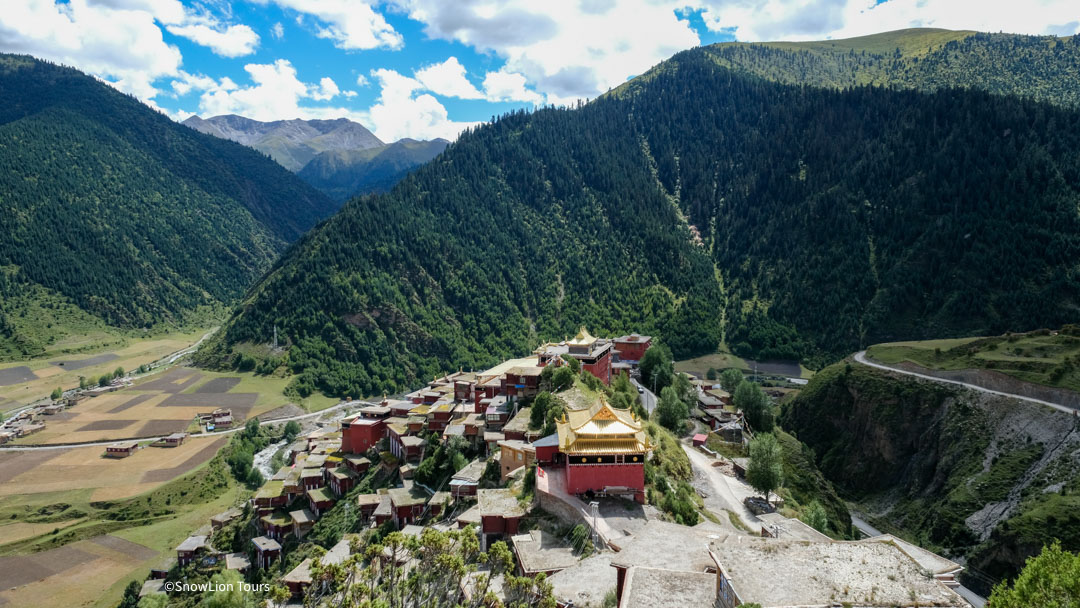
Dzongsar’s spiritual history spans multiple religious traditions, reflecting the complex evolution of Tibetan Buddhism in the Kham region. The site was originally established as a Bon monastery by a Bon lama, with temples constructed during this initial period remaining intact until 1958. This Bon foundation created a sacred geography that would continue to support contemplative practice through successive religious transformations.
The monastery underwent significant religious transitions, initially converting from Bon to Nyingma and Kadampa traditions before finding its definitive identity. In 1275, the site was formally established as a Sakya monastery by the great Drogon Chögyal Phagpa upon his return from mainland China. This transformation by one of Tibet’s most influential political and spiritual leaders established Dzongsar’s position within the Sakya school while maintaining the site’s reputation for religious openness and scholarly excellence.
Institutional Grandeur and Monastic Life
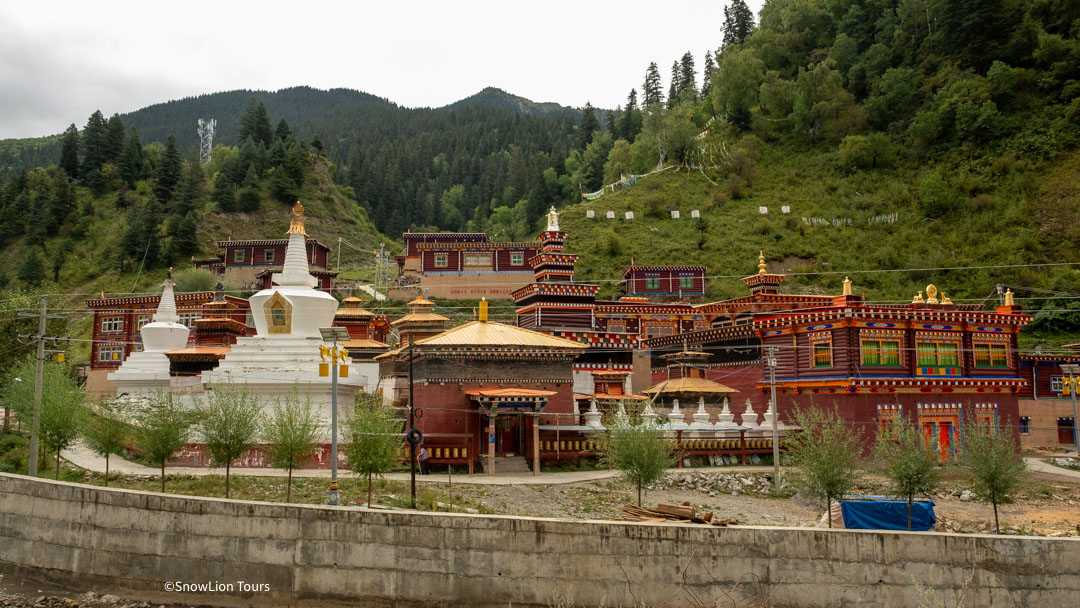
At its zenith, Dzongsar supported a thriving monastic community of between 300 and 500 permanent resident monks, making it one of the largest and most influential institutions in eastern Tibet. The monastery’s impressive scale reflected both its spiritual significance and its role as a major center of learning for the broader Kham region.
The complex encompassed twenty-three temples, both large and small, along with numerous important sacred rooms that housed an extraordinary collection of Buddhist art, texts, and ritual objects. This architectural richness created a comprehensive environment for Buddhist study and practice, with specialized spaces supporting different aspects of monastic education and contemplative training.
Retreat Centers and Contemplative Tradition
Dzongsar’s commitment to intensive spiritual practice manifested through an extensive network of hermitages and retreat centers that dotted the surrounding landscape. These included Khamshe Shekdra, Karmo Taktsang retreat center, Gargu Shangchub Rihtrek retreat center, Zamnang Pema Shelpuk, Zingkhok Trawo retreat center, Tsedrak Drulphuk, Gyalgen Chungtak, Munong Dorjee Drakal, Tsa-chu-juk Chenresig Lhakang, and Honda Thongthong Gyalpo, among others.
This constellation of practice sites created a comprehensive contemplative ecosystem where practitioners could engage in everything from preliminary practices to the most advanced tantric retreats. The diversity of these centers reflected Dzongsar’s commitment to supporting practitioners at all levels of spiritual development.
The Rimé Revolution and Non-Sectarian Excellence
Dzongsar’s most distinctive contribution to Tibetan Buddhism emerged through its central role in the Rimé (non-sectarian) movement, spearheaded by three of Tibet’s greatest 19th-century masters: Jamgön Kongtrül, Chokyi Lingpa, and Khyentse Wangpo. These visionary teachers gathered a unique collection of Rimé scriptures and teachings at Dzongsar, creating an unprecedented repository of cross-traditional Buddhist wisdom.
Although Dzongsar remained a Sakya monastery in principle, it became renowned for its flexibility in teachings, making it possible to study eight different sects of Buddhism within a single institution. This revolutionary approach broke down sectarian barriers that had historically limited scholarly exchange, allowing students to access the full breadth of Tibetan Buddhist wisdom regardless of their institutional affiliation.
The Rimé approach developed at Dzongsar profoundly influenced Tibetan Buddhism’s modern development, demonstrating that sectarian identity need not preclude appreciation for other traditions’ insights and methods. This philosophical openness became a defining characteristic of 20th and 21st-century Tibetan Buddhism.
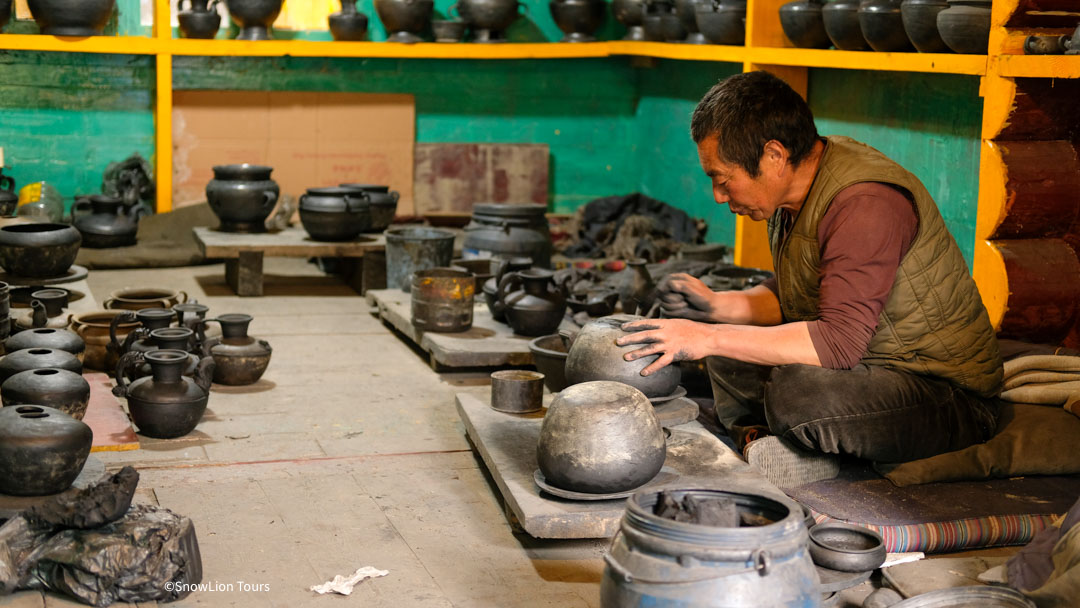
Black clay pottery
Destruction and Remarkable Revival
Like countless Tibetan monasteries, Dzongsar faced complete destruction in 1958, marking the end of nearly seven centuries of continuous religious activity. The loss of this extraordinary institution represented not just architectural devastation but the interruption of precious lineages and the dispersal of irreplaceable texts and art objects.
However, Dzongsar’s story demonstrates the remarkable resilience of Tibetan Buddhist institutions. Rebuilding efforts began in 1983 under the guidance of Dr. Lodrö Phuntsok, a scholar-practitioner who understood both the monastery’s historical significance and the practical requirements for successful restoration. This revival effort has gradually restored both the physical infrastructure and the intellectual vitality that made Dzongsar such an important center of learning.
Contemporary Leadership and Global Influence
The current abbot of Dzongsar Monastery is Dzongsar Khyentse Rinpoche, who resides in Bhutan while maintaining close connections to the monastery’s activities and development. Dzongsar Khyentse Rinpoche has emerged as one of contemporary Tibetan Buddhism’s most influential teachers, combining traditional scholarship with innovative approaches to presenting Buddhist wisdom to global audiences.
His leadership exemplifies Dzongsar’s continuing commitment to the Rimé spirit, as he draws from multiple Tibetan Buddhist traditions while maintaining the monastery’s Sakya identity. Through his international teaching activities and film career, Dzongsar Khyentse Rinpoche has brought global attention to Tibetan Buddhism while supporting the monastery’s ongoing development.
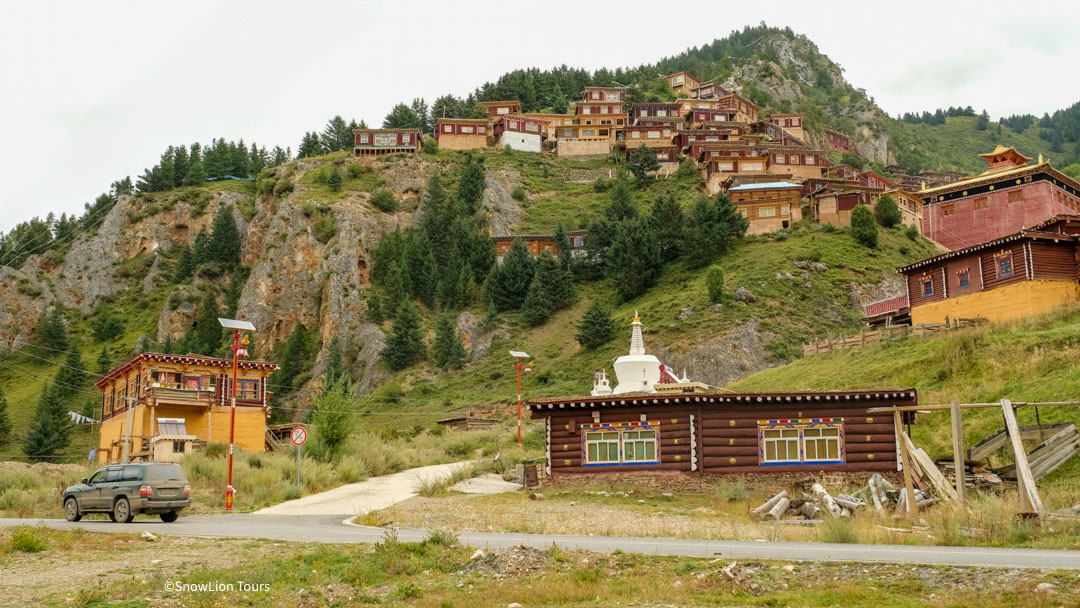
Modern Retreat Infrastructure
The monastery’s commitment to intensive contemplative practice continues through modern developments. Approximately 15km inside the valley, a substantial retreat center occupies a hilltop location where monks and nuns engage in study and meditation. This contemporary addition demonstrates how traditional Tibetan Buddhist institutions adapt to modern circumstances while maintaining their essential contemplative focus.
The retreat center’s elevated position provides both practical advantages for meditation practice and symbolic significance, as practitioners literally and figuratively rise above mundane concerns to engage with ultimate spiritual questions. The facility serves practitioners from Dzongsar and other institutions, continuing the monastery’s tradition of supporting intensive contemplative training.
Cultural and Artistic Heritage
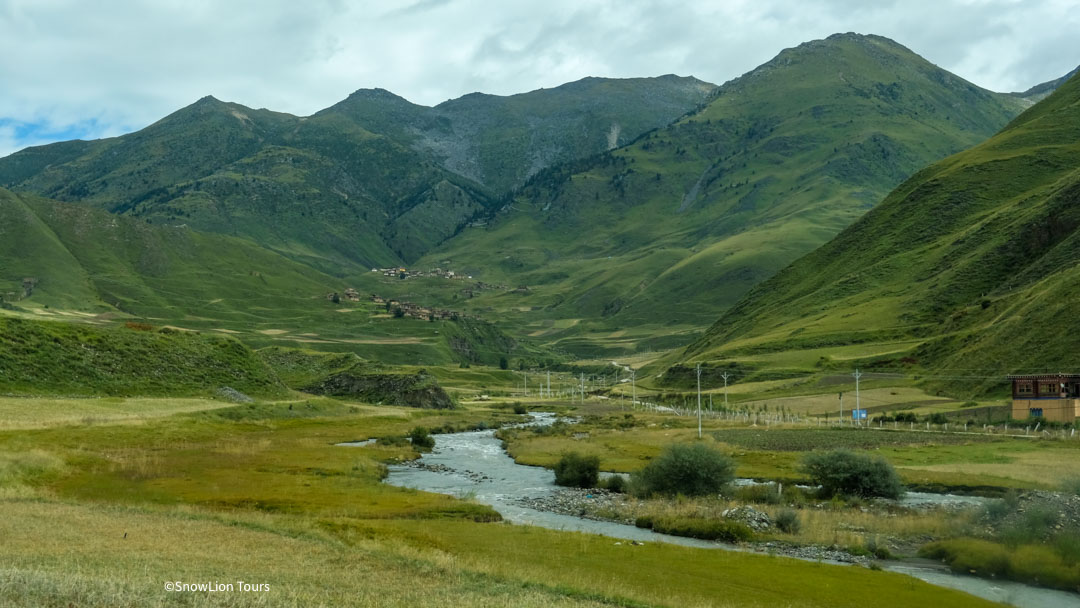
The journey to Dzongsar itself provides insights into the region’s rich cultural heritage, with ancient rock paintings visible along the route from Derge that testify to the area’s long history of human spiritual activity. These prehistoric artistic expressions create continuity between ancient contemplative traditions and the sophisticated Buddhist practices that later developed in the region.
The surrounding landscape also supports beautiful smaller monasteries near Dzongsar that contribute to the area’s reputation as a major center of Tibetan Buddhist learning and practice. This network of institutions creates a comprehensive spiritual environment where different aspects of Buddhist tradition can flourish while maintaining mutual support and exchange.
A Living Legacy of Religious Harmony
Dzongsar Monastery represents far more than a historical institution – it embodies principles of religious tolerance, scholarly excellence, and contemplative dedication that remain urgently relevant in our contemporary world. The monastery’s success in maintaining both sectarian identity and non-sectarian openness offers valuable lessons for religious institutions worldwide.
The Rimé approach pioneered at Dzongsar demonstrates that authentic spiritual practice requires neither sectarian narrow-mindedness nor syncretic confusion. Instead, it shows how practitioners can maintain deep commitment to their own traditions while appreciating the wisdom and methods developed by other lineages.
As Dzongsar continues its revival and development, it serves as a beacon of hope for the preservation and evolution of Tibetan Buddhist wisdom. The monastery’s example shows how traditional institutions can adapt to modern circumstances while maintaining their essential spiritual functions, ensuring that ancient wisdom remains accessible to contemporary practitioners seeking authentic paths to awakening.
Through its commitment to both traditional scholarship and innovative presentation, Dzongsar Monastery continues to fulfill its historic mission of preserving and transmitting the Buddha’s teachings while adapting to the needs of each new generation of spiritual seekers.
Recent Posts
- Shoton Festival Begins in Lhasa!
 August 23, 2025
 - Tour Price in Tibet
 August 23, 2025
 - Qinghai Shaman Festival in Rebkong Concludes Successfully
 August 21, 2025
Related Tours

The Land of Four Rivers and Six Ranges
Explore Eastern Tibet from Xining to Mount Amnye Machen, Yushu, and Nangchen. Experience stunning landscapes, sacred mountains, and Tibetan culture.

Khampa Heartland
Journey across Amdo & Kham Tibet from Xining to Chengdu. Visit Qinghai Lake, Amnye Machen, Yushu, Dzogchen, Derge, Ganzi, Lithang & Danba’s Tibetan villages.
We are recommended by
We are committed to providing authentic, high quality, environmentally sustainable travel services. Join us and experience once in a lifetime holiday.
Recent Trips

.jpg "amdo monlam festival tour")