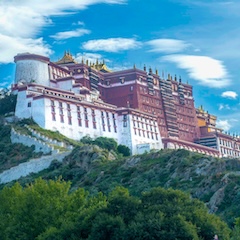
Boudhanath
Boudhanath Stupa: The Sacred Heart of Tibetan Buddhism in Kathmandu
General Information
Boudhanath Stupa, also known locally as Boudha, stands as one of the largest and most significant Buddhist stupas in the world. Located approximately 11 kilometers northeast of central Kathmandu, this UNESCO World Heritage Site serves as the spiritual and cultural heart of Nepal’s Tibetan Buddhist community. The massive mandala-shaped stupa dominates the skyline of the Boudha area, creating a sacred landscape that has drawn pilgrims, monks, and spiritual seekers for over 1,500 years.
Historical Background
The origins of Boudhanath Stupa stretch back to ancient times, with various legends attributing its construction to different periods. According to Buddhist texts, the original stupa was built in the 5th or 6th century CE, though some traditions place its origins even earlier. The most widely accepted historical account suggests that the stupa was constructed during the reign of the Licchavi dynasty, which ruled the Kathmandu Valley from the 4th to 9th centuries.
Legendary Origins
Several fascinating legends surround the stupa’s creation. The most popular tells of a poultry keeper’s daughter named Jadzima (or Kanma) who requested just enough land from the king to build a stupa – only as much as could be covered by a buffalo hide. Cleverly, she cut the hide into thin strips and encircled a vast area where the great stupa now stands. Another legend connects the stupa to the remains of Kassapa Buddha, one of the previous Buddhas who preceded Gautama Buddha.
The Tibetan tradition holds that the stupa contains relics of Kassapa Buddha, making it one of the most sacred pilgrimage sites for Tibetan Buddhists. This belief has been central to the site’s significance for over a millennium.
Architectural Marvel
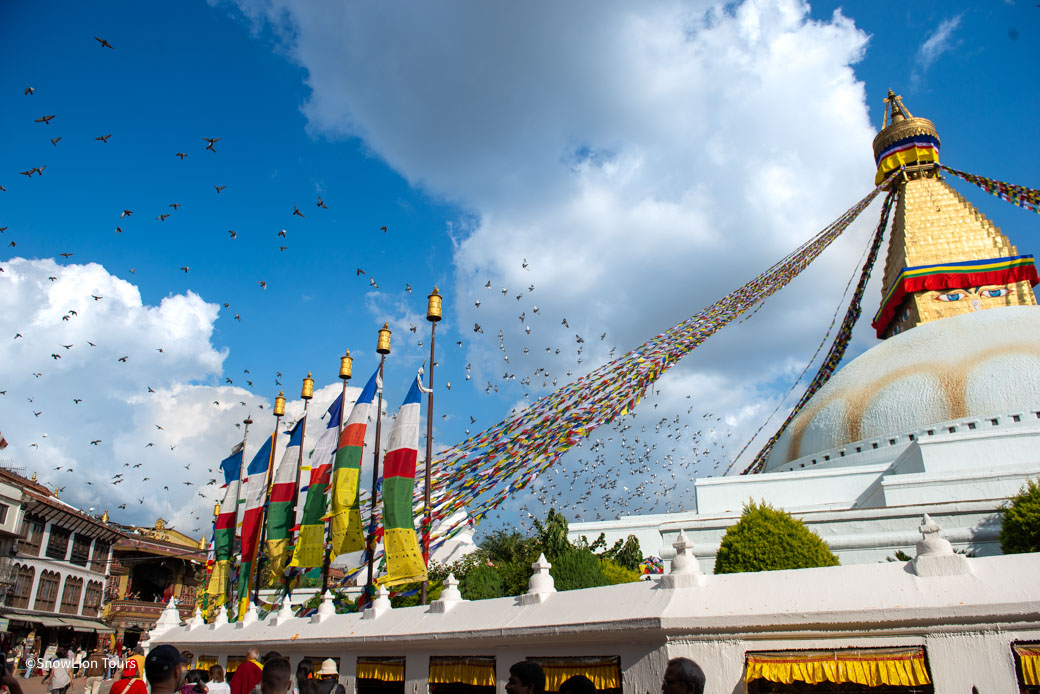
Boudhanath Stupa represents a perfect example of Nepalese stupa architecture and Buddhist symbolism. The structure rises 36 meters high and measures 120 meters in diameter, making it one of the largest spherical stupas in the world. The stupa’s design follows the traditional mandala pattern, representing the Buddhist cosmos.
Symbolic Elements:
The Base: The massive white dome (anda) symbolizes the earth and the unconscious mind. Pilgrims circumambulate this base in a clockwise direction, spinning prayer wheels and chanting mantras.
The Harmika: The square structure above the dome represents the conscious mind and the four elements. Each side bears the painted eyes of Buddha, known as the “Wisdom Eyes,” which watch over the valley in all four directions.
The Spire: The thirteen levels of the spire represent the thirteen stages of enlightenment that lead to buddhahood. At the very top sits a pinnacle symbolizing the achievement of enlightenment.
The Prayer Flags: Colorful prayer flags in five colors (blue, white, red, green, and yellow) representing the five elements stream from the spire, carrying prayers and mantras on the wind.
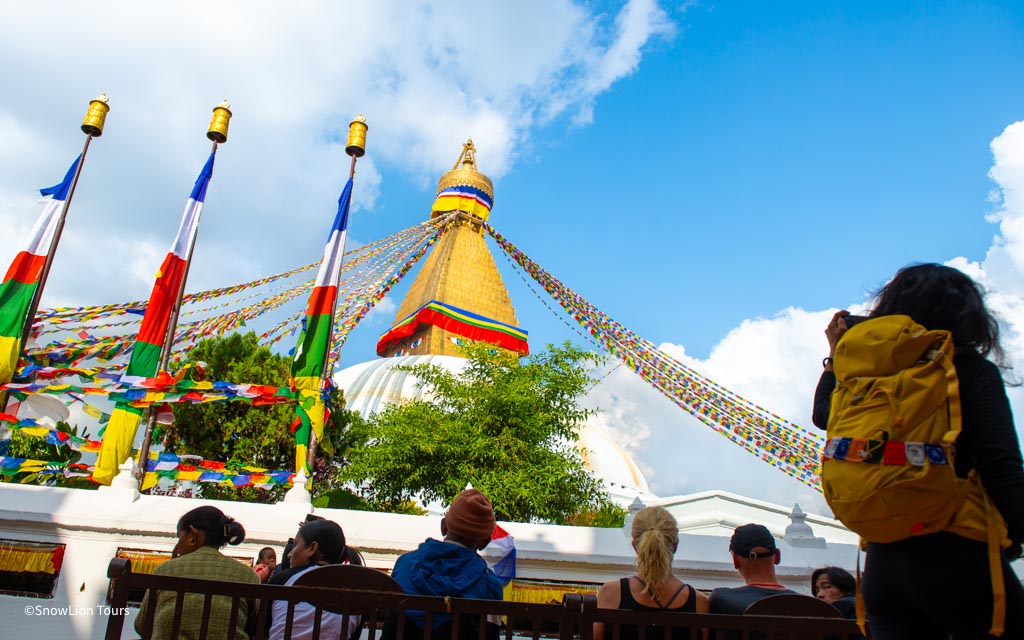
A traveler walking aroiund Boudha Stupa.
Religious Significance
For Tibetan Buddhists, Boudhanath holds immense religious importance as one of the most sacred pilgrimage sites outside of Tibet. The stupa is believed to be a powerful source of merit and blessings, and completing circumambulations (kora) around the stupa is considered highly auspicious.
Daily Practices:
Every morning and evening, hundreds of devotees perform ritual circumambulation around the stupa. The clockwise walk around the base takes approximately 20 minutes and is often accompanied by the spinning of prayer wheels, chanting of mantras (particularly “Om Mani Padme Hum”), and the lighting of butter lamps.
Festival Celebrations:
The stupa becomes the focal point for major Buddhist festivals, particularly during Buddha Jayanti (Buddha’s birthday), Losar (Tibetan New Year), and the full moon days throughout the year. During these times, thousands of pilgrims gather to perform special pujas, offer khata (ceremonial scarves), and participate in religious ceremonies.
Cultural Heritage and Community
Tibetan Refugee Community:
Following the Tibetan exodus of 1959, Boudhanath became the center of Kathmandu’s growing Tibetan refugee community. The area around the stupa transformed into a “Little Tibet,” with Tibetan refugees establishing homes, monasteries, shops, and restaurants. This influx brought authentic Tibetan culture, cuisine, and religious practices to the area, creating a unique cultural synthesis.
Monasteries and Learning Centers:
The Boudha area houses numerous important monasteries and religious institutions, including:
- Ka-Nying Shedrub Ling Monastery: A prominent center for Buddhist study and meditation
- Thrangu Monastery: Associated with the Kagyu lineage of Tibetan Buddhism
- Jamchen Lhakhang: An important temple near the stupa
- Various retreat centers and nunneries that provide facilities for intensive meditation practice
Traditional Crafts and Arts:
The area surrounding Boudhanath has become a center for traditional Tibetan arts and crafts. Skilled artisans create thangka paintings, prayer wheels, singing bowls, statues, and ritual objects using techniques passed down through generations. Many shops and workshops offer visitors the opportunity to observe these traditional crafts being made.
The Living Community
Daily Life:
The Boudha area pulsates with religious and cultural activity throughout the day. Early morning sees monks and nuns heading to prayers, while pilgrims begin their circumambulations as the first rays of sunlight hit the stupa’s golden spire. The sound of chanting, prayer wheels, and temple bells creates a constant spiritual soundtrack.
Cultural Integration:
The Boudha community represents a remarkable example of cultural integration, where Tibetan refugees, Nepalese locals, and international practitioners coexist harmoniously. Local Newar communities have also embraced the Buddhist traditions, adding their own cultural elements to the area’s rich tapestry.
Visiting Boudhanath
Best Times to Visit:
- Early Morning (5:00-7:00 AM): Experience the stupa’s most peaceful atmosphere with morning prayers and fewer crowds
- Evening (5:00-7:00 PM): Witness the beautiful sunset ceremonies and evening circumambulations
- Full Moon Days: Participate in special religious observances and increased pilgrim activity
- Festival Times: Experience the vibrant celebrations during major Buddhist festivals
What to Expect:
Visitors can explore the stupa complex, visit surrounding monasteries, shop for authentic Tibetan goods, enjoy traditional Tibetan and Nepalese cuisine, and participate in meditation sessions or teachings offered by various centers.
Practical Information:
- Entry Fee: Small fee required for foreign visitors
- Photography: Permitted in most areas, but respectful behavior is essential
- Dress Code: Modest clothing recommended; remove shoes when entering temples
- Accessibility: The main circumambulation path is accessible to all visitors
Restaurants and Accommodation:
The Boudha area offers numerous restaurants serving authentic Tibetan cuisine, including momos (dumplings), thukpa (noodle soup), and butter tea. Several guesthouses and hotels cater to pilgrims and tourists, ranging from budget-friendly options to more comfortable accommodations.
Cultural Sensitivity and Respect
When visiting Boudhanath, it’s important to remember that this is an active religious site. Visitors should:
- Always circumambulate clockwise
- Avoid pointing feet toward the stupa
- Maintain quiet, respectful behavior during religious ceremonies
- Ask permission before photographing people, especially monks and nuns
- Dress modestly and appropriately
- Remove hats and shoes when entering temple areas
Conservation and Challenges
Earthquake Recovery:
The devastating 2015 Nepal earthquake caused significant damage to Boudhanath Stupa, including cracks in the main structure and damage to surrounding buildings. A major restoration project, completed in 2016, not only repaired the damage but also enhanced the stupa’s structural integrity while maintaining its traditional appearance.
Modern Challenges:
The growing urbanization of Kathmandu and increasing tourism present ongoing challenges to the preservation of Boudhanath’s sacred atmosphere. Efforts are underway to balance development with conservation, ensuring that the area’s spiritual significance is maintained for future generations.
UNESCO World Heritage Status:
Designated as a UNESCO World Heritage Site in 1979, Boudhanath is protected under international law. This status helps ensure its preservation while recognizing its outstanding universal value to humanity.
A Living Testament to Faith
Boudhanath Stupa represents more than an ancient monument – it stands as a living testament to the enduring power of faith and the resilience of cultural traditions. For over 1,500 years, this sacred site has served as a beacon of peace, compassion, and enlightenment. The continuous circumambulation of pilgrims, the daily rituals, and the vibrant community life ensure that Boudhanath remains a dynamic center of Buddhist practice and Tibetan culture.
Whether you come as a pilgrim seeking spiritual blessings, a cultural enthusiast interested in Tibetan traditions, or simply a traveler drawn to sacred places, Boudhanath offers a profound experience that connects visitors to centuries of devotion and the timeless pursuit of enlightenment. In the heart of Kathmandu’s bustling urban landscape, this sacred stupa continues to provide a sanctuary of peace and a window into the rich spiritual heritage of the Himalayan region.
The Boudhanath area serves as a bridge between ancient wisdom and contemporary life, demonstrating how traditional spiritual practices can thrive in the modern world while maintaining their essential character and transformative power.
Recent Posts
- Mount Kailash Kora updates
 September 26, 2026
 - Tibet Travel Permits
 September 24, 2026
 - Update on China / Tibet–Nepal Land Border Crossings
 September 24, 2026
Related Tours
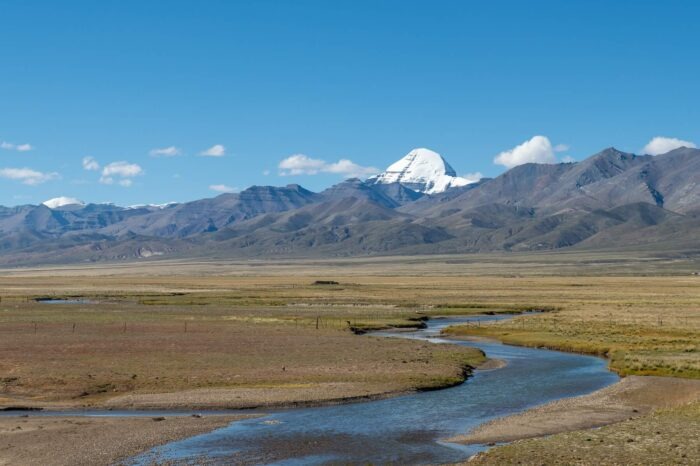
Kathmandu – Mount Kailash – Kathmandu
Embark on a 12-day spiritual journey from Kathmandu to the ancient Guge Kingdom and sacred Mount Kailash. Experience breathtaking Himalayan landscapes, Tibetan culture, Lake Manasarovar, and the transformative Kailash Kora on this unforgettable pilgrimage and …
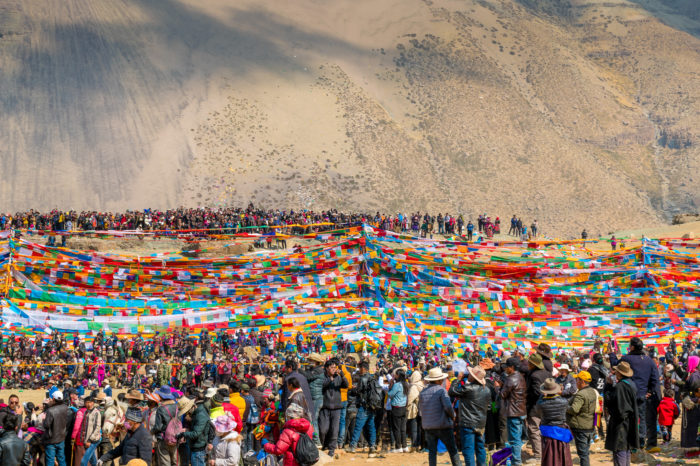
Saga Dawa Kailash Kora
A meaningful Saga Dawa pilgrimage from Lhasa, featuring festival celebrations, the sacred kora around Mount Kailash, and time at Lake Manasarovar amid the vast landscapes of Western Tibet
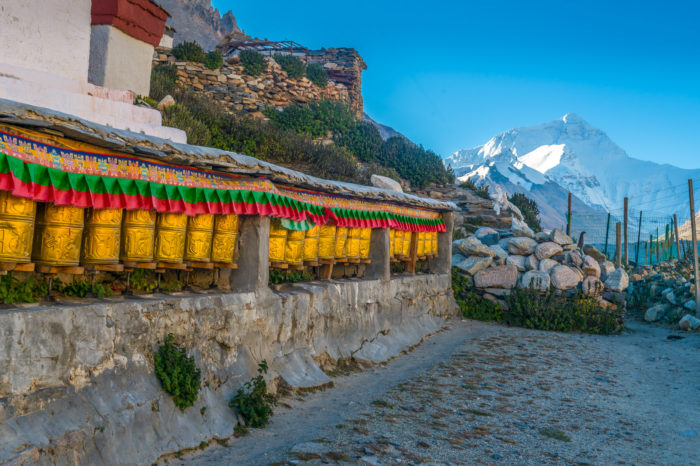
Trans Himalaya Overland Tour
On this tried-and-true Nepal to Tibet trip with the best locations in and around Tibet, experience both modern and traditional life in the Tibetan region. Cross the Nepal-Tibet border to enter Tibet, and visit some …
We are recommended by
We are committed to providing authentic, high quality, environmentally sustainable travel services. Join us and experience once in a lifetime holiday.
Recent Trips
.jpg "amdo monlam festival tour")