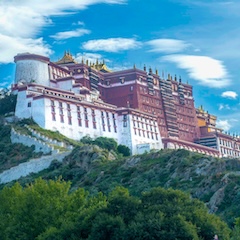
Ganden Monastery
Ganden Monastery: The Mother Monastery of the Gelugpa School
Ganden Monastery holds the distinguished honor of being the first monastery of the Gelugpa school of Tibetan Buddhism and the mother monastery of what would become one of Tibet’s most influential religious traditions. Founded in 1409 by Je Tsongkhapa himself, the great reformer and founder of the Gelugpa order, Ganden represents the spiritual heart of a tradition that would eventually produce the Dalai Lama lineage and dominate Tibetan Buddhism for over 600 years.
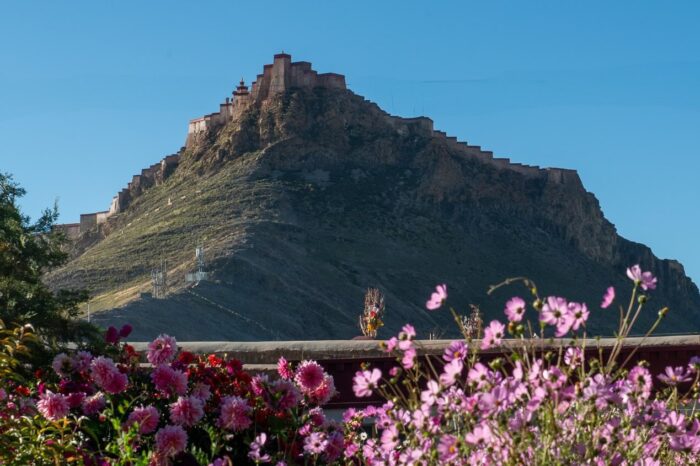
Located approximately 60 kilometers northeast of Lhasa at an altitude of 4,300 meters, Ganden Monastery sits dramatically on the southern slope of Wangbur Mountain in the Dagze region. The monastery’s name, meaning “joyful” in Tibetan, reflects the pure land of Maitreya Buddha, embodying Tsongkhapa’s vision of a perfected Buddhist community dedicated to rigorous study, ethical conduct, and spiritual realization.
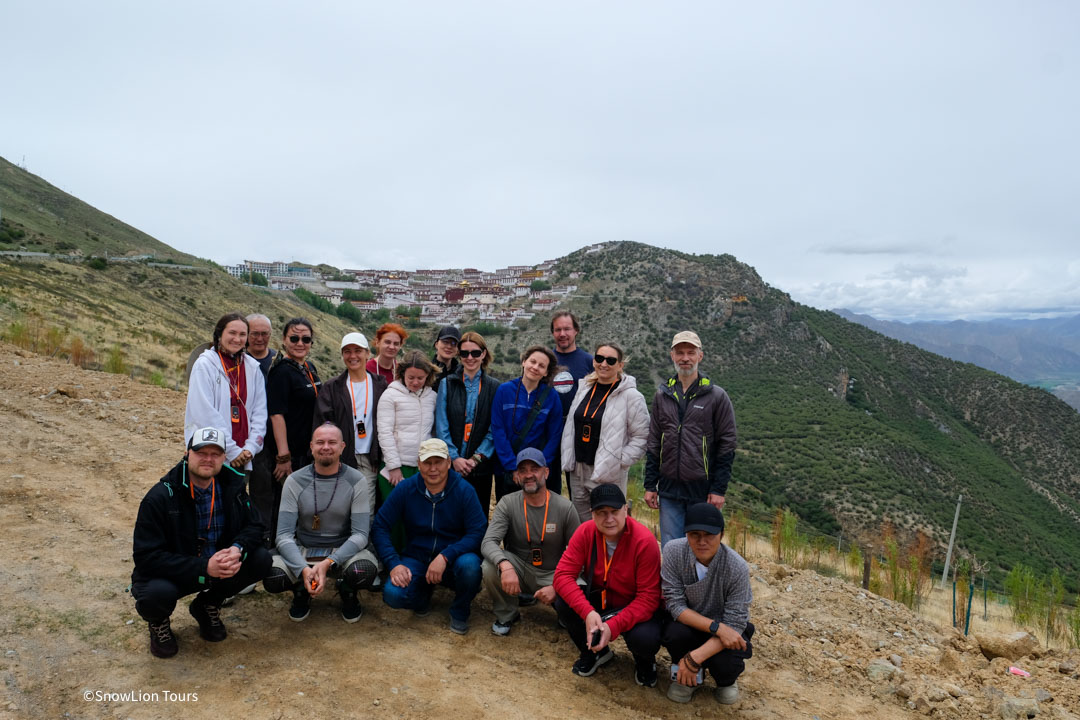
Je Tsongkhapa and the Birth of Gelugpa Tradition
Je Tsongkhapa (1357-1419), born in Amdo and recognized as one of Tibet’s greatest religious masters, established Ganden as the institutional foundation for his reformed Buddhist teachings. His comprehensive approach emphasized strict monastic discipline, rigorous philosophical study, and the gradual path to enlightenment that synthesized the best elements of existing Tibetan Buddhist traditions while addressing their perceived shortcomings.
Tsongkhapa’s teachings, known as the “New Kadam” tradition (later called Gelugpa or “Yellow Hat” school), stressed the importance of combining scholarly study with meditative practice. Ganden became the prototype for this educational approach, establishing traditions of philosophical debate, systematic curriculum, and institutional organization that would be replicated throughout the Tibetan cultural world.
The Sacred Burial Site
Ganden holds profound significance as the site where Je Tsongkhapa passed away in 1419, just ten years after founding the monastery. His preserved remains were kept in a magnificent silver and gold stupa within the monastery until 1959. This sacred tomb became one of the most important pilgrimage destinations in Tibet, drawing devotees from across the Tibetan plateau who believed that circumambulating the stupa and making offerings would bring special blessings and spiritual merit.
The presence of Tsongkhapa’s relics transformed Ganden into more than just a monastery – it became a sacred landscape where the founder’s spiritual presence was believed to remain actively accessible to practitioners and pilgrims.
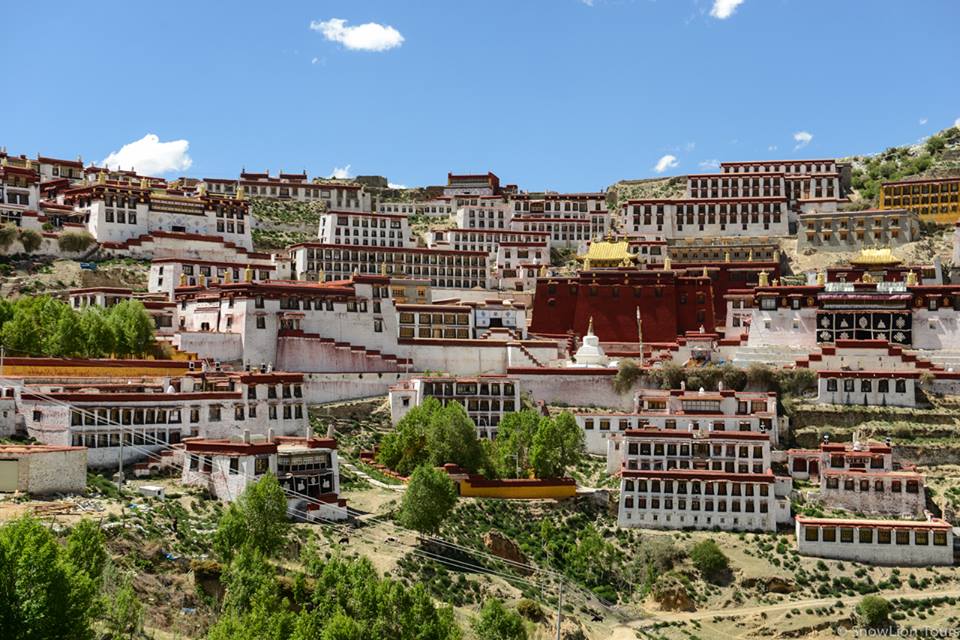
Ganden Monastery
Architectural Complex and Sacred Spaces
Serdung Lhakhang (Golden Tomb Chapel)
The most sacred building within Ganden was the Serdung Lhakhang, housing Tsongkhapa’s golden stupa. This chapel served as the spiritual heart of the monastery, featuring exquisite murals depicting the life of Tsongkhapa, his major disciples, and scenes from Buddhist cosmology. The original stupa, adorned with precious stones and gold, was considered one of the most magnificent religious artifacts in Tibet.
Tsokchen Assembly Hall
The great assembly hall served as the center for communal prayers, teachings, and ceremonies. This massive structure could accommodate thousands of monks during important festivals and contained an impressive collection of Buddhist statues, including large images of the Buddha, Maitreya, and Tsongkhapa. The hall’s walls were adorned with intricate murals depicting the lineage of Gelugpa masters and scenes from Buddhist scriptures.
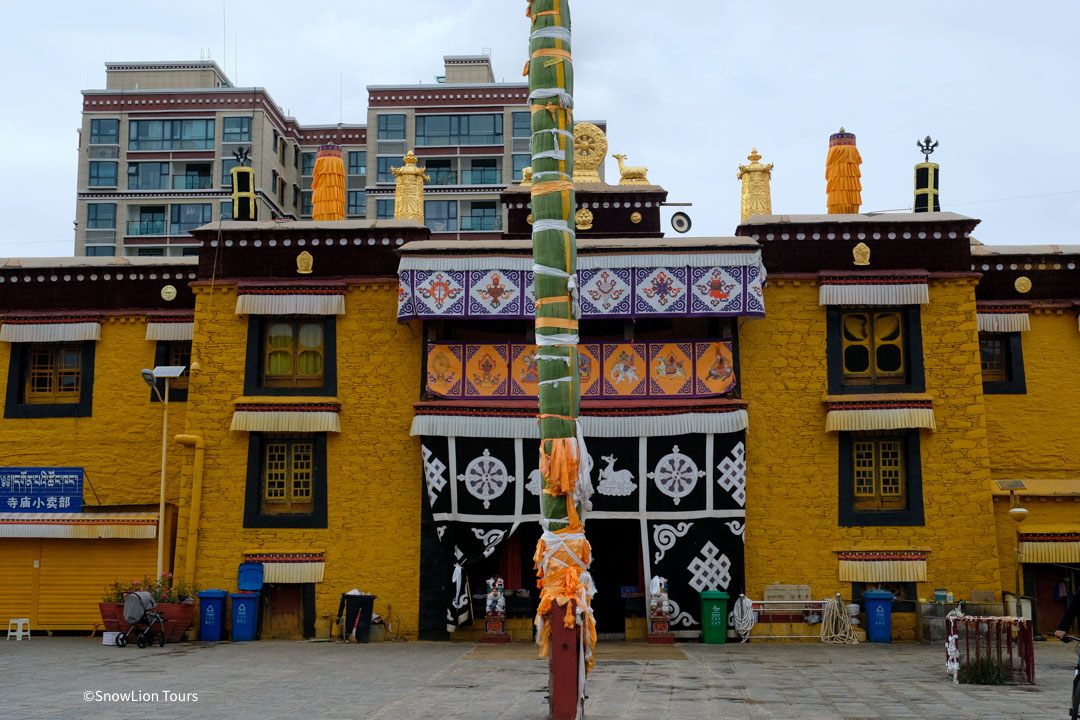
The Two Main Colleges
Ganden was organized around two primary colleges (dratsang), each with its own specialized curriculum and residential facilities:
Jangtse College: Established for monks primarily from northern and eastern Tibet, this college developed a reputation for particularly rigorous philosophical training and produced many of Tibet’s most accomplished scholars and teachers.
Shartse College: Serving monks mainly from central and southern Tibet, Shartse maintained its own distinctive teaching methods while following the same fundamental curriculum of Buddhist philosophy, logic, and debate.
Each college maintained multiple residential houses (khangtsang) where monks lived according to their regional origins, creating communities that preserved local dialects and customs while engaging in shared religious study.
Educational Excellence and Scholarly Tradition
Ganden established the educational model that became standard throughout Gelugpa monasteries. The curriculum focused on five major subjects: Prajnaparamita (Perfection of Wisdom), Madhyamika (Middle Way philosophy), Pramana (Logic and Epistemology), Abhidharma (Buddhist psychology and metaphysics), and Vinaya (Monastic discipline).
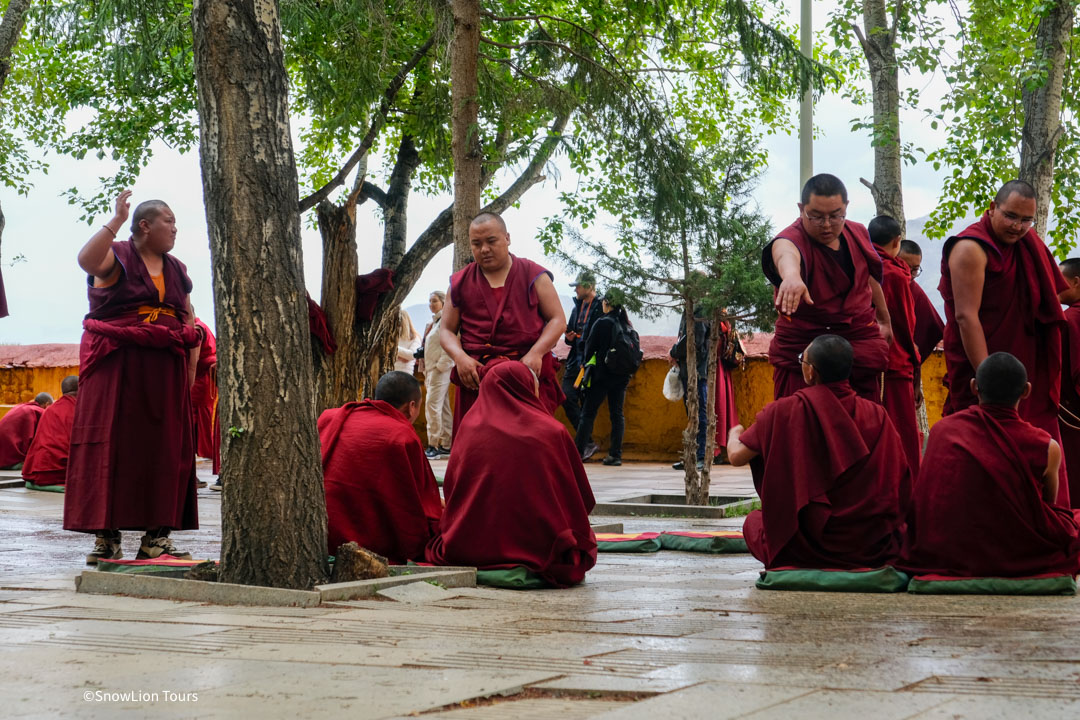
The monastery’s approach emphasized rigorous debate as the primary method for developing understanding. Students progressed through a systematic 20-year program, beginning with basic logic and advancing through increasingly sophisticated philosophical topics. The culminating achievement was the Geshe degree, equivalent to a doctorate in Buddhist philosophy, which qualified recipients to teach and establish their own monasteries.
The Ganden Tripa Tradition
One of Ganden’s most important contributions to Tibetan Buddhism was the establishment of the Ganden Tripa position – the throne holder of Ganden and titular head of the entire Gelugpa school. Unlike hereditary or reincarnate lineages, the Ganden Tripa was selected based purely on scholarly achievement and spiritual accomplishment, representing the meritocratic ideals of the Gelugpa tradition.
The Ganden Tripa served as the highest authority on Gelugpa doctrine and practice, and many throne holders played crucial roles in Tibet’s political and religious development. This position maintained continuity of leadership even when political circumstances affected other religious hierarchies.
Destruction and Remarkable Revival
Like many Tibetan monasteries, Ganden suffered complete destruction during the Cultural Revolution in the 1960s. The monastery’s buildings were demolished, its precious artifacts destroyed or removed, and its community of over 3,000 monks dispersed. The sacred stupa of Tsongkhapa was broken apart, though some relics were reportedly saved by devoted individuals.
The destruction of Ganden represented a particularly devastating blow to Tibetan Buddhism, given its foundational importance to the Gelugpa tradition. However, beginning in the 1980s, a remarkable reconstruction effort began, supported by both official policy changes and the determination of surviving monks and local communities.
Contemporary Ganden
Today’s Ganden Monastery, while much smaller than its historical predecessor, has been substantially rebuilt and houses approximately 400 monks. The reconstruction has focused on restoring the main assembly halls, the two colleges, and key chapels, though the complex remains smaller than the original monastery that once sprawled across multiple ridges.
A new stupa containing recovered relics of Tsongkhapa has been installed in the rebuilt Serdung Lhakhang, once again making Ganden a major pilgrimage destination. The monastery has resumed its educational functions, training monks in traditional philosophical studies and maintaining the debate traditions that made Ganden famous.
The Sacred Circumambulation (Lingkor)
One of the most rewarding aspects of visiting Ganden is participating in the traditional circumambulation (lingkor) around the monastery. This sacred walk takes approximately 45 minutes to complete and offers spectacular views of the Kyichu Valley and surrounding mountains. The path is marked with prayer flags, mani stones, and small shrines where pilgrims make offerings and prayers.
The lingkor provides opportunities to observe local pilgrims performing prostrations, spinning prayer wheels, and chanting mantras as they complete their devotional circuits. Many pilgrims travel great distances to perform this circumambulation, particularly during important festivals and auspicious days of the Tibetan calendar.
Festival Celebrations and Spiritual Life
Ganden becomes particularly vibrant during major Buddhist festivals, especially the anniversary of Tsongkhapa’s death (25th day of the 10th Tibetan month), known as Ganden Ngamcho. During this festival, thousands of butter lamps are lit throughout the monastery, creating a spectacular display visible from great distances. Pilgrims arrive from across Tibet to participate in special prayers and ceremonies honoring the founder of their tradition.
The Ganden-Samye Trek
For adventurous visitors, Ganden serves as the starting point for one of Tibet’s most popular trekking routes – the four-day Ganden to Samye trek. This challenging high-altitude hike crosses several passes over 5,000 meters and offers stunning views of pristine Tibetan landscape while connecting two of Tibet’s most important monasteries. The trek provides an opportunity to experience the rugged beauty of the Tibetan plateau while following ancient pilgrimage routes.
Visiting Ganden Monastery
Location and Access: Ganden is located about 60km northeast of Lhasa, requiring approximately 1.5 hours by road. The journey itself offers beautiful views of the Tibetan countryside and provides a sense of pilgrimage as the monastery comes into view on the mountainside.
Best Times to Visit: Early morning (7:00-9:00 AM) offers the most peaceful atmosphere and best photography light. The monastery is particularly special during full moon days and major festivals when additional ceremonies take place.
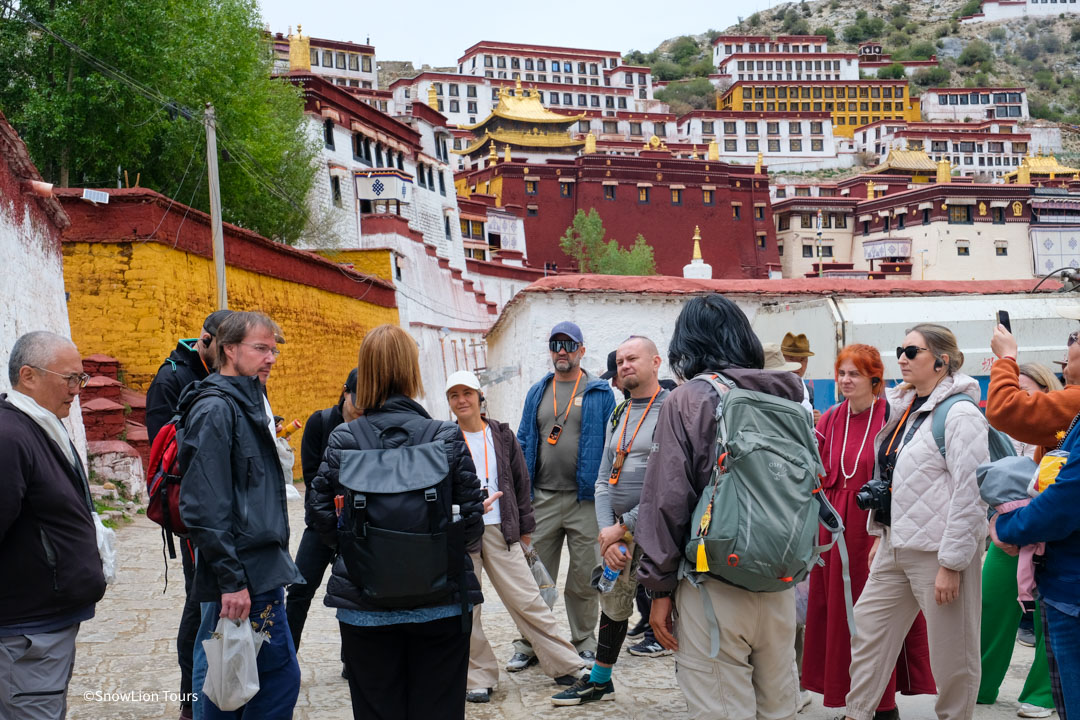
What to Expect: Visitors can explore the rebuilt assembly halls, chapels, and colleges, observe monks engaged in traditional debates (typically in the afternoon), and participate in the circumambulation path. The altitude requires acclimatization, and the mountain location can be quite cold, especially in winter.
Cultural Sensitivity: As an active monastery and pilgrimage site, visitors should dress modestly, maintain respectful silence during prayers, and ask permission before photographing monks or religious ceremonies.
Spiritual Significance for Modern Practitioners
Ganden continues to serve as a powerful symbol of the Gelugpa tradition’s resilience and the enduring relevance of Tsongkhapa’s teachings. For contemporary practitioners, both Tibetan and international, Ganden represents a direct connection to the source of their tradition and an opportunity to experience the living continuity of Tibetan Buddhist culture.
The monastery’s emphasis on combining intellectual rigor with spiritual practice continues to attract students from around the world, making it not only a historical site but a continuing center of Buddhist learning and practice. The philosophical debates, traditional ceremonies, and daily rhythms of monastic life provide visitors with authentic insights into Tibetan Buddhism as it continues to evolve while maintaining its essential character.
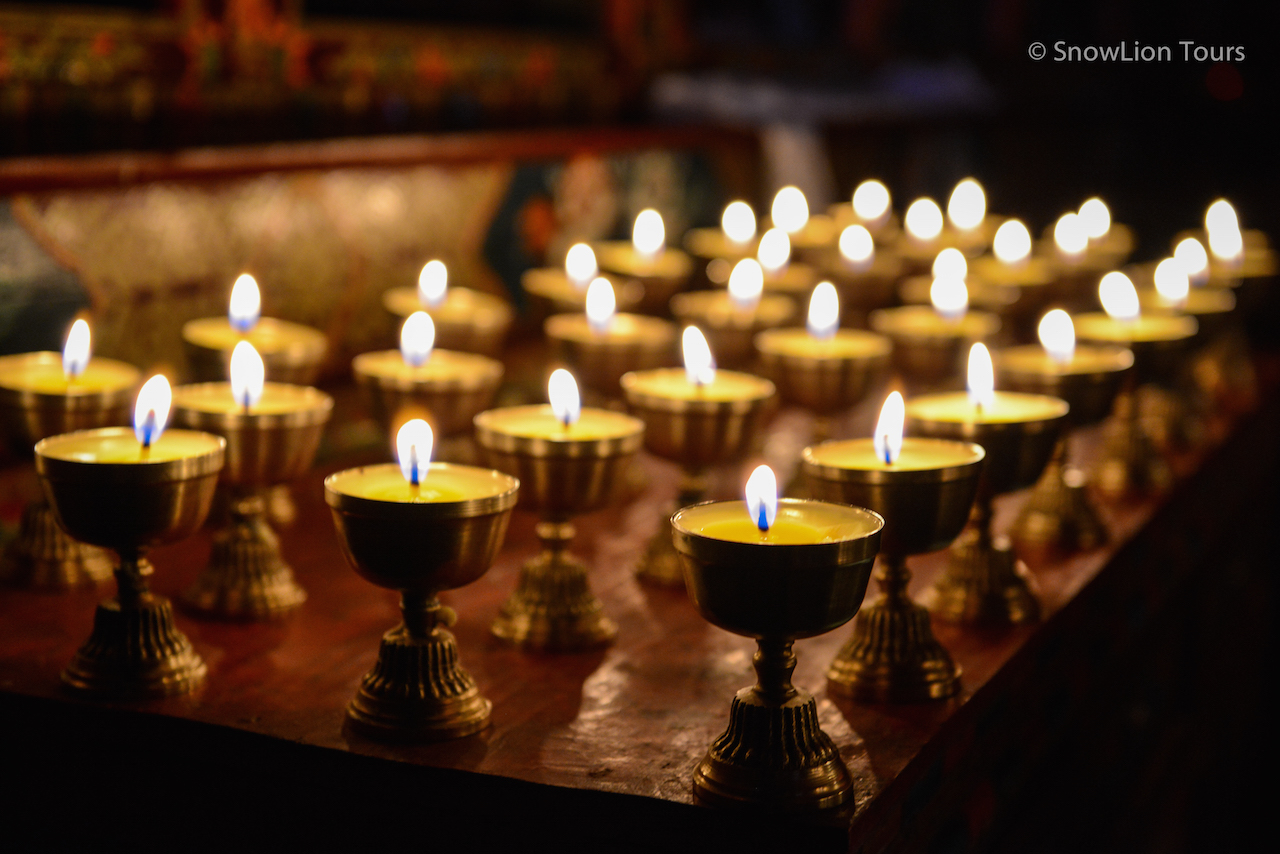
Butter lamps
Legacy and Continuing Influence
Ganden Monastery’s influence extends far beyond its physical location. As the mother monastery of the Gelugpa school, it established institutional models, educational curricula, and spiritual practices that were replicated in hundreds of monasteries across Tibet, Mongolia, and beyond. The monastery’s approach to combining scholarly study with meditative practice continues to shape Tibetan Buddhist education worldwide.
Today, Ganden serves as a bridge between Tibet’s remarkable religious heritage and its contemporary realities, demonstrating how traditional spiritual communities can maintain their essential character while adapting to changing circumstances. For visitors, whether pilgrims seeking blessings or travelers interested in Tibetan culture, Ganden offers a profound encounter with one of Buddhism’s great institutional achievements and the enduring power of spiritual tradition to inspire and transform human consciousness.
The monastery stands as a testament to the vision of Je Tsongkhapa and the countless generations of monks, scholars, and practitioners who have maintained his teachings across six centuries of history. In its rebuilt halls and continuing educational mission, Ganden embodies the fundamental Buddhist teaching that wisdom and compassion, properly cultivated, can create institutions and communities that benefit all sentient beings across time and space.
Recent Posts
- Shoton Festival Begins in Lhasa!
 August 23, 2025
 - Tour Price in Tibet
 August 23, 2025
 - Qinghai Shaman Festival in Rebkong Concludes Successfully
 August 21, 2025
Related Tours
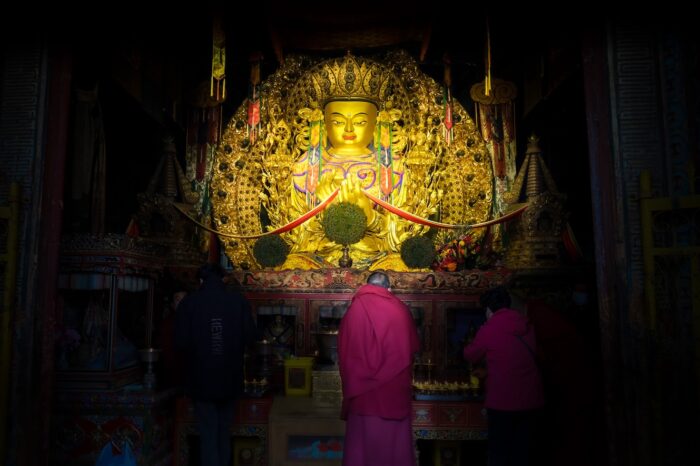
Spiritual Journey in Central Tibet
The year 2026 is the Year of the Horse according to the Tibetan lunar calendar. This is the year during the 12-yearlong astrological cycle that is understood to magnify the beneficial effects of pilgrimage manifold. …
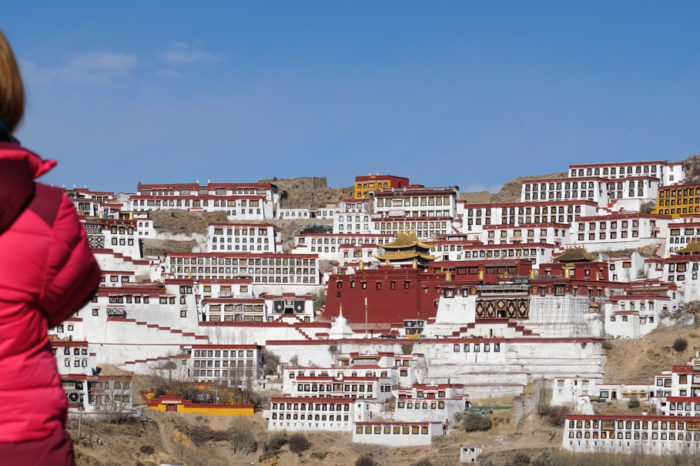
Ganden to Samye Trek
A classic trek from Ganden Monastery to Samye, crossing high passes, valleys, villages, and sacred Buddhist sites in central Tibet.
Heritage of the Holy City
In the sacred city of Lhasa, visit the grand Potala Palace, the holy Jokhang Temple, and the colorful Barkhor Square. Watch monks debate at Sera Monastery and join pilgrims in exploring the temples and prayer …
We are recommended by
We are committed to providing authentic, high quality, environmentally sustainable travel services. Join us and experience once in a lifetime holiday.
Recent Trips
.jpg "amdo monlam festival tour")