Langmusi
Taktsang Lamo in Amdo
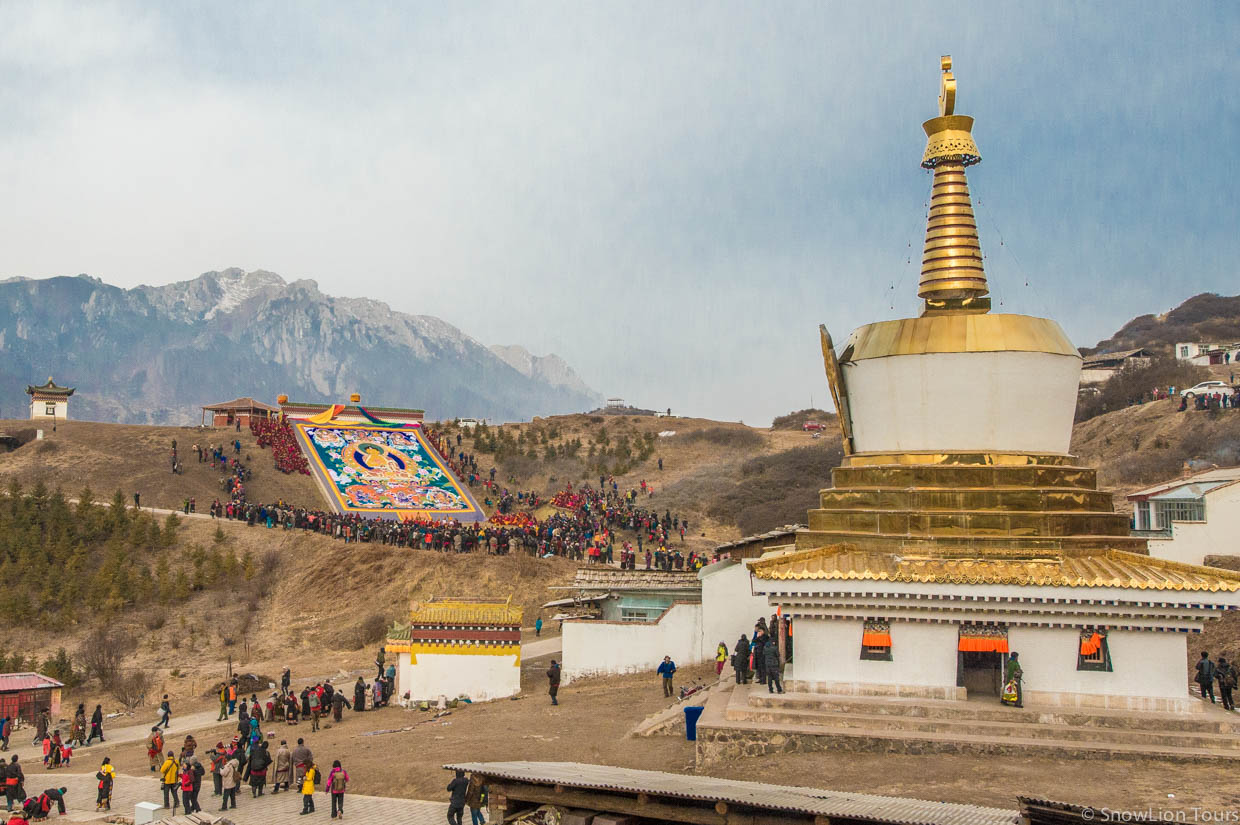
Langmusi, known in Tibetan as Taktsang Lhamo (སྟག་ཚང་ལྷ་མོ), is a small alpine village located at the border of Gansu and Sichuan provinces in the Amdo region of Tibet. The name “Taktsang Lhamo” means “den of tigers” in Tibetan, with “Taktsang” meaning “Tiger Cave” and “Lhamo” meaning “Fairy”. The town sits at an elevation of 3,325 meters (10,909 ft) in a beautiful peaceful valley surrounded by alpine forests and mountains.
Administratively, the town is part of Luqu County in Gannan Tibetan Autonomous Prefecture in Gansu, although a small portion of the town in the south is actually located in Zoigê County, Ngawa Tibetan and Qiang Autonomous Prefecture, Sichuan. A small stream flows through Langmusi Town called the White Dragon River (Bailong River), which, although less than 2 meters wide, divides the town between the two provinces.
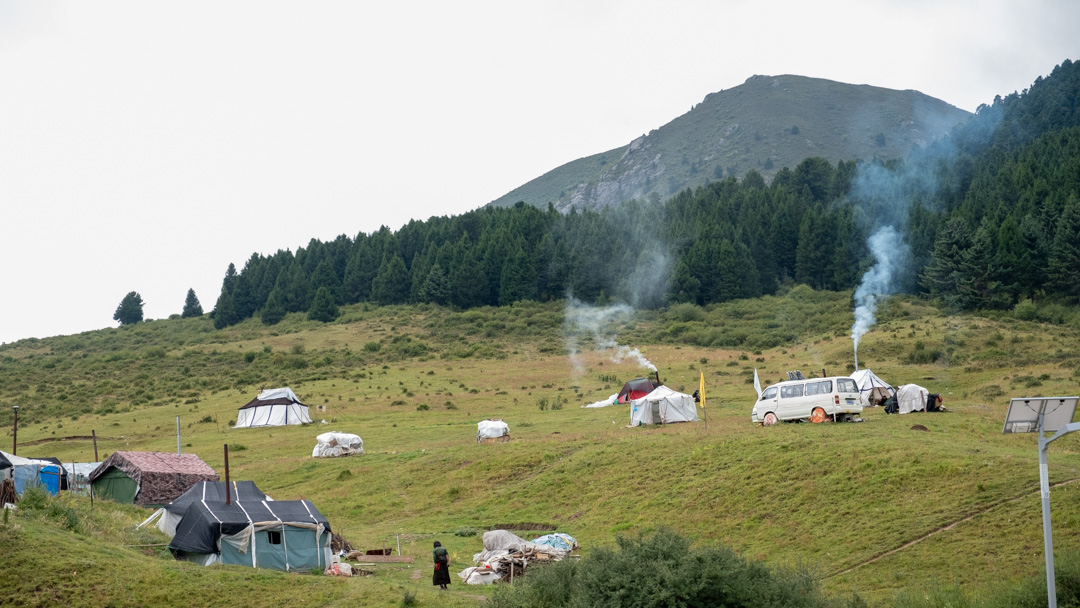
The town has become a popular tourist destination in Amdo, offering great opportunities for horseback trekking and hiking. There are also Amdo Tibetan nomads scattered on both sides of the valley where visitors can experience nomadic lifestyle. The town has a population of around 3,500 to 4,500, with more than 1,100 people belonging to the two monasteries found in the village.
Langmusi
Cultural Significance and Legend
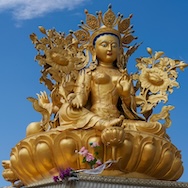
Legend has it that in ancient times there were many tigers along the Bailong River (White Dragon River) that hurt and killed many local people. Taktsang Lhamo, a popular female guardian of Tibetan Buddhism, couldn’t bear to see the suffering of the people. She vanquished the tigers and was incarnated as a stalactite statue to protect the locals. As memory and gratitude, local people named the village Taktsang Lhamo.
The location is considered sacred, as a deity is believed to reside in the nearby mountain and Padmasambhava is said to have eliminated demons from the space.
The Two Monasteries
The two major tourist attractions in Langmusi are the two monasteries located on both sides of the White Dragon River, each in a different province.
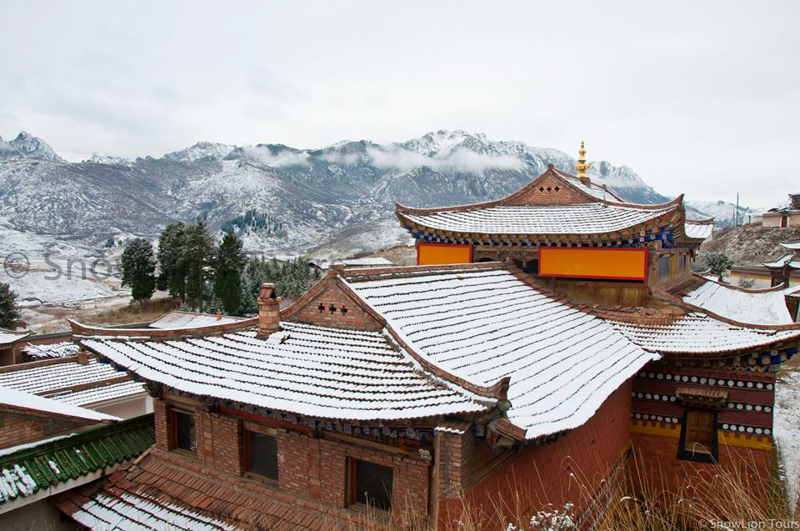
Langmusi Monastery in the Snow in Amdo Tibet
Kirti Monastery (Taktsang Lhamo Kirti Gompa)
Kirti Gompa was founded in 1472 by Rongpa Chenakpa, a disciple of Tsongkhapa. Located on the Sichuan side of the village, Kirti Monastery is home to around 750 monks. The original article incorrectly states it was “established near the border with Gansu Province in 1693,” but this refers to the main Kirti Monastery in Ngawa, not the Taktsang Lhamo branch.
Tāla Ngawang Pelzang built a hermitage at Taktsang Lhamo in 1713 that he later gave to the Fifth Kīrti. After this, it developed into a large monastery and one of the seats of the Kīrti incarnations. Kirti Monastery is the older of the two monasteries in Langmusi, dating back from around 1400 AD, established at the entrance of the Namo Gorge.
Behind the monastery is the Namo Gorge with several old meditation caves. In Tibetan, “Taktsang” means “Tiger Cave” and a short hike behind Kirti Monastery will bring you to the caves for which the town is named. The unique thing about this monastery is the relics of a Kirti Rinpoche (1681-1775), whose body still stays there and can be seen by tourists.
The first Kirti Monastery founded by Kirti Rinpoche was actually in Gyelrang. These days the two main Kirti Monasteries are in Taktsang Lhamo and Ngawa prefecture in Sichuan. Like most monasteries, Kirti monastery was destroyed during the Cultural Revolution and has now been rebuilt. There are numerous (approximately 30–40) smaller monasteries affiliated with the Kirti Monasteries spread throughout the region.
Sertri Monastery (Taktsang Lhamo Sertri Gompa)
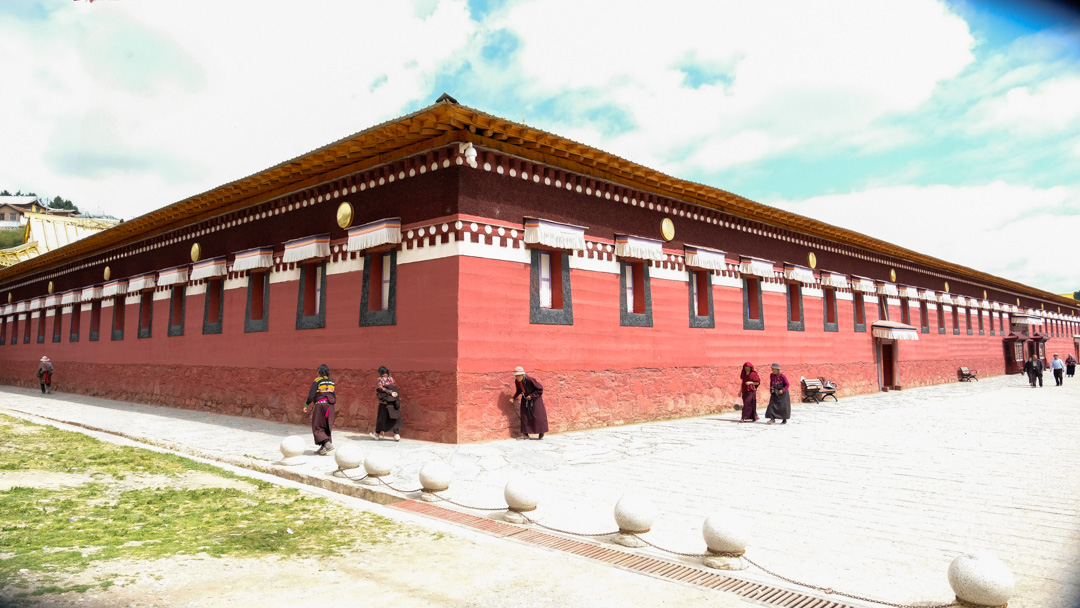
Taktsang Lhamo Sertri Monastery is located on the east side of the White Dragon River and belongs to the Gansu side, housing around 350 monks. Founded by the 53rd Ganden Setri Gyaltsen Sengge of Ganden Monastery in 1748, over the decades from the time the monastery was built in the 18th century, five different colleges were established within the monastery, focusing on:
- Debate College
- Tantra College
- Kalachakra Tantra College (specific study)
- Tibetan Medicine College
- Sutra Woodblock Printing College
During the Cultural Revolution, like most monasteries, Sertri Monastery suffered major damage and most of its original structure, including the prayer hall and stupas, were destroyed. The monastery was later reconstructed in 1980.
Sertri Monastery is the higher of the two monasteries and sits in a less impressive setting than nearby Kirti Monastery. There is a pilgrimage kora around Sertri that is best to do in the morning as there are normally many Tibetan pilgrims also doing the kora.
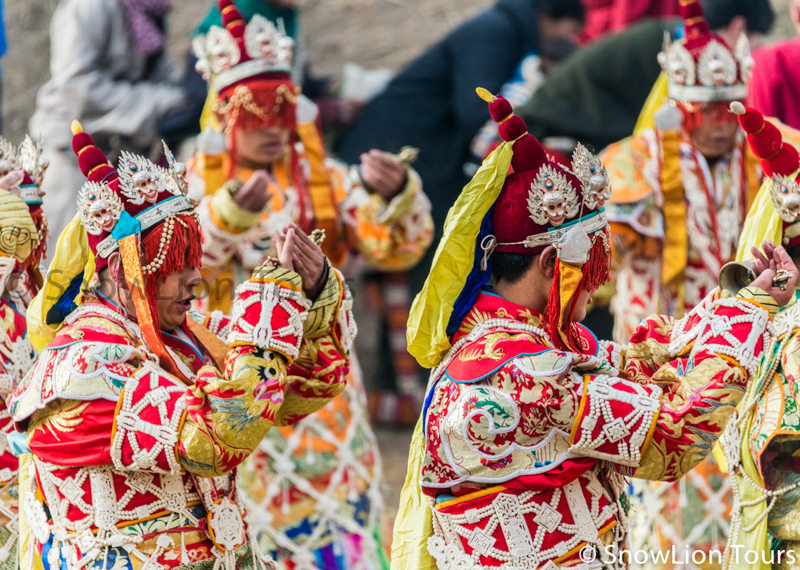
Langmusi Monastery monks
Festivals and Ceremonies
There are rituals and festivals throughout the year in these two monasteries, but the most important one is the Monlam Festival in the first month of the Lunar Calendar. During Tibetan New Year (Losar) and during other important festivals throughout the year, many pilgrims can be found going to Taktsang Lhamo. These pilgrims often prostrate to the ground every 3 steps all the way to the monasteries. The journey for them can take several weeks or even months.
Tourism and Accommodation
The town is relatively small, but due to the recent boost of tourism, Langmusi has developed nice hotels and restaurants. The village has developed a budget-friendly backpacker vibe, yet even in high season, tourists are relatively few, and this is very much an active religious community with many monks and initiates to be seen walking the roads.
The main reason people go to Taktsang Lhamo is for the hiking and horse trekking. The Langmusi Tibetan Horse Trekking company arranges quality horse treks in the area for around Y150 per day, per person. They arrange everything from 1 to 5 day treks to the surrounding mountains and nomadic grasslands of the region.
Dining and Entertainment
- Snowy Mountain Cafe: Serves several good western dishes including great pizza
- Amdo Cafe: Offers real coffee, cakes, sandwiches, smoothies, and sells authentic Tibetan handicrafts made locally by Tibetan nomads
- Dong Zan Tibetan Culture Restaurant: Great Tibetan-owned restaurant serving Tibetan and Chinese food with large screen TVs and free wireless internet
Cultural Diversity
Langmusi’s population is a mix of Tibetans and Hui Muslim ethnic minority. While the Tibetans heavily outnumber the Hui, the two groups, who have strong prejudices against each other, live in a symbiotic state. Although they segregate themselves to different areas of the small town, each minority has shops and restaurants next to each other and they seem to begrudgingly get along.
Sky Burial Site
If you walk up past the left side of Sertri Monastery, you’ll eventually come to a clearing near a hilltop where there is a sky burial site – the only one in the area that is allowed to visit. The clearing has two boxes of axes and knives, prayer flags, and a pile of ashes. The red rock cliff is a landmark that leads the trail to this site.
Natural Attractions
Langmusi has an iconic focal point – the Red Stone Cliff, referred to by the Hui and Han ethnic groups as “Hongshan”. This is the place where the sun rises every day in Langmusi, known in Tibetan as “Qiongbo Ma”, meaning “offering mountain”, named for its shape resembling a tray for offerings.
Just 15 km from Langmusi lies the vast Zoige Grassland (若尔盖草原), also known as Zoige Marsh or Songpan Grassland – the largest marsh area on Earth, offering endless flat meadows and spectacular scenery.
Transportation Options:
- From Lanzhou: Langmusi is located 390km south of Lanzhou. Direct travel takes about 6 hours
- From Xining: The distance from Xining to Langmusi is about 410km and takes about 7 hours. Xining has been the gateway to Amdo region of Tibet
- From Chengdu: Langmusi is located 600km north of Chengdu. This is quite far compared to the two options above but can be a nice stop if you travel from Chengdu to Xining or Lanzhou
Langmusi is accessible via Highway 213 which passes 3 km to the north of the town. The nearest airport is Gannan Xiahe Airport, 125 km north.
Entrance Fees:
- Kirti Monastery: 30 CNY entrance fee (required even for hiking behind the monastery)
- Sertri Monastery: 30 RMB per person
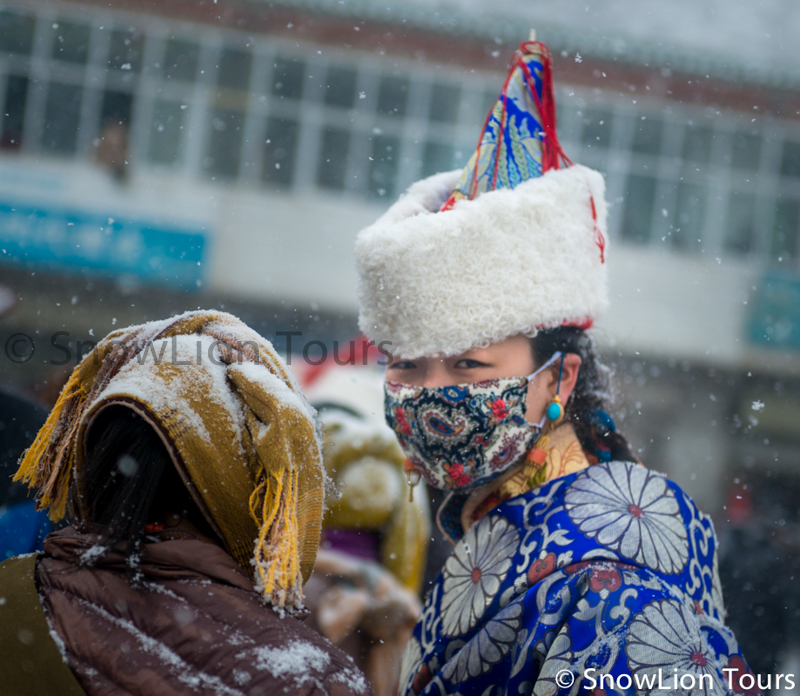
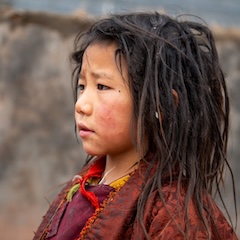
A girl from Labrang dresses traditional Tibetan robe
Historical and Political Significance
Taktsang Lhamo/Kirti Monastery was a monastic polity exercising joint political and religious rule of a wide area before 1949, based mainly in Dzörgé but extending into Ngawa and Markham counties. The relationship between Kirti Monastery and Labrang Monastery has not been a good one, especially since the time of the eighth Kirti Rinpoché (1849-1905).
Recent Posts
- Mount Kailash Kora updates
 September 26, 2026
 - Tibet Travel Permits
 September 24, 2026
 - Update on China / Tibet–Nepal Land Border Crossings
 September 24, 2026
Related Tours
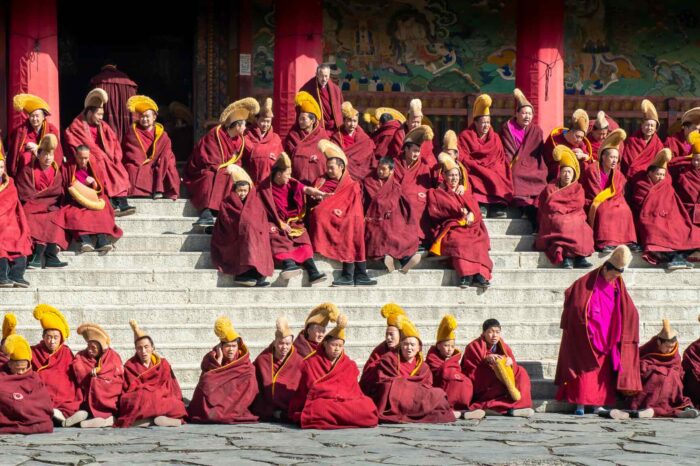
Himalayan Nomad Route
Travel from the wild grasslands of Amdo to the beautiful valleys of Gyarong, Tibet. Along the way, take in stunning scenery characteristic of the Tibetan plateau: snaking rivers, rolling hills, craggy snow mountains, and picturesque …
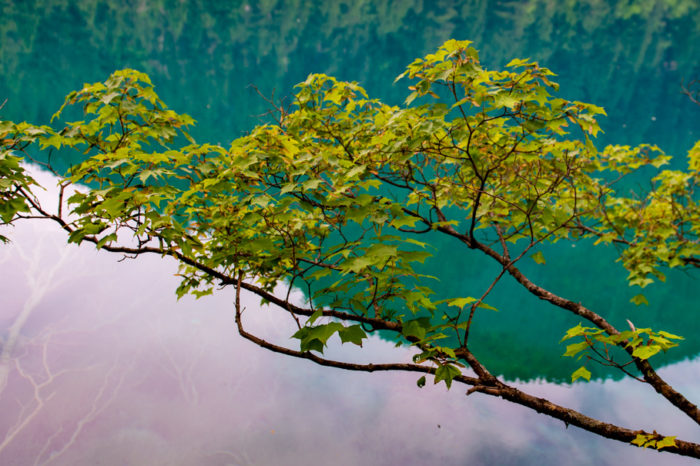
The Old Trade Route
Travel the ancient trade route from Amdo to Kham. Along the way, take in stunning scenery characteristic of the Tibetan plateau: snaking rivers, rolling hills, craggy snow mountains, waterfalls, and picturesque valleys. Visit an artist …
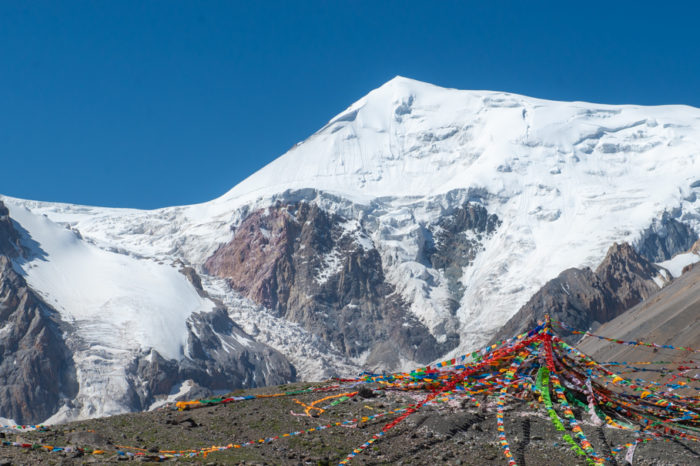
Classic Amdo
Explore the cultural heart of Amdo, visiting turquoise Qinghai Lake, ancient monasteries, rolling grasslands, and nomadic communities, where authentic Tibetan traditions, breathtaking landscapes, and peaceful countryside reveal a lesser-known side of Tibet.
We are recommended by
We are committed to providing authentic, high quality, environmentally sustainable travel services. Join us and experience once in a lifetime holiday.
Recent Trips
.jpg "amdo monlam festival tour")