The city of Lhasa straddles the banks of the Kyichu River, where the valley opens into one of its broadest expanses. Known as “The Place of the Gods”, Lhasa has long been the spiritual and political heart of Tibet. Here, sacred monasteries and bustling modern streets coexist in a delicate balance, offering visitors a living portrait of a society rooted in tradition yet adapting to change.
Situated in the central U-Tsang region at an altitude of 3,650 m (11,975 ft), Lhasa serves as a gateway to some of Tibet’s most iconic landmarks: the Potala Palace, Mount Everest, sacred lakes like Yamdrok Tso and Namtso, mineral-rich hot springs, and many of the country’s most revered monasteries. Within the city, modern Tibetan life unfolds in markets, teahouses, and lively squares, while just outside, farmers tend their barley fields and nomads graze their herds as they have for centuries.
Although most travelers visit in the summer months when the weather is warmest, winter offers a special charm. During the colder season, pilgrims from every corner of Tibet make their way to Lhasa to circumambulate its holy sites, creating an atmosphere of deep devotion. The skies are often crystal clear, the city is less crowded with tourists, and the winter sun provides surprisingly comfortable warmth during the day.
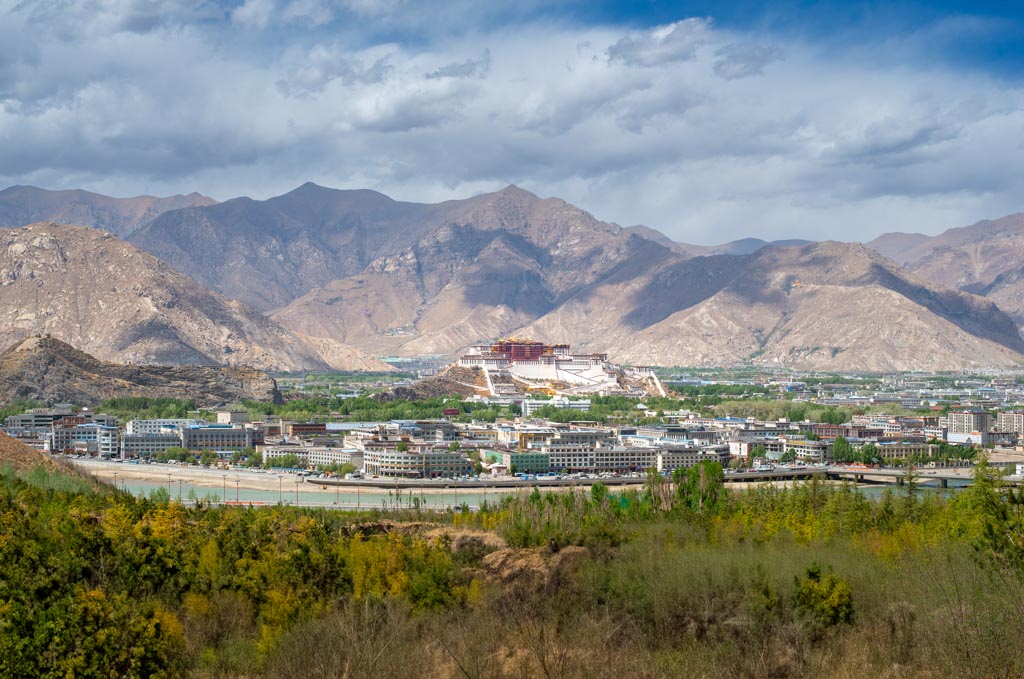
Lhasa is an ideal base for travelers who wish to:
-
Tour historic Tibetan temples, monasteries, and palaces
-
Experience the journey to Mount Everest
-
Trek in surrounding valleys and mountains
-
Spend a night with Tibetan nomads
-
Enjoy hot springs and wellness retreats
-
Witness both traditional and modern Tibetan lifestyles
Highlights of Lhasa and Surroundings
Potala Palace
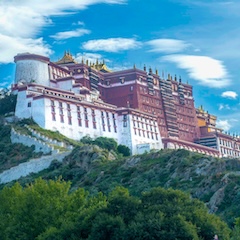
Dominating the city skyline, the Potala Palace is the most famous architectural masterpiece in Tibet, named after Mount Potalaka, the mythical abode of Avalokiteshvara, the Bodhisattva of Compassion. Construction began in the 7th century under King Songtsen Gampo, but the palace took its present form during the 17th century under the Fifth Dalai Lama.
Rising 13 stories high from Mount Marpori (Red Hill), the palace is divided into two main sections:
-
The White Palace – the former seat of the Tibetan government and the winter residence of the Dalai Lama.
-
The Red Palace – home to sacred chapels, murals, and the golden reliquary stupas of eight Dalai Lamas.
With over 1,000 rooms, the Potala houses countless treasures—manuscripts, sculptures, murals, and religious relics. It remains a powerful symbol of Tibet’s spiritual heritage and its cultural resilience.
Jokhang Temple
Located in the heart of the Barkhor Square, the Jokhang Temple is the holiest shrine in Tibet and a UNESCO World Heritage Site. Built in the 7th century, it enshrines the revered Jowo Shakyamuni statue, said to be the most sacred image of the Buddha in Tibet. Pilgrims can be seen prostrating before its gates and walking clockwise around the Barkhor Circuit, spinning prayer wheels and chanting mantras.
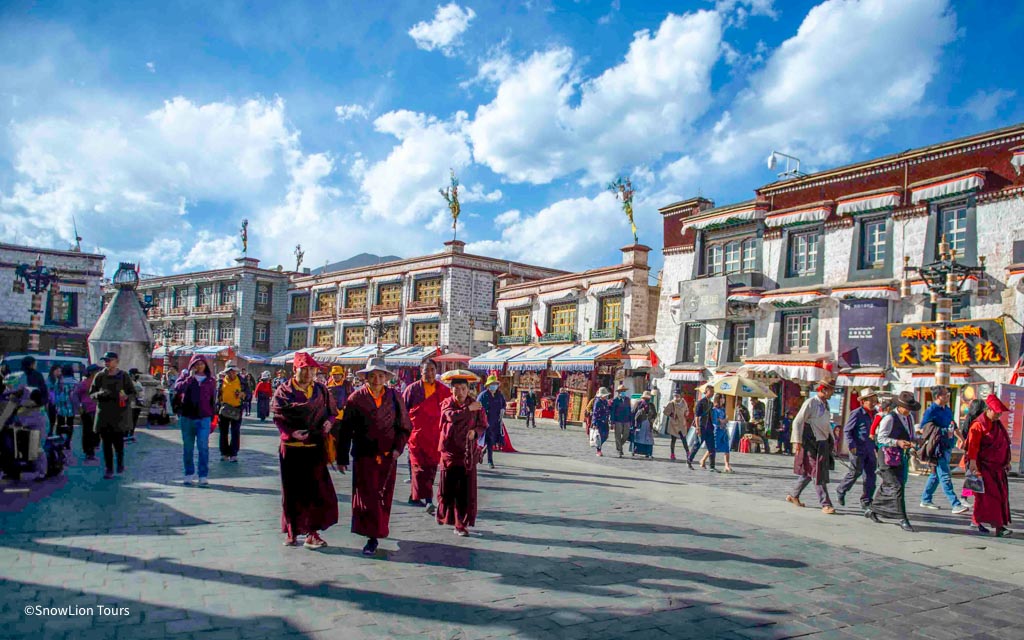
Walking around Jokhang Temple in Lhasa, Tibet
Barkhor Street
Encircling the Jokhang Temple, Barkhor Street is both a spiritual and commercial hub. It serves as a pilgrimage kora (circumambulation route) and a marketplace where Tibetan artisans sell traditional goods such as prayer beads, thangka paintings, butter lamps, and yak wool garments.
Norbulingka – The Summer Palace
Meaning “Jewel Park,” Norbulingka was the summer residence of the Dalai Lamas from the 18th century onward. Its shaded gardens, pavilions, and palaces offer a peaceful retreat from the city. In summer, the park comes alive with picnics, performances, and traditional festivals.
Drepung Monastery
Once the largest monastery in the world, Drepung was home to over 10,000 monks at its peak. Founded in 1416, it is a key center of the Gelug school of Tibetan Buddhism. The monastery’s sprawling white buildings cling to the hillside west of Lhasa, offering panoramic views over the valley.
Sera Monastery
Famous for its lively debating courtyards, Sera Monastery is an unmissable stop for visitors. Here, monks engage in dynamic philosophical debates—complete with hand claps and emphatic gestures—keeping the Tibetan Buddhist scholastic tradition alive.
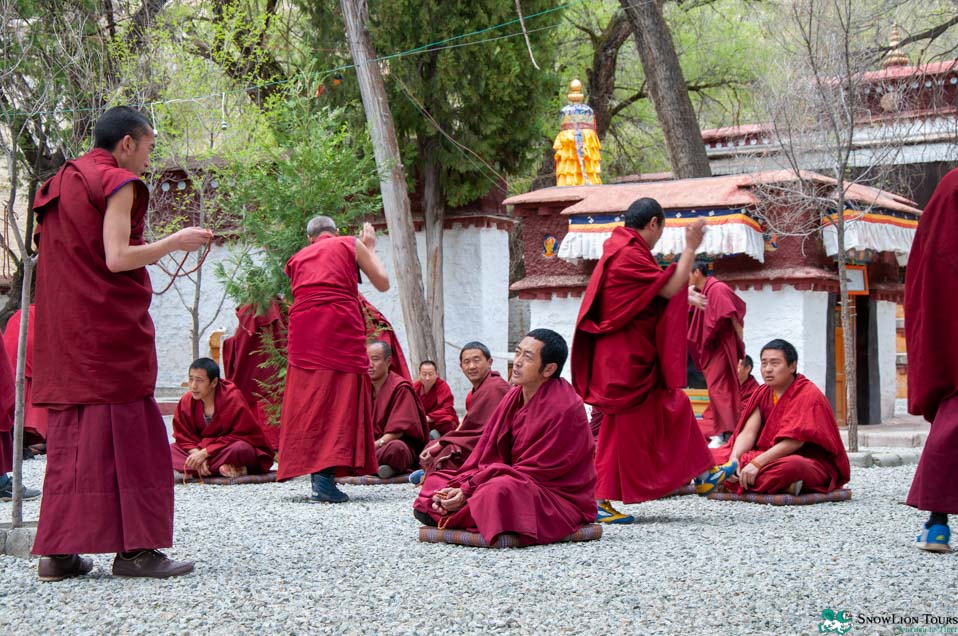
Sera Monastery debate Courtyard
Drak Yerpa Hermitage
Just outside the city lies Drak Yerpa, a cluster of meditation caves set among dramatic cliffs. Tibetan kings, scholars, and yogis have meditated here for over a thousand years. The site offers not only profound spiritual significance but also breathtaking views of the surrounding mountains.
Hot Springs and Nearby Villages
The area around Lhasa is dotted with medicinal hot springs, such as Yangpachen, where visitors can soak while enjoying views of snow-capped peaks. Nearby villages provide opportunities to experience rural Tibetan life, try local barley beer (chang), and join nomadic families for tea in a yak-hair tent.
Travel Tips for Lhasa
-
Altitude: At 3,650 m, acclimatization is essential—rest for the first couple of days.
-
Best Seasons: May to October for warm weather; November to March for fewer tourists and a rich pilgrim atmosphere.
-
Cultural Etiquette: Always walk clockwise around sacred sites; avoid touching religious objects unless invited.
-
Photography: Some temples charge a fee for photography; always ask permission before photographing monks or locals.


.jpg "amdo monlam festival tour")