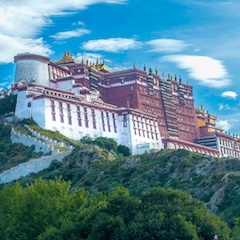
Dentig Gompa
Dentig Gompa
Dentig Monastery is located 55 kilometers east of Hualong County and 160 kilometers east of Xining in Qinghai Province, within the traditional Amdo region of Tibet. The monastery sits dramatically in the red clay mountains that characterize this region, surrounded by the rugged landscape of deep valleys and towering cliffs that define the geography of eastern Amdo.
This remote location places Dentig among the 18 sacred power places of the Tibetan Plateau, recognized for its extraordinary spiritual significance and the natural power believed to reside in its dramatic mountain setting. The monastery’s position among red clay formations creates a striking visual contrast while providing the isolation necessary for intensive spiritual practice.
Dentig is a Geluk monastery in Amdo with profound historical significance. Originally founded in the tenth century, it was converted to the Geluk tradition in the early seventeenth century. Revered as a foremost power-place associated with Buddha-mind throughout Kham and Amdo, Dentig holds a pivotal role in the second propagation of Buddhism in Tibet.
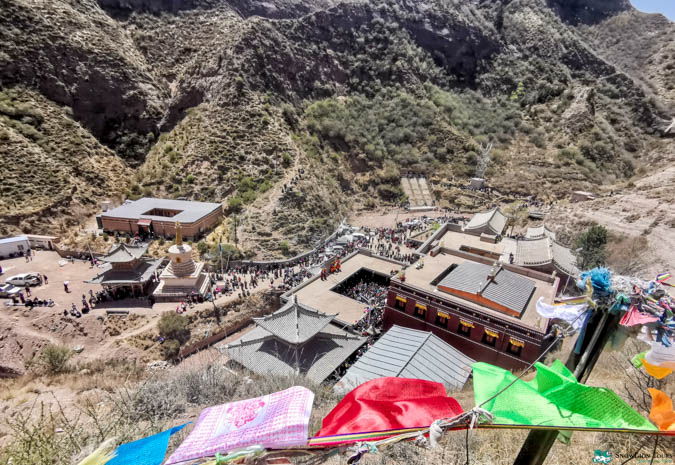
The overview of Dentig Gompa Monastery
It was at Dentig that three Tibetan hermits – Mar Shakyamuni, Tsang Rabsel, and Yo Gejung – accepted Gongpa Rabsel as their student, who would become one of the most important figures in Buddhism’s revival. According to legend, the ten men of Utsang who were destined to bring Buddhism back to central Tibet were ordained here by Gongpa Rabsel. He later ordained the famous “ten monks from Ü and Tsang,” including Lume, thus continuing the traditional monastic lineage.
Legend tells of three monks from Pel Chowori meditation center who fled with donkey-loads of Vinaya and Abhidharma texts, traveling first to Ngari, then Mongolia, and finally settling at Achung Namdzong monastery near Dentig in Amdo, where they found active Buddhist centers. Many other monks from Tibet also sought refuge in Amdo when their dharma centers were closed, bringing precious scriptures with them.
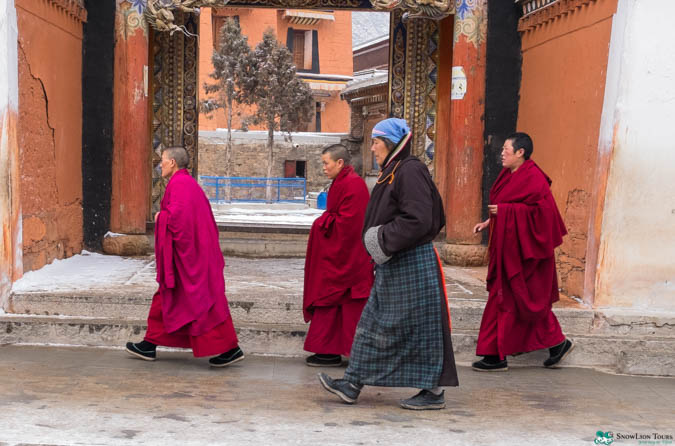
Pilgrims in Dentig Gompa on a annually festival
Lachen Gongpa Rabsel According to hagiographies, Lachen Gongpa Rabsel spent his final decades in a cave called Martsang Drak, named after the activities of two of his preceptors there. He passed away in a wood-pig year, likely 915 CE. His entire body was placed in a clay reliquary within the cave, but when the cave later collapsed, his intact body was miraculously recovered. Devotees built a small monastery around his preserved remains, which became the main object of veneration. Subsequent legends tell of the body speaking and appearing in visions to the faithful.
Nearby Sites Further east from Dentig lies the Yangtig hermitage site, precariously located in clifftops. Due to extremely narrow and dangerous paths along steep cliffs, visits to this site are not recommended for safety reasons.
Visiting Information Getting There: No direct bus service exists from Xining. Take a bus from Xining to Hualong town, then catch a local minivan to Korpa village. From there, either hire a vehicle or hike through the red mountains to reach Dentig.
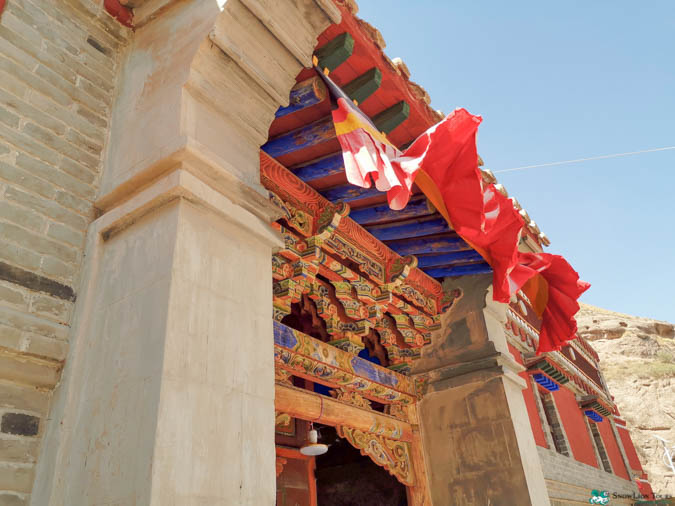
The gate of main temple in Dentig Monastery.
Entrance: No entrance fee is charged. However, following several thefts in recent years, temple halls are kept locked when no pilgrims are present. Visitors must find the monk manager to open the doors for interior visits.
Important Note: This sacred monastery represents a crucial link in Tibetan Buddhism’s historical continuity and serves as a living testament to the faith’s resilience during times of persecution and revival.
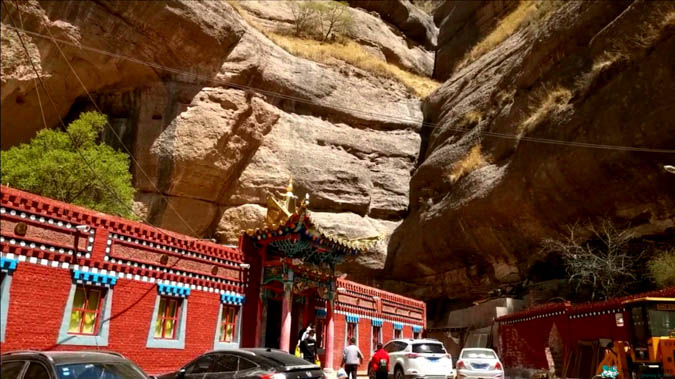
Main Assembly hall in Dentig Monastery
Recent Posts
- Shoton Festival Begins in Lhasa!
 August 23, 2025
 - Tour Price in Tibet
 August 23, 2025
 - Qinghai Shaman Festival in Rebkong Concludes Successfully
 August 21, 2025
We are recommended by
We are committed to providing authentic, high quality, environmentally sustainable travel services. Join us and experience once in a lifetime holiday.
Recent Trips
.jpg "amdo monlam festival tour")