Derge
The Heart of Kham Tibet
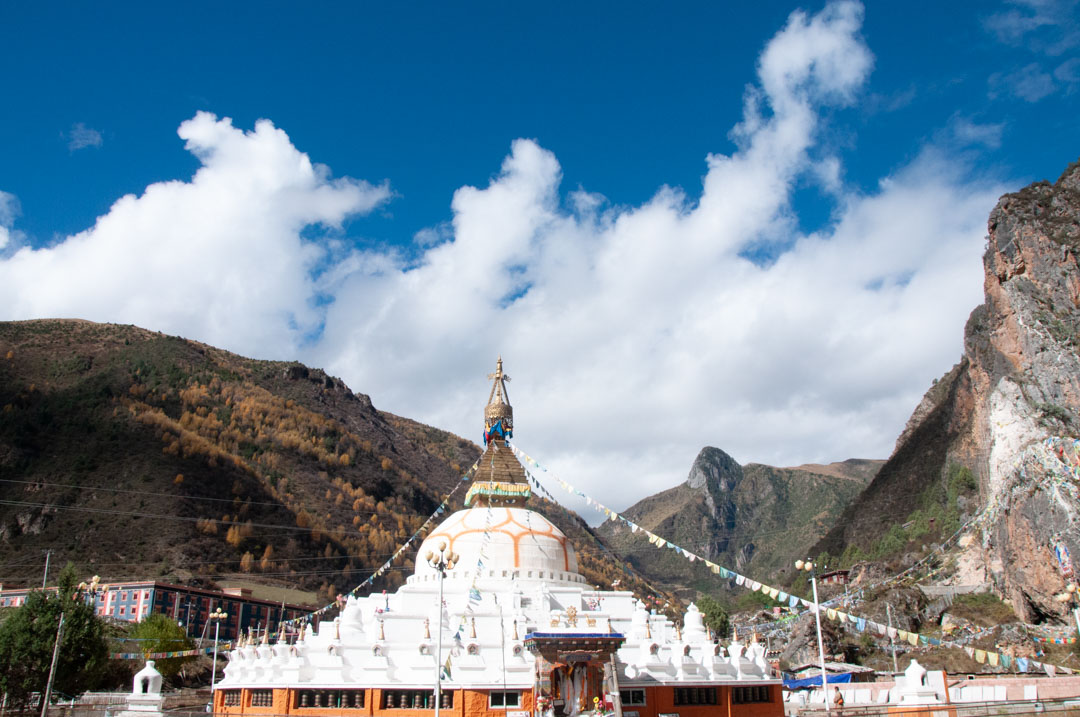
Derge is often regarded as the heart of Kham Tibet. It lies on the bank of the Sugchu River, a tributary of the Yangtze River, and administratively belongs to the Ganzi Tibetan Autonomous Prefecture of Sichuan Province. The town of Derge is located next to Derge Gomchen and Parkhang (Derge Printing House) in the Sugchu valley. It takes about 10 minutes’ walk from town to reach the Derge Gomchen Monastery.
There are more than 50 monasteries in Derge County, among which most are Sakyapa monasteries, but Nyingmapa, Gelugpa, and Kagyupa, as well as Bon monasteries, are also established in the county. This diversity reflects the rich spiritual heritage of the region and its historical role as a center of Tibetan Buddhist learning.
Historical Background – The Derge Kingdom
The Derge area was an independent kingdom until the 19th century. Among all the Derge Kings, Tenpa Tsering (1678-1738) is famous for his contribution to Buddhism and culture preservation. Under his rule, Derge reached the peak of its power by conquering the outlying northern districts of Dzachuka, and he was instrumental in establishing the region’s most famous cultural institution.
Derge Gomchen Monastery
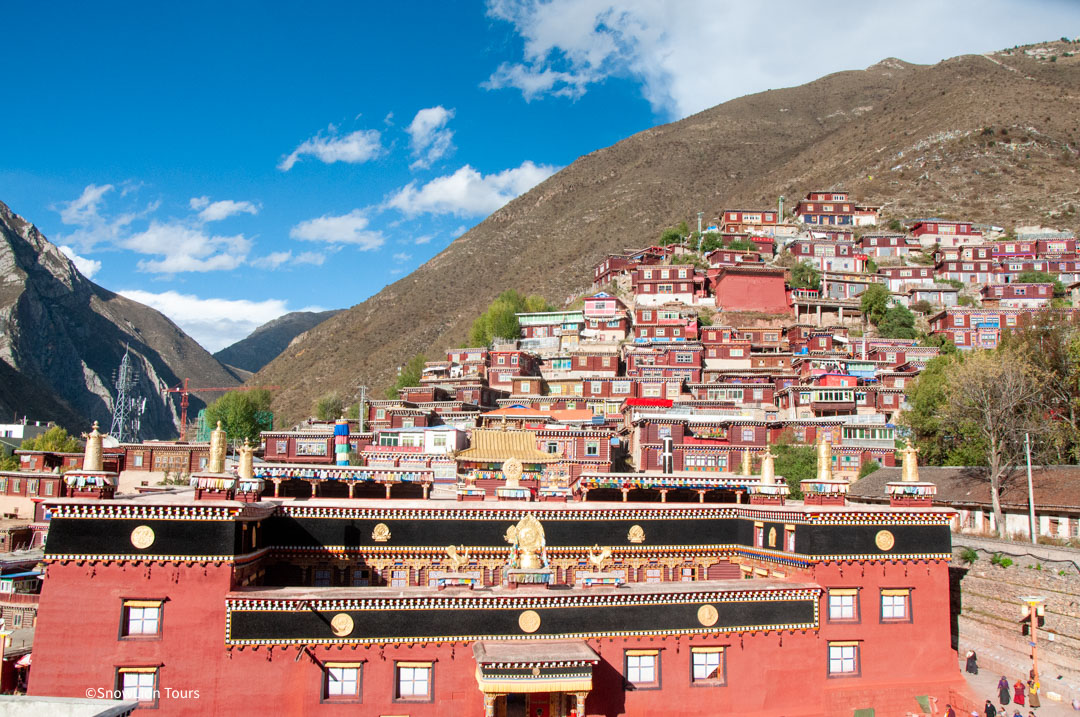
Above picture is taken from the roof of printing house. This is Derge Gomchen.
Derge Gomchen was founded in 1448. The monastery was originally built as a Sakyapa monastery; therefore, it has kept strong ties with the Sakyapa tradition and maintains connections with the center of Ngor Gompa. However, the monastery has introduced different traditions over time. It was destroyed during the Cultural Revolution but has been reconstructed and now houses more than 300 monks.
Derge Gomchen is not only the name of the monastery but also served as the seat of the Derge Kings, highlighting its dual role as both a religious and political center.
Derge Parkhang (Derge Printing House)
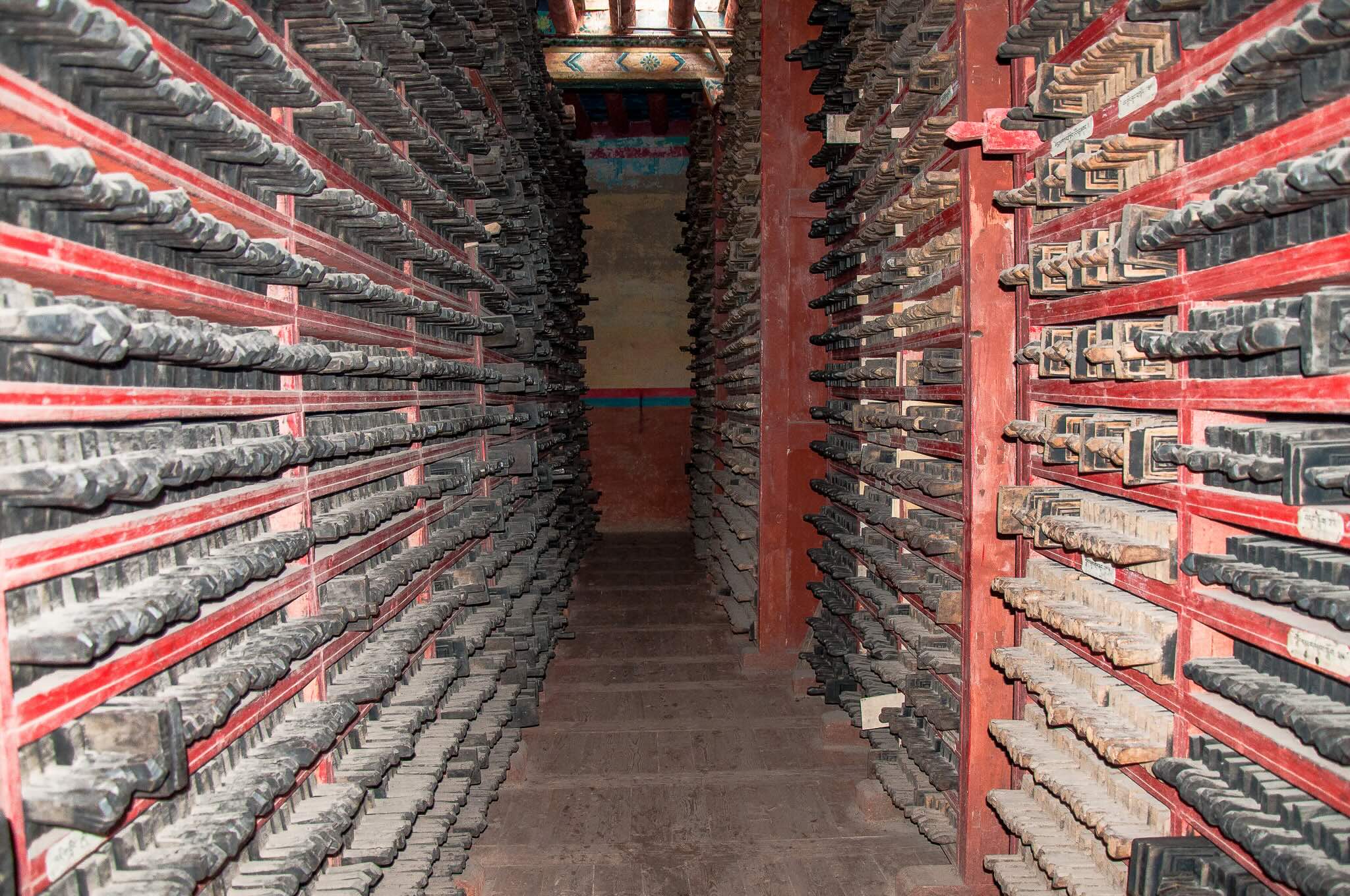
Above picture is taken inside the Derge Parkhang, the printing house. This is the wooden block storage section.
Derge Parkhang/Derge Printing House represents one of Tibet’s greatest cultural treasures. In the 18th century, King Tenpa Tsering brought Derge to the peak of its power, and under his instructions and assistance from local tribes, Derge Parkhang was founded in 1729. The construction was completed in 1750 during the reigns of his successors.
The famous Sakyapa scholar Zhuchen Tsultrim Rinchen edited the Kangyur and Tengyur collections. The Tibetan texts of Kangyur and Tengyur housed here are known as the most accurate and complete Tibetan Buddhism scriptures. There are a total of 217,000 wooden printing blocks housed in this printing house, and the works of this print house have been used across the entire Tibetan Plateau.
Today, Derge Parkhang printing house is still functioning as it did centuries ago—all the work is done manually. It has become the largest printing house in Tibet. The printing house produces traditional mathematics, science, Tibetan medicine books and scriptures, and books from Nyingmapa, Gelugpa, Kagyupa, and Sakyapa traditions, as well as Bon religion texts.
Cultural Significance
The Derge Printing House is not merely a printing facility but a living repository of Tibetan knowledge and culture. The meticulous process of hand-printing from wooden blocks preserves traditional methods that have been passed down through generations. The facility represents the intersection of spiritual devotion, scholarly achievement, and artisanal craftsmanship.
Other Notable Monasteries and Sites
Tengchen Monastery
A Bon tradition monastery built between the 8th and 9th centuries, representing one of the oldest religious institutions in the region and showcasing the pre-Buddhist spiritual traditions of Tibet.
Palpung Gompa (Babang Monastery)
Established in 1727 by the Karma Kagyu tradition’s highest lama, Tai Situ Rinpoche. This monastery serves as an important seat of the Karma Kagyu lineage and has played a significant role in preserving and transmitting these teachings.
Dzongsar Tashi Lhatse Monastery
Founded in 1253 by Drigungpa Chogye Pakpa, Dzongsar Monastery’s later construction was instructed by two of the most influential figures in Tibetan Buddhism:
- Jamyang Khyentse Wangpo (1820-1892)
- Dzongsar Khyentse Chokyi Gyatso (1896-1959)
These two masters were among the most prolific teachers and lineage holders of the combined Sakya, Nyingma, and Kagyu traditions in East Tibet. Their influence helped establish Dzongsar as a center of the Rimé (non-sectarian) movement, which sought to preserve and integrate the various schools of Tibetan Buddhism.
Geography and Accessibility
Derge is strategically located in the Sugchu valley, making it accessible yet maintaining its traditional character. The town serves as a hub for exploring the broader Kham region, with its network of monasteries and cultural sites providing visitors with an immersive experience of Tibetan Buddhist culture.
Cultural Preservation
The combination of the functioning printing house, numerous monasteries representing different Buddhist traditions, and the historical significance of the former Derge Kingdom makes this town a unique repository of Tibetan culture. The continued operation of traditional printing methods alongside the active monastic communities demonstrates the living nature of Tibetan Buddhist tradition in the modern era.
Visiting Derge
For visitors interested in Tibetan culture and Buddhism, Derge offers an unparalleled opportunity to witness traditional practices in their authentic setting. The proximity of the town to both the monastery and printing house allows for easy exploration on foot, while the surrounding valley provides access to numerous other significant religious sites.
The town represents a remarkable synthesis of political history, religious devotion, and cultural preservation, truly earning its reputation as the heart of Kham Tibet.
Recent Posts
- Shoton Festival Begins in Lhasa!
 August 23, 2025
 - Tour Price in Tibet
 August 23, 2025
 - Qinghai Shaman Festival in Rebkong Concludes Successfully
 August 21, 2025
Related Tours
Civilizations of Eastern Tibet
Journey through Eastern Tibet and Sichuan from Xining to Shangri-la via Kumbum, Qinghai Lake, Mount Amnye Machen, Yushu, Dzogchen, Derge, Lithang, Yading, and Dechen.

The Land of Four Rivers and Six Ranges
Explore Eastern Tibet from Xining to Mount Amnye Machen, Yushu, and Nangchen. Experience stunning landscapes, sacred mountains, and Tibetan culture.

Khampa Heartland
Journey across Amdo & Kham Tibet from Xining to Chengdu. Visit Qinghai Lake, Amnye Machen, Yushu, Dzogchen, Derge, Ganzi, Lithang & Danba’s Tibetan villages.
We are recommended by
We are committed to providing authentic, high quality, environmentally sustainable travel services. Join us and experience once in a lifetime holiday.
Recent Trips
.jpg "amdo monlam festival tour")