Dunhuang
Dunhuang: the treasure house of ancient ancient China and Tibet
Dunhuang is a county-level city in Gansu Province in northwest China, under the administration of Jiuquan. Dunhuang’s name comes from its function as a garrison town of the Han Dynasty, but the Tang name of Sha Zhou describes it better, as it is hemmed in by bleak, pebbly desert and sand dunes. It was an important stop on the ancient Silk Road, passing through the remote garrison town of Loulan and the Lop Desert.
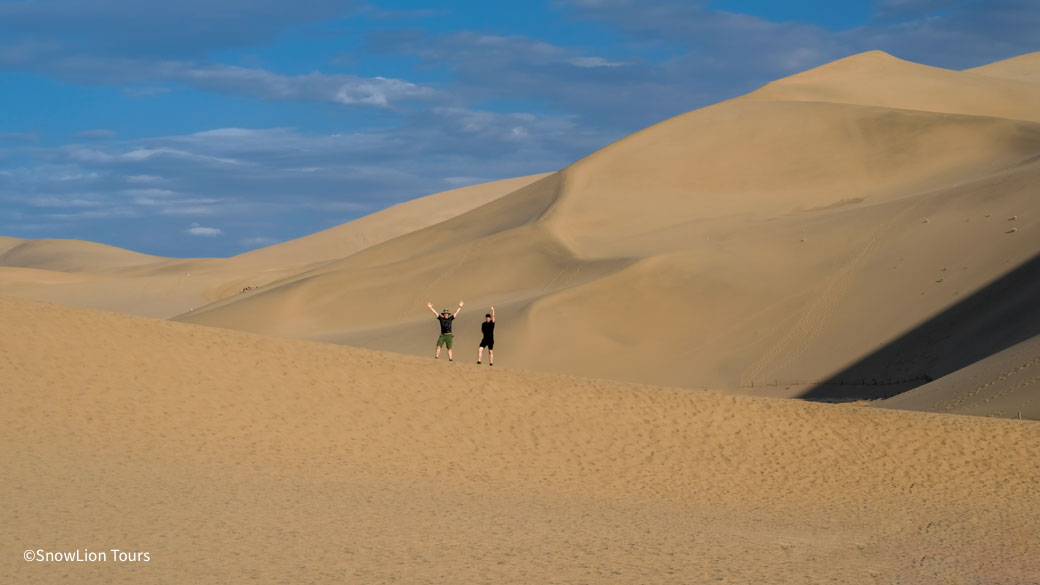
A large number of the early residents of Dunhuang were not Han, and the town came under the sway of the Tibetans, the Uighurs, and Xi Xia, only really becoming a Han town after the colonization of the western regions was initiated during the Qing Dynasty. The town is dependent on tourism, and despite efforts to develop other sites, it is the peerless Mogao cave-temple complex that makes Dunhuang a significant stop on the Silk Road, a city with a long history and splendid culture.
Mogao Caves (Mogao Shiku)
The Mogao Caves, also known as the Thousand Buddha Grottoes, are the largest, best-preserved, and most significant site of Buddhist statuary and frescoes in all of China. They are located 25 km southeast of Dunhuang. There are 735 caves in Mogao, particularly noted for their Buddhist art spanning a period of 1,000 years. The tour takes about two hours, and 12 caves will be visited; the rest are closed. The number of visitors is limited to 6,000 a day, so it’s better to book in advance during peak seasons. It is said that the treasures in the Mogao caves embody the essence of Dunhuang culture.
Mingsha Shan & Yueya Quan
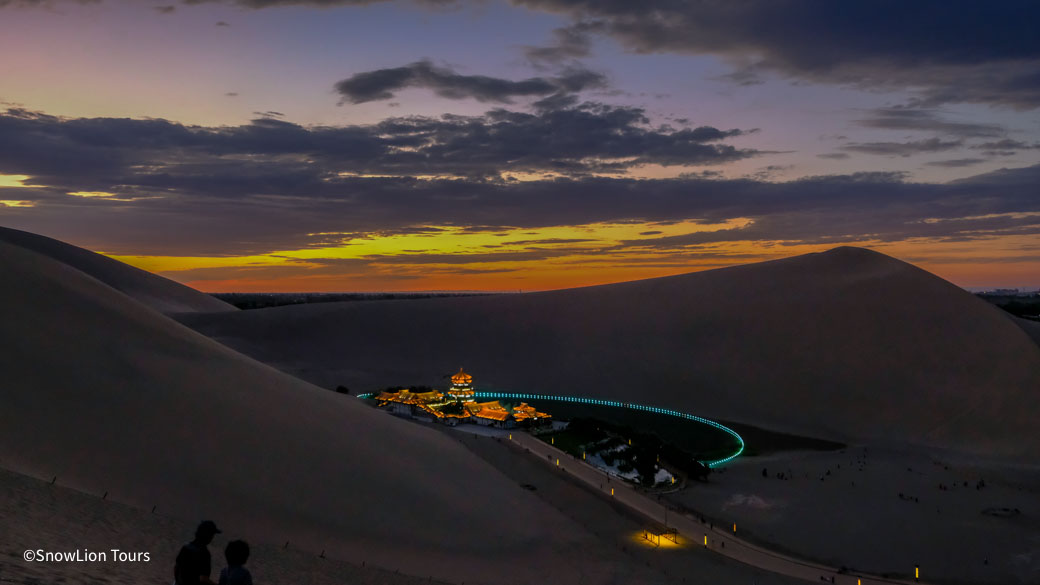
Yueya Quan is surrounded by Mingsha Shan, with the main peak rising to a height of 1,715 meters. The shape of Yueya Quan resembles a crescent moon, hence its name in Chinese. If you don’t want to see the lake up close, you can walk a few minutes to a higher vantage point, from where you can view the entire lake. You can also bike and ride camels there.
Han Dynasty Ruins
If you’re a history buff not interested in seeing replicas of the Great Wall, this 92 km journey into the desert to visit the desolate Han Dynasty ruins is a worthwhile day trip. The ruins are composed of three separate locations: Yumen Guan, an ancient watchtower made of stone, straw, and mud; He Changcheng; and Han Changcheng. On the way to these ruins, you’ll pass another historic site named Yang Guan. Yumen Guan and Yang Guan were the ancient borders during the Han Dynasty. The highlight of the three is Han Changcheng, which translates as River Warehouse Town. It’s located 13 km east of Yumen Guan on a dirt road and is a crumbling building that was once used as a storage unit. Han Changcheng is 5 km away from Yumen Guan, featuring one watchtower and a remnant of the Great Wall that’s several hundred yards long.
Recent Posts
- Shoton Festival Begins in Lhasa!
 August 23, 2025
 - Tour Price in Tibet
 August 23, 2025
 - Qinghai Shaman Festival in Rebkong Concludes Successfully
 August 21, 2025
Related Tours
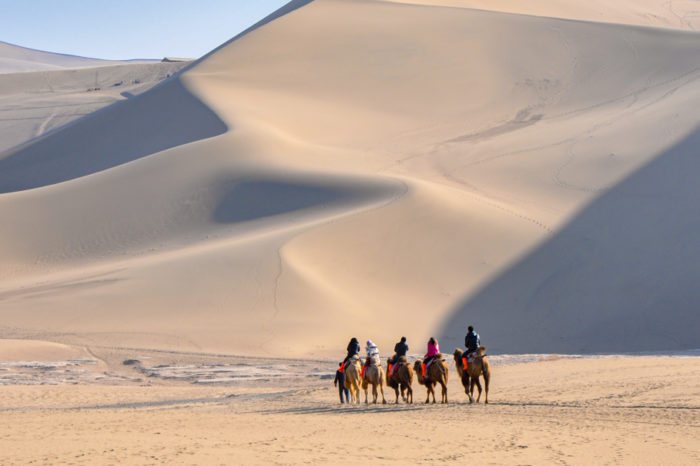
Silk Road Tour
The Ancient Silk Road, an intricate network of trade and cultural exchange pathways, served as a vital connection between the East and the West for merchants, pilgrims, soldiers, princes, nomads, and other intrepid adventurers. At …
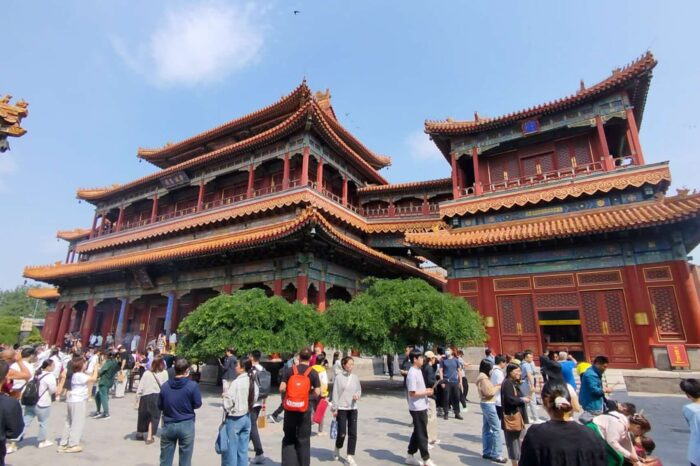
Beijing – Xi’an – Xining – Lhasa Tour
This tour offers one of the best China travel experiences available. Explore the modern capital city of Beijing, China’s political and cultural center, and visit historic sites such as the Great Wall, Forbidden City, Tiananmen …
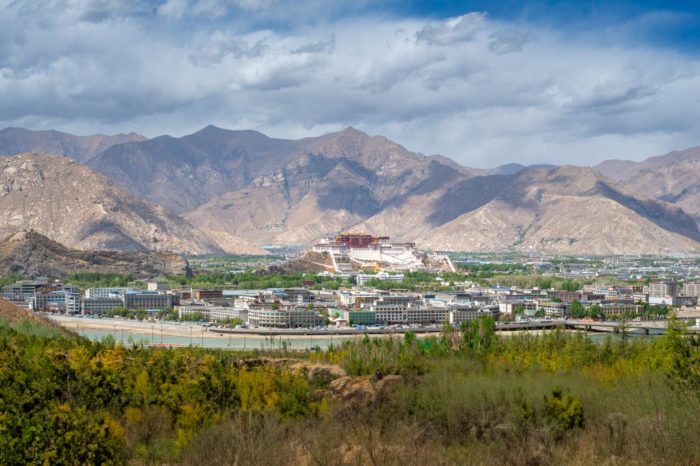
Cross-Country Railway Tour
Travel over 4000km from Beijing to Lhasa. Starting in Beijing, visit the historic sites of Tiananmen Square, the Forbidden City, the Great Wall, the Summer Palace, the Lama Temple, and the Temple of Heaven. Next, …
We are recommended by
We are committed to providing authentic, high quality, environmentally sustainable travel services. Join us and experience once in a lifetime holiday.
Recent Trips

.jpg "amdo monlam festival tour")