Gyantse
Gyantse: Historic Fortress Town and Religious Center
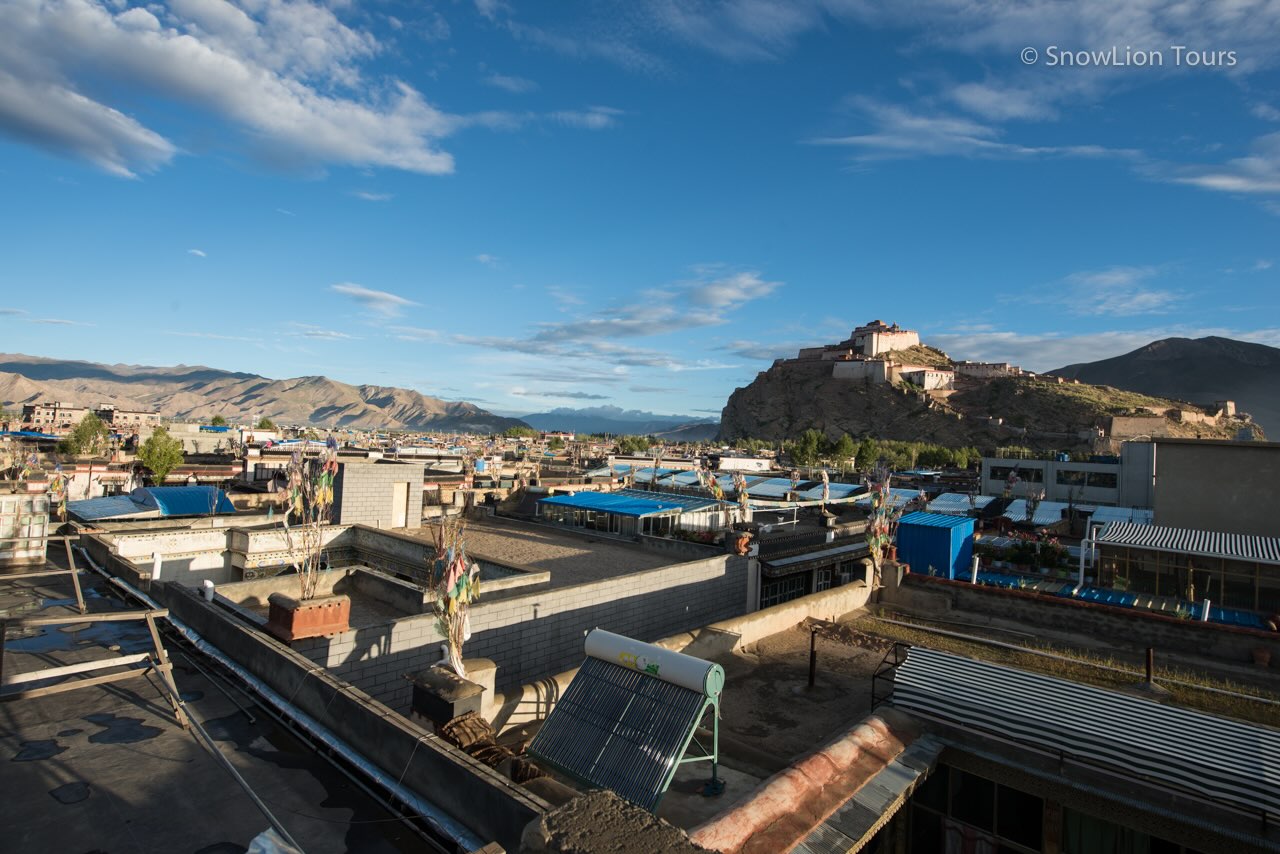
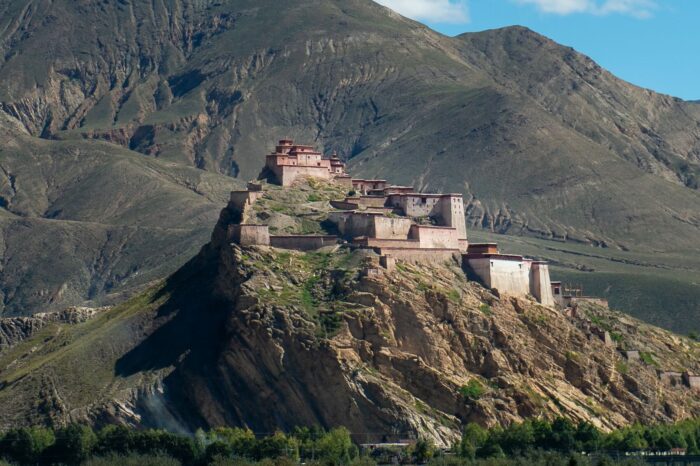
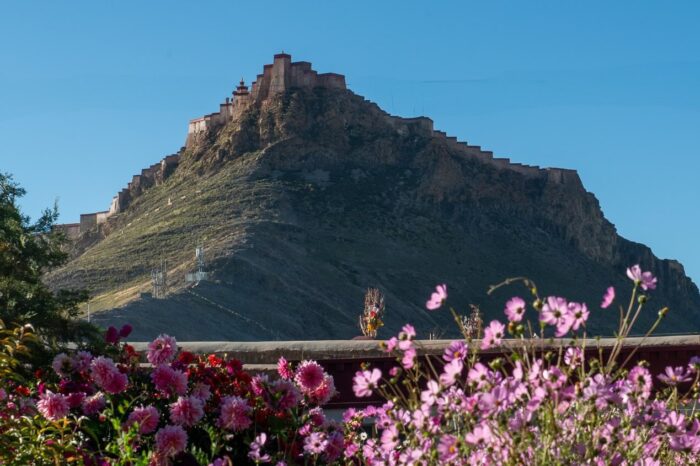
Gyantse Dzong stands majestically in the heart of old Gyantse town, rising dramatically from a prominent hilltop that commands the entire valley. This formidable fortress served as the seat of power for the local kings of Gyantse from the 13th century onwards, representing centuries of regional autonomy and political independence in this strategically important location along ancient trade routes.
The dzong gained international notoriety in 1903 when it became the site of fierce resistance against the British military expedition led by Colonel Francis Younghusband. The fortress’s strategic position and solid construction enabled Tibetan defenders to mount determined opposition to the British advance, making it a symbol of Tibetan resistance to foreign invasion. This historic confrontation marked one of the most significant military encounters in modern Tibetan history.
As the tallest structure in Gyantse, the dzong offers spectacular panoramic views in all directions, encompassing the fertile Nyang Chu valley, surrounding barley fields, and the dramatic mountain ranges that frame this historic town. The fortress serves both as an architectural monument and a viewing platform from which visitors can appreciate the geographic advantages that made Gyantse a crucial center of trade and political power.
Historical Development and Architecture
The walls of the present structure were built in 1268, following the rise to power of the Sakyapa school, which established political control over this region of Tibet. The original castle or palace was founded in 1365 on the hilltop by the local Gyantse prince Phakpa Pelzangpo (1318-1370), who recognized the strategic importance of this elevated position for both defense and governance.
During the 14th century, Phakpa Pelzangpo’s son, Kunga Phakpa, significantly expanded the palace complex and established the administrative center that would govern Gyantse town for centuries. This expansion transformed the dzong from a simple fortress into a comprehensive seat of government that included residential quarters, administrative offices, temples, and defensive structures.
Gyantse Pelkor Choede: Monastery of Many Traditions
The monastic complex of Gyantse, known as Pelkor Choede, represents a unique achievement in Tibetan Buddhist history – a single institution that successfully housed multiple Buddhist traditions under one administrative structure. The name “Pelkor Choede” derives from Pelkor Tsen, a son of the 9th-century Tibetan king Langdarma, connecting the monastery to Tibet’s earliest Buddhist period.
This remarkable complex originally included small monasteries representing different Tibetan Buddhist schools, including Gelugpa, Sakyapa, and Kadampa traditions. While much of the original complex has been damaged through various historical events, the surviving structures continue to demonstrate the spirit of religious tolerance and cooperation that once characterized this institution.

Gyantse Kumbum Stupa
The Main Assembly Hall
The assembly hall stands as the architectural and spiritual centerpiece of the monastic complex. Built with impressive proportions, the hall features 8 tall pillars and 48 shorter ones supporting its massive roof structure. The supreme statue within the shrine is that of Jowo Mahabuddhi, representing the Buddha’s enlightenment and serving as the focal point for communal prayers and ceremonies.
Unlike typical Tibetan temples that feature extensive wall paintings and the traditional Wheel of Life mural, the entrance to this assembly hall is uniquely decorated with magnificent depictions of the Four Guardian Kings, who serve as protectors of the dharma and guardians of the monastery’s sacred spaces.
Sacred Chapels and Religious Art
The first chapel to the left of the main hall houses the Five Dhyani Buddhas (Five Jinas), representing the five aspects of enlightened consciousness in Tantric Buddhism. The east chapel centers around a statue of Jampa (Maitreya), the future Buddha, flanked by Avalokiteshvara, the Bodhisattva of Compassion. The surrounding area contains statues of Manjushri (Wisdom), Vajrapani (Power), Guru Rinpoche (Padmasambhava), and the trio of Dharma Kings who established Buddhism in Tibet.
Gyantse Kumbum: The Crown Jewel
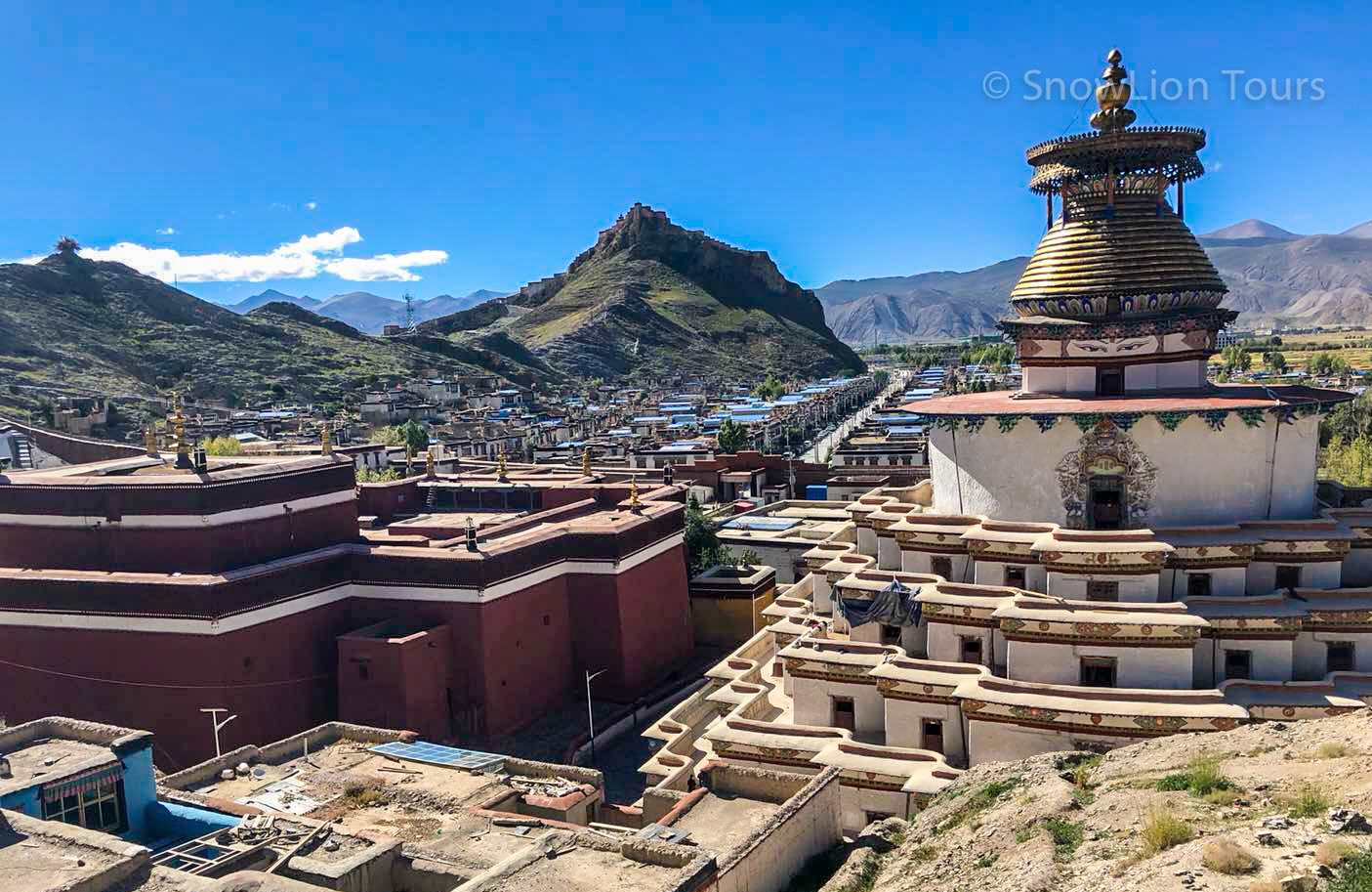
Among all of Gyantse’s architectural treasures, the Gyantse Kumbum (stupa) stands as the undisputed masterpiece – the largest chorten of its kind in Tibet at over 37 meters in height. This extraordinary artistic structure serves as the highlight of any visit to Gyantse, representing one of the finest examples of Tibetan religious architecture and artistic achievement.
The name “Kumbum” literally means “100,000 Buddha images,” referring to the countless depictions of Buddhist deities, teachers, and symbolic figures painted on the walls throughout the stupa’s interior. This massive three-dimensional mandala contains 75 individual chapels arranged across multiple levels, each dedicated to specific aspects of Buddhist teaching and practice.
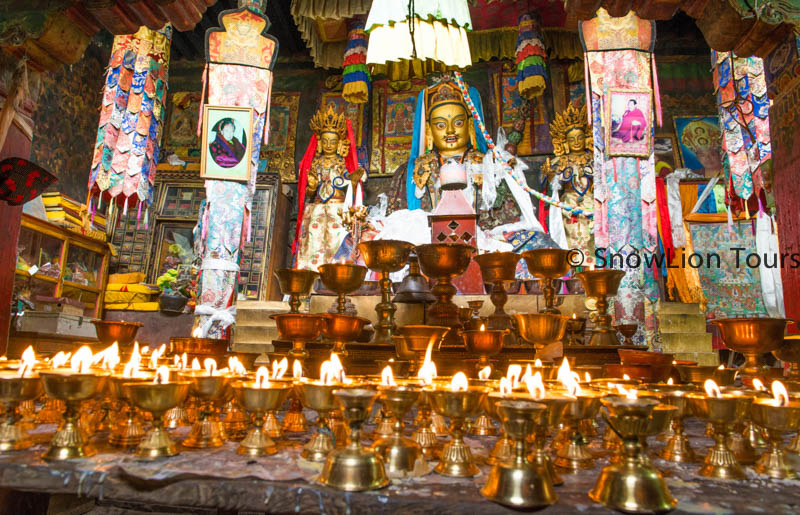
Small Nyingmapa temple nearby Gyantse Kumbum
The Sacred Ascent
Visitors ascend through the Kumbum in a clockwise direction, following the traditional Buddhist circumambulation pattern while viewing the extraordinary collection of statues and murals in each chapel. The journey upward through the stupa represents a spiritual pilgrimage through different levels of Buddhist understanding, with each level revealing increasingly esoteric and profound teachings.
The artistic quality of the murals and statues within the Kumbum represents some of the finest examples of 15th-century Tibetan religious art, executed by master artists who combined Tibetan, Nepali, and Chinese influences to create a unique synthesis that became characteristic of the Gyantse school of art.
Annual Religious Festivals
During the fourth lunar month of the Tibetan calendar, Pelkor Choede hosts vibrant religious festivals that attract hundreds of devotees from across the region. These celebrations feature elaborate ritual performances, including spectacular tantric dances performed by monks wearing traditional masks and costumes representing various Buddhist deities and protectors.
The festival’s highlight occurs on the 18th day with the unveiling of a massive thangka (religious scroll painting) depicting the Buddha. This enormous textile artwork, requiring dozens of people to display properly, draws hundreds of devotees who come to receive blessings and participate in the community celebration of their shared faith.
Secular Celebrations and Cultural Events
The religious festivals are complemented by secular activities that celebrate Gyantse’s cultural heritage, including traditional horse racing competitions and archery contests that demonstrate skills historically important for both warfare and hunting. These events create a festive atmosphere that combines spiritual devotion with cultural pride, offering visitors insights into both the religious and secular traditions that have shaped Gyantse’s identity.
Strategic Importance and Trade Heritage
Gyantse’s location at the confluence of major trade routes connecting Tibet with India, Sikkim, and Bhutan made it one of Tibet’s most important commercial centers for centuries. The town served as a crucial stop for caravans carrying goods between the Indian subcontinent and central Tibet, contributing to its wealth and cultural sophistication.
This commercial importance attracted diverse populations and cultural influences that enriched Gyantse’s artistic and religious traditions, contributing to the cosmopolitan character evident in the Kumbum’s artistic synthesis and the monastery’s multi-sectarian approach to Buddhist practice.
Visiting Information
Best Photography: The dzong offers excellent photography opportunities, particularly during golden hour when the ancient walls glow against the mountain backdrop. The view from the Kumbum toward the dzong provides the classic perspective that captures both structures in their historic relationship.
Cultural Sensitivity: As active religious sites, both the dzong and monastery complex require respectful behavior. Photography may be restricted in certain areas, and visitors should ask permission before photographing religious ceremonies or individual monks.
Physical Considerations: The climb to the dzong and the ascent through the Kumbum both require moderate physical exertion at altitude. Visitors should pace themselves and be prepared for the effects of elevation.
A Living Heritage
Gyantse represents a remarkable preservation of Tibet’s medieval heritage, where fortress, monastery, and town continue to function as an integrated community much as they have for centuries. The combination of military architecture, religious art, and living Buddhist practice creates an authentic historical experience that few places in the modern world can match.
For visitors, Gyantse offers an unparalleled opportunity to experience the synthesis of political power, religious devotion, and artistic achievement that characterized Tibet’s classical period. The town serves as a window into a world where spiritual and temporal authority worked together to create institutions and communities that have endured across centuries of change while maintaining their essential character and continuing relevance.
The legacy of Gyantse extends beyond its historical importance to demonstrate how traditional communities can preserve their cultural identity while adapting to contemporary realities, making it not only a destination for understanding Tibet’s past but also for appreciating the resilience and continuity of Tibetan civilization.
Recent Posts
- Shoton Festival Begins in Lhasa!
 August 23, 2025
 - Tour Price in Tibet
 August 23, 2025
 - Qinghai Shaman Festival in Rebkong Concludes Successfully
 August 21, 2025
Related Tours
Lhasa & Shigatse Holy City Explore
In the sacred city of Lhasa, visit the grand Potala Palace, the holy Jokhang Temple, and the colorful Barkhor Square. Watch monks debate at Sera Monastery and join pilgrims in exploring the temples and prayer …
Heritage of the Holy City
In the sacred city of Lhasa, visit the grand Potala Palace, the holy Jokhang Temple, and the colorful Barkhor Square. Watch monks debate at Sera Monastery and join pilgrims in exploring the temples and prayer …
Himalayan Journey
Lhasa ➔ Yamdrok Lake ➔ Everest Base Camp ➔ Peikutso Lake ➔ Kyirong ➔ Kathmandu
We are recommended by
We are committed to providing authentic, high quality, environmentally sustainable travel services. Join us and experience once in a lifetime holiday.
Recent Trips
.jpg "amdo monlam festival tour")