Kham Nangchen
Nangchen County: The Heart of Ancient Kham
Nangchen is a county of the Yushu Tibetan Autonomous Prefecture and is the southernmost county-level division of Qinghai Province, bordering the Tibet Autonomous Region to the south. It was one of the five kingdoms of the historical region of Kham. Nangchen town is located in a side valley on the right bank of the Dza Chu, in the upper reaches of the Mekong River.
Historical Heritage and Cultural Significance
Nangchen is a place that has been able to maintain its Kagyu heritage despite outside influences. The region features both beautiful nomadic rolling grasslands and lower sheltered areas with cultivated fields. The vast pastures, dramatic limestone and sandstone cliffs, and pristine nature reserves combine to make Nangchen one of the most interesting and unspoiled parts of Kham.
The Nangchen royal family belonged to the Dru clan. In 1240, the Mongol prince Godan Khan endowed a local monastery, Kumbum Monastery, which contained the reliquary of Tishri Repa Sherab Sengge, with an estate of tax-paying subjects and also sponsored the construction of Nangsochenmo Castle. A disciple of Tishri Repa called Trewo Alu became the secular leader of this region, soon to be called Nangchen after the castle. It was Trewo Alu’s son, Chokyi Gyeltsen, who became the first Nangchen king in 1300. Under Nangchen jurisdiction were twenty-five autonomous tribes, including the Nangchen tribe itself, known as the twenty-five tribes of Yushu.
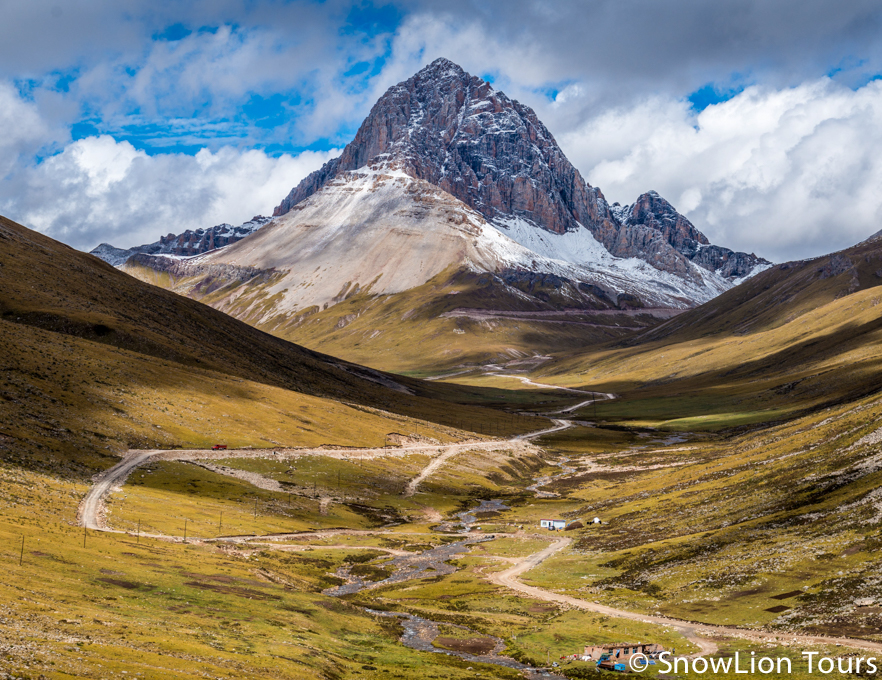
A beautiful rocky mountain on the way to Surmang
Monastic Landscape
Currently, it is estimated there are 78 monasteries within the county, of which approximately 70% belong to the Kagyu sect of Tibetan Buddhism, with the remainder being Sakya, Nyingma, and Gelukpa in descending order.
The capital town is Sharda, located 193km north of Jyekundo, 160km northeast of Zurmang Dultsedil, and 189km north of Riwoche. Nangchen has some of the most beautiful and remote monasteries and temples hidden in the mountains of the Nangchen highlands.
Major Monasteries and Religious Sites
Zurmang Namgyaltse Monastery
Zurmang Namgyaltse is located 60km east of Nangchen Sharda town in the Tsichu valley. The small town called Modrong is where Zurmang Namgyaltse is now situated. The original foundation dates from the 15th century when Trungpa Ma-se, a disciple of the Fifth Karmapa, constructed a “many-cornered” (Zurmang) meditation hut here. His disciples gathered in numbers, and the local chieftain Adru Shelubum donated his castles (at both Namgyaltse and Dutsitil) to Trungpa Ma-se and his followers.
Three colleges once existed here: the Dechen Dratsang on the higher slopes, the Lingpa Dratsang on the lower slopes, and the Lama Dratsang adjacent to the assembly hall. Nowadays, there are 300 monks affiliated with Zurmang Namgyaltse, 200 of whom are studying in the monastic college under Khenpo Aten. The senior-most Tulkus are Dengar Rinpoche, Rolpei Dorje, and the young Trungpa Rinpoche, who moves between here and Dutsitil.
The oldest and original buildings are the assembly hall and the Gonkhang. The assembly hall contains murals depicting Padmasambhava, Simhavaktra, Vajrayogini, Vajravarahi, Chakrasamvara, and various Kagyu lineage holders including Zharmapas and the founders of Zurmang. The Gonkhang has images on its upper level depicting Bernakchen and his acolytes.
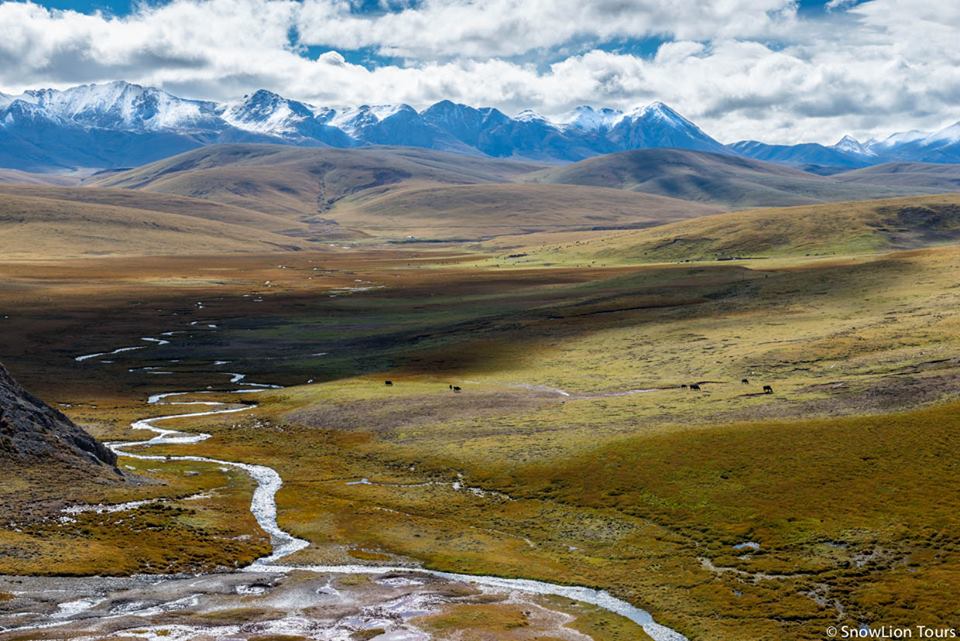
The landscape view of Nangchen
Gar Monastery
Gar Monastery is located about 60km south of Nangchen Sharda town. Built in the 18th century, it is a Drikung Kagyu monastery. There are 50 monks, most of whom are young novices studying under the guidance of Gargon Tulku and Gargon Chetsang.
The monastery features small mani stone mounds and dedicated murals depicting the lords of the three enlightened families. The older buildings at Gar Monastery were restored in the 1980s. The new Tsuklhakhang alongside them has excellent gilded copper images on the left wall depicting Gampopa, Milarepa, Marpa, Naropa, Tilopa, and Vajradhara. The inner sanctum contains images of Amitayus, Drikung Kyabgon, and Padmasambhava.
Gechak Nunnery
Gechak is a nunnery named after its founder, the charismatic Gechak Tsangyang Gyatso. Although established only in 1893, it is now the largest nunnery in Qinghai Province, housing 400 nuns under the guidance of 4 lamas, including Nang Se Tulku and Lama Wangdrak. Nang Se Tulku is revered as the incarnation of the nunnery’s founder.
The Tsuklhakhang contains a large image of Padmasambhava, and upstairs are the Zhitro Lhakhang, the Tsedruk Lhakhang (dedicated to Amitayus), and residential apartments. Altogether, there are 16 hermitages used by hermit nuns for specific practices. The Kangyur Lhakhang above the Tsuklhakhang contains the Derge canon and the reliquary stupas of Lama Achung, Loro Wangchung, Tangchok, and Gechak Tsangyang Gyatso. There are also large clay images of Vajrasattva and four-armed Avalokiteshvara, along with numerous old images kept in glass cabinets and other treasures offered in the past by the Kings of Nangchen.
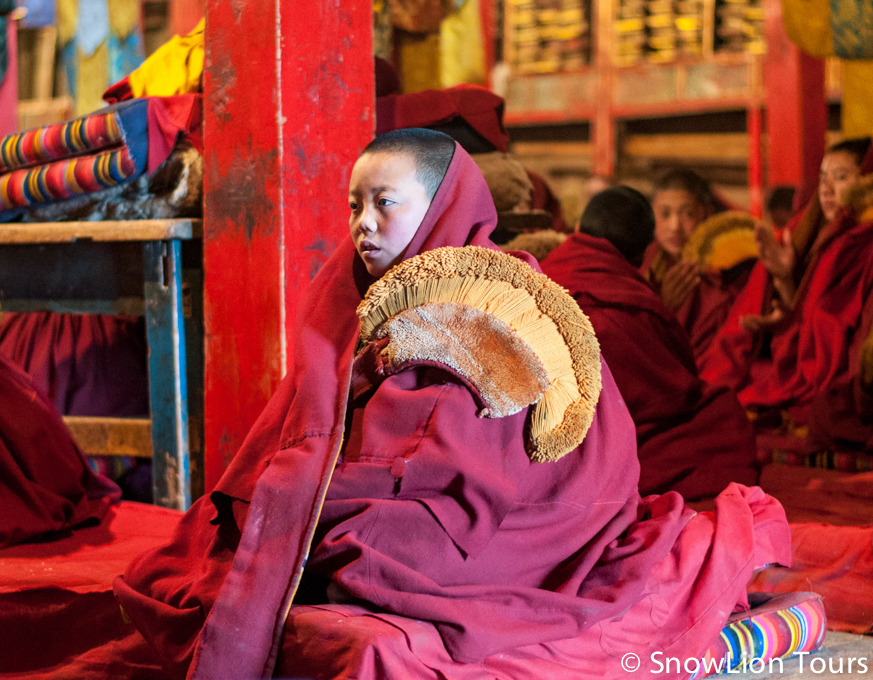
Monks’ morning prayer session in one of the monasteries in Yangchen
Danak Senge Namdzong
Danak Monastery is located 150km west of Nangchen Sharda town and was founded by Sangye Yelpa Yeshe Tsepa in 1188, an actual student of Phakmodrupa. There is also a reliquary stupa built for Phakmodrupa.
The monastery is located below the “horse ear”-shaped twin limestone peaks of Mt. Danak. Its assembly hall contains chapels replete with relics attributed to the epic warrior King Gesar, which were donated by the monastery’s founder from the Ling clan following Gesar’s death.
Tsechu Monastery
Tsechu Monastery is located exactly at Nangchen Gar, the heart of the ancient kingdom of Nangchen, to which the 25 clans of the Mekong grasslands held allegiance. Formally known as Dongak Shedrub Choling, Tsechu Monastery belongs to the Drukpa Kagyu tradition and was founded in the 18th century by Palden Gyurme Tsewang, the fifth incarnate lama of Tsabzhi Gon.
Currently, there are 200 monks. The Tsuklhakhang has a monastic college alongside a new temple constructed by Tsoknyi Rinpoche. On the ground floor of the Tsuklhakhang, there are many painted scrolls and the embalmed remains of Adi Rinpoche. The inner sanctum contains clay images of four-armed Avalokiteshvara, Vajrasattva, Shakyamuni, Padmasambhava, and Green Tara.
Continuing upstairs to the next level, there are three chapels. To the left is the Drukpa Lhakhang, which contains 13 wood-carved meditational deities of the Drukpa Kagyu tradition, including Amitayus, four-armed Avalokiteshvara, Akshobhya, White Tara, and others.
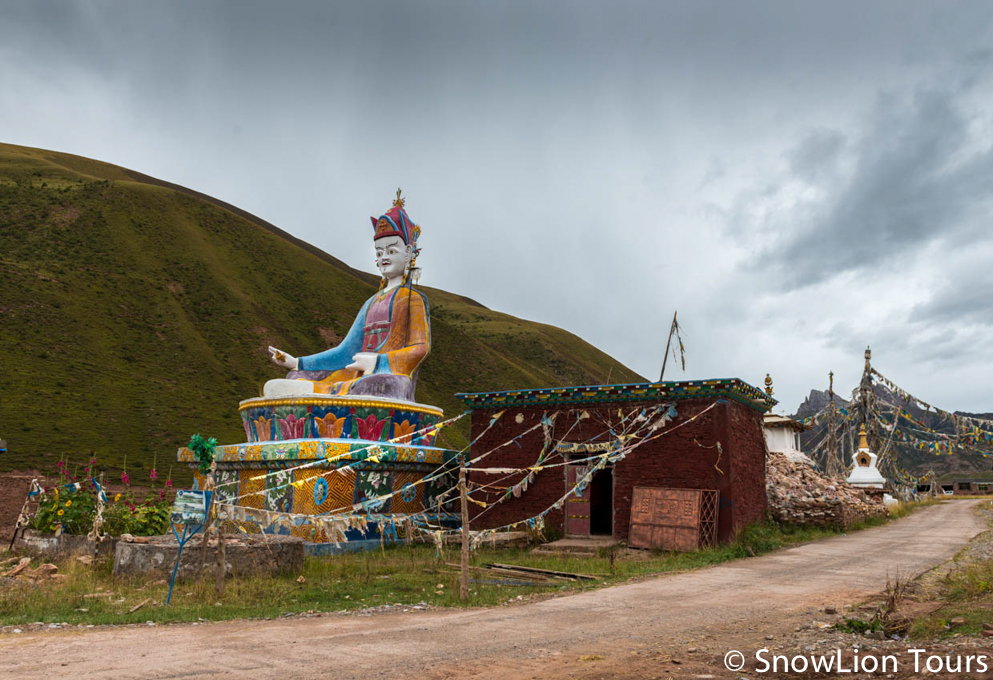
Guru Rinpoche’s statue on the way to Danak Monastery.
A Hidden Gem of Tibetan Buddhism
Nangchen represents one of Tibet’s most authentic and well-preserved cultural regions, where ancient traditions continue to thrive amidst spectacular natural beauty. The county’s numerous monasteries and nunneries serve as living repositories of Kagyu Buddhist teachings, making it an essential destination for understanding the depth and diversity of Tibetan religious heritage.
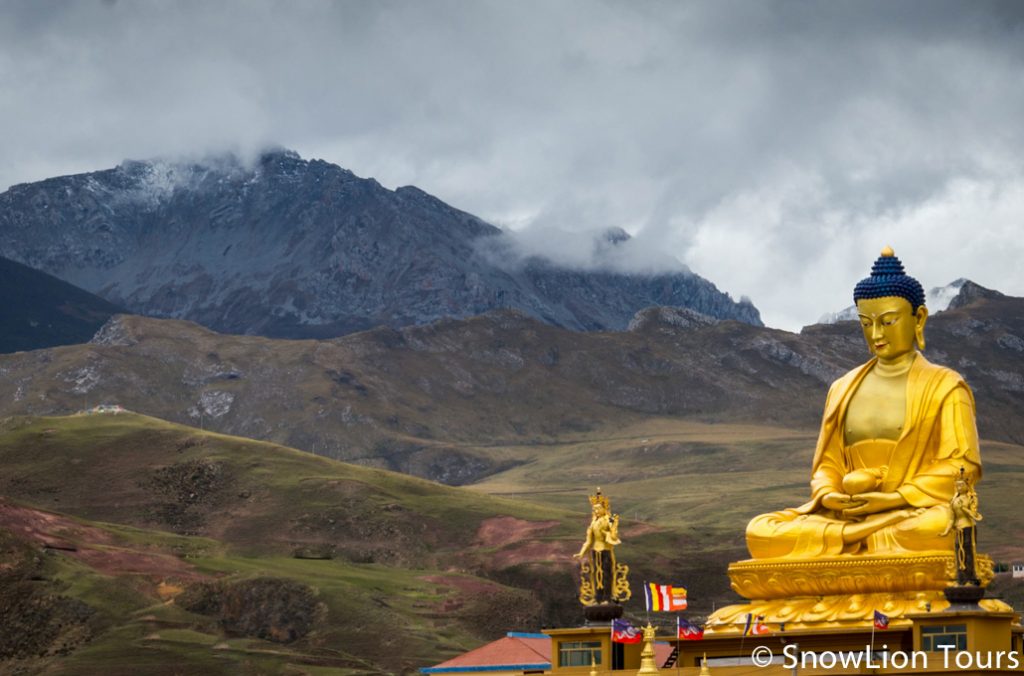
A giant Buddha’s statue at the monastery close to Nangchen town.
Recent Posts
- Shoton Festival Begins in Lhasa!
 August 23, 2025
 - Tour Price in Tibet
 August 23, 2025
 - Qinghai Shaman Festival in Rebkong Concludes Successfully
 August 21, 2025
Related Tours

Uncharted Territory Kailash Tour
Starting in Lhasa, visit the Potala Palace, the Jokhang Temple, and the traditional marketplace known as the Barkhor. Watch monks debate at Sera Monastery, visit the summer palace of H.H. the Dalai Lama, and then …
Yushu Horse Festival
Deep in the heart of Kham, Tibetans gather every summer to participate in the spectacular Yushu Horse Festival. The festival grounds, surrounded by colorful Tibetan tents, are set in grassy fields where more than ten …
Civilizations of Eastern Tibet
Journey through Eastern Tibet and Sichuan from Xining to Shangri-la via Kumbum, Qinghai Lake, Mount Amnye Machen, Yushu, Dzogchen, Derge, Lithang, Yading, and Dechen.
We are recommended by
We are committed to providing authentic, high quality, environmentally sustainable travel services. Join us and experience once in a lifetime holiday.
Recent Trips
.jpg "amdo monlam festival tour")