Maduo County
Maduo County: Guardian of the Yellow River’s Source
Maduo County (also spelled Madoi or Matoi) stands as one of Amdo Tibet’s most remote and pristine regions, located in the southwestern reaches of Qinghai Province within Golog Tibetan Autonomous Prefecture. Positioned 495km southwest of Xining and 330km northeast of Yushu, this extraordinary county occupies some of the highest terrain in China, with an average altitude of 4,300m making it one of Qinghai Province’s most elevated administrative regions.
The Cradle of China’s Mother River
Maduo holds profound geographical and cultural significance as the guardian of the Yellow River’s source, situated within the sacred Bayankala watershed. This remote highland region serves as the birthplace of China’s second-longest river, earning it reverence throughout Chinese and Tibetan culture as the protector of one of Asia’s most vital waterways.
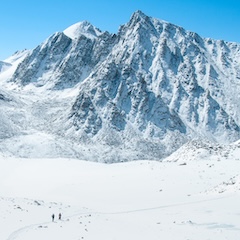
The county’s landscape represents the raw, untamed beauty of the Tibetan Plateau at its most pristine – a vast expanse of rolling grasslands, crystal-clear lakes, and snow-capped peaks that have remained largely unchanged for millennia. This untouched wilderness serves not only as the source of one of the world’s great rivers but as a crucial ecosystem supporting an extraordinary diversity of high-altitude wildlife.
The Sacred Sister Lakes: Kyarang and Ngoring
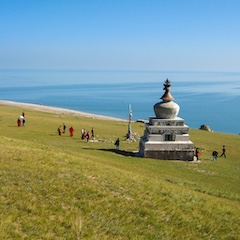
Approximately 80km from Maduo town lie the magnificent Kyarang and Ngoring Lakes, known locally as the “Sister Lakes” and revered as two of the most sacred bodies of water on the Tibetan Plateau. These massive freshwater lakes serve as primary sources of the Yellow River, their pristine waters beginning the 5,464-kilometer journey to the Bohai Sea.
Ngoring Lake, whose name translates to “Long Blue Lake” in Tibetan, and Kyarang Lake, meaning “Long Grey or Whitish Lake,” each cover approximately 1,000 square kilometers of the high plateau. These shallow lakes, rich in fish populations, freeze completely during the harsh winter months, creating a stark yet beautiful landscape of ice and snow that stretches to the horizon.
The lakes’ significance extends beyond their role as the Yellow River’s source – they represent sacred spaces in Tibetan cosmology, where earth and water elements converge to create life-giving forces. The positioning of these twin lakes has inspired countless legends and spiritual practices among local Tibetan communities.
The Monumental Yak Head
Crowning the hill that separates the two sister lakes stands an impressive Yak Head Monument, a powerful symbol of the region’s cultural identity and its relationship with the landscape. This monument pays homage to the yak, the iconic animal of the Tibetan Plateau that has sustained nomadic communities for thousands of years. The monument’s strategic location offers visitors panoramic views of both lakes and serves as a meditation point where the spiritual significance of the landscape becomes palpable.
A Wildlife Paradise
Maduo County functions as one of Tibet’s most important wildlife sanctuaries, supporting populations of rare and endangered species adapted to extreme high-altitude conditions. The region’s pristine grasslands and wetlands provide habitat for wild yaks (the ancestors of domestic yaks), Tibetan wild donkeys (kiang), Tibetan foxes, and the magnificent Tibetan brown bears (dramo).
The area’s numerous lakes and wetlands serve as crucial breeding and feeding grounds for black-necked cranes, one of the world’s rarest crane species, along with numerous other plateau bird species including bar-headed geese, Tibetan sandgrouse, and various species of plovers and sandpipers. This remarkable biodiversity makes Maduo a premier destination for wildlife enthusiasts and researchers studying high-altitude ecosystem adaptation.
Spiritual Landscape: Tsori Katse Monastery
Near the shores of Ngoring Lake stands Tsori Katse Monastery, a significant Nyingma institution that adds profound spiritual dimension to the landscape. This monastery holds particular cultural importance for its strong connections to the Epic of King Gesar, Tibet’s great heroic epic that celebrates the legendary warrior-king who conquered demons and protected the Dharma.
The monastery’s location beside the sacred lake creates a powerful spiritual environment where practitioners can contemplate the interconnections between landscape, spirituality, and cultural identity. The institution serves local nomadic communities while maintaining traditions that have been passed down through generations of high-altitude practitioners.
Geographic Origins and River Formation
The Yellow River’s journey begins at an elevation exceeding 4,600m in the Bayan Har Mountains, where glacial melt and highland springs create the initial tributaries that will eventually become one of the world’s great rivers. From Maduo, the river flows through a landscape of broad highlands that rise 300 to 500m above the river and its tributaries, creating a dramatic topography of valleys and plateaus.
The river’s course from its source demonstrates the raw power of geological forces – entering a region of deep gorges, winding its way first southeast, then northwest around the sacred Amnyi Machen Mountains. This circuitous route around one of Tibet’s most revered peaks adds spiritual significance to the river’s geography, as it circumambulates the holy mountain before continuing its journey toward distant seas.
Traditional Nomadic Culture
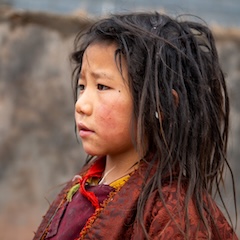
Maduo remains one of the last strongholds of traditional Tibetan nomadic culture, where families continue to live in traditional black yak-hair tents while herding their animals across vast seasonal grazing areas. These nomadic communities represent living links to Tibet’s pastoral heritage, maintaining sustainable relationships with the high-altitude environment that have evolved over thousands of years.
The nomads of Maduo possess intimate knowledge of weather patterns, animal behavior, and ecosystem management that enables them to thrive in one of the world’s most challenging environments. Their traditional lifestyle provides valuable insights into sustainable high-altitude living and serves as a model for conservation efforts across the Tibetan Plateau.
Visitor Information and Conservation
Admission: 150 yuan per person, providing access to the entire Yellow River Source Nature Reserve Season: Year-round access, weather permitting (winter visits require special preparation for extreme conditions)
The designation of the area as a nature reserve reflects recognition of its crucial ecological importance and the need to balance tourism with environmental protection. Visitors to Maduo have the rare opportunity to witness one of the world’s great rivers at its source while experiencing the pristine beauty of the Tibetan Plateau in its most untouched form.
A Sacred Trust
Maduo County represents far more than a geographical designation – it embodies the sacred trust of protecting one of Asia’s most vital water sources. As climate change and development pressures threaten high-altitude ecosystems worldwide, Maduo stands as a crucial laboratory for understanding and preserving the delicate balance between human activity and environmental conservation.
The county’s role as guardian of the Yellow River’s source carries profound responsibility for the millions of people downstream who depend on this water system. The pristine condition of Maduo’s lakes, grasslands, and watersheds directly impacts the health and sustainability of one of China’s most important river systems, making conservation efforts here critical for the welfare of vast populations across northern China.
Search
Upcoming Tours
Recent Posts
- Shoton Festival Begins in Lhasa!
 August 23, 2025
 - Tour Price in Tibet
 August 23, 2025
 - Qinghai Shaman Festival in Rebkong Concludes Successfully
 August 21, 2025
For More Information
Newsletter
Explore more! Join to get updates on Tibet tours and departures.
We are recommended by
We are committed to providing authentic, high quality, environmentally sustainable travel services. Join us and experience once in a lifetime holiday.
Contact Information
Recent Trips
.jpg "amdo monlam festival tour")