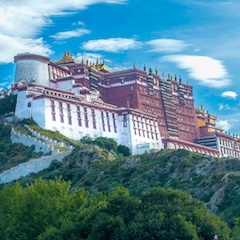
Mingdroling Monastery
Mingdroling Monastery stands as one of the most important and influential monasteries of the Nyingma school of Tibetan Buddhism, representing a pinnacle of scholarly achievement and spiritual practice within Tibet’s oldest Buddhist tradition. Located in the Dranang region of the […]
Mingdroling Monastery stands as one of the most important and influential monasteries of the Nyingma school of Tibetan Buddhism, representing a pinnacle of scholarly achievement and spiritual practice within Tibet’s oldest Buddhist tradition. Located in the Dranang region of the Tsethang area in the Yarlung Valley, approximately 120 kilometers southeast of Lhasa, this magnificent institution has served as a beacon of Nyingma learning and practice for over 300 years.
The monastery’s name, “Mingdroling,” translates to “Place of Accomplishment Liberation” or “Complete Liberation,” reflecting the profound spiritual goals that have guided this institution since its founding. As one of the six great Nyingma monasteries and the head institution of the southern treasure tradition (terma), Mingdroling has played a crucial role in preserving and transmitting the ancient teachings and practices that form the foundation of Tibetan Buddhism.
Foundation by Terdak Lingpa
Mingdroling Monastery was founded in 1676 by the extraordinary master Rigdzin Terdak Lingpa (1646-1714), one of the most accomplished treasure discoverers (tertön) in Tibetan history. Terdak Lingpa, recognized as an incarnation of Vairocana Buddha and one of the 25 disciples of Guru Rinpoche (Padmasambhava), established Mingdroling as both a center for advanced Buddhist study and a repository for the precious terma (treasure teachings) that he had discovered throughout his remarkable career.
The location chosen for the monastery was not arbitrary – the Yarlung Valley holds special significance as the birthplace of Tibetan civilization and the original seat of Tibetan kings. By establishing Mingdroling in this sacred landscape, Terdak Lingpa connected his institution to the very roots of Tibetan culture while positioning it to influence the spiritual development of the entire region.
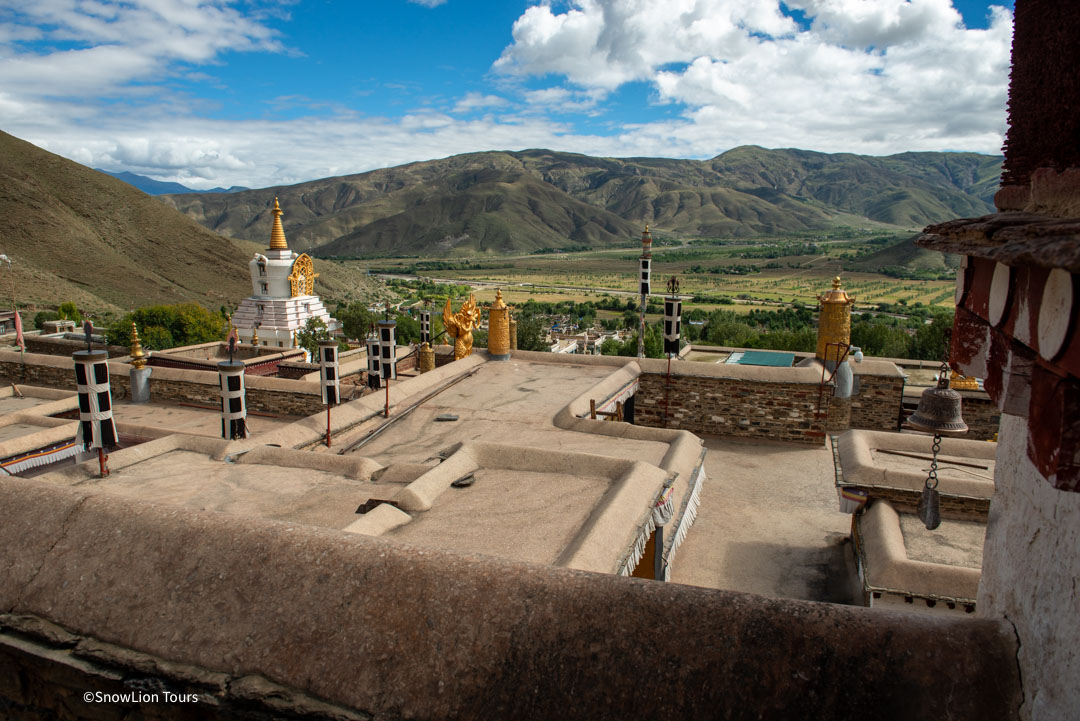
The Main Assembly Hall (Tsokchen Dukhang)
The centerpiece of Mingdroling is its magnificent main assembly hall, one of the largest and most impressive religious structures in Tibet. This massive building, capable of accommodating over 1,000 monks during major ceremonies, showcases the architectural sophistication that characterized the monastery’s golden age. The hall’s soaring pillars, intricate woodwork, and elaborate decorative elements reflect both traditional Tibetan craftsmanship and the unique artistic sensibilities of the Nyingma tradition.
The assembly hall houses an extraordinary collection of Buddhist art, including massive statues of the Buddha, Guru Rinpoche, and other important figures from the Nyingma lineage. The walls are adorned with intricate murals depicting the lives of great masters, scenes from Buddhist cosmology, and the rich iconography of Nyingma tantric practice. These artistic treasures represent some of the finest examples of classical Tibetan religious art.
The Golden Stupa Complex
Perhaps the most architecturally distinctive feature of Mingdroling is its collection of golden stupas, which create a glittering panorama visible from great distances. These magnificent structures, with their gleaming copper-gold exteriors, serve both as repositories for sacred relics and as powerful symbols of enlightened consciousness. The stupas represent different aspects of Buddhist teaching and provide focal points for circumambulation and meditation.
Specialized Colleges and Learning Centers
Mingdroling’s educational system was organized around several specialized colleges (dratsang), each focusing on different aspects of Nyingma study and practice:
Shedra (Philosophy College): Dedicated to the systematic study of Buddhist philosophy, logic, and the classical Indian texts that form the foundation of Tibetan Buddhist scholarship.
Ngakpa College: Specializing in tantric studies and the complex ritual practices that characterize the Nyingma tradition, including advanced meditation techniques and ceremonial procedures.
Chotra College: Focused on the study and performance of religious music, chanting, and the elaborate ritual arts that accompany Nyingma ceremonies.
The Treasure Tradition and Scholarly Excellence
Mingdroling gained particular renown as a center for the study and preservation of terma literature – the treasure teachings believed to have been hidden by Guru Rinpoche and other masters for discovery by future generations when conditions were appropriate. Terdak Lingpa himself was one of the most prolific treasure discoverers in Tibetan history, revealing numerous important cycles of teachings that became central to Nyingma practice.
The monastery developed sophisticated methods for authenticating, studying, and transmitting these treasure teachings, establishing scholarly standards that influenced the entire Nyingma tradition. Mingdroling’s library contained one of the most comprehensive collections of terma literature in Tibet, making it an essential destination for scholars and practitioners seeking to understand the full breadth of Nyingma teaching.
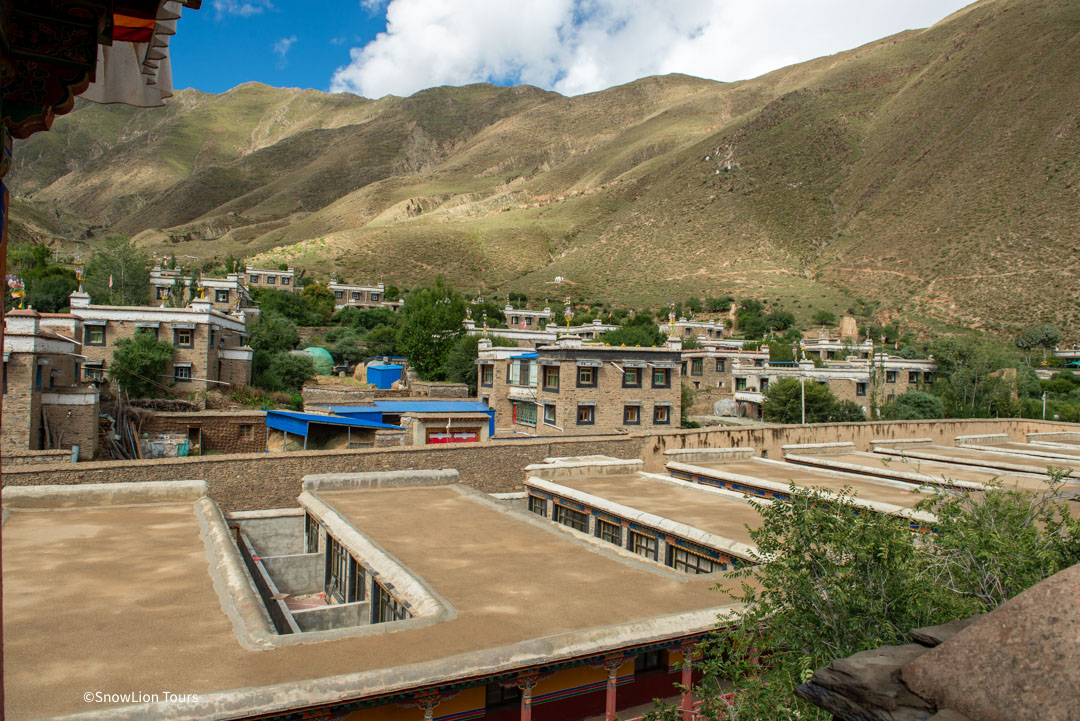
The Mindroling Scripture Printing House
One of Mingdroling’s most significant contributions to Tibetan Buddhist culture was its renowned printing house, which produced some of the finest examples of traditional Tibetan woodblock printing. The monastery’s craftsmen achieved legendary status for the quality and accuracy of their work, producing texts that were sought after throughout the Tibetan cultural world.
The Mingdroling editions of classical texts became the gold standard for accuracy and artistic excellence, with their distinctive typography and careful editorial work earning them recognition as among the most reliable versions of important Buddhist scriptures. This printing tradition represented a crucial service to the broader Buddhist community, ensuring the preservation and dissemination of essential teachings.
Lineage of Great Masters
Throughout its history, Mingdroling has been home to an extraordinary succession of accomplished masters who have shaped the development of Nyingma thought and practice:
Terdak Lingpa (1646-1714): The founder, whose treasure discoveries and scholarly works established the monastery’s intellectual foundation.
Lochen Dharmashri (1654-1717): Terdak Lingpa’s brother, who served as the monastery’s head scholar and compiled many of its most important texts.
Minling Trichen Lineage: A succession of throne holders who have maintained the monastery’s traditions while adapting to changing historical circumstances.
Each generation of masters has contributed to Mingdroling’s reputation for producing scholars and practitioners of the highest caliber, many of whom have gone on to establish their own institutions or serve as teachers throughout the Tibetan world.
Destruction and Remarkable Revival
Like many Tibetan monasteries, Mingdroling suffered devastating destruction during the Cultural Revolution of the 1960s. The monastery’s buildings were demolished, its precious libraries destroyed, and its community of over 300 monks dispersed. The loss of this institution represented a catastrophic blow to Nyingma scholarship and the preservation of treasure tradition teachings.
However, beginning in the 1980s, a remarkable reconstruction effort began, supported by both policy changes and the determination of surviving lamas and lay supporters. The rebuilding of Mingdroling has focused not only on restoring physical structures but also on reviving the scholarly and spiritual traditions that made the monastery famous.
Contemporary Mingdroling
Today’s Mingdroling, while smaller than its historical predecessor, has successfully reestablished itself as a major center of Nyingma learning and practice. The monastery currently houses approximately 300 monks and has rebuilt its main assembly hall, several colleges, and many of the golden stupas that characterize its distinctive skyline.
The monastery has resumed its educational functions, training monks in traditional Nyingma philosophy, tantra, and ritual arts. The printing house has also been reestablished, once again producing high-quality editions of important texts using traditional methods combined with modern printing technology.
Educational Excellence and Modern Adaptations
Modern Mingdroling maintains its reputation for scholarly excellence while adapting to contemporary educational needs. The monastery’s curriculum includes both traditional subjects and modern skills, preparing monks to serve Buddhist communities in an increasingly complex world.
The institution has also embraced technology to preserve and disseminate its teachings, digitizing rare texts and making them available to scholars worldwide. This balance between tradition and innovation reflects Mingdroling’s continuing commitment to its educational mission while recognizing the opportunities presented by modern communication methods.
Religious Festivals and Cultural Events
Mingdroling hosts several major festivals throughout the year that attract thousands of devotees and visitors:
Guru Rinpoche Day Celebrations: Monthly observances honoring Padmasambhava, featuring elaborate rituals and traditional mask dances.
Annual Monlam Prayer Festival: A major gathering that brings together monks and lay practitioners for intensive prayers and teachings.
Treasure Teaching Transmissions: Special ceremonies for the transmission of important terma cycles, often attended by practitioners from across the Tibetan world.
These festivals provide opportunities for the broader community to participate in the monastery’s spiritual life while maintaining important cultural traditions that might otherwise be lost in the modern world.
Pilgrimage and Spiritual Tourism
Mingdroling has become an increasingly important destination for both traditional pilgrims and spiritual tourists seeking authentic encounters with Tibetan Buddhist culture. The monastery offers various programs for visitors, including guided tours, meditation retreats, and opportunities to observe traditional monastic life.
Circumambulation Routes: Sacred walking paths around the monastery complex provide opportunities for meditation and spiritual reflection while offering different perspectives on the architectural ensemble.
Meditation Centers: Specialized facilities for intensive practice, including retreat cabins where visitors can engage in traditional Nyingma meditation techniques under qualified guidance.
Cultural Workshops: Programs that introduce visitors to traditional arts such as thangka painting, ritual music, and ceremonial dance.
The Yarlung Valley Context
Mingdroling’s location in the historic Yarlung Valley adds layers of significance to any visit. This region, known as the cradle of Tibetan civilization, contains numerous important historical and religious sites, including:
Yumbulagang Palace: Traditionally considered the first building in Tibet and the ancestral palace of Tibetan kings.
Samye Monastery: Tibet’s first monastery, located nearby and easily combined with a visit to Mingdroling.
Trandruk Temple: One of Tibet’s earliest Buddhist temples, containing precious historical artifacts and artwork.
This concentration of significant sites makes the Yarlung Valley a premier destination for understanding the full sweep of Tibetan cultural development.
Visiting Information and Practical Details
Location and Access: Mingdroling is located approximately 120km southeast of Lhasa, requiring about 2.5 hours by road through scenic mountain and valley landscapes.
Best Times to Visit:
- Spring (April-May): Mild weather with blooming flowers in the valley
- Summer (June-August): Warmest conditions but potentially more crowded
- Autumn (September-October): Clear skies and stable weather with fewer visitors
Cultural Considerations: As an active monastery, visitors should dress modestly, maintain respectful behavior during religious ceremonies, and ask permission before photographing monks or religious objects.
Duration: A thorough visit to Mingdroling typically requires 2-3 hours, though visitors interested in meditation or detailed exploration of the art and architecture may wish to spend longer.
A Living Treasure of Nyingma Tradition
Mingdroling Monastery represents far more than a historical monument or tourist destination – it embodies the living continuity of the Nyingma tradition and its profound contributions to Tibetan Buddhist thought and practice. The monastery’s emphasis on scholarly excellence, treasure tradition preservation, and spiritual accomplishment continues to attract students and practitioners from around the world.
For visitors, Mingdroling offers an unparalleled opportunity to experience the depth and sophistication of Nyingma Buddhism while witnessing the remarkable resilience of Tibetan monastic institutions. The monastery’s combination of architectural beauty, artistic treasures, and living spiritual practice creates an environment where the ancient wisdom of Tibet remains vibrantly alive and accessible to contemporary seekers.
The golden stupas that gleam across Mingdroling’s landscape serve as powerful symbols of the enlightened potential that the monastery exists to cultivate. In our rapidly changing world, institutions like Mingdroling provide essential bridges between ancient wisdom and contemporary needs, ensuring that the profound insights of Tibetan Buddhism continue to benefit future generations while honoring the extraordinary legacy of masters like Terdak Lingpa who devoted their lives to preserving and transmitting these precious teachings.
Recent Posts
- Shoton Festival Begins in Lhasa!
 August 23, 2025
 - Tour Price in Tibet
 August 23, 2025
 - Qinghai Shaman Festival in Rebkong Concludes Successfully
 August 21, 2025
Related Tours
Ganden to Samye Trek
In the first few days of this trip, explore the famous sites in Lhasa. Visit the great Potala Palace, the holy Jokhang Temple, and the lively Barkhor market. Watch monks debate at Sera Monastery and …
Sacred Cities and Heavenly Lakes
In the sacred city of Lhasa, visit the grand Potala Palace, the holy Jokhang Temple, and the colorful Barkhor Square. Watch monks debate at Sera Monastery and join pilgrims in exploring the temples and prayer …
The Undiscovered East
Far from Lhasa, the East of Tibet offers untold adventures that take travelers across verdant grasslands, over snowy mountain passes, and beyond the shores of holy lakes. On this journey, explore the hidden monasteries of …
We are recommended by
We are committed to providing authentic, high quality, environmentally sustainable travel services. Join us and experience once in a lifetime holiday.
Recent Trips
.jpg "amdo monlam festival tour")