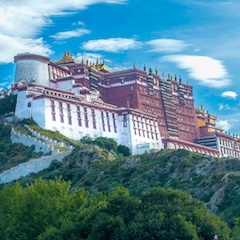
Mount Kailash | Gang Rinpoche
Mount Kailash: The Sacred Peak of Four Religions
Mount Kailash, known as Gang Rinpoche or “the Precious Jewel of Snows” in Tibetan, is considered by Buddhists to be the abode of the deity Chakrasamvara and by Hindus to be the heaven of Shiva. Jainism and Bon also revere Mount Kailash as a holy mountain. This most sacred mountain in many traditions is located 1,300km west of Lhasa at the border of China and Nepal, rising to an elevation of 6,714m (22,027ft) above sea level.
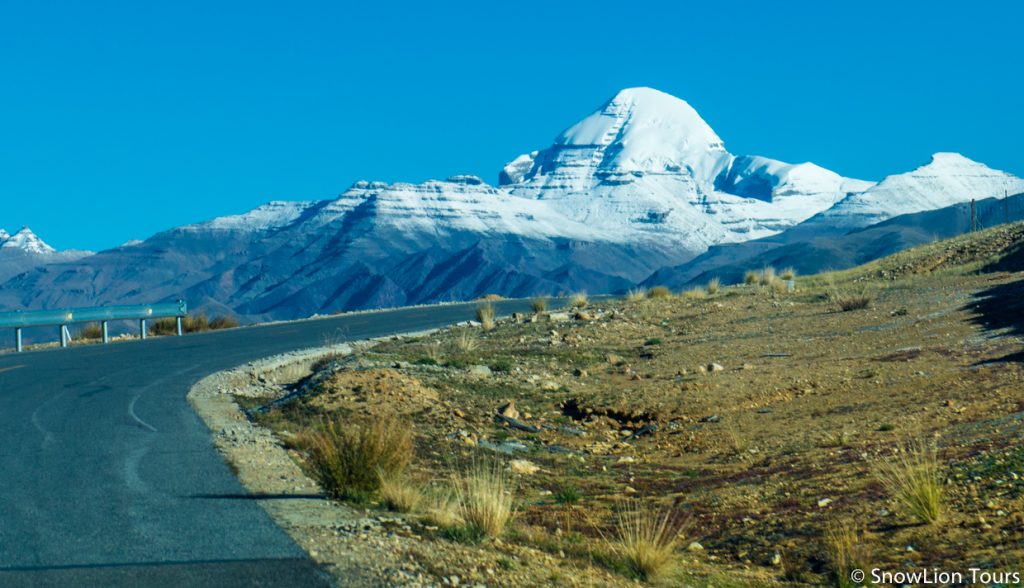
You will see this beautiful view on the way to Kailash from Lake Manasarovar
Sacred Stories and Legends
There is an ancient story that makes Mt. Kailash even more sacred and revered. It is said that Atisha, the Bengali sage, traveled to Tibet to spread Buddhism and passed through this region. When he arrived at the foot of the mountain, he heard the sounds of Buddhist instruments such as bells and drums emanating from the top of this holy mountain. He felt blessed and knew that his teaching of Buddhism in Tibet would be successful. This story is preserved by the locals, and if you are a fortunate pilgrim, you may hear the same sounds that Atisha heard in the 10th century.
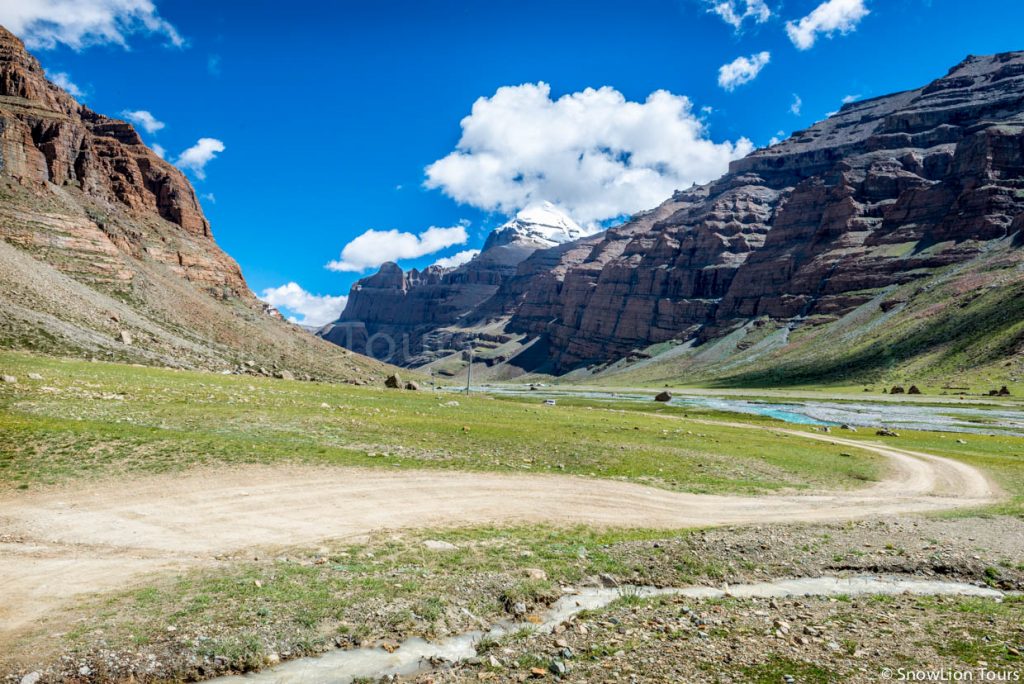
View from first day of Kailash Trek
The Contest Between Milarepa and Naro Bonchung
The great Tibetan poet-saint Milarepa lived in a cave on Mt. Kailash. One day, he received a challenge from a young man named Naro Bonchung, a faithful follower of the Bon religion who was equipped with supernatural powers and held high status. The challenge was that whoever reached the top of the mountain would become master of the sacred mountain.
Naro Bonchung made every effort to climb the mountain, but Milarepa remained calm and reached the summit while Naro Bonchung was still climbing. When Naro Bonchung finally arrived at the summit, he discovered that Milarepa was already there meditating, and he became deeply discouraged.
On his way down from Mount Kailash, Naro Bonchung used black magic to crack the mountain, which can be seen today—this crack is never covered by snow. After his failure, Naro Bonchung admitted Milarepa’s greatness and asked Milarepa to be his mentor, converting to Buddhism. Milarepa’s victory over Bonchung had great influence in the region and helped elevate the status of Buddhism in the Mt. Kailash area.
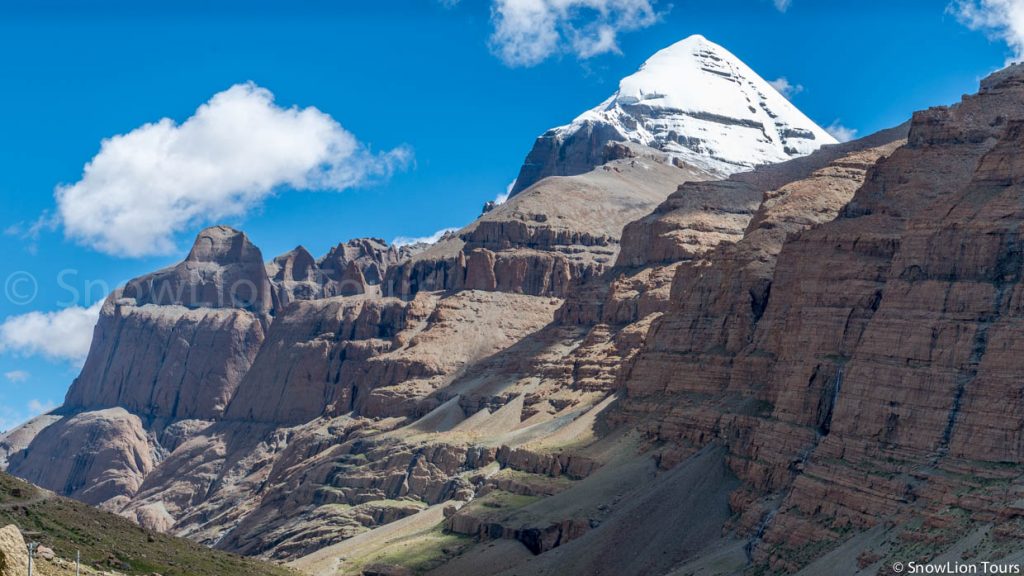
Close look at Mount Kailas
The Sacred Kora (Circumambulation)
The total length of the Mt. Kailash kora is 52km, starting at Darchen and passing through Dolma La Pass (5,630m) on the second day of the three-day trek. There are many sacred stories and symbolic peaks along the trekking route. You can see representations of Tara, Risum Gompo (Protectors of the Three Realms), and the Horse Head of King Gesar, among others.
You will also encounter cave-based monasteries such as:
- Thargu Monastery on the left side of the mountain slope on the first day
- Dirapuk (Yak Court Cave) where you stay overnight on the first trekking day
- Zutulpuk where you stay overnight on the second trekking day
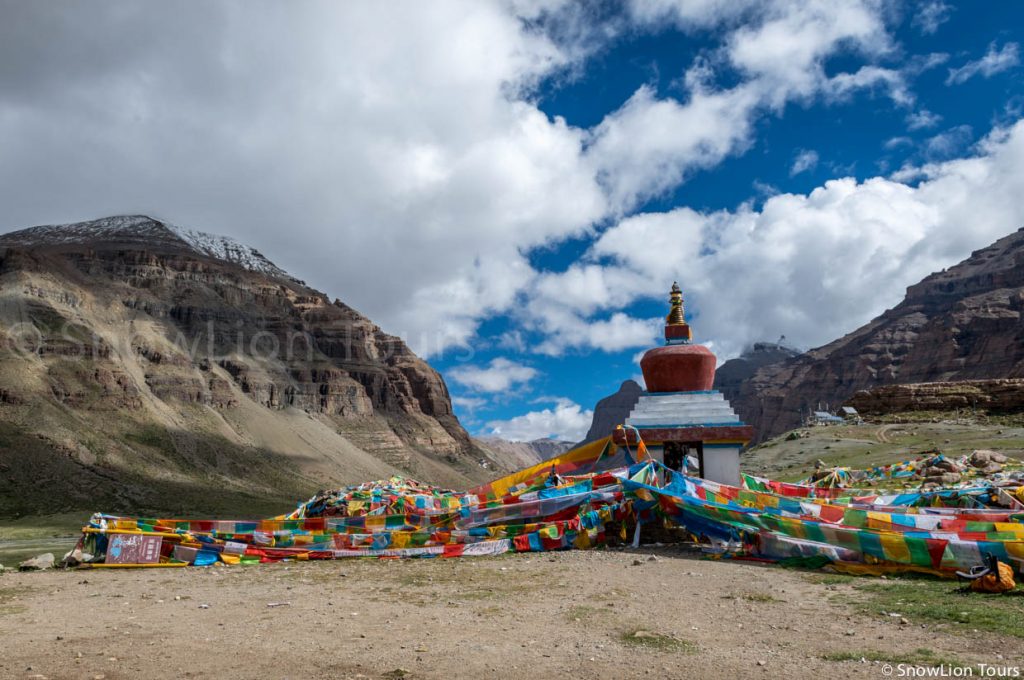
Stupa at Darpoche in Kailash
Pilgrimage and Spiritual Significance
Every year, thousands of pilgrims from all over the world come to Kailash to fulfill their kora dream and hope to receive blessings. The pilgrimage is especially auspicious when undertaken in the year of the horse, because Milarepa defeated the non-Buddhist challengers in a horse year. It is believed that a kora undertaken in a horse year is equal to 12 conventional koras of Mount Kailash.
The Path to Enlightenment
It is said that if one completes 108 circumambulations, one will reach enlightenment. The great Tibetan poet-saint Milarepa once declared: “There is no place more powerful for practice, more blessed, or more marvelous than this. May all pilgrims and practitioners be welcome!”
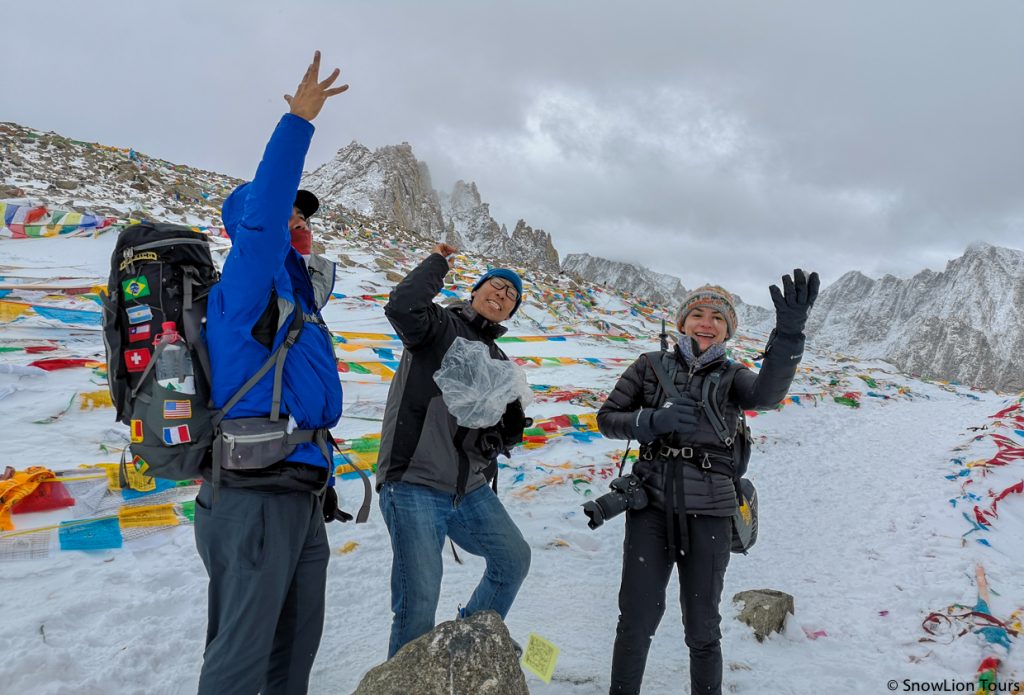
Our group is spreading wind horse or Lungta in the air, a way to ask for a safe and successful kora.
A Journey of Transformation
The Mount Kailash kora represents more than a physical journey—it is a spiritual transformation that has drawn seekers from across Asia for over a millennium. The challenging three-day trek through high-altitude terrain, combined with the mountain’s profound spiritual significance across multiple religious traditions, creates an experience that pilgrims describe as life-changing.
Whether undertaken for religious devotion, personal challenge, or spiritual seeking, the circumambulation of Mount Kailash remains one of the world’s most significant pilgrimage experiences, where the physical demands of high-altitude trekking merge with the spiritual power of one of humanity’s most sacred places.
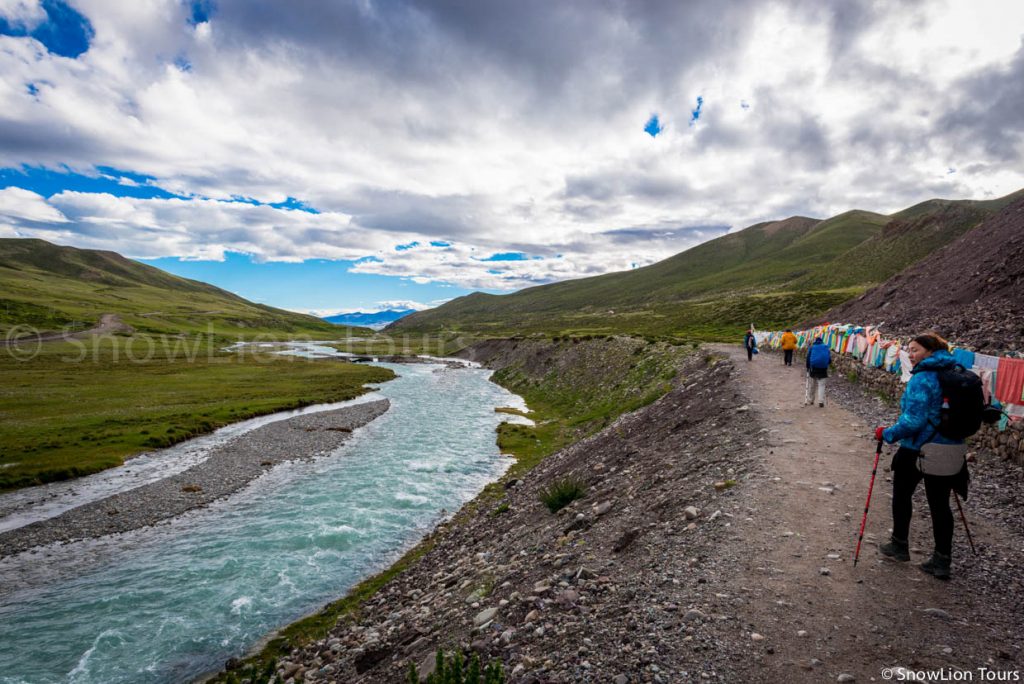
The last day of Kailash Kora, the trail is much wider and smooth with beautiful river next to the trail.
Recent Posts
- Shoton Festival Begins in Lhasa!
 August 23, 2025
 - Tour Price in Tibet
 August 23, 2025
 - Qinghai Shaman Festival in Rebkong Concludes Successfully
 August 21, 2025
Related Tours

Mount Kailash and Lake Manasarovar Trek
Mount Kailash, known as the Precious Jewel of Snows in Tibetan, is considered by Buddhists to be the abode of the deity Chakrasamvara. It is said that if one performs 108 circumambulations, one will reach …
Saga Dawa Kailash Kora
A meaningful Saga Dawa pilgrimage from Lhasa, featuring festival celebrations, the sacred kora around Mount Kailash, and time at Lake Manasarovar amid the vast landscapes of Western Tibet
Mount Kailash and Guge Kingdom
Lhasa ➔ Yamdrok Lake ➔ Shigatse ➔ Zhada ➔ Guge Kingdom ➔ Mount Kailash Kora ➔ Lake Manasarovar
We are recommended by
We are committed to providing authentic, high quality, environmentally sustainable travel services. Join us and experience once in a lifetime holiday.
Recent Trips
.jpg "amdo monlam festival tour")