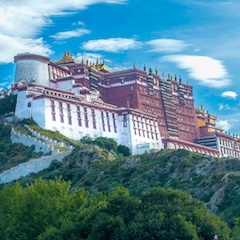
Samye Monastery in Tibet
Samye Monastery: Tibet’s First Buddhist Temple and Sacred Mandala
Samye Monastery is located 130km southeast of Lhasa and 39km west of Tsethang town, positioned strategically on the north bank of the Yarlung Tsangpo River in the culturally significant Yarlung Valley. This extraordinary monastery holds the distinguished honor of being the first Buddhist temple established in Tibet and is renowned worldwide for its beautiful mandala-shaped design, where many of the buildings reflect profound cosmological symbols embedded within the sacred mandala structure.
Founded during the reign of King Trisong Detsen between 765-780 CE, Samye Monastery represents Tibet’s first systematic effort to establish Buddhism as a permanent spiritual tradition in the country. The monastery’s construction marked a pivotal moment in Tibetan history when Buddhism began its transformation from a foreign religion into the defining spiritual force of Tibetan civilization.
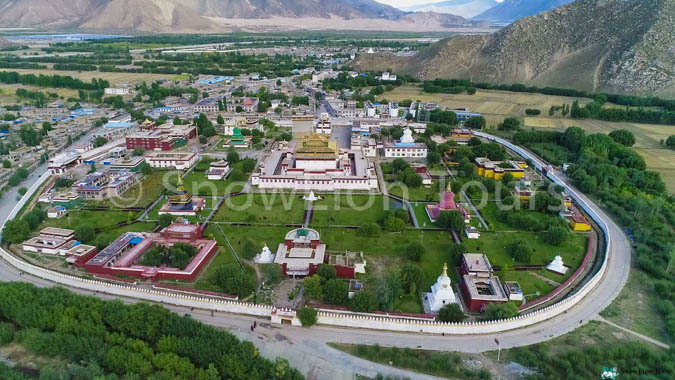
Aeria view of Samye Monastery.
The Great Debate: Buddhism versus Bon
The establishment of Samye was not without controversy. The indigenous Bon religion, which had prevailed in Tibet for centuries before Buddhism’s arrival, was not pleased with these efforts to introduce a new spiritual tradition. The tension between these religious systems created a crucial historical moment that would determine Tibet’s spiritual future.
According to traditional accounts, the victory of Buddhism over the Bon-dominated establishment was symbolically represented by Guru Rinpoche’s (Padmasambhava’s) success in subduing the demons and negative forces that resided in Tibet. This spiritual conquest took place at Hepori Hill, located just 400 meters east of Samye, where Padmasambhava performed powerful rituals to pacify the local spirits and make the land suitable for Buddhist practice. This legendary victory paved the way for Buddhism’s successful introduction and eventual dominance in Tibet.
The Utse Hall
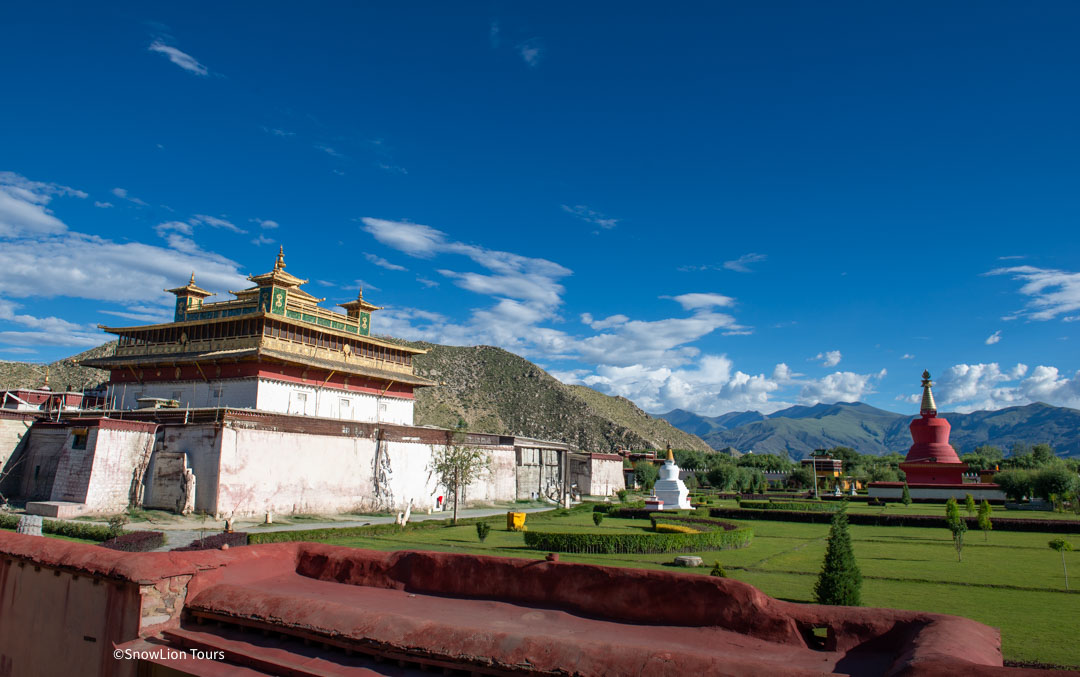
The center building three story Utse Hall is the most important temple in Samye monastery. This magnificent building combined 3 different architecture styles. The 1st floor were originally Tibetan style, the 2nd was Chinese style and the 3rd floor is Indian style. Just to the left of the entrance gate has the historical record which proclaims Buddhism as the state religion of Tibet by the order of King Trisong Detsen. The first floor of the building is the assembly hall and which contains different statues of Buddha and Bodhisattvas. The main statues on the 2nd floor is the Guru Rinpoche, King Trisong Detsen, And Buddha Shakyamuni. The 3rd floor houses a Mandala base as well as four statues of Namse (protectors for four directions). This is the main pilgrimage site in Samye monastery, therefore, this building is busy with local pilgrims from all over the Tibetan regions.
Architectural Marvel: The Mandala Design
Samye’s revolutionary architectural concept represents one of the most sophisticated examples of sacred geometry in Tibetan Buddhism. The entire monastery complex is designed as a three-dimensional mandala representing the Buddhist cosmos, with each building and structural element carrying deep symbolic meaning related to Buddhist cosmology and spiritual practice.
The Utse Hall: Heart of the Sacred Mandala
The centerpiece of Samye is the magnificent three-story Utse Hall, which serves as Mount Meru, the cosmic mountain at the center of the Buddhist universe. This extraordinary building showcases a unique architectural fusion that reflects the international character of early Tibetan Buddhism:
First Floor (Tibetan Style): Originally constructed in traditional Tibetan architectural style, the ground floor serves as the main assembly hall and contains diverse statues of Buddhas and Bodhisattvas. A significant historical inscription near the entrance gate proclaims Buddhism as the state religion of Tibet by royal decree of King Trisong Detsen, marking this momentous decision in Tibetan history.
Second Floor (Chinese Style): Built in Chinese architectural style, this level houses the most important statues in the monastery, including Guru Rinpoche (Padmasambhava), King Trisong Detsen, and Buddha Shakyamuni. These three figures represent the essential elements that made Samye possible: spiritual mastery, royal patronage, and the Buddhist teachings themselves.
Third Floor (Indian Style): Constructed in Indian architectural style to honor Buddhism’s origins, this level contains a mandala base and four statues of the Namse (directional protector deities). This floor serves as the primary pilgrimage destination within Samye, constantly bustling with devoted pilgrims from across the Tibetan regions.
The Four Sacred Stupas
Positioned at the four corners of the monastery complex, four magnificent stupas (chortens) serve as cosmic guardians, each distinguished by a dominant color that carries specific protective and symbolic functions:
Red Stupa: Symbolizes wisdom and represents the fire element, protecting against ignorance and promoting intellectual clarity.
White Stupa: Symbolizes compassion and represents the water element, fostering loving-kindness and emotional purification.
Black Stupa: Symbolizes strength and represents the earth element, providing stability and protection against negative forces.
Green Stupa: Symbolizes eternity and represents the wind element, ensuring continuity and preventing both natural and man-made disasters.
These stupas work together as a protective mandala shield, safeguarding the monastery and its surrounding community from various forms of harm while promoting spiritual qualities essential for Buddhist practice.
Hepori Hill: Sacred Site of Spiritual Victory
Hepori Hill, located approximately 400 meters east of Samye Monastery, holds immense significance as the legendary site where Guru Rinpoche subdued the demons and negative spirits of Tibet, making the location safe for monastery construction and Buddhist practice. This spiritual conquest represented the triumph of enlightened wisdom over ignorance and marked the definitive establishment of Buddhism in Tibet.
A well-maintained path leads from Samye’s east gate to the summit of Hepori Hill, offering visitors a moderate hike with extraordinary rewards. The hilltop provides spectacular panoramic views of the entire Samye complex, allowing visitors to appreciate the mandala design from an elevated perspective. From this vantage point, the symbolic arrangement of the central Utse Hall surrounded by the four colored stupas becomes clearly visible, revealing the sophisticated sacred geometry that makes Samye unique among world monasteries.
The Sacred Circumambulation (Korlam)
After exploring the monastery’s interior spaces, visitors are encouraged to join local pilgrims in performing the traditional circumambulation (korlam) around the entire monastery complex. This sacred walk takes approximately 30-40 minutes to complete and follows a peaceful route between the monastery walls and traditional village homes, creating an intimate connection with both the sacred architecture and the living community that surrounds it.
Along the circumambulation route, small stupas built into the monastery wall serve as focal points for prayer and meditation. Many pilgrims pause at these miniature shrines to make offerings, spin prayer wheels, and recite mantras, creating a continuous stream of devotional activity that has continued unbroken for over 1,200 years.
The korlam offers visitors an opportunity to experience Tibetan Buddhist practice firsthand while enjoying quiet reflection and observing the daily rhythms of monastic and village life that continue to flourish around this ancient sacred site.

Red Stupa in Samye Monastery
Living Monastic Tradition
Monks’ Debate Sessions
For visitors staying at Samye or arriving in the late afternoon, the monastery offers an exceptional opportunity to witness traditional Buddhist philosophical debates. These sessions typically begin at 4:00 PM (though times may vary seasonally) in the designated debating courtyard, where monks engage in rigorous intellectual exchanges that combine logical argumentation with physical gestures and vocal emphasis.
The debate tradition represents one of the most distinctive features of Tibetan Buddhist education, where complex philosophical concepts are explored through dynamic dialogue rather than passive study. Watching these debates provides insights into the sophisticated intellectual traditions that have made Tibetan Buddhism one of the world’s most philosophically developed religious systems.
Practical Information for Visitors
Accommodation: Accommodation options in Samye are limited but adequate for visitors seeking an authentic experience. The Samye Monastery Hotel serves as the primary lodging option, offering budget-friendly accommodations that are relatively clean with shower facilities available most of the time. The hotel’s location provides easy access to the monastery while allowing guests to experience the rhythm of daily life in this historic religious community.
Dining Options: Several restaurant choices are available, with most establishments located on the main street of the village near the Samye Monastery Hotel. Additionally, one restaurant operates within the monastery courtyard itself, providing convenient dining for visitors exploring the complex. Both vegetarian and non-vegetarian food options are available, catering to diverse dietary preferences and religious requirements.
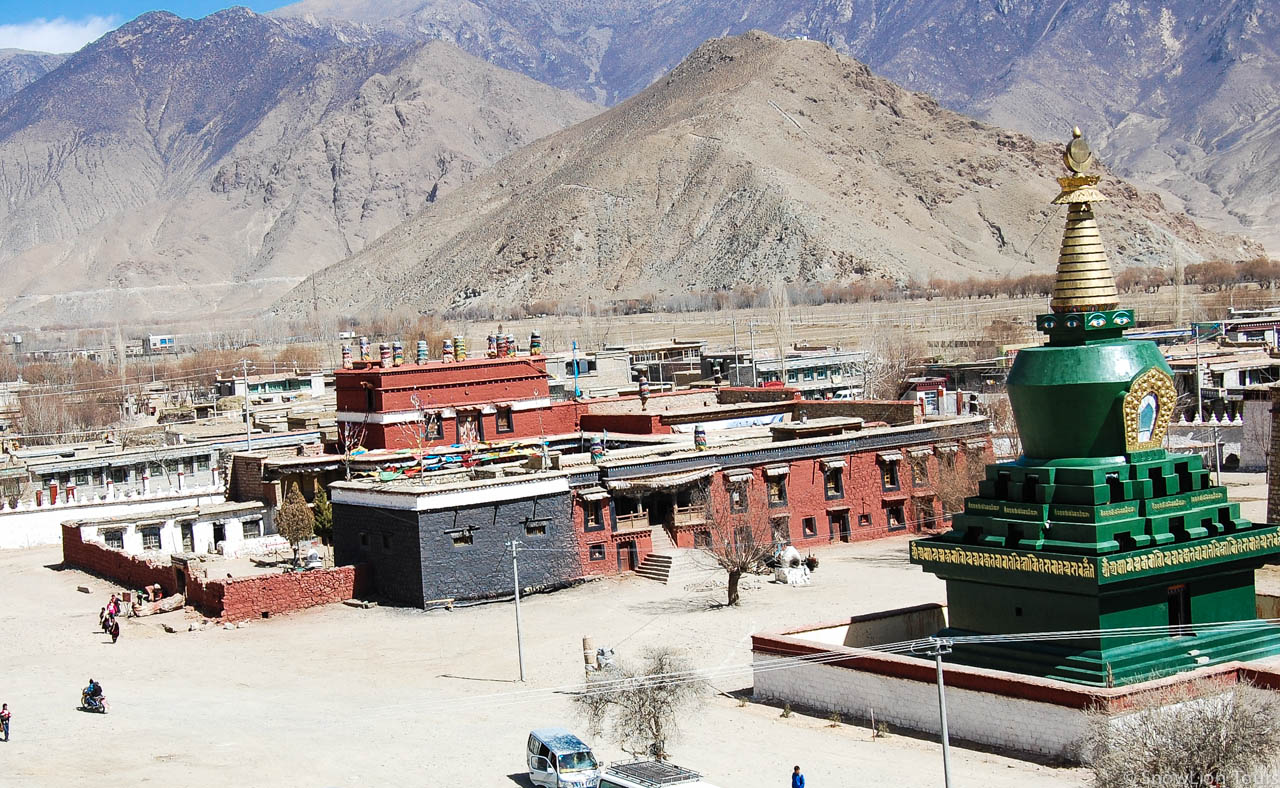
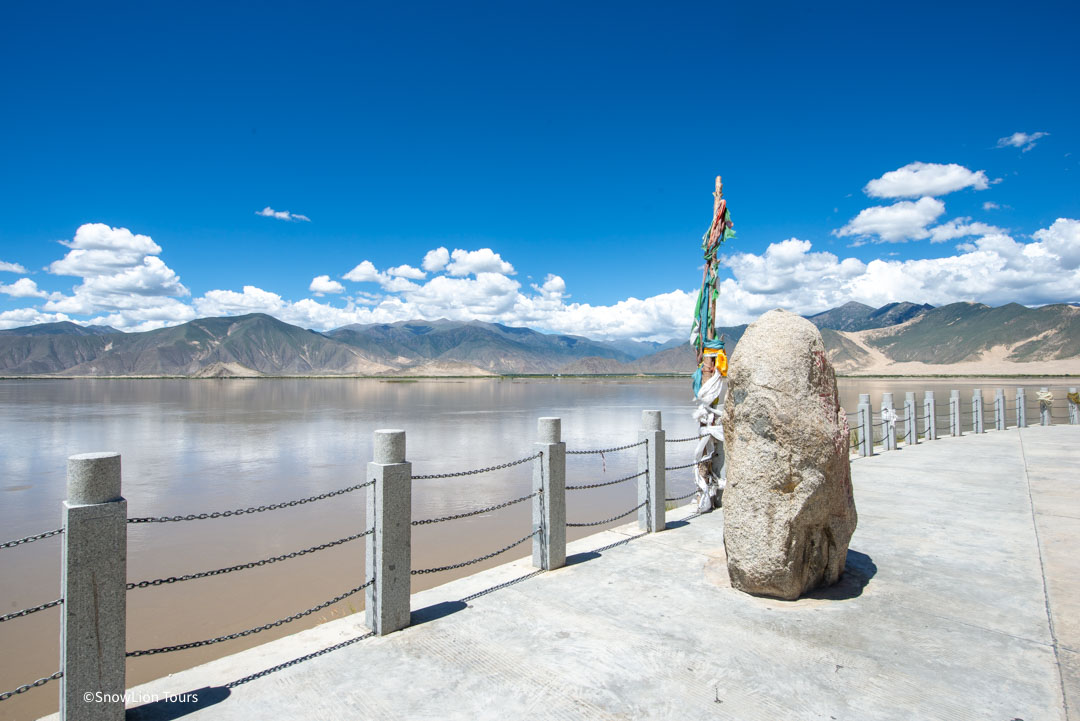
Samye Monastery has 4 Chortan or stupas around the 4 corner of the monastery. This is the green stupa in Samye Monastery located on the bank of Yurlung Tsangpor river in Tsethang
Visiting Information:
- Admission Fee: Utse Hall entrance costs 40 yuan per person
- Opening Hours: The monastery is accessible year-round
- Best Visiting Times: Early morning (7:00-9:00 AM) and late afternoon (4:00-6:00 PM) offer the most peaceful atmosphere and optimal lighting for photography
- Seasonal Considerations: Spring and autumn provide the most comfortable weather, while winter visits offer unique perspectives but require warm clothing
Cultural and Spiritual Legacy
Samye Monastery represents far more than an architectural achievement or historical curiosity – it embodies the successful synthesis of diverse cultural influences that created the unique tradition of Tibetan Buddhism. The monastery’s international architectural styles, mandala-based design, and integration of indigenous and foreign spiritual elements demonstrate Tibet’s remarkable ability to absorb and transform external influences while maintaining its essential cultural character.
For contemporary visitors, Samye offers an unparalleled opportunity to experience the birthplace of Tibetan Buddhism while witnessing the continuing vitality of traditions established over twelve centuries ago. The monastery serves as a living testament to the power of spiritual vision combined with royal patronage and community dedication to create institutions that transcend their historical origins to become eternal sources of inspiration and transformation.
The experience of walking through Samye’s sacred spaces, participating in its circumambulation, and observing its continuing monastic life provides profound insights into how spiritual communities can maintain their essential character across centuries of change while continuing to serve the spiritual needs of each new generation. In our rapidly changing world, Samye stands as a powerful reminder of the enduring human need for sacred spaces that connect us to both our highest aspirations and our deepest sources of meaning and purpose.
Recent Posts
- Shoton Festival Begins in Lhasa!
 August 23, 2025
 - Tour Price in Tibet
 August 23, 2025
 - Qinghai Shaman Festival in Rebkong Concludes Successfully
 August 21, 2025
Related Tours
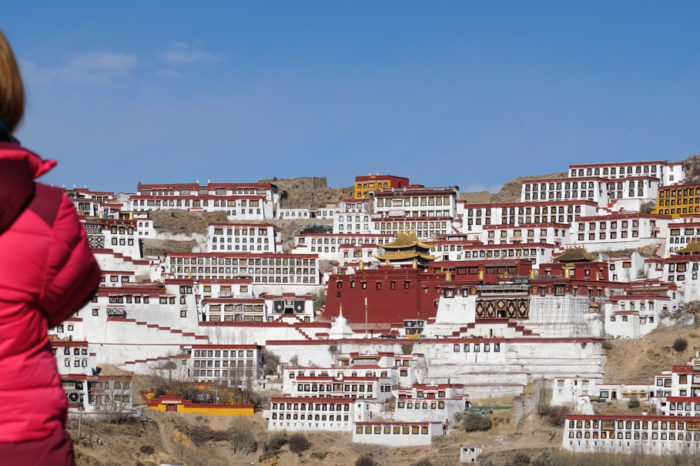
Ganden to Samye Trek
In the first few days of this trip, explore the famous sites in Lhasa. Visit the great Potala Palace, the holy Jokhang Temple, and the lively Barkhor market. Watch monks debate at Sera Monastery and …
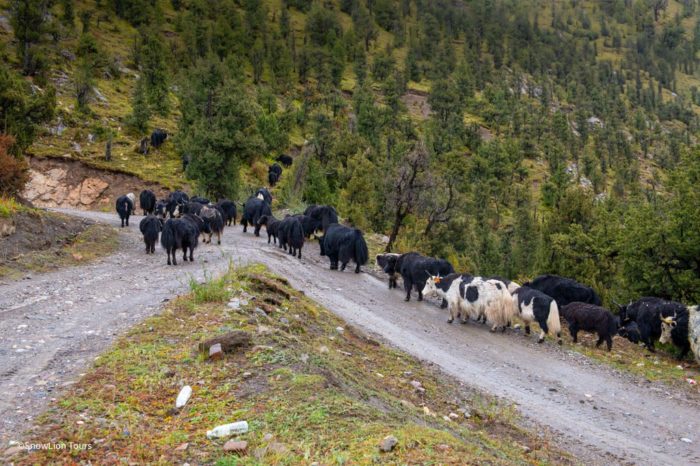
Expedition to the East
Starting in Lhasa, discover the famous Potala Palace, watch the monks debate at Sera Monastery, and sip tea on a rooftop overlooking the bustling Barkhor market square. Follow the Nyang River out of Lhasa to …
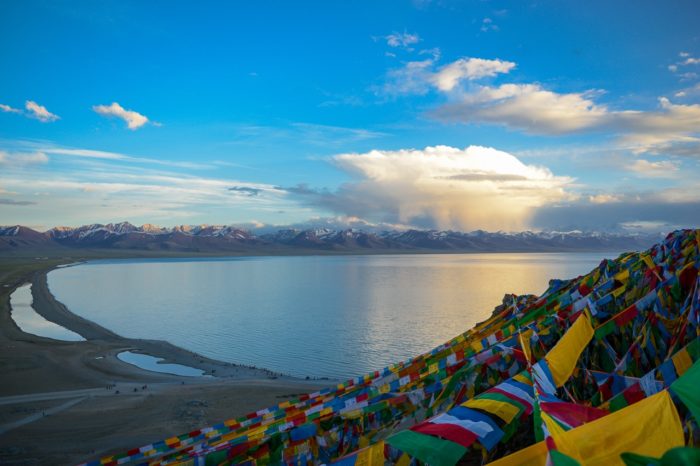
Sacred Cities and Heavenly Lakes
In the sacred city of Lhasa, visit the grand Potala Palace, the holy Jokhang Temple, and the colorful Barkhor Square. Watch monks debate at Sera Monastery and join pilgrims in exploring the temples and prayer …
We are recommended by
We are committed to providing authentic, high quality, environmentally sustainable travel services. Join us and experience once in a lifetime holiday.
Recent Trips
.jpg "amdo monlam festival tour")