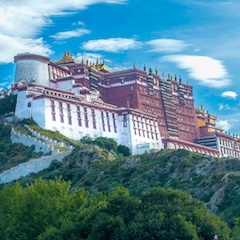
Yamdrok Yumtso Lake
Yamdrok Yumtso: The Sacred Turquoise Lake of Tibet
Yamdrok Yumtso, situated at an elevation of 4,441 meters and located approximately 100 kilometers south of Lhasa, stands as one of Tibet’s most breathtaking and spiritually significant natural wonders. The name “Yamdrok Yumtso” translates to “the Turquoise Lake” in Tibetan, perfectly capturing the stunning azure-blue waters that have inspired pilgrims, poets, and travelers for over a millennium.
This magnificent freshwater lake holds profound religious importance as one of the four most sacred lakes in Tibet, alongside Namtso Lake, Lake Manasarovar, and Lhamo Lhatso Lake. For Tibetan Buddhists, Yamdrok Yumtso is not merely a geographical feature but a sacred mandala, a dwelling place of protective deities, and a source of spiritual power that influences the fate of Tibet itself.

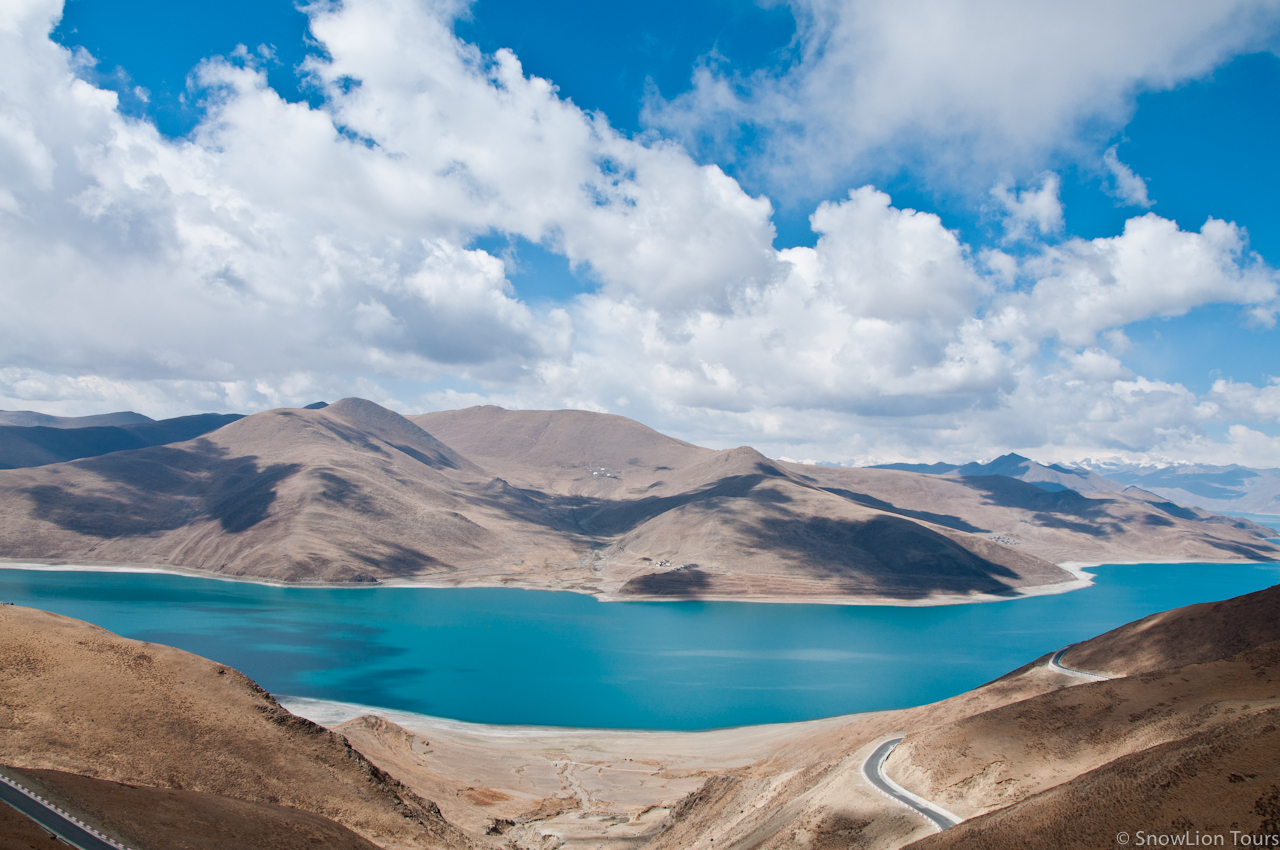
Yamdrok Lake in Tibet – One of the most beautiful scenic view on this trip.
Geographic Marvel and Natural Beauty
The journey to Yamdrok Yumtso is itself a spectacular experience. The paved road from Lhasa to Gyantse ascends dramatically to the Kamba La Pass at 4,700 meters, one of the highest motorable passes regularly crossed by travelers in Tibet. From the summit of Kamba La, visitors are rewarded with one of the most stunning panoramic views in the Himalayas.
On one side of the mountain lies the winding Yarlung Tsangpo (Brahmaputra River) valley, where Tibet’s longest river carves its ancient path through the landscape. On the other side, several hundred meters below the road, spreads the magnificent expanse of Yamdrok Lake, its waters displaying fabulous shades of deep turquoise on clear days. In the distance, the snow-capped peak of Nojin Kangsang (7,191 meters) provides a dramatic backdrop, creating a landscape composition of extraordinary beauty.
Physical Characteristics
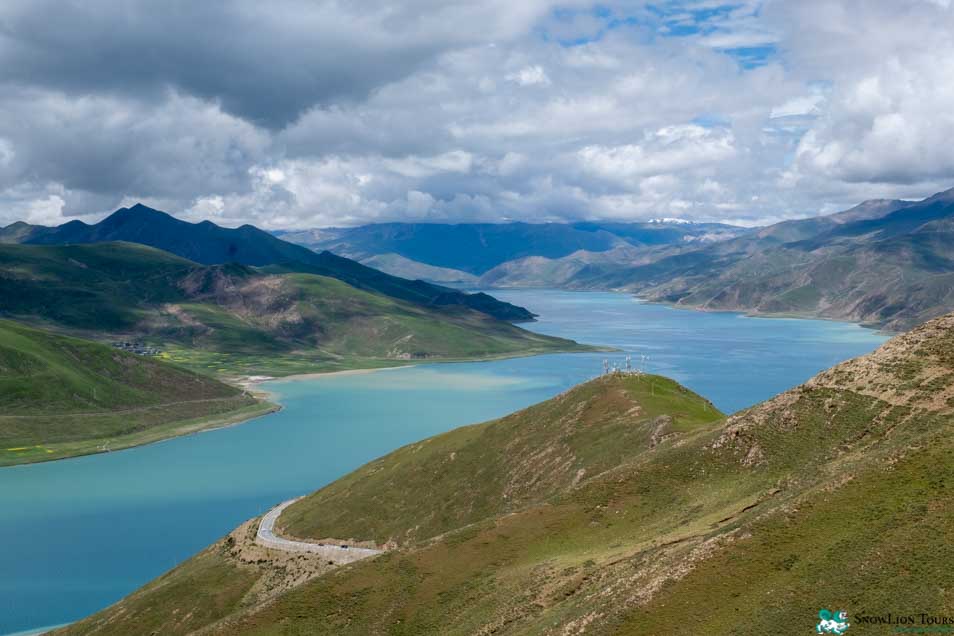
Yamdrok Yumtso covers an impressive area of 638 square kilometers, making it one of Tibet’s largest lakes. The lake maintains an average depth of 30 meters, reaching its deepest point at 60 meters. The lake’s irregular shoreline creates numerous bays, peninsulas, and inlets that stretch for over 250 kilometers of coastline, giving the lake its distinctive sprawling, tentacle-like appearance when viewed from the surrounding mountains.
The lake is fed by numerous small streams and glacial melt from the surrounding peaks, while its waters have no natural outlet, making it an endorheic lake. This closed-basin characteristic contributes to the lake’s unique mineral composition and the stunning turquoise coloration that changes throughout the day as light conditions shift across its surface.
Yamdrok Lake in Tibet
Religious and Cultural Significance
Yamdrok Yumtso’s inclusion among Tibet’s four most sacred lakes reflects its deep spiritual significance in Tibetan Buddhist cosmology. Each of these lakes is associated with specific protective deities and is believed to influence different aspects of Tibet’s spiritual and temporal welfare. Local tradition holds that Yamdrok Yumtso is connected to the life force of the Tibetan nation itself, and that the lake’s condition reflects the spiritual health of Tibet.
Pilgrimage Traditions
The lake serves as an important pilgrimage destination throughout the year, but it holds special significance during the Tibetan Year of the Sheep, when the lake’s spiritual power is believed to be particularly potent. During these auspicious years, hundreds of pilgrims from across Tibet undertake arduous journeys to visit the holy lake and perform ritual circumambulations around its shores.
The complete circumambulation of Yamdrok Yumtso is a major undertaking, requiring several days to complete on foot. Pilgrims believe that completing this sacred walk generates immense spiritual merit, purifies negative karma, and brings blessings for both the individual practitioner and all sentient beings. Many pilgrims perform prostrations along portions of the route, particularly at sacred sites and viewpoints around the lake.
Spiritual Beliefs and Local Legends
According to Tibetan Buddhist tradition, Yamdrok Yumtso is inhabited by powerful protective deities who safeguard both the lake itself and the broader region. Local legends speak of the lake as the transformation of a goddess who sacrificed herself to create this sacred water body for the benefit of all beings. The lake is also associated with the female Buddha Dorje Phagmo (Vajravarahi), whose monastery overlooks the lake from nearby Samding.
The changing colors of the lake throughout the day and seasons are interpreted through spiritual lenses, with different hues believed to indicate various spiritual conditions and prophetic meanings. Tibetan oracle traditions include consultations about the lake’s appearance as part of divination practices concerning Tibet’s future.
Yamdrok Yumtso Lake
Unique High-Altitude Ecosystem
Yamdrok Yumtso supports a unique high-altitude ecosystem that has adapted to the extreme conditions of the Tibetan Plateau. The lake’s waters, despite their high altitude and harsh seasonal temperature variations, support several species of fish that have evolved specifically for these conditions. The surrounding wetlands and grasslands provide crucial habitat for migratory birds and endemic species found nowhere else on Earth.
Climate and Seasonal Variations
The lake experiences dramatic seasonal changes, with winter temperatures dropping well below freezing, causing portions of the lake to ice over. Summer months bring relatively warmer conditions, allowing the lake’s famous turquoise colors to reach their most brilliant intensity. The high altitude and thin atmosphere create rapid weather changes, with storms appearing and dissipating quickly across the lake’s surface.
Conservation Challenges
Like many of Tibet’s sacred lakes, Yamdrok Yumtso faces environmental pressures from climate change, which affects water levels and temperature patterns. Development projects in the watershed also pose potential threats to the lake’s pristine condition. The Tibetan community’s deep spiritual connection to the lake serves as a powerful conservation force, as local beliefs emphasize the importance of maintaining the lake’s purity and natural state.
Cultural Landscape and Human Heritage
Traditional Communities
The shores of Yamdrok Yumtso are dotted with small Tibetan villages where communities have maintained traditional lifestyles for centuries. These communities practice traditional animal husbandry, primarily herding yaks, sheep, and goats on the high-altitude grasslands surrounding the lake. The harsh but beautiful environment has shaped a distinctive local culture that combines practical adaptation to extreme conditions with deep spiritual reverence for the natural landscape.
Samding Monastery
Overlooking the lake from the Samding Peninsula stands Samding Monastery, famous as the seat of Dorje Phagmo, one of the highest-ranking female incarnations in Tibetan Buddhism. This monastery adds another layer of spiritual significance to the lake, as the Dorje Phagmo incarnation is traditionally recognized as the protector of Yamdrok Yumtso.
Visiting Yamdrok Yumtso
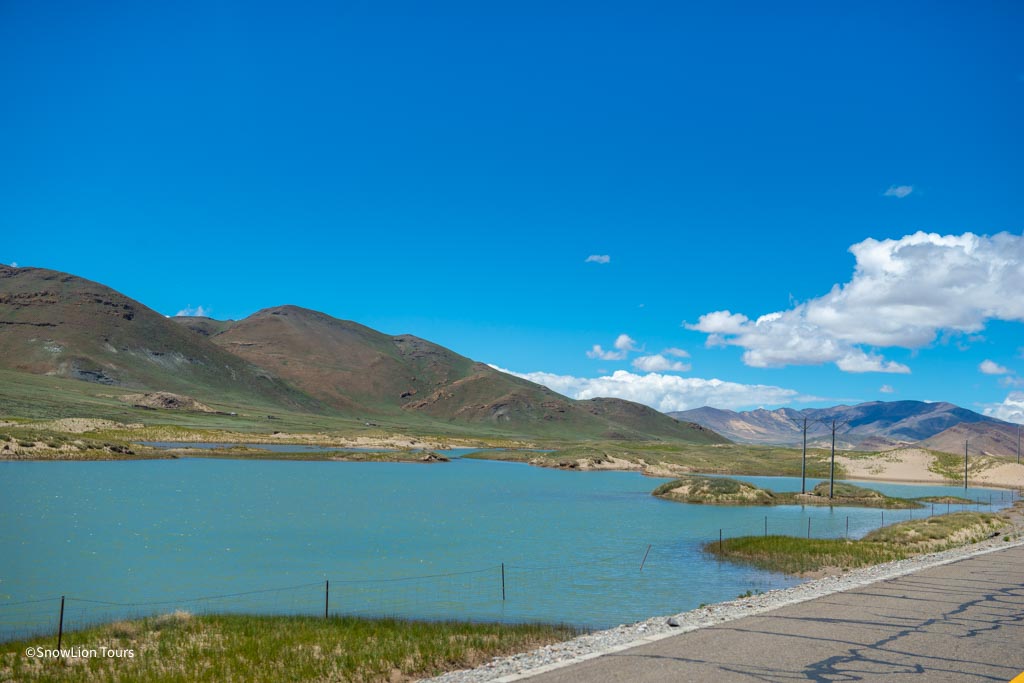
A lake at the road side on the way to Mount Kailash.
Best Viewing Points
The Kamba La Pass provides the most spectacular and accessible viewpoint for first-time visitors. The elevation and perspective from this pass offer comprehensive views of the lake’s full extent and its relationship to the surrounding mountain landscape. Several marked viewpoints along the pass allow for photography and contemplation while providing safety barriers along the dramatic cliff edges.
Photography Opportunities
Yamdrok Yumtso is renowned among photographers for its remarkable range of colors and dramatic lighting conditions. The best photography typically occurs during the “golden hours” of early morning and late afternoon when the interplay of light on water creates the most striking color variations. The lake’s turquoise waters provide stunning contrast against the brown hills and snow-capped peaks that surround it.
Seasonal Considerations
Summer (June-September): Warmest weather with the most vivid water colors, but also the busiest tourist season. Road conditions are optimal, and the full range of turquoise hues is visible.
Winter (December-February): Dramatic winter landscapes with portions of the lake frozen, creating unique ice formations. Very cold temperatures require appropriate preparation, but the winter scenery offers a completely different perspective on the lake’s beauty.
Spring and Autumn: Moderate temperatures with excellent visibility and fewer crowds. These seasons often provide the clearest mountain views and most stable weather for extended observation.
Practical Information
Access and Transportation: Yamdrok Yumtso is easily accessible as part of the standard Lhasa to Gyantse route, making it a popular addition to Tibet itineraries. The journey from Lhasa takes approximately 2-3 hours by vehicle, with the dramatic ascent to Kamba La Pass being part of the experience.
Altitude Considerations: At 4,441 meters, the lake sits at an elevation that requires acclimatization. Visitors should be aware of potential altitude-related effects and ensure adequate preparation for high-altitude travel.
Cultural Sensitivity: As a sacred site, visitors should maintain respectful behavior, avoid disturbing local pilgrims and religious practices, and follow local guidelines regarding photography and access to sensitive areas.
A Timeless Sacred Landscape
Yamdrok Yumtso represents more than a scenic destination – it embodies the profound connection between natural beauty and spiritual significance that characterizes Tibetan culture. The lake serves as a living mandala where geography, spirituality, and human culture intersect in ways that have remained essentially unchanged for centuries.
For visitors, whether pilgrims seeking spiritual blessings or travelers drawn to natural beauty, Yamdrok Yumtso offers an encounter with one of the world’s most spectacular high-altitude lakes while providing insights into the deep spiritual traditions that have shaped Tibetan civilization. The experience of standing at Kamba La Pass, witnessing the lake’s brilliant turquoise waters spreading across the high plateau beneath snow-capped peaks, creates lasting memories and a deeper appreciation for the remarkable landscapes that continue to inspire devotion and wonder in the heart of the Himalayas.
The lake stands as a testament to the Tibetan understanding that the natural world and spiritual realm are intimately connected, and that certain landscapes possess the power to transform human consciousness simply through the act of witnessing their sublime beauty. In our modern world, Yamdrok Yumtso continues to offer this transformative experience to all who make the journey to its sacred shores.
Recent Posts
- Shoton Festival Begins in Lhasa!
 August 23, 2025
 - Tour Price in Tibet
 August 23, 2025
 - Qinghai Shaman Festival in Rebkong Concludes Successfully
 August 21, 2025
Related Tours
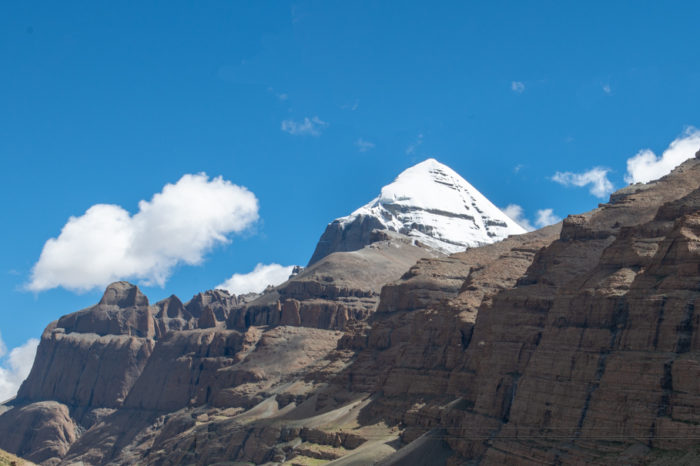
Sacred Mt. Kailash
Mt. Kailash, known as the "Precious Jewel of Snows" in Tibetan, is revered by Buddhists as the dwelling place of the deity Chakrasamvara. It is believed that completing 108 circumambulations around the mountain leads to …
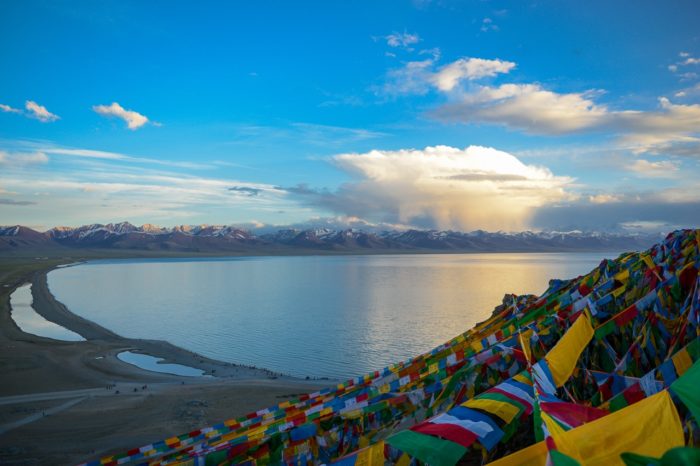
Sacred Cities and Heavenly Lakes
In the sacred city of Lhasa, visit the grand Potala Palace, the holy Jokhang Temple, and the colorful Barkhor Square. Watch monks debate at Sera Monastery and join pilgrims in exploring the temples and prayer …
Taste of Lhasa
In the sacred city of Lhasa tour, visit the grand Potala Palace, the holy Jokhang Temple, and the vibrant Barkhor Square. Watch monks debate at Sera Monastery, and join pilgrims as they explore the temples …
We are recommended by
We are committed to providing authentic, high quality, environmentally sustainable travel services. Join us and experience once in a lifetime holiday.
Recent Trips
.jpg "amdo monlam festival tour")