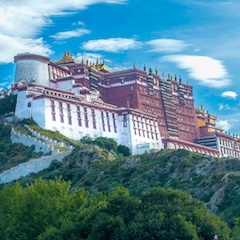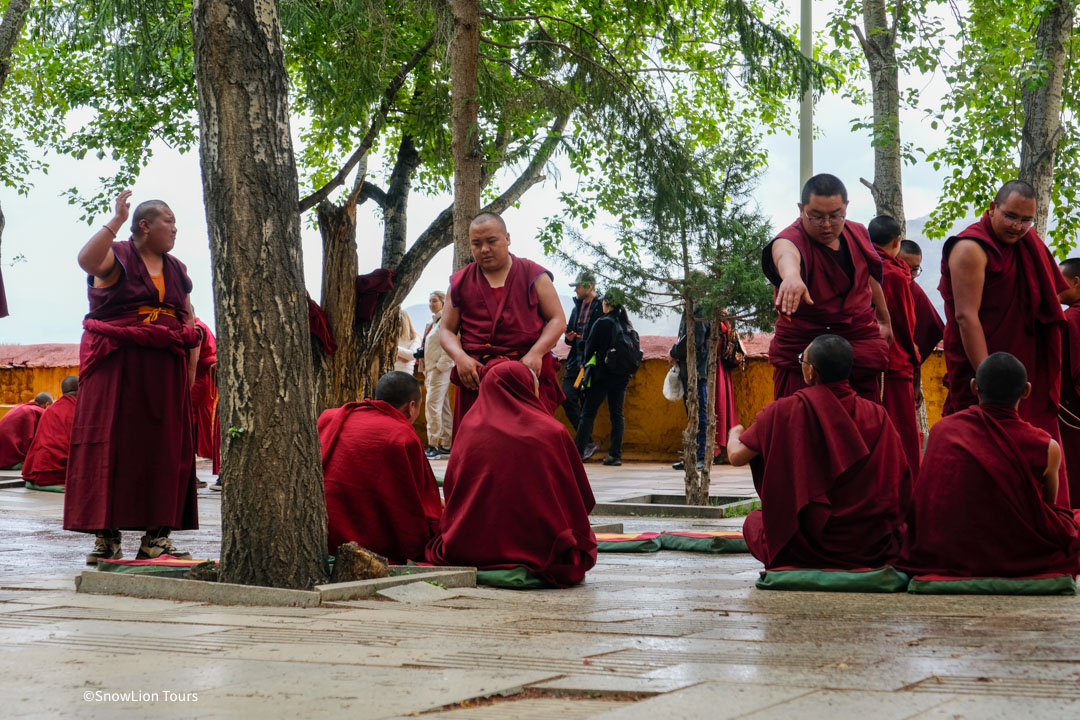
For most travelers, Tibet conjures images of a remote land tucked high in the Himalayas. Long isolated from the outside world, it was once considered a forbidden land, nearly impossible to enter. Today, however, Tibet is more accessible than ever. Here’s what you need to know to plan your journey.
Tibet Travel Permits
All travelers to the Tibet Autonomous Region (TAR) require a Tibet Travel Permit. These permits can only be obtained through a registered travel agency. Even the simplest tour requires:
-
A Tibet Travel Permit
-
A licensed guide
-
A car and driver if leaving Lhasa
Entering Tibet via Mainland China
If entering Tibet from within China, a valid Chinese visa is required in addition to the Tibet Travel Permit.
-
By Train: A copy of the permit is sufficient, which your travel agency can send via email. Lhasa is connected by train to Xining, Lanzhou, Chengdu, Xi’an, Beijing, Shanghai, Guangzhou, and other cities along the railway.
-
By Air: The original permit is required and can be couriered to your hotel. Flights are available from Chengdu, Xi’an, Shangri-La, Beijing, Shanghai, Guangzhou, Chongqing, Xining, and other cities.
-
By Land: Lhasa can be reached via the Qinghai-Tibet Highway, Sichuan-Tibet North and South Highways, and the Yunnan-Tibet Highway. Overland access from Kashgar to Western Tibet (Ngari) is also possible via the Xinjiang-Tibet Highway.
Entering Tibet via Nepal
Travelers entering Tibet through Nepal need a “group visa,” issued through a registered travel agency.
-
Chinese visas are canceled and replaced with the group visa, which includes a list of all travelers’ names.
-
Group visas are typically valid for 15–25 days and cannot be extended or modified while in Tibet.
-
All members on the visa must exit China together.
Options:
-
By Air: Flights from Kathmandu to Lhasa offer stunning views of the Himalayas.
-
By Land: Overland travel from Kathmandu to Lhasa takes 5–7 days, passing Everest Base Camp, Tingri, Gyantse, and Shigatse.
Traveling to Other Tibetan Regions in China
Outside the Tibet Autonomous Region, Tibetan culture thrives in regions of Amdo and Kham, spread across Qinghai, Sichuan, Gansu, and Yunnan. Visiting these areas is simpler:
-
No special permits, guides, or drivers are required.
-
Public transportation is available.
-
Hiring a guide or carrying a Tibetan/Chinese phrasebook is recommended for travelers unfamiliar with local languages.
Gateways: Xining for Amdo and Chengdu for Kham.
Choosing a Tibet Travel Agency
To arrange a Tibet Travel Permit and tour, it is essential to contact a reliable travel agency. Tips:
-
Select agencies based in Lhasa, Xining, or Chengdu; they are experienced and offer fair pricing.
-
Avoid middle-men outside Tibet, who often inflate prices.
-
Choose Tibetan-owned companies to support local communities. Tibetan-owned agencies have deep knowledge of the land, culture, and local guides, ensuring your tourism dollars benefit Tibetans directly.
Traveling responsibly means supporting local businesses while experiencing authentic Tibetan culture and hospitality.






.jpg "amdo monlam festival tour")