Wonders of Mountain Kingdom
Mount Kailash, the great Tibetan poet-saint Milarepa once declared, There is no place more powerful for practice, more blessed, or more marvelous than Mount Kailash. May all pilgrims and practitioners be welcome!
Mt. Everest, which is known as Jomolangma or the Mother of all mountains in Tibetan, is the world’s highest mountain with an altitude of 8848m / 29028ft.
Begin your journey in Lhasa, visiting the Potala Palace, Jokhang Temple, and the Barkhor marketplace. Watch monks debate at Sera Monastery, explore the summer palace of the Dalai Lama, Drepung Monastery, and Ramoche Temple. Drive to Yamdrok Lake and Shigatse to see the giant Buddha. Traverse the Tibetan countryside and high mountain passes to reach Mt. Everest Base Camp, visiting the world’s highest monastery, Rongbuk Monastery. Continue to Peikutso Lake with views of Mt. Shishapangma, then reach the Ngari region. In Western Tibet, visit Lake Manasarovar and Darchen, and trek around Mt. Kailash, enjoying stunning rocky cliffs and waterfalls.
Highlights
- Lhasa, the cradle of Tibetan civilization
- Lake Manasarovar, Lake Peikutso & Yamdrok Lake
- Mt. Everest North Face
- Mt. Kailash Trekking
- Nepal border
Details
- 16-day trip begins and ends in Lhasa, Tibet
- 14-day trip begins in Lhasa and ends in Nepal border
- 15 nights in hotels and guesthouses for participants begin and end in Lhasa, Tibet
- 13 nights in hotels and guesthouses for participants end and exit at Nepal border
- Altitude from 2800-5600m
Itinerary:
Day 1: Arrive in Lhasa (3658 m)
Welcome to Lhasa! Transfer to your hotel and get settled. You can wander around the town on your own or rest at the hotel to acclimatize.
Day 2: Lhasa Sightseeing
Visit Drepung, one of the three most famous monasteries in Lhasa. Drepung is located just outside Lhasa on Gambo Utse Mountain. After lunch, explore Sera Monastery, where you can watch monks debate in the courtyard. If time allows, hike to Pabonka Hermitage. Founded by the 33rd King Songtsan Gampo in the 7th century, it is currently the largest and most important of the Sera hermitages.
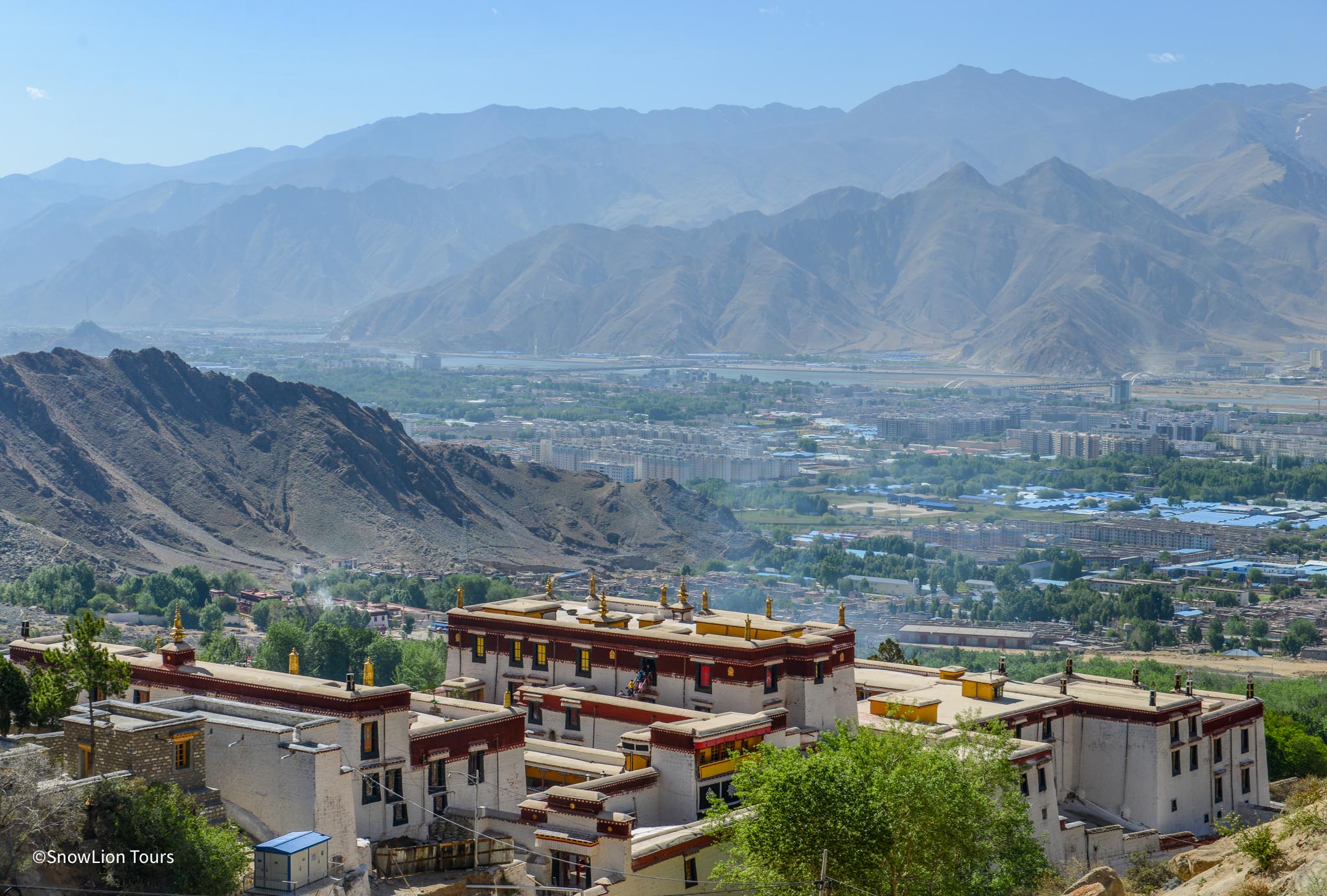
The view of Lhasa city from Drepung Monastery
Day 3: Lhasa Sightseeing
In the morning, visit the Potala Palace, the greatest monumental structure in all of Tibet. Also, visit the Jokhang Temple, which is located in Barkhor Square in Lhasa. The Barkhor is a famous shopping street filled with goods and souvenirs from Tibet, Nepal, and India. Pilgrims from all over Tibet visit the Barkhor to pray in front of the Jokhang. Afterwards, visit Ramoche, a small monastery located in the city center.
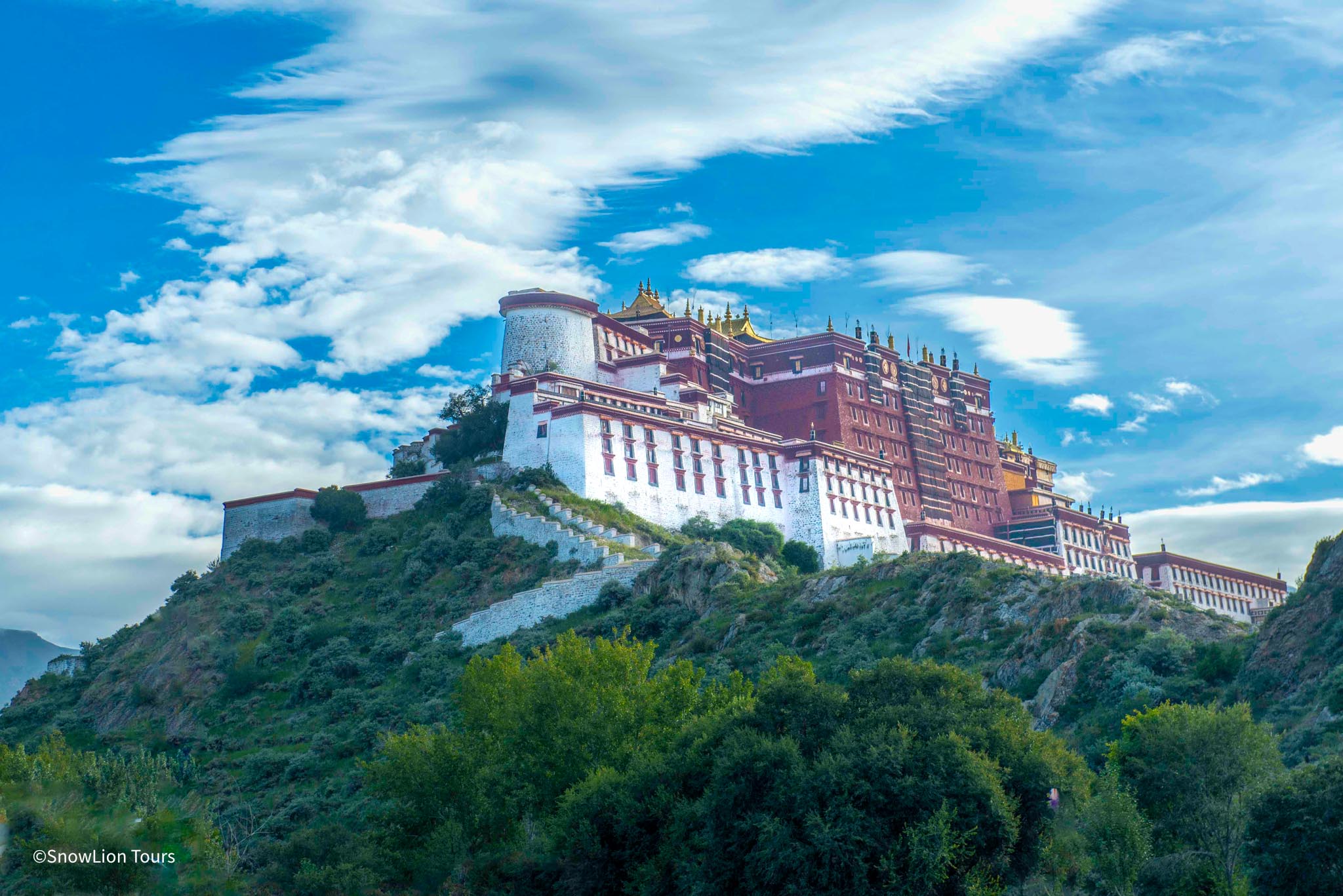
Potala Palace in Tibet
Day 4: Lhasa – Yamdrok Lake (4442 m) – Samding Monastery – Karo La Glacier – Gyantse (3900 m)
Begin your adventure in the Himalayas and drive to Gyantse. Along the way, cross over the Kamba La (4794 m) and the Karo La passes (5010 m), which boast spectacular views. After Kamba La, arrive at Yamdrok Lake, a holy turquoise-colored lake with stunning scenery. If time allows, visit Samding Monastery located at the lakeshore. Stay the night in Gyantse.
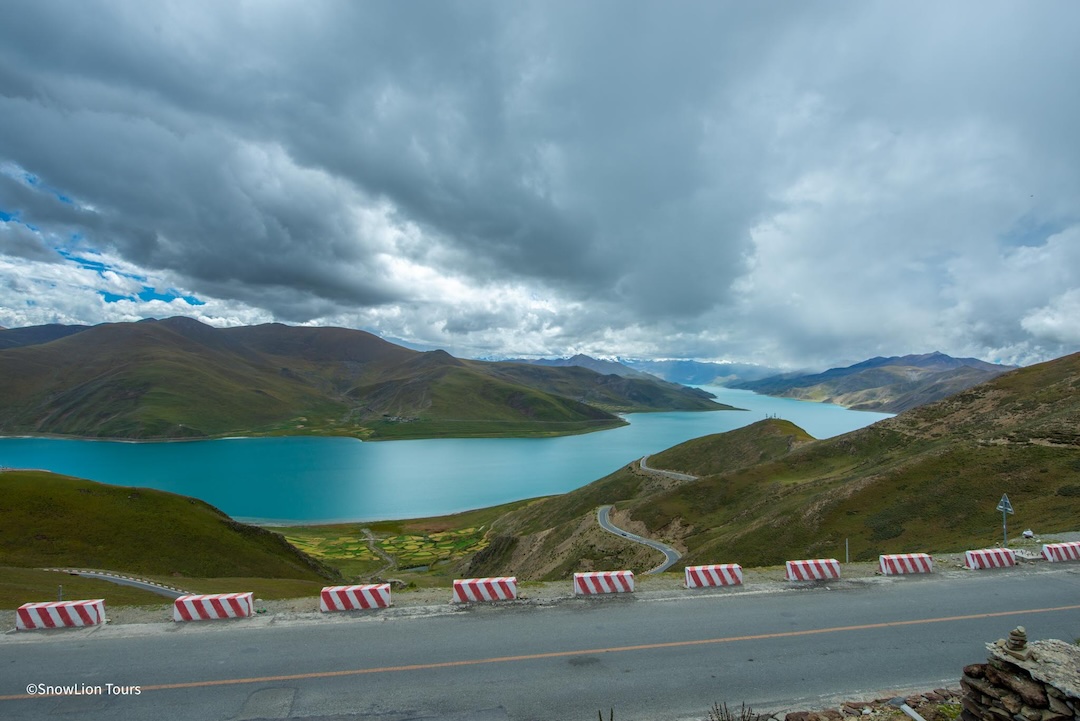
Yamdrok Yumtso Lake in Tibet
Day 5: Gyantse – Shalu Monastery – Shigatse (3836 m)
In the morning, visit Gyantse, a midsized town in the southwest of Lhasa. When you enter the town, the first landmark you will see is Gyantse Dzong or Gyantse Castle, which once served as the residence of Gyantse Kings. The famous Pelkor Chode and Kumbum Stupa are at the north end of the town. The Pelkor Chode once was the largest non-sectarian Buddhist learning center, but today only two main temples remain. Next to the main temple is the Kumbum Stupa, the largest of its kind in Tibet. There are many chapels you can visit by walking clockwise from one story to another. Once you reach the top story, Gyantse Old Town and Dzong Castle can be seen not far away.
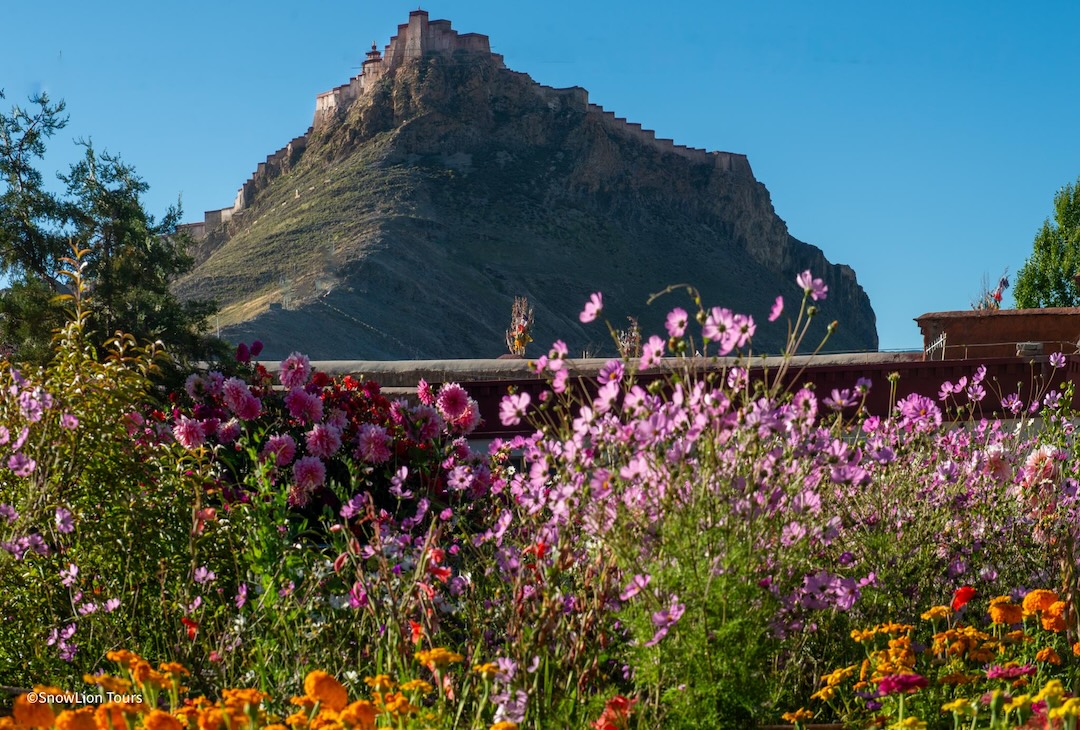
Gyantse Dzong
Afterwards, drive to Shigatse, making a detour to visit Shalu Monastery. Founded in 1003 by Jetsun Sherab Jungnay, Shalu became an important center of the Sakya tradition. In Shigatse, see the giant Buddha in the famous Tashilunpo Monastery.

Tashilhunpo Monastery in Shigatse
Day 6: Shigatse – Rongbuk Monastery (4980 m) – View of Mount Everest (5200 m)
In the morning, drive further west into the Himalayas. Drive through Tso-La Pass (4500 m) and Gyatso-La Pass (5252 m) where you will have a great view of Mt. Everest and other mountains of the Himalayan range. After passing through scenic valleys and driving over rocky mountains, reach Rongbuk (Rongphu) Monastery, where you will have a fabulous view of Mt. Everest. Rongbuk Monastery is the highest monastery in the world. It is worth doing a small kora (circumambulation) around the monastery, taking amazing photos of Mt. Everest. Spend the night near Rongbuk Monastery (or in Old Tingri depending on availability).
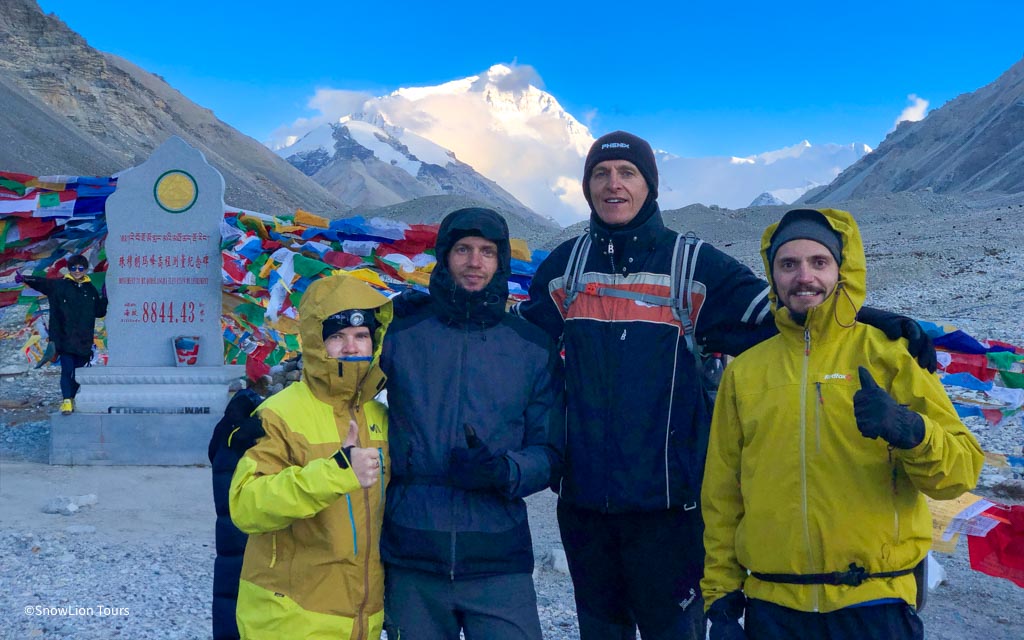
Our group poses a photo at Everest Base Camp in Tibet
Day 7: Rongbuk Monastery or Old Tingri – View of Mt. Shishapangma – Peikutso Lake – Saga (4640 m)
Catch a sunrise view of Mount Everest, and continue driving along the world’s highest mountains. After reaching the main road, drive up to high mountain passes with a great view of the Himalayas. Mt. Shishapangma, one of the world’s highest mountains, can be seen in the distance on your left. Continue north to Peikutso Lake, an alpine lake. Afterwards, drive through the countryside, where you can see small lakes and nomads camping with their yaks and sheep. In the late afternoon, cross over the Brahmaputra River on the way to a typical Chinese and Tibetan town. Spend the night in Saga.
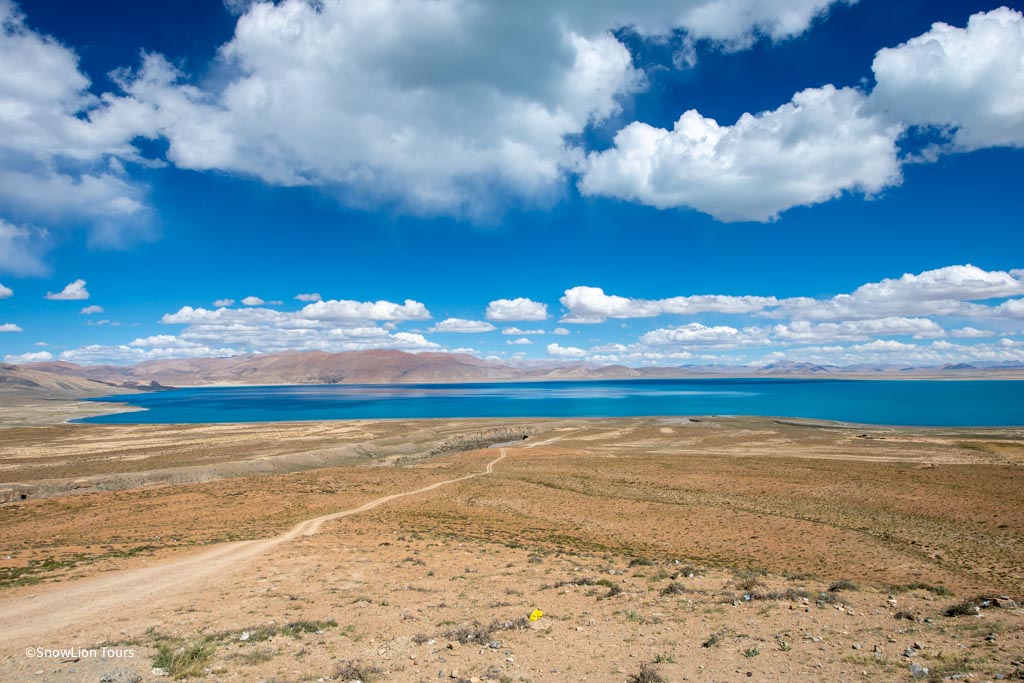
Peikutso Lake
Day 8: Saga – Paryang (4700 m) – Darchen (4575 m)
Drive through a wide valley along a scenic river and look out on the grazing lands of yaks and sheep. Towards the south, you can see sand dunes, rocky mountains, and snow-capped peaks. Depending on the season, nomads and other mobile shopkeepers will be attired in beautiful traditional costumes. Join them for a cup of hot tea in their home. Continue to drive west. In the late afternoon, catch your first sight of Holy Lake Manasarovar and Mt. Kailash. Prepare for the Mt. Kailash Kora once you arrive. Spend the night in Darchen where you can enjoy a close-up view of Kailash at any point in this one-street town.
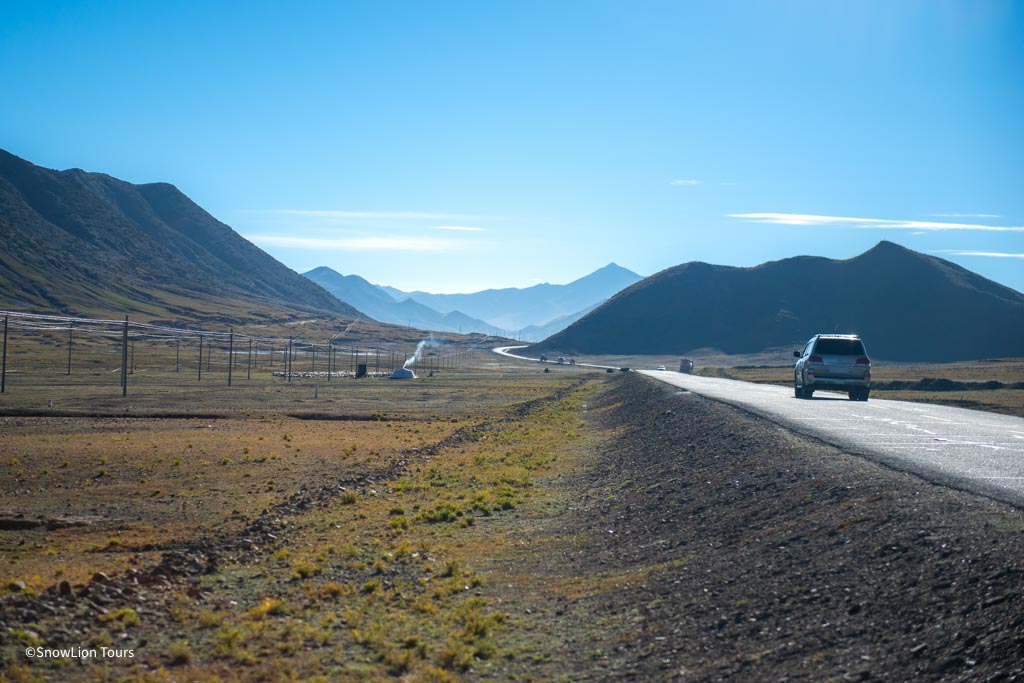
Road on the way to Kailash
Day 9: 1st Day of the Mount Kailash Trek (19 km, 6-7 hours)
Walk along beautiful rocky cliffs and take deep breaths of fresh air. From time to time, the face of Mt. Kailash will appear. The trail passes a stone-piled pass with colorful prayer flags, the famous Tarpoche Flagpole, and a sky burial site, then enters Lha Chu Valley. At the gate of this rocky canyon, a small monastery called Chugu Monastery with a meditation cave of the Tibetan Great Yogi Milarepa is on the left side of the canyon across the river. If you are a good trekker and interested in meditation, you can follow the small trail leading to this monastery on the left side of the river while others may continue on the main trail. A visit to this monastery takes an extra hour.
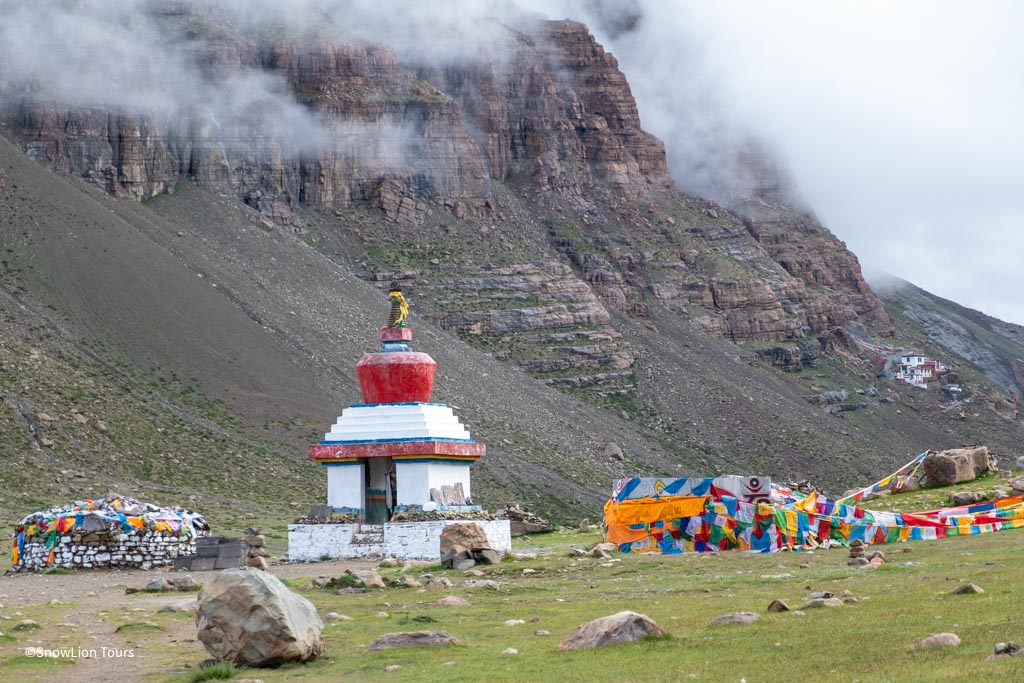
The view of Stupa gate and Chugu Monastery behind.
Afterward, you can join the main trail across the bridge below the monastery. Both sides of this canyon are high steep rocky mountains representing Bodhisattvas. For example, the three high rocky mountains on the left before reaching Dirapuk Monastery represent “Rigsum Gonpo” in Tibetan or the Three Bodhisattvas (Manjushri, Avalokiteshvara, and Vajrapani). After half an hour of walking, you will reach the sacred Dira Puk Monastery located at an elevation of 5000 meters by mid-afternoon. Here you can see the North Face of Mt. Kailash. This sight is also considered the birthplace of Shiva, one of the primary forms of God in Hinduism. Spend the night in the monastery guesthouse.
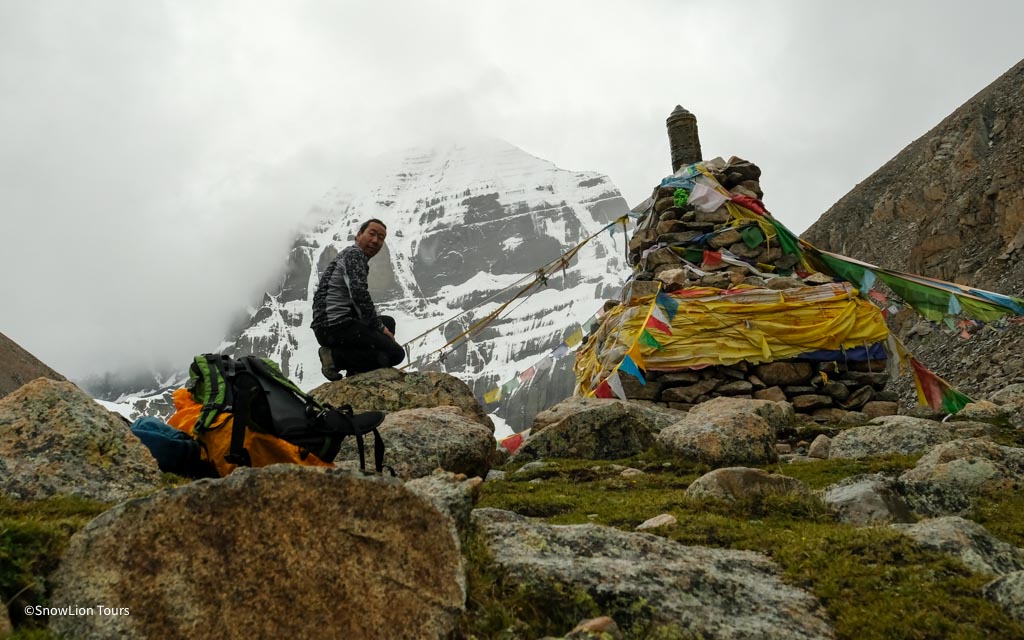
At the bottom of the northface of Mount Kailash.
Day 10: 2nd Day of the Mount Kailash Trek – Dolma La Pass (5650 m) – Zuthal Puk (4815 m) (12 km, 7 hours)
This place is the closest to view Mt. Kailash on the entire kora. It’s right behind the guesthouses, so enjoy this last close-up view of this holy mountain before starting the day. Hike across a valley up to the Dolma-La Pass. The trail is more dramatic today as you ascend from 5050 m to 5650 m above sea level. Though these numbers are not a big difference, given the altitude, this is the most difficult part of the trek. When you reach the top, make an offering, take a break (or meditate), and leave behind all your problems and worries. Let the prayer flags at the mountain pass bring positive energy to you and your families. Afterwards, begin descending. A mirror-like turquoise lake will appear in front of you in the middle of black rocky mountains, said to be a water offering for the holy mountain. By the late afternoon, arrive at Zuthal Puk, the cave of miracles where Milarepa once stayed.
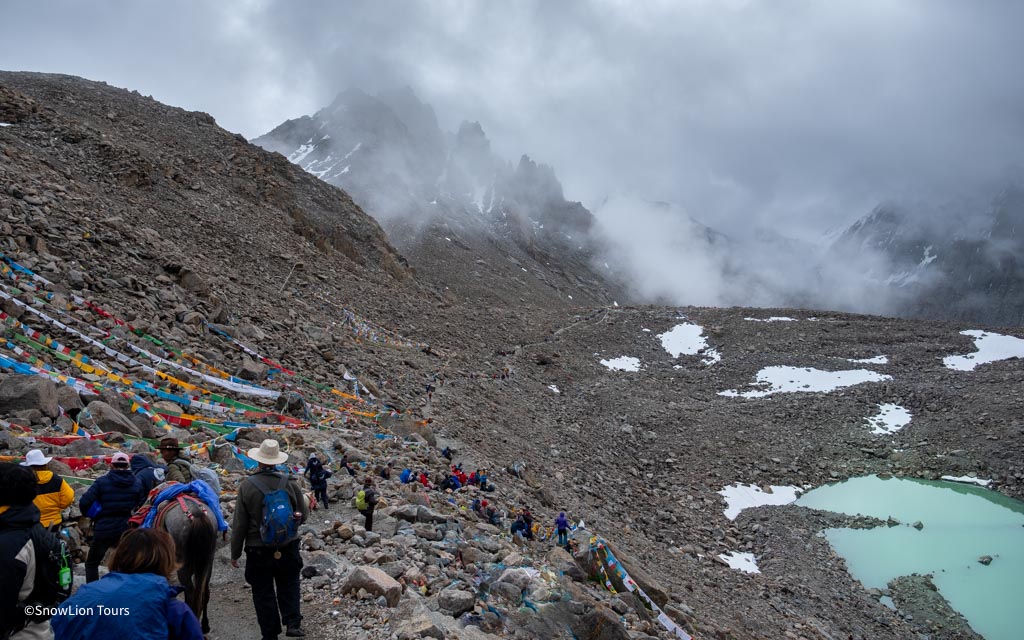
The view of Dolma la pass on Kailash Kora
Day 11: 3rd Day of the Mount Kailash Trek – View of Mt. Nemo Nani – Drive to Lake Manasarovar
Start the day by following one of the clearest rivers you have ever seen. The trail is flat and much greener. At the end of the valley before turning right, a stunning view of snow mountain Nemo Nani (altitude 7728 m) will appear. After finishing your circuit of Mt. Kailash, your car will pick you up and take you to Lake Manasarovar, one of the highest freshwater lakes in the world. This turquoise-colored lake is full of fish and swans. Holy Mt. Kailash, Mt. Nemo Nani or Gurula-Mandala, and Lake Rashekshi surround Manasarovar. The region is rich in gold and other minerals, hot springs, and hundreds of wild creatures. Visit Rakshas Tal Lake and Chiu Monastery, a small monastery located on a hillside. You can dip into a hot spring there. If your group stays until sunrise, a walk to the mountain slope to see a full view of the lake is recommended.
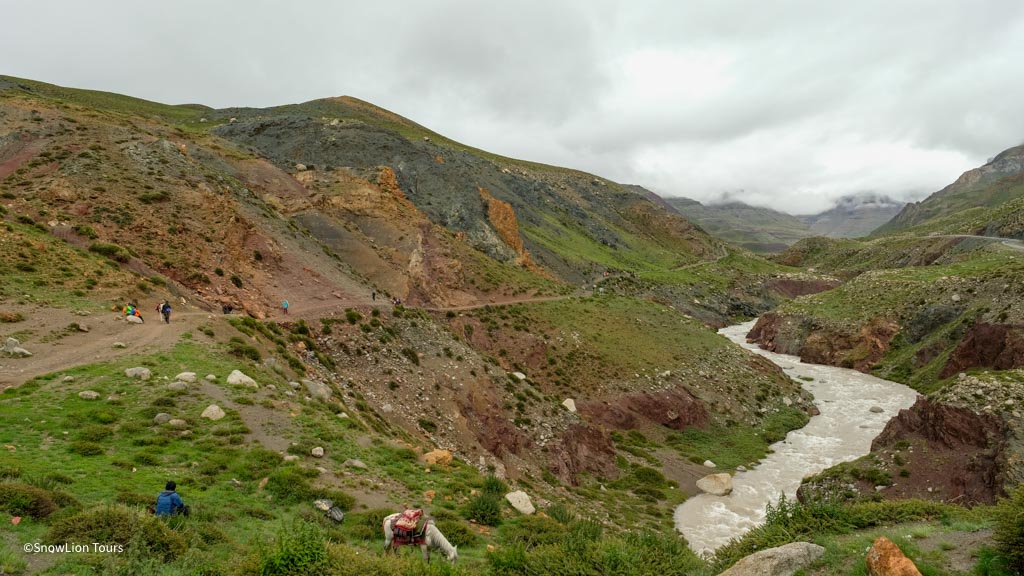
Walking back to Darchen along the river side
Day 12: Holy Lake Manasarovar – Paryang – Saga
Begin the journey back to Lhasa with a detour to the China-Nepal border. Enjoy a beautiful view of the Himalayas. Most travelers usually take this long driving road back as rest time after three days of trekking. This zig-zag scenic drive always brings some surprises, such as suddenly appearing rainbows in front of your vehicle, flocks of yaks or sheep that may stop your bus, giving you a chance to see these animals up close, a wild animal running across the road, a beautiful lake or snow, sunrise, or sunset that makes your journey lively.
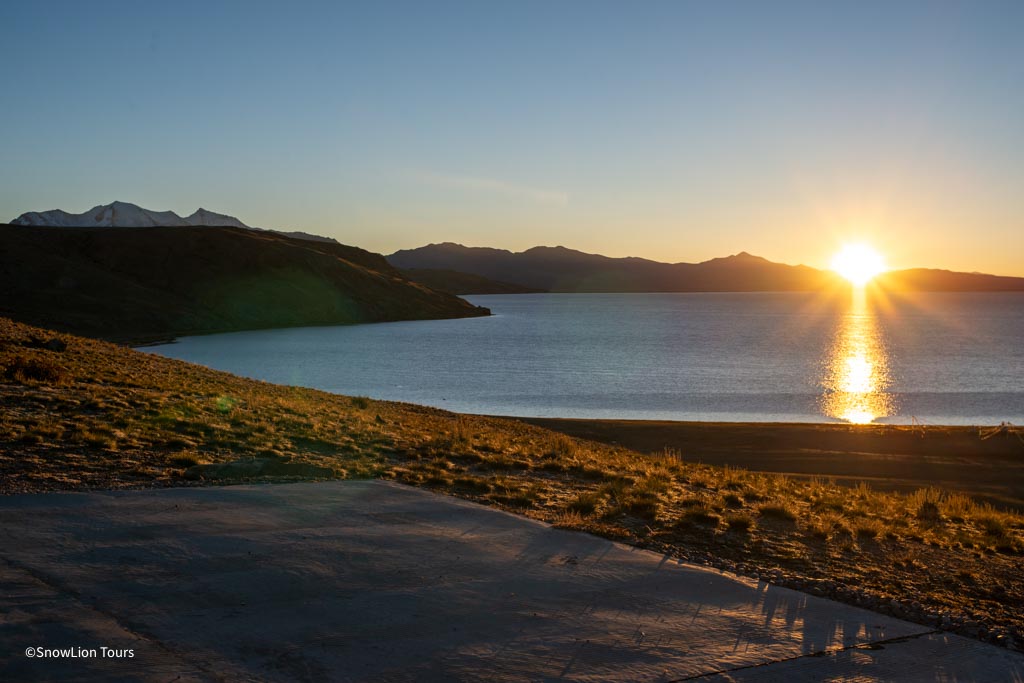
The sunrise at the Lake Manasarovar
Day 13: Saga – Kyirong (Nepal Border) (2800 m)
Continue driving in the Himalayas. If weather permits, you will have a great view of Mt. Shishapangma and other snow peaks. After ascending to Gongtang La Pass, the last highest point of this trip with an elevation of 5300 m / 17400 ft, the zig-zag road will lead us down to the valley. The altitude decreases dramatically as you descend to the valley, and the geography changes from desert-like grassland to a greenish forest. You will start to feel the gentle air full of oxygen. Right before reaching Kyirong town, we will stop at a waterfall that falls from atop the rocky mountain. The water is said to be blessed by Guru Rinpoche. If time allows, we will visit Guru Rinpoche’s caves and Milarepa’s monastery. Once you get to the newly built border town of Kyirong, you can fully rest in a restaurant or wander around the town. There is a Nepali-style temple called Pakba Lhakhang Monastery which hosts about 30 nuns. Overnight in a guesthouse in Kyirong.
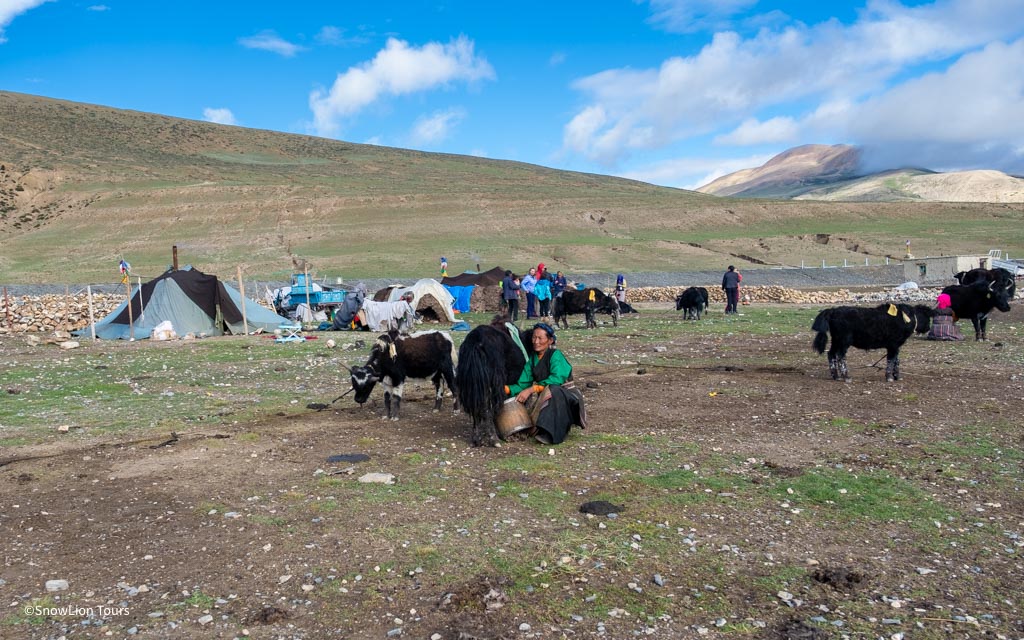
Our group stopped to see nomadic life on the way to Kyirong
Day 14: Kyirong – Rasuwa Gadi (Cross Border) / Return to Shigatse
Drive 23 km towards the border between China and Nepal. The customs opens at 10 am and closes by 5:30 pm. It may take around 1-2 hours to cross the border and go through customs formalities. After crossing the bridge, you need to go through Nepali customs. Finally, you will get to the Nepal border town of Rasuwa Gadhi. Our Tibetan guide will help you go through border formalities on the Chinese side of the border. On the way to Kathmandu, you will see Langtang National Park, snow peaks, farm terrains, and the Rasuwa ethnic group of Nepal. You will arrive in Kathmandu in the evening. It takes about 8-9 hours to reach Kathmandu. Note: there are unpaved parts of the road.

For those returning to Lhasa, continue to drive to Shigatse via Old Tingri. This is another long driving journey. Due to the traffic speed limit, your vehicle will stop from time to time, giving you a chance to stretch your legs or walk around. Along the way, you will again see Peikutso Lake and some of the world’s highest mountains including Mt. Shishapangma and Mt. Cho Oyu. Arrive in Shigatse in the evening.
Day 15: Shigatse – Yundrunling Monastery – Lhasa
Continue to drive on the Friendship Highway. After 80 km, make a detour to visit Yundrunling Monastery, the biggest Bonpo monastery in Tibet and once the second most influential monastery in Tibet. This is the only monastery where you need to walk counterclockwise. The main chapels are the Assembly Hall and Protector Hall. Note, female travelers are not allowed inside the Protector Hall. Finally, make your way back to Lhasa.
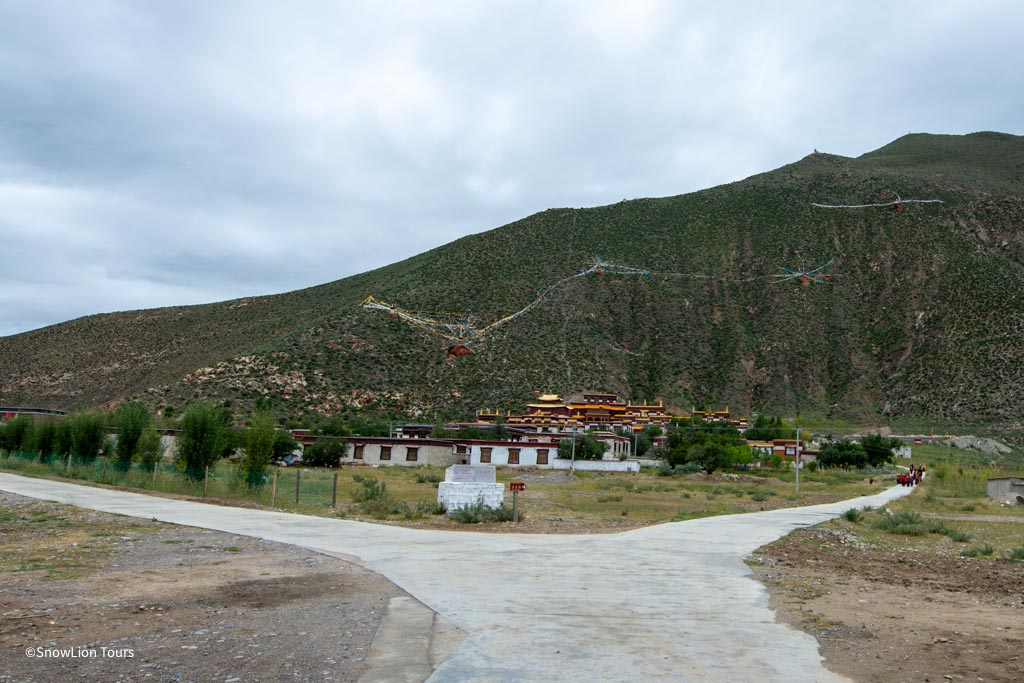
The largest Bon Monastery in Tibet
Day 16: Depart from Lhasa
Say goodbye to Tibet!
Itineraries are subject to change without prior notice.
-
DepartureLhasa
-
Departure TimeApril 29th, July 13th, September 1st, October 10th
-
Return TimeApproximately 8:30 PM
-
IncludedPick up and drop offPrivate vehicleAccommodation Hotel in the citiesGuesthouses in the smaller places and koraTibetan English Speaking GuideTibet Travel PermitsAll the entrance tickets listed above itinerary
-
Not IncludedFood (L, D and breakfast in the guesthouses)Plane or train tickets to/from LhasaTips for guide and driver
Recent Posts
- Shoton Festival Begins in Lhasa!
 August 23, 2025
 - Tour Price in Tibet
 August 23, 2025
 - Qinghai Shaman Festival in Rebkong Concludes Successfully
 August 21, 2025

.jpg "amdo monlam festival tour")