Xining – Lhasa Tour
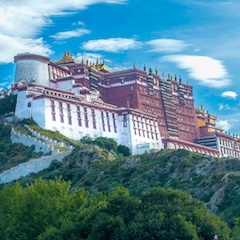
Explore some of the most iconic and culturally rich destinations on the Qinghai-Tibetan Plateau. Journey from one of the region’s largest monasteries through sweeping fields of golden rapeseed flowers to the stunning Qinghai Lake. Visit Rebkong’s traditional artist villages and monasteries before boarding the famed Qinghai-Tibet Railway to Lhasa. In Tibet’s capital, explore the majestic Potala Palace, the sacred Jokhang Temple, and ancient meditation caves used by generations of practitioners.
Highlights
- Xining: Qinghai Lake, Rebkong Artist village
- Qinghai Tibet Railway
- Lhasa: Potala Palace, Monasteries and meditation caves
- Chinese and Tibetan Culture experience
Details
- 10-day trip begins in Beijing and ends in Lhasa, Tibet
- 8 nights in hotels
- Altitude from 1800-3600m
Itinerary:
Day 1: Arrive Xining and transfer to your hotel
Welcome to Xining. If you arrive early, we will start the trip on this day.
Day 2. Xining – Kumbum Monastery – Qinghai Lake and Gui’de /Trika
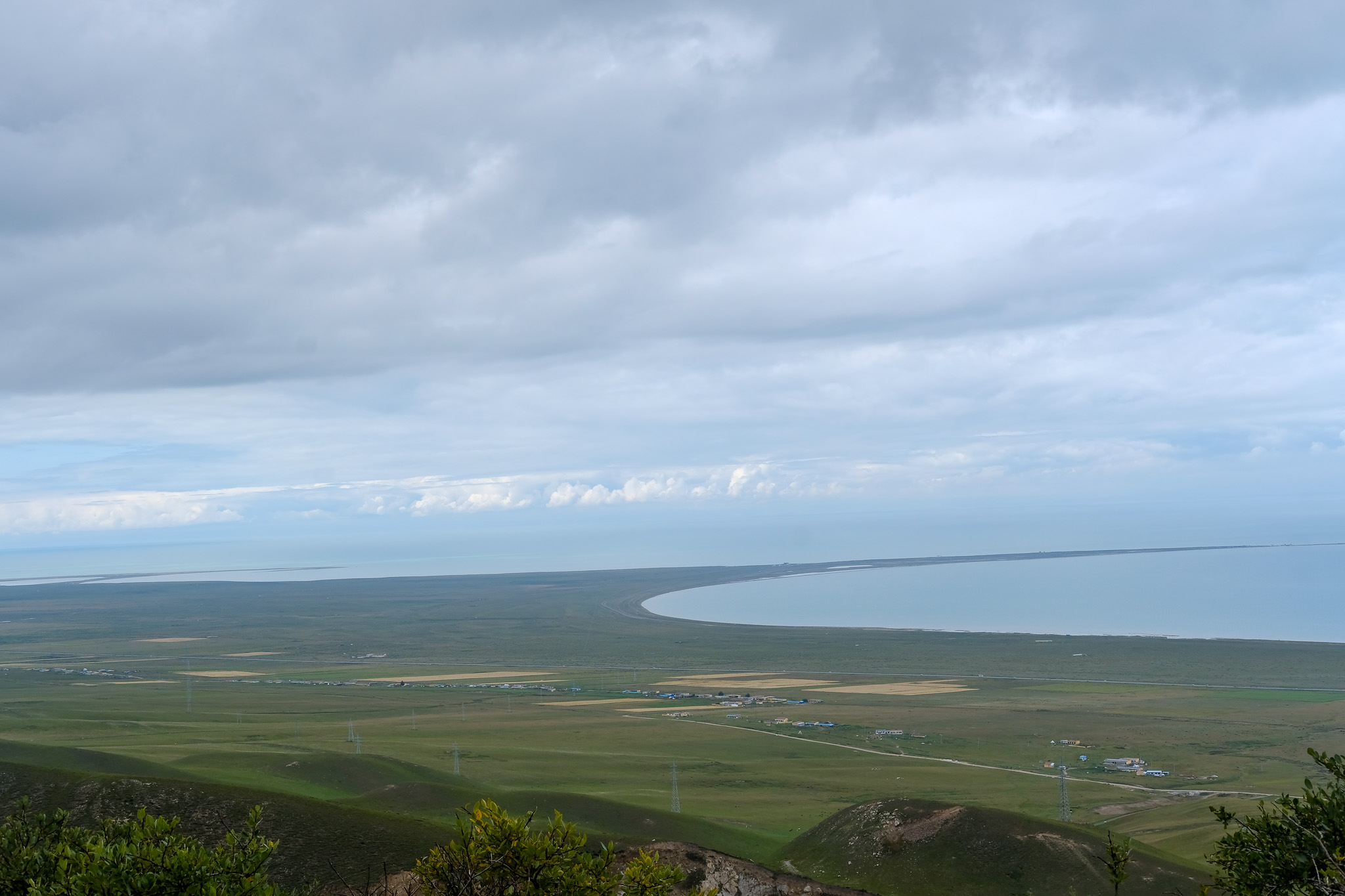
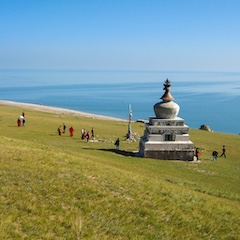
Your Tibetan guide will be waiting for you at the Xining train station on your arrival. After greeting, we will begin the day. Drive to Kumbum, a famous monastery located 25 km southwest of Xining, the capital city of Qinghai Province. Kumbum is home to over 600 monks and has some great hills around the monastery to hike. Kumbum is also famous for being the birthplace of Je Tsongkapa, who founded the Gelukpa sect, which is the most influential sect in Tibet. From Kumbum, head to Qinghai Lake, the biggest lake in China. The fields of yellow rapeseed flowers at the Qinghai Lake shore in the summertime are one of the highlights and attract many tourists in August. If you wish to ride a horse, you can hire one from local Tibetans by paying a small tip. Afterwards, drive east to the sand dunes and then down to the small town of Trika or Gui’de Xian in Chinese. If you happen to be there at sunset, the old Yellow River bridge is an amazing bonus for this day.
Day 3. Trika – Kamra / Kanbula National Park – Rebkong / Tongren
Trika is one of the lowest towns in Qinghai Province in the northwest of China. It is also known as the cleanest part of the Yellow River. The Yellow River is greener than yellow in this part of the stream. Visit Jokhang Temple in the morning, a small temple named after the Buddha’s statue inside the main temple. Then drive along a tributary of the Yellow River and you will reach a forest, and now you are already inside Kanbula Park. Before continuing to drive up the mountain, you have an option to visit a hidden nunnery by turning left down the narrow valley. The nunnery is called Achung Namdzong Nunnery, which once became one of the most important meditation centers in Amdo Tibet. It is surrounded by steep, high red clay mountains, also called Danxia-style earth formations. Afterwards, continue to drive up the mountain to have a panoramic view of Kanbula Park, Danxia red clay mountains, and the artificial lake formed by the Yellow River Hydropower Station. Then drive down to Jantsa and continue to drive to Rebkong along the Yellow River.
Day 4. Around Xining sightseeing
Highlights: Rebkong Artist Village, Shachung Monastery and Xining
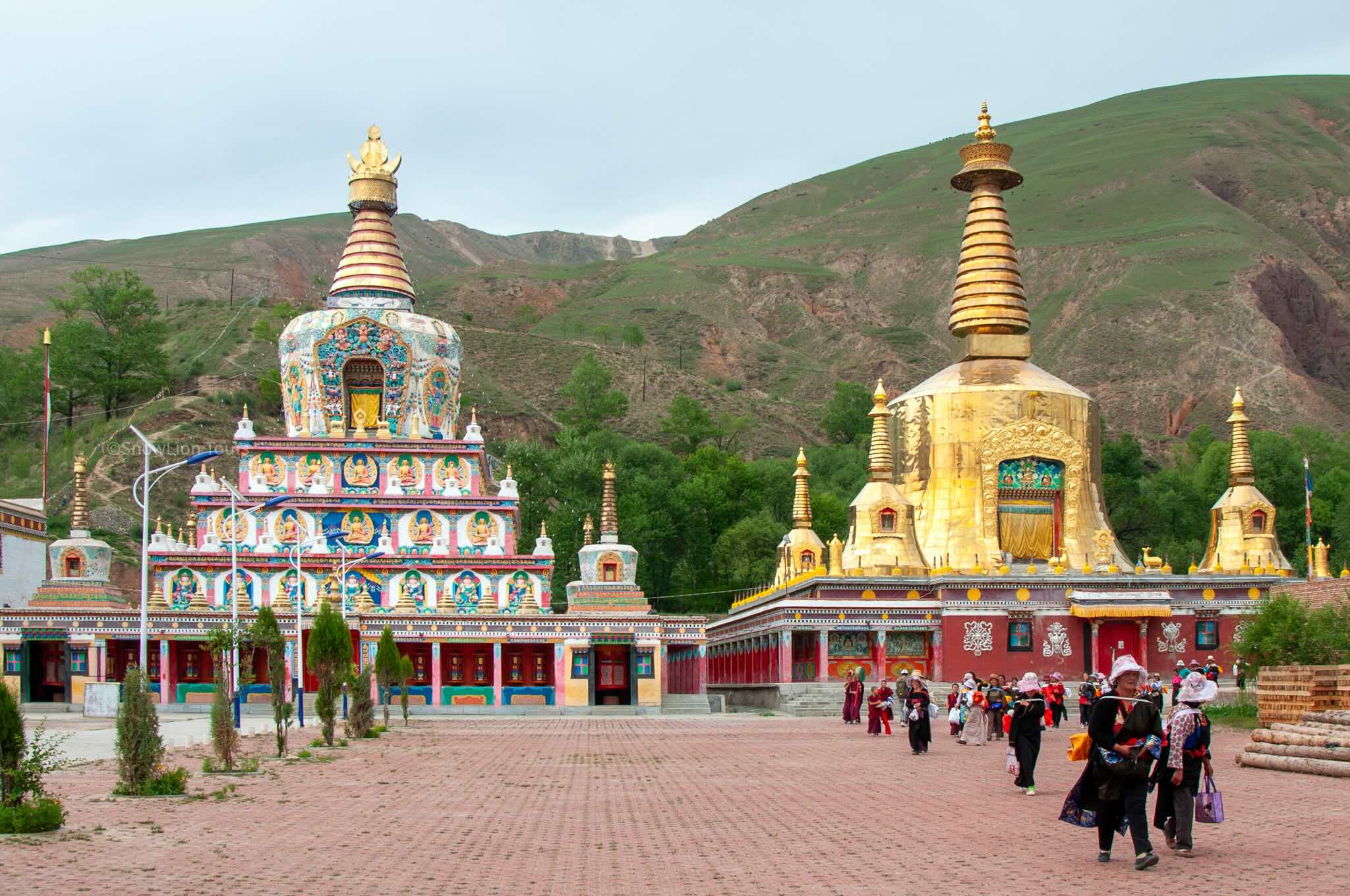
Visit the Tibetan traditional artist village and Sanggeshung Monastery in the morning. This is one of the most popular places that produces a large scale of Tibetan traditional arts and religious arts. You can visit one of the local artist’s homes and see how they paint and what kind of materials are used. Then we will drive towards Xining. On the way, we will make a detour to visit Shachung Monastery. Shachung Monastery was founded by Choegyi Dundrup Renchen, the first teacher of Lama Tsongkapa, in 1349. It is one of the most beautiful monasteries in Tibet. You can see several bends of the Yellow River in the valley from the mountain top where the monastery is located. Afterwards, we will drive back to Xining. Overnight in Xining.
Day 5. Xining – Xining Tibetan Cultural Museum – Xining Train Station
All the trains from Xining to Lhasa depart after 3 p.m. So in the morning, we will visit the Tibetan Medical and Cultural Museum. After lunch, we will drop you off at the Xining Railway Station to start your Tibet train journey to the holy city of Lhasa.
Day 6. Arrive in Lhasa [3658m]
Welcome to Lhasa! Transfer to your hotel and get settled. Rest of the day for acclimatizing to the high altitude. Walk around Lhasa street on your own.
Day 7. Lhasa Sightseeing
Highlights: Drepung Monastery, Nechung Temple and Sera Monastery
Visit Drepung, one of the three most famous monasteries in Lhasa. Drepung is located just outside Lhasa on Gambo Utse Mountain. Once home to as many as 10,000 monks, the enormous monastic complex is the site of many prayer halls, dormitories, and temples. Just below the monastery is the Nechung Temple, the former home of the state oracle. Afterwards, visit Sera Monastery, where you can watch monks debate in the courtyard. If you enjoy hiking, walk the hour-long circumambulation path around the monastery complex.
Day 8: Lhasa sightseeing
Highlights: Potala Palace, Jokhang Temple and Barkhor Street
In the morning, visit the Potala Palace, the greatest monumental structure in all of Tibet. The Potala is 13 stories high and holds countless treasures in its many rooms. Built in 637 AD, the Potala has been home to the Dalai Lama lineage for more than a thousand years. Also visit the Jokhang Temple, the holiest temple in all of Tibet. From the rooftop, you will see pilgrims from all over Tibet prostrating in front of the Jowo Buddha statue inside the monastery. Afterwards, walk through the Barkhor, a famous shopping street filled with goods and souvenirs from Tibet, Nepal, and India. Spend some time drinking sweet tea in a traditional teahouse located on a rooftop overlooking the bustling Barkhor.
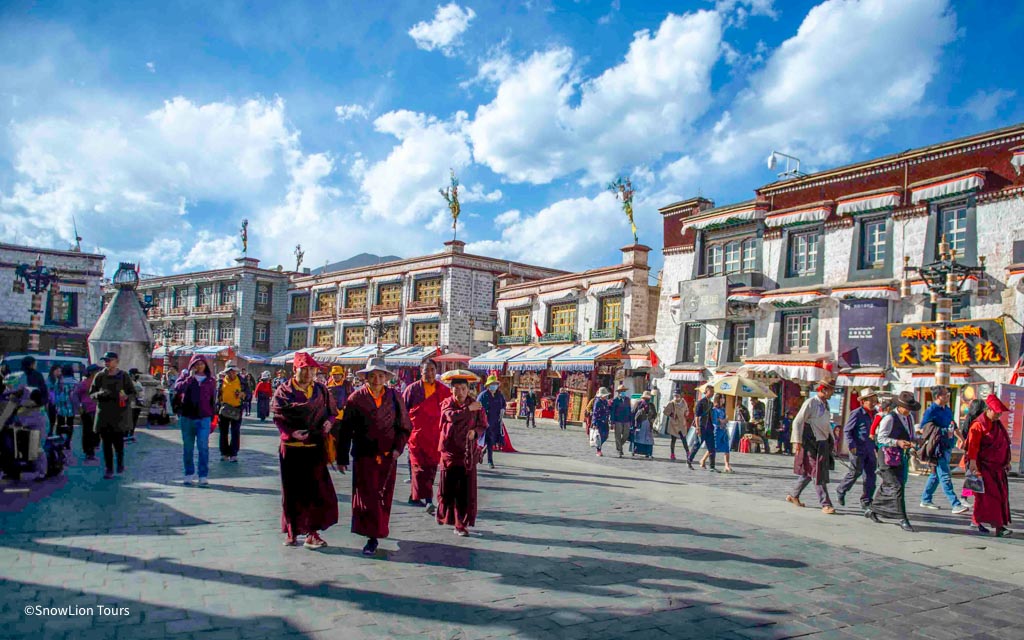
Walking around Jokhang Temple in Lhasa, Tibet
Day 9: Day trip to Ganden Monastery and Drak Yerpa meditation caves
Pick-up from your hotel in the morning, drive about 70 km east to Ganden Monastery. Ganden is one of the three most important monasteries in Lhasa (along with Sera Monastery and Drepung Monastery). Ganden sits high on a mountain ridge. Explore the monastery prayer halls, then hike around the ruins on the backside of the mountain and do a kora (circumambulation) around the monastery, which takes about 40 minutes — it’s a short hike that offers great views over a vast valley. If you’re up for it, do the longer kora and climb all the way to the top of a mountain ridge and fly some prayer flags, time permitting.
Then, after lunch, drive to Drak Yerpa Meditation Caves. This hermitage, about 40 km north of Lhasa, is one of the holiest cave retreats in central Tibet. Carved into the side of a mountain, it is very peaceful and beautiful here. The drive passes through a small village, and you can explore the many caves at the site. You might see some pilgrims meditating in the caves. Padmasambhava, or Guru Rinpoche (late 8th to early 9th century), meditated and practiced tantric yoga here in the Dawa Puk cave for a long time. This is considered to be one of his three most important places of attainment.
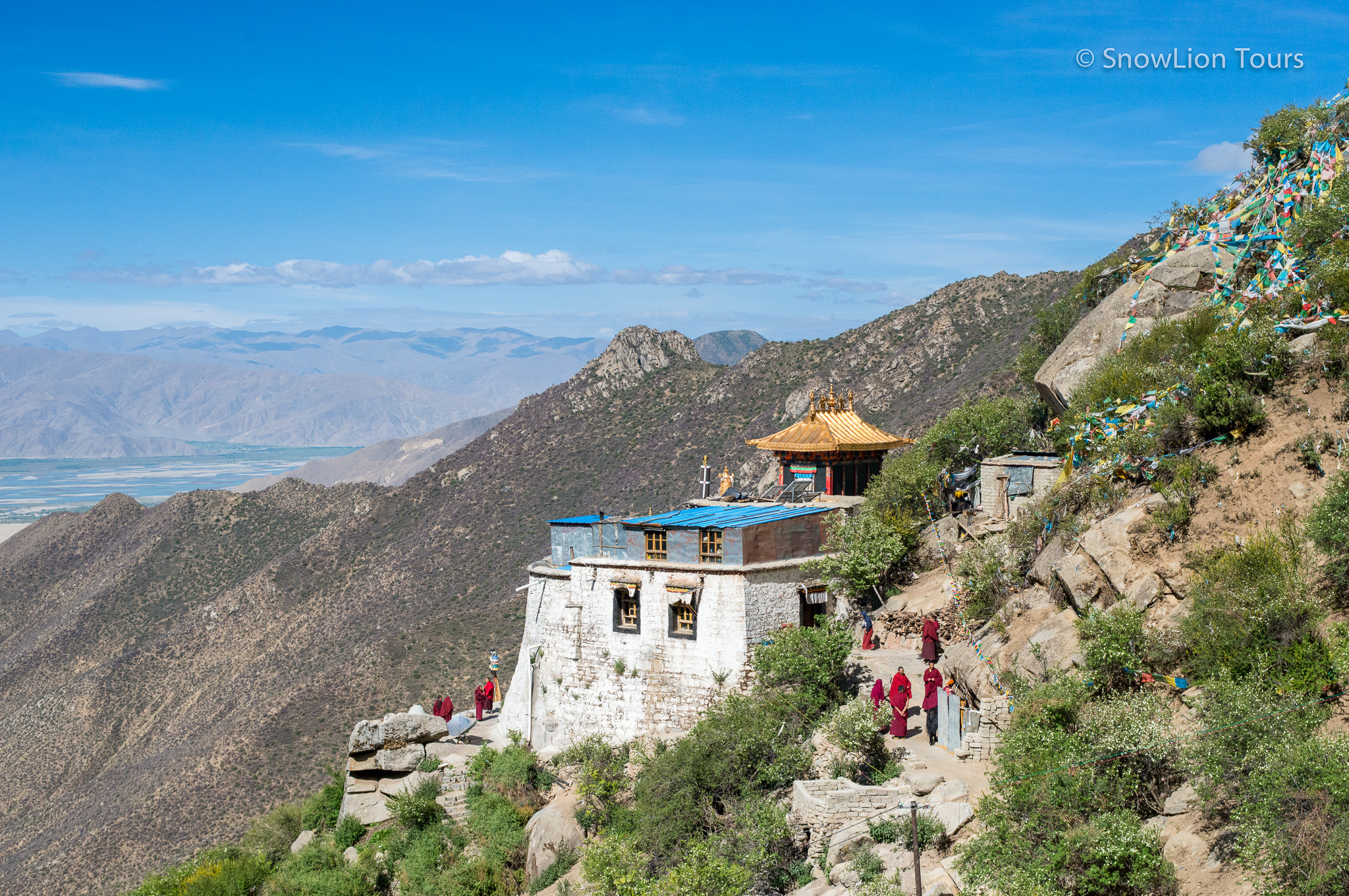
Chimphu Nunnery Temple
If you are up to it, doing a short meditation here in this powerful place is a unique opportunity.
Day 10. Depart from Lhasa
Say goodbye to China!
-
DepartureXining
-
Departure TimePlease arrive by 10:20 AM for a prompt departure at 10:50 AM
-
Return TimeApproximately 8:30 PM
-
IncludedEntrance ticketLocal transportationAccomodationProfessional Guide
-
Not IncludedFoodEntry FeesTips for guide and driver
-
Maps
Recent Posts
- Shoton Festival Begins in Lhasa!
 August 23, 2025
 - Tour Price in Tibet
 August 23, 2025
 - Qinghai Shaman Festival in Rebkong Concludes Successfully
 August 21, 2025

.jpg "amdo monlam festival tour")