Tibet Meditation Tour
This is our pure spiritual and meditation tour that we are offering. During this tour, you can visit, meditate, and spiritually experience some of the hidden monasteries and powerful places in Tibet, including caves such as Drakyangdzong hermitage caves, Dzong Kumbum caves, Chimphu hermitage caves, and Yarlung Sheldrak caves. These places are associated with Master Padmasambhava, Kamdro Yeshi Tsogyel, and Longchenpa. These locations are not well-known in travel books but are highly valued by our Tibetan society. We hope that by joining this unique tour, your meditation skills and techniques will be refined and your spiritual experience will be awakened and inspired.
Highlights
- Meditation in Tibet
- Guru Rinpoche’s caves
- Shoton Festival
- Hiking, walking and crawling
Details
- 15-day trip begins in Lhasa and ends in Lhasa, Tibet
- 14 nights in hotels and guesthouses
- Altitude from 1800-4200 m
Itinerary:
Day 1: Arrive in Lhasa, the capital of Tibet.
Welcome to Lhasa! Transfer to your hotel from Lhasa airport or Lhasa train station and get settled. You can wonder around the town on your own or rest at hotel to acclimatization.
Day 2: Lhasa sightseeing: Potala Palace, Jokhang, Barkhor, Tsanggu Nunnery, and Nunnery Tea House
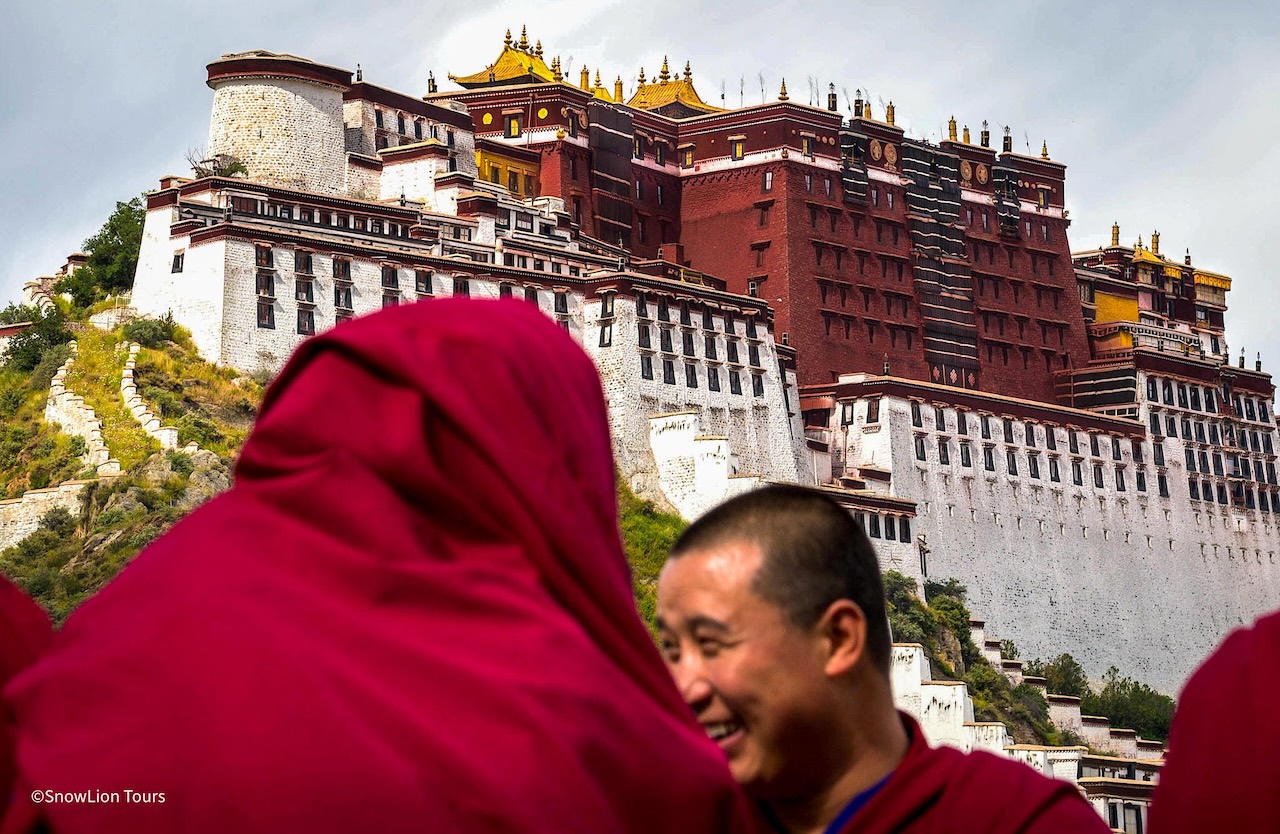
In the morning, we will first visit the iconic landmark of Tibet, the Potala Palace, the winter residence of the Dalai Lama, which began construction in the 7th century. Next, we will visit the Jokhang Temple, located in Barkhor Square in Lhasa. The Barkhor is a famous shopping street filled with goods and souvenirs from Tibet, Nepal, and India. Pilgrims from all over Tibet come to the Barkhor to pray in front of the Jokhang Temple.
Afterward, we will make a short visit to Ani Tsanggu Nunnery, situated next to the Jokhang Temple and home to more than 100 nuns. Although the nunnery is small in size, it is a very important historical site. King Songtsen Gampo conducted his daily meditation in this nunnery, and you can still see his meditation cave behind the kitchen of the nunnery.
Day 3: Lhasa sightseeing: Drepung Monastery and Sera Monastery
Visit Drepung Monastery, one of the three most famous monasteries in Lhasa, located just outside the city on Gambo Utse Mountain. Once home to as many as 10,000 monks, this vast monastic complex features numerous prayer halls, dormitories, and temples. Below the monastery is the Nechung Temple, the former residence of the state oracle. Afterward, visit Sera Monastery, where you can watch monks engage in lively debates in the courtyard. For those who enjoy hiking, there is an hour-long circumambulation path around the monastery complex.
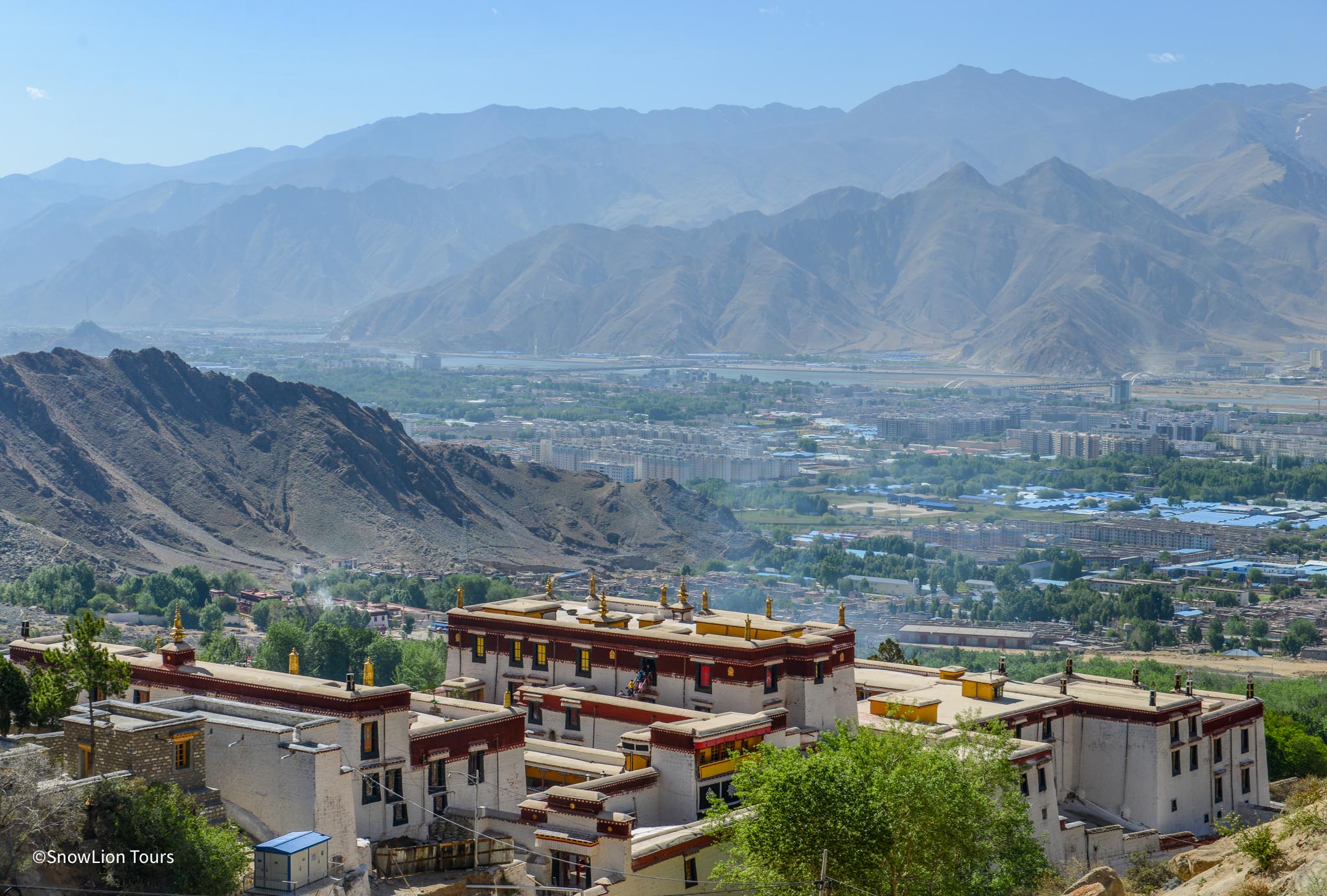
The view of Lhasa city from Drepung Monastery
Day 4: Lhasa – Drak Yangzong . Dzong Kumbum ( optional) – Samye
n the morning, we will drive to Drak Yangdzong, a journey that takes about three hours. Afterward, we will climb up to the Drak Yangdzong Caves, a two-hour ascent. After explore the caves and meditation. We walk down to the nunnery. Upon arrival at the nunnery below the Drak Yangdzong cave, we can have lunch at the nunnery’s vegetarian restaurant, which offers bread, rice, vegetables, and noodles. Then if you are up to another hike, you can also visit Dzong Kumbum. The cave complexes of Drak Yangdzong and Dzong Kumbum are a maze of interconnecting limestone passages and natural caverns, associated with Padmasambhava and Kamdro Yeshi Tsogyel, whose Buddha-body is represented by these caves. According to tradition, Padmasambhava sent two of his newly ordained disciples, Nubchen Sanggye Yeshe and Nanam Dorje Dudjom, to meditate in these caves. The site was also significant for treasure revelation, with both Padmasambhava and Yeshe Tsogyal concealing treasures there. After exploring the caves, drive down to the village and stop by the Kamdro Yeshi Tsogyel Lake. There is a big tree which represents the mother of Yeshi Tsogyel as she drank milk from the tree rather than from real mother after she was born. It is also said to be seen your future reflection in the lake if you can focus enough. finally, we will drive to Samye Monastery.
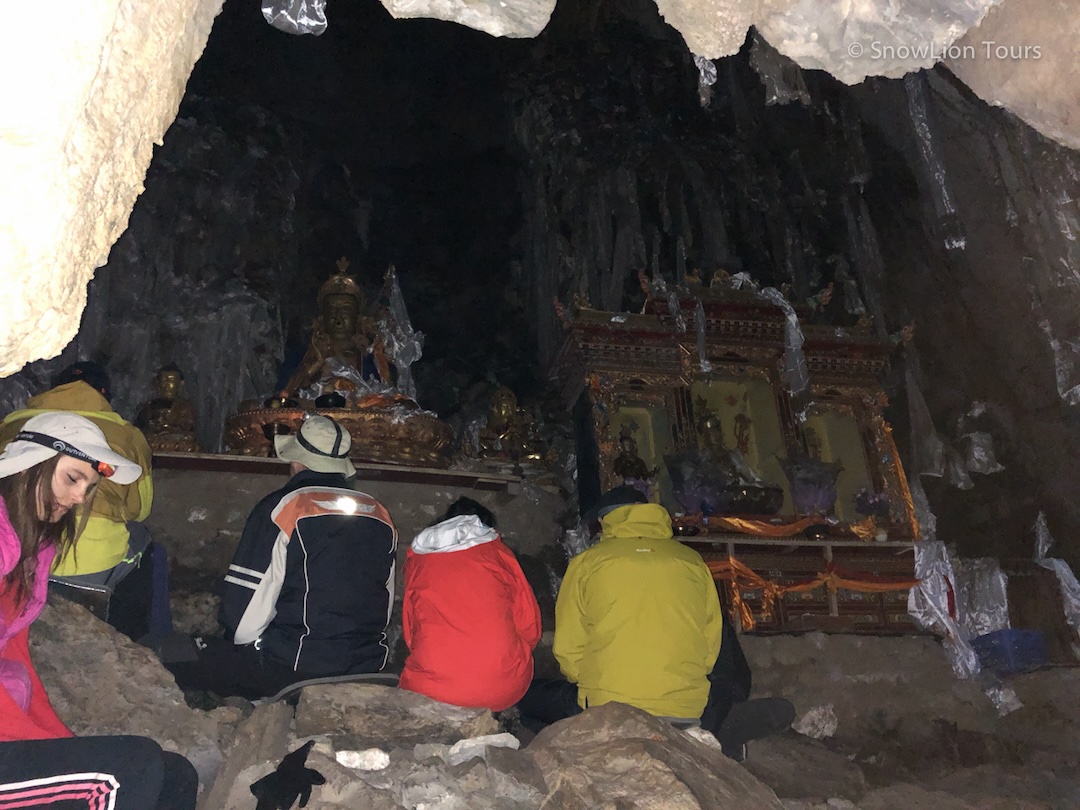
Our group meditating inside Drak Yangdzong cave.
Day 5: Samye monastery in the morning – hike to Chimpu Hermitage – back to Samye (Samye monastery hotel)
In the morning, we walk to Samye Monastery, which is widely believed to be the first Buddhist monastery in Tibet with a history of over 1,200 years. The monastery grounds are laid out in the shape of a mandala and represent an ideal universe as described in Buddhist scriptures. After that drive to Chimphu, hike to Chimphu Hermitage in the morning. This mountain retreat not far from Samye is revered as the sacred place of Guru Rinpoche’s speech. This is where he taught the Twenty-Five Disciples and where numerous disciples had profound realizations. Today, there are a hundred or more yogis, men and women, living there in retreat. As we hike through Chimphu, there are many occasions to meet with them and make personal offerings. The hike takes about 2 hours one way. Afterward, we return to Samye. If time allows, you can walk around the monastery on your own.
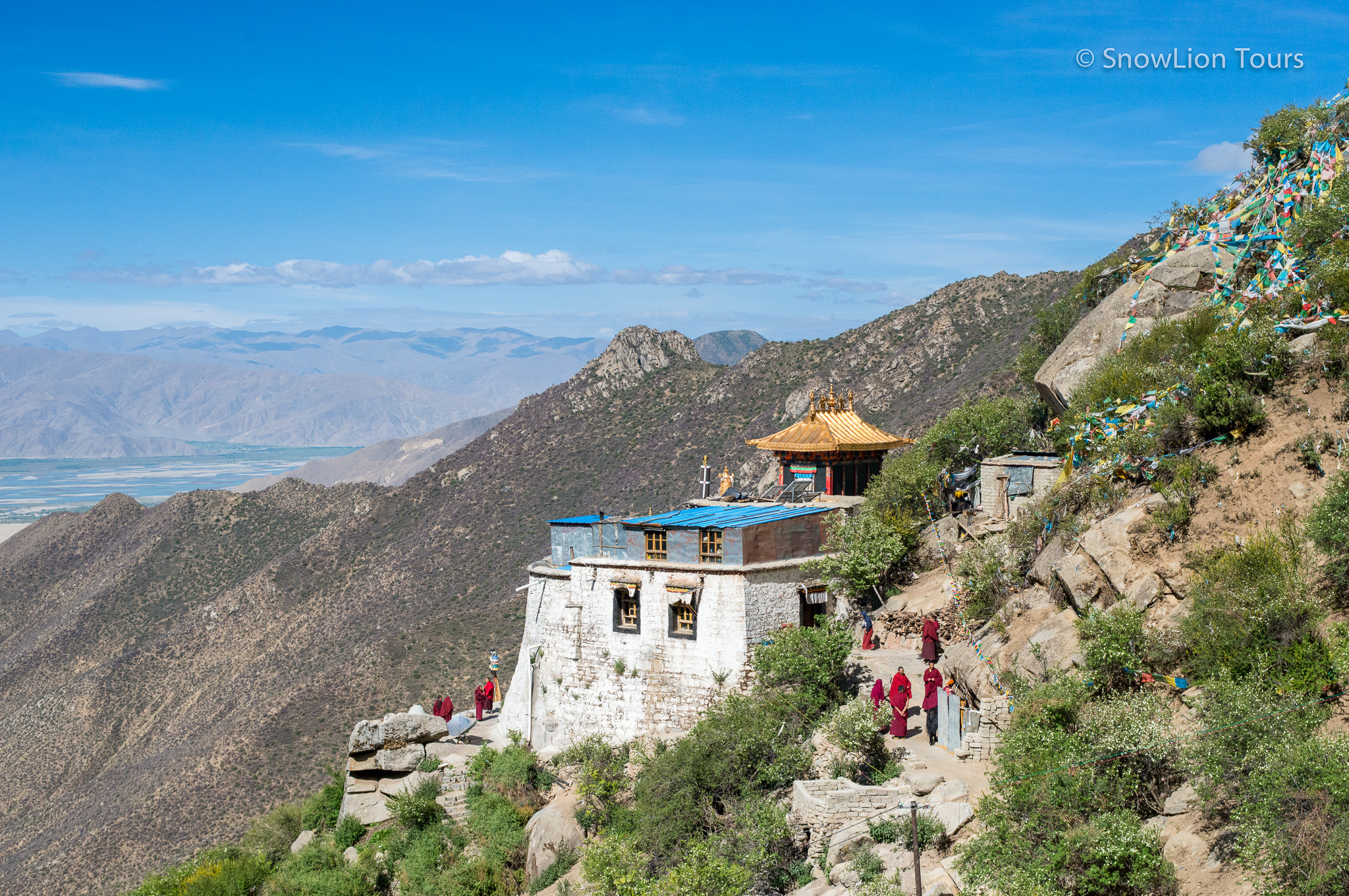
Chimphu Nunnery Temple
Day 6: Samye to Yamalung – Tsethang
In the morning drive to the remote Yamalung hermitage. which is located in 20km from Samye monastery. Padmasambhava, also known as Guru Rinpoche, spent his meditation time in this hermitage. It is said that Padmasambhava received empowerment from the deity Amitayus. It is also known that the fifth Dalai Lama had spent 14 months of meditation in this hermitage. As a result, Yamalung Hermitage is an ideal place for offering blessings and prayers. Afterward, drive to Tsethang. The third largest city in Central Tibet.
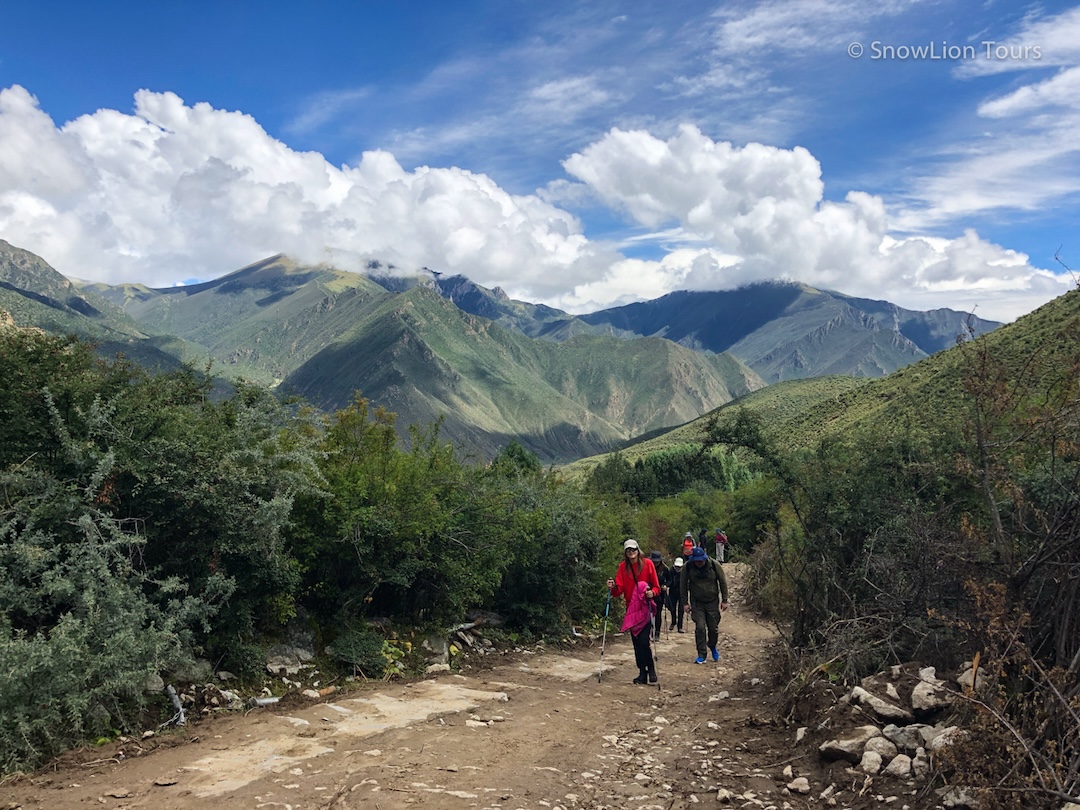
Hiking to Drak Yangdzong
Day 7: Tsethang to Yarlung Sheldrak cave and Yumbulagang Palace. Overnight at Tsethang.
In the morning, drive to Sheldrak Cave, a key pilgrimage site for Tibetans, especially those of the Nyingma Lineage. This was Guru Rinpoche’s first meditation cave in Tibet, where he bound demonic influences under oath. Many masters, such as Orgyen Lingpa, gained realizations here. After visiting Yarlung Sheldrak Cave, we drive back to Tsethang and visit Yumbu Lhagang Palace, known as the first palace ever built in Tibet, originally constructed for King Nyatri Tsempo. This magnificent building is located in the Yurlung Valley, only 12 km from Tsethang city. Tsethang is considered the cradle of Tibetan civilization and is the third largest city in Tibet. The historic palace is perched atop a craggy hill, and you can either hike up or ride a horse to the palace. Stay in Tsethang.

Red Stupa in Samye Monastery
Day 8: Tsethang – Mindroling Monastery – Tsurphu Monastery
In the morning, drive to Tsurphu via Mindroling Monastery. Mindroling Monastery is one of the most important Nyingma monasteries in Tibet, founded by Rigzin Terdak Lingpa in 1676. “Mindroling” means “Place of Perfect Emancipation.” For a long time at Mindrolling Monastery, special emphasis was placed on the study of Buddhist scriptures, astronomy, the Tibetan lunar calendar, calligraphy, rhetoric, and traditional Tibetan medicine.
Afterward, continue driving north to Tsurphu. Along the way, you will cross the Lhasa Kyichu River and pass through beautiful villages of Duilong. As you drive inside the valley to the end, Tsurphu Monastery will appear on your right. This monastery is the traditional seat of the Karmapa and belongs to the Karma Kagyu or Black Hat lineage. Tsurphu Monastery was founded in 1159 and is built in the middle of a valley surrounded by high mountains. Above the monastery are traces of rock paintings and some meditation retreats. A kora (circumambulation) trail takes visitors on a beautiful 2-3 hour hike that overlooks the Tsurphu valley. Stay at the Tsurphu Monastery guesthouse

The main assembly hall of Tsurphu Monastery
Day 9: Tsurphu Monastery – Namtso Lake – Damshung
We continue driving 200 km north to Namtso Lake. Along the way, you can see Tibetan nomads with their livestock. Today, we will reach the highest point of this trip, Nagen-la Pass, which is 5,130 meters above sea level, before descending to the lake. Namtso Lake lies at an altitude of 4,700 meters. In the eastern corner of the lake is a bird sanctuary that is home to black-necked cranes and other wildlife. A small monastery, Tashi Dor Gompa, is situated on a peninsula stretching into the southeastern part of the lake. This monastery includes several hermitage caves, one of which is said to have been used by the famous Indian master Padmasambhava and his consort Yeshe Tsogyel. We recommend climbing the rock hill behind the guesthouse for a stunning view of the lake and the snow-covered Nyenchen Tanglha Mountain (7,162 meters). If time permits, you can also take a 1.5-2 hour pilgrimage circuit around the rocky mountain. Then drive back to Damshung.
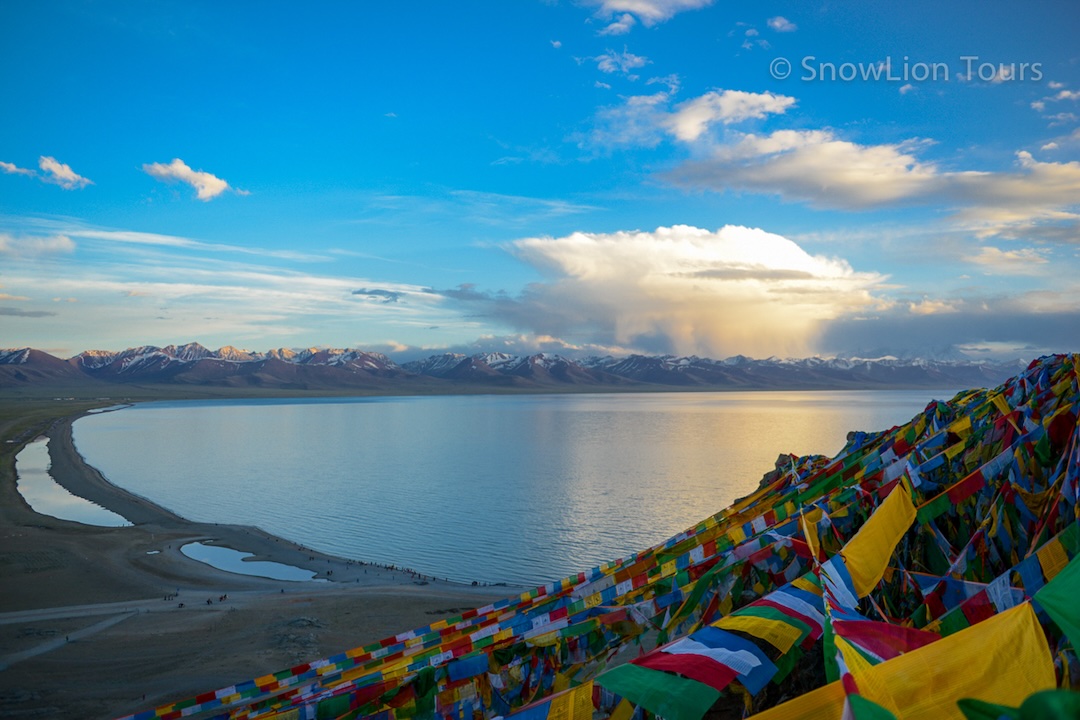
Namtso Lake
Day 10: Damshung – Reting Monastery – Tedrum Nunnery
In the morning, drive to the remote Yamalung Hermitage, located 20 km from Samye Monastery. Padmasambhava, also known as Guru Rinpoche, spent his meditation time in this hermitage, where he received empowerment from the deity Amitayus. The fifth Dalai Lama also spent 14 months meditating here. Yamalung Hermitage is an ideal place for offering blessings and prayers. Afterward, drive to Tsethang, the third largest city in Central Tibet.
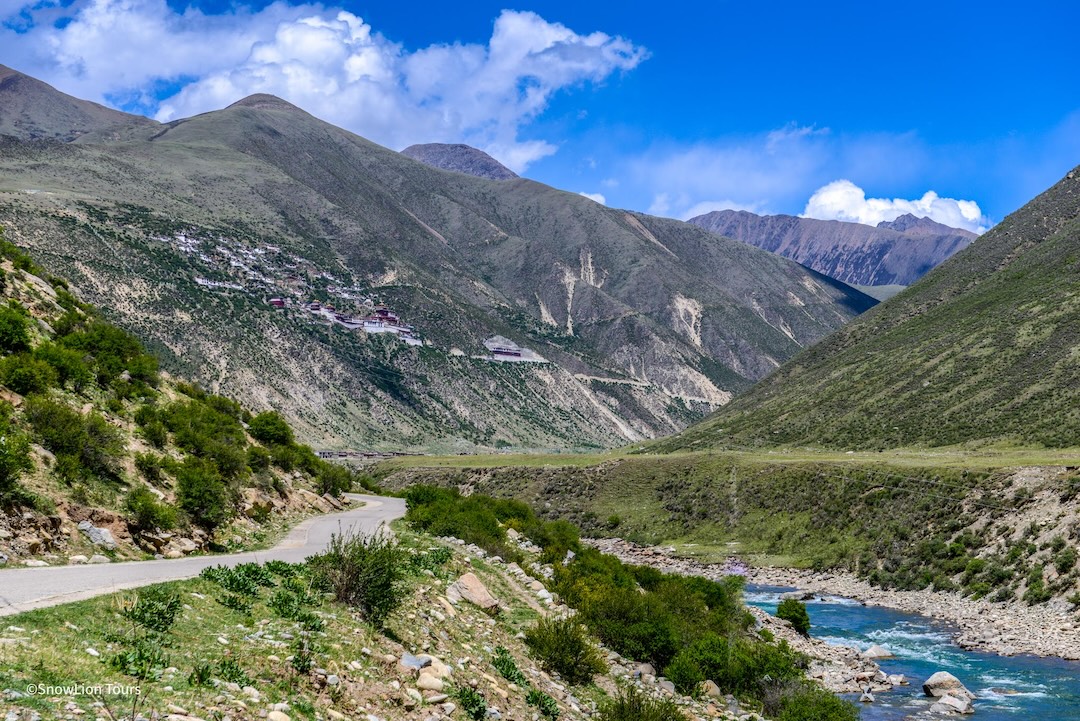
Reting Monastery from the main road at the river side.
Day 11: Tedrum Nunnery – Drak Yerpa Meditation Caves – Back to Lhasa
In the morning, drive to Drak Yerpa, a hermitage about 30 km north of Lhasa. Drak Yerpa is one of the holiest cave retreats in central Tibet. Carved out of the side of a mountain, it is very peaceful and beautiful here. You need to follow small trails to find and explore these caves. The drive passes through a small village, and you can explore the many caves at this site. You might see some pilgrims meditating in the caves! Afterward, drive back to Lhasa.
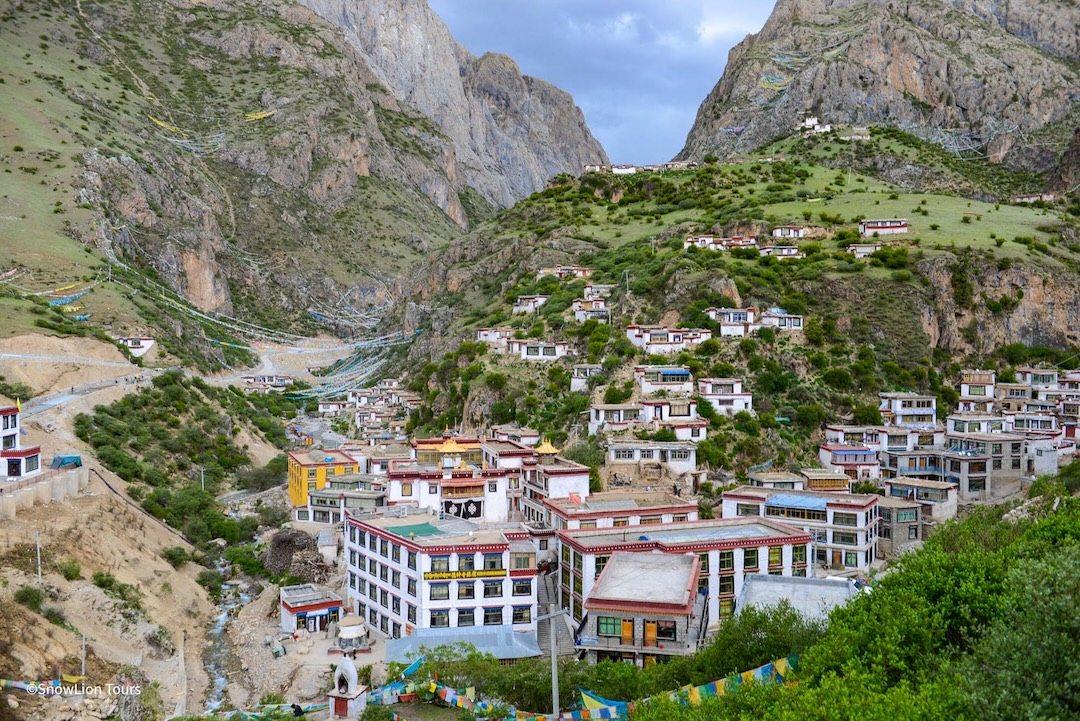
Tedrum Nunnery
Day 12: Depart Lhasa
Say goodbye to Tibet!
For more info about Guru Rinpoche, please check out here – Guru Rinpoche / Padmasambhava
Helpful Travel Guides
-
DepartureLhasa
-
Departure TimeAnyway time
-
Return Timeto be fixed
-
IncludedTibetan English Speaking guideAccommodationEntrance TicketsVehicleTibet Travel Permits
-
Not IncludedPlane or train to/from LhasaTips for guide and driverFood
-
Maps
Recent Posts
- Mount Kailash Kora updates
 September 26, 2026
 - Tibet Travel Permits
 September 24, 2026
 - Update on China / Tibet–Nepal Land Border Crossings
 September 24, 2026

.jpg "amdo monlam festival tour")