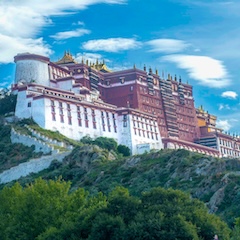
Drepung Monastery & Nechung Temple
Drepung Monastery: The Great Seat of Learning in Tibe
Drepung Monastery is magnificently situated 7km northwest of Lhasa city on the slopes of Gephel Utse ridge, creating a dramatic silhouette against the barren mountains that surround the Lhasa Valley. Founded in 1416 by Jamyang Choje Tashi Palden, one of Je Tsongkhapa’s most accomplished disciples, Drepung quickly established itself as one of the three great Gelugpa monasteries alongside Ganden and Sera in Central Tibet.
The name “Drepung” means “rice heap” in Tibetan, referring to the way the monastery’s white buildings cascade down the mountainside, resembling scattered grains of rice when viewed from a distance. This poetic name captures both the monastery’s impressive scale and its organic integration with the natural landscape.

Historical Significance and Monastic Life
At its zenith in 1641, Drepung Monastery housed more than 10,000 monks, making it the largest monastery in the world at that time. The monastery functioned as a complete monastic city, with its own government, economy, and educational system. Although there are approximately 500 monks residing there today, Drepung remains one of the largest and most influential monasteries in Tibet, continuing its vital role in preserving and transmitting Tibetan Buddhist knowledge.
Political Importance: The Ganden Podrang
In the early years of the 16th century, the Second Dalai Lama took possession of the Ganden Podrang (Heavenly Palace) at Drepung, transforming the monastery into an important center of political power in Tibet. This palace served as the primary residence of the Dalai Lamas until the completion of the Potala Palace in the 17th century. The Ganden Podrang became the seat of the Tibetan government, and its name was later adopted for the entire Tibetan governmental system established by the Fifth Dalai Lama.
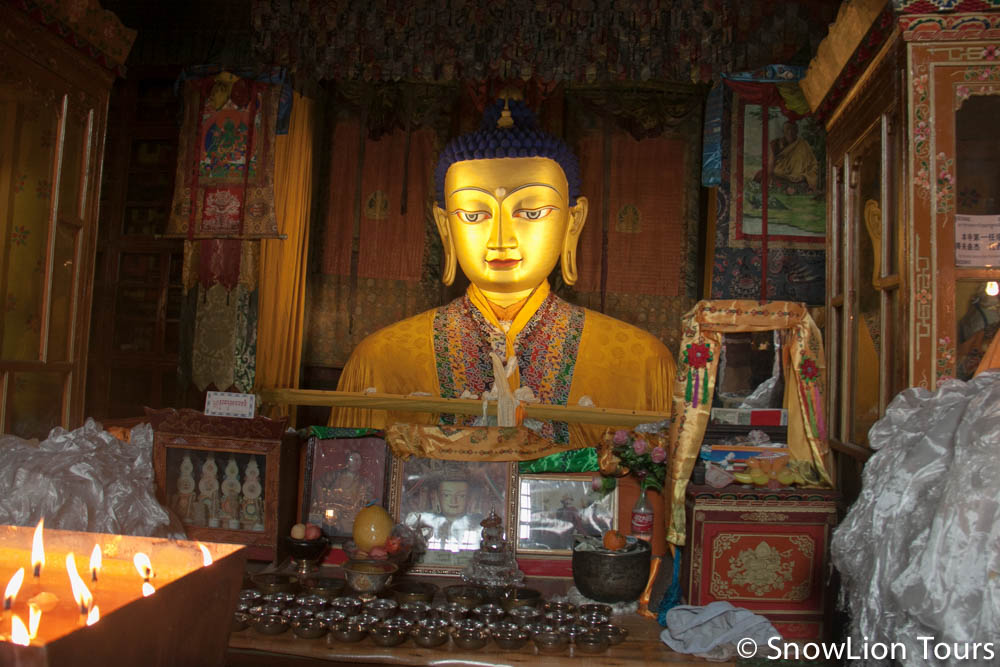
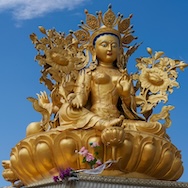
Buddha Statue in Drepung Monastery
Educational Excellence and Regional Influence
Drepung’s influence within the Gelugpa world extends far beyond central Tibet, reaching eastward through the Amdo region and northward into Mongolia. This vast network was established through centuries of scholarly exchange and religious missions. Today, the monastery continues to attract monks from these distant regions, with many students from Amdo and Mongolia coming to study Buddhism in Drepung’s renowned colleges, maintaining traditions that span over 600 years.
The monastery has produced countless scholars, masters, and teachers who have spread Gelugpa teachings throughout the Tibetan cultural world. Many of Tibet’s most respected philosophers, debaters, and religious leaders received their education within Drepung’s halls.
Architectural Complex and Sacred Spaces
The sprawling monastic complex consists of several major components, each serving specific functions within the monastery’s educational and spiritual life:
Central Assembly Hall (Tsokchen Lhakhang): The heart of the monastery, this massive hall can accommodate thousands of monks during important ceremonies and teachings. The hall contains impressive statues of the Buddha and bodhisattvas, ancient murals depicting Buddhist cosmology, and a vast collection of sacred texts. The assembly hall serves as the focal point for major religious festivals and communal prayers.
Ganden Podrang (Heavenly Palace): The former residence of the Dalai Lamas, this palace complex contains private chambers, reception halls, and chapels that witnessed crucial decisions in Tibetan history. Though no longer occupied by the Dalai Lama, the palace remains a sacred space filled with precious artifacts and historical significance.
Seven Colleges (Dratsang): The monastery’s educational system is organized around seven distinct colleges, each founded by and assigned to some of the most accomplished students of Jamyang Choje. These colleges specialize in different aspects of Buddhist study, including philosophy, tantra, medicine, and debate. Each college maintains its own residential units (Khangtsang) where monks live, study, and practice together, creating intimate learning communities within the larger monastery.

Drepung Monastery
The Meditation Caves of Jamyang Choje
Scattered throughout the Drepung complex are approximately five meditation caves where the monastery’s founder, Jamyang Choje, engaged in intensive spiritual practice. These sacred retreats, carved into the mountainside, represent some of the most hallowed spaces in the monastery. While many of these caves are not typically open to tourists due to their sacred nature and preservation concerns, they continue to inspire the monastic community and serve as pilgrimage sites for devoted practitioners.
The Sacred Circumambulation (Kora)
One of the most meaningful ways to experience Drepung is to join the pilgrims’ circumambulation, a sacred walk that takes approximately one hour to complete. Beginning at the monastery’s entrance gates, pilgrims and visitors walk in a clockwise direction around the entire complex, following ancient paths marked by centuries of devotional footsteps.
Along the kora path, visitors encounter numerous stone-carved scriptures and Buddha images that have been placed by devoted pilgrims over the centuries. These carved stones, known as mani stones, bear sacred mantras and religious symbols, creating an outdoor gallery of devotional art. The circumambulation path offers spectacular views of the monastery from different angles and provides opportunities for meditation and reflection while walking in the footsteps of countless pilgrims.
Spiritual Practices and Daily Life
The kora serves multiple purposes beyond mere sightseeing – it is a form of moving meditation that generates merit, purifies negative karma, and creates a deep connection with the sacred space. Local Tibetans often perform this circumambulation daily, particularly in the early morning and evening, creating a continuous stream of devotional activity around the monastery.
Nechung Temple: The Oracle’s Seat
After visiting Drepung, following the local pilgrims will lead you to the nearby Nechung Temple in approximately 15 minutes. This important temple serves as the abode of Pehar, one of Tibet’s most powerful protector deities, and historically functioned as the seat of the Tibetan State Oracle.
Nechung Temple holds immense significance in Tibetan Buddhism and politics, as the State Oracle traditionally provided divine guidance on important government decisions. The Oracle, when in trance, was believed to be possessed by Pehar and would offer prophetic advice to the Dalai Lama and Tibetan government. This unique institution represents the deep integration of spiritual and temporal authority that characterized traditional Tibetan society.
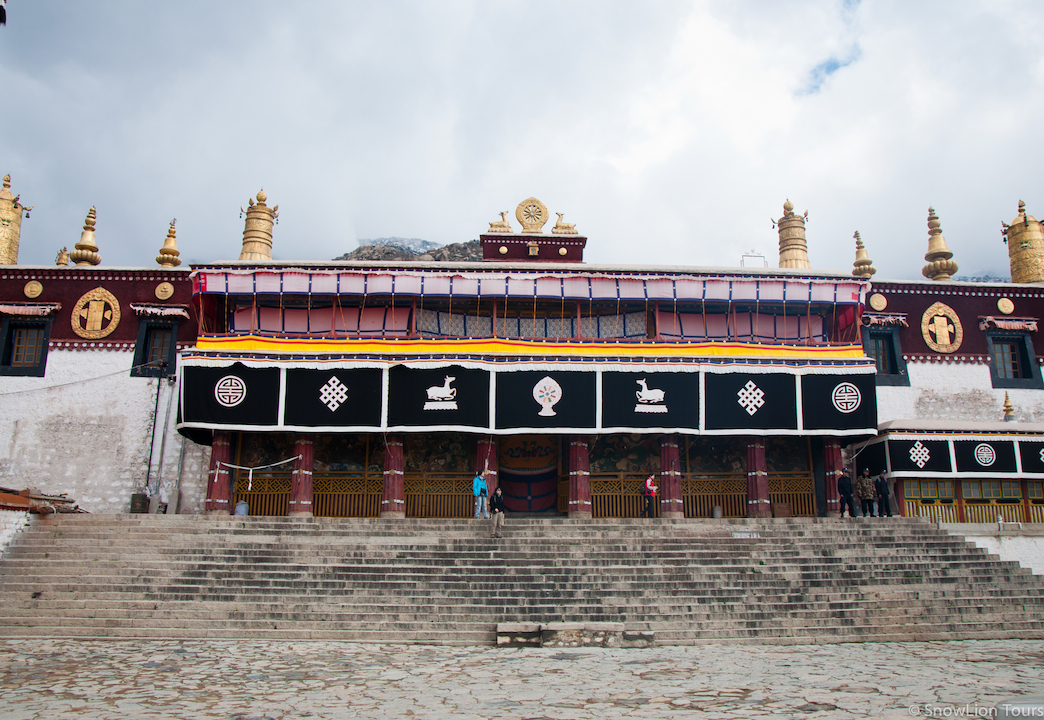
Drepung monastery
Visitor Experience and Cultural Significance
Best Times to Visit: Early morning (6:00-8:00 AM) offers the most authentic experience, as this is when monks gather for morning prayers and locals perform their daily circumambulations. The soft morning light also provides excellent photography opportunities.
Monastery Etiquette: Visitors should dress modestly, remove hats when entering temples, avoid pointing feet toward sacred objects, and maintain respectful silence during prayers. Photography may be restricted in certain halls – always ask permission.
Seasonal Considerations: The monastery is accessible year-round, but spring and autumn offer the most comfortable visiting conditions. During major festivals like Shoton (Yogurt Festival) in summer, the monastery becomes a focal point for elaborate celebrations.
Academic Traditions
Drepung continues to maintain rigorous academic standards, with monks engaging in formal debates, memorizing vast texts, and pursuing advanced degrees in Buddhist philosophy. The monastery’s educational system, unchanged for centuries, produces some of Tibet’s most learned religious scholars.
Contemporary Relevance
Despite political changes and modernization pressures, Drepung Monastery remains a living center of Tibetan Buddhist learning and practice. The monastery continues to ordain new monks, conduct traditional ceremonies, and preserve the scholarly traditions that have made it one of Buddhism’s great seats of learning.
For visitors, Drepung offers an unparalleled opportunity to witness authentic Tibetan monastic life, experience the profound scholarly traditions of Tibetan Buddhism, and connect with spiritual practices that have continued unbroken for over 600 years. The monastery stands as a testament to the enduring power of Buddhist education and the remarkable civilization that created and sustained these great centers of learning on the roof of the world.
Recent Posts
- Mount Kailash Kora updates
 September 26, 2026
 - Tibet Travel Permits
 September 24, 2026
 - Update on China / Tibet–Nepal Land Border Crossings
 September 24, 2026
We are recommended by
We are committed to providing authentic, high quality, environmentally sustainable travel services. Join us and experience once in a lifetime holiday.
Recent Trips
.jpg "amdo monlam festival tour")