Kumbum Monastery
Kumbum Monastery: The Sacred Birthplace of Tsongkhapa
Kumbum Monastery (Ch: Ta Er Si), one of the six great monasteries of the Gelugpa school of Tibetan Buddhism, is renowned as the birthplace of the great religious reformer Tsongkhapa. Its full name is Kumbum Jampaling Monastery. This monastery offers a unique opportunity to explore Tibetan religious culture, architecture, and art. Notable highlights include intricate butter sculptures, stunning murals, and appliqué embroidery. Another must-see is the daily monastic debate held in front of the Assembly Hall from 5-6 pm.
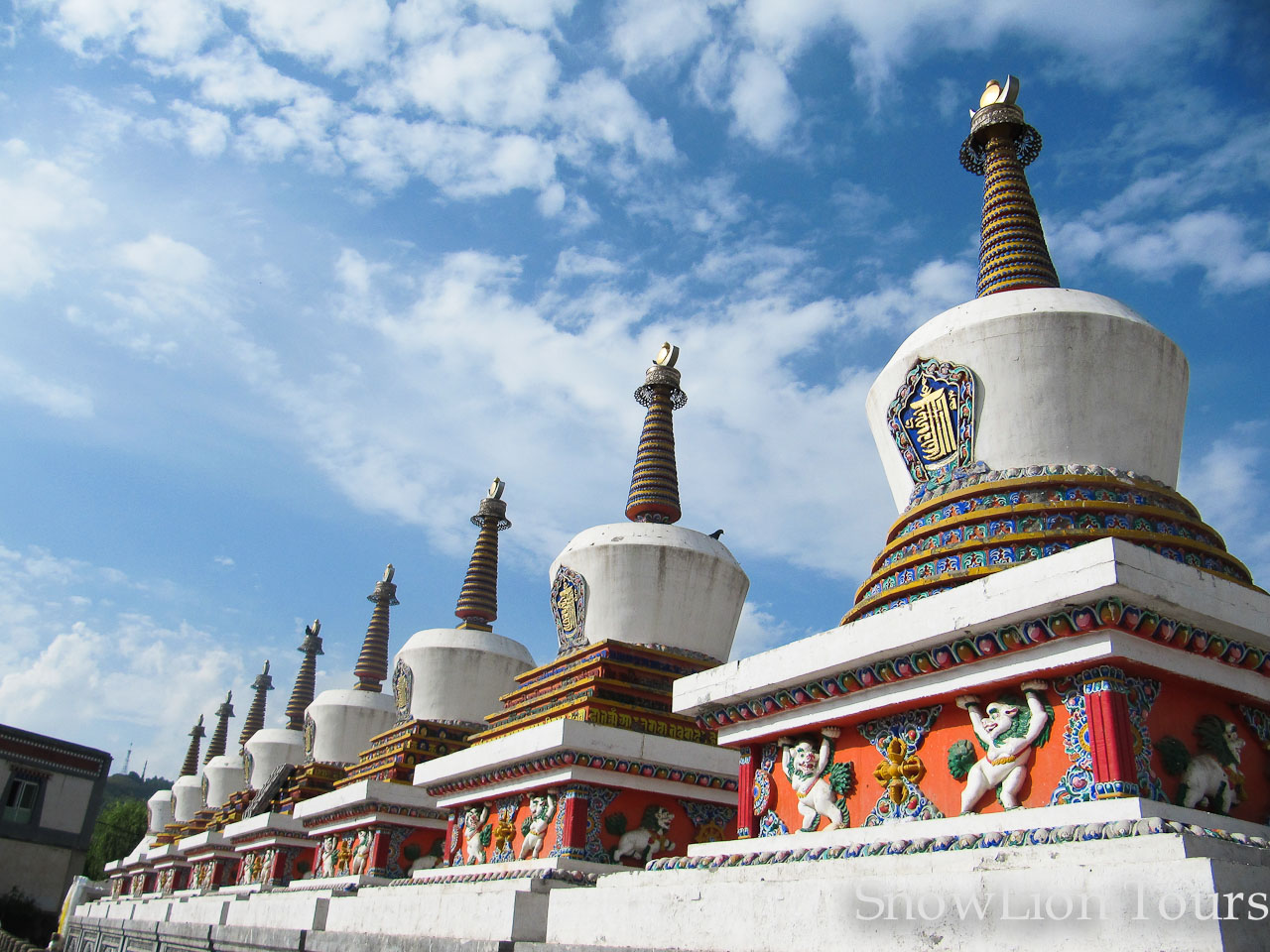
Kumbum Monastery 8 stupa in Amdo
Kumbum Monastery is located 25 km west of Xining, the capital city of Qinghai Province. The monastery currently houses about 600 monks, though at its peak it was home to more than 2,500 monks. This sacred site holds immense significance in Tibetan Buddhism as the birthplace of one of its most influential figures.
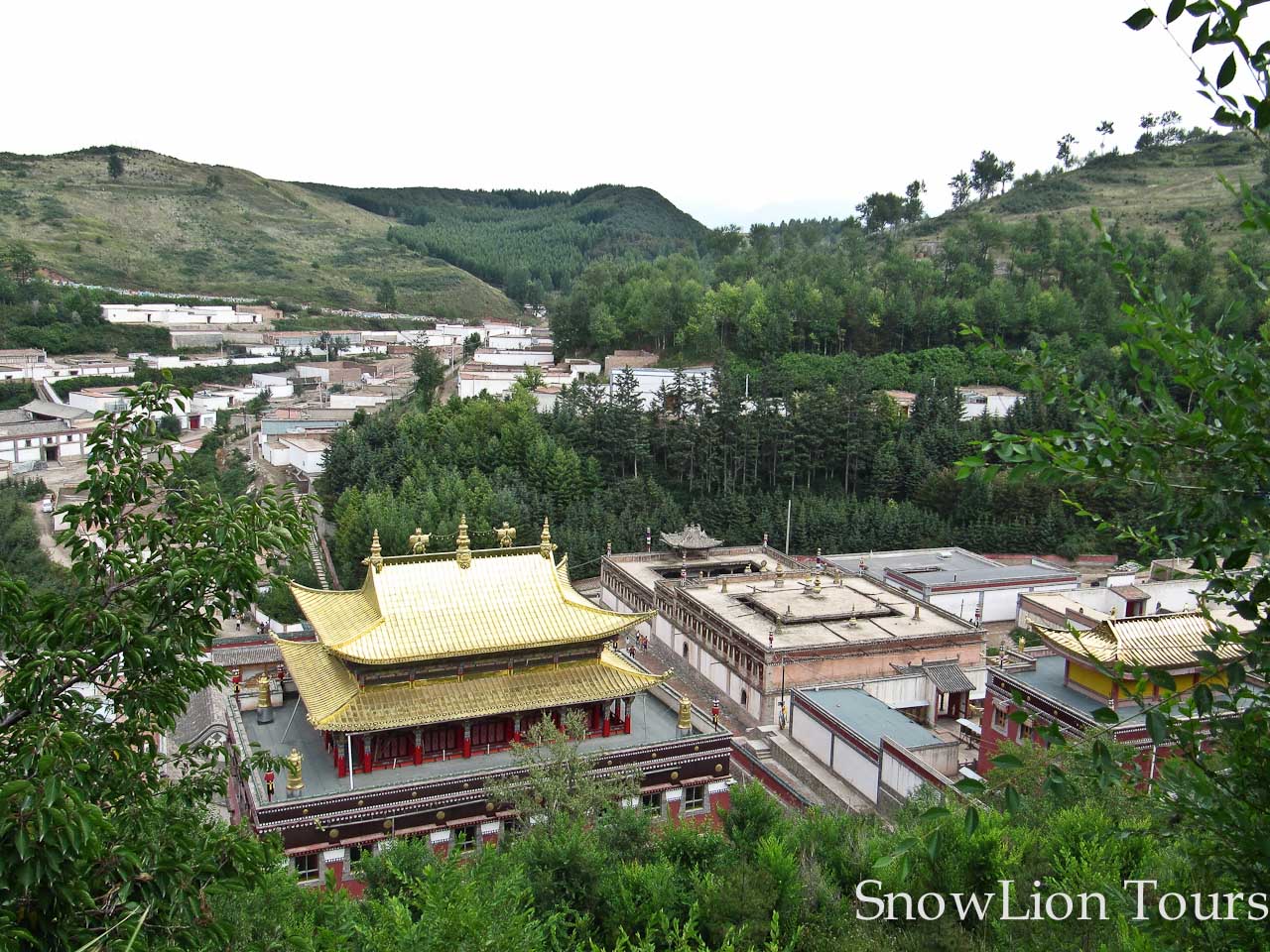
Amdo Kumbum Monastery
Kumbum Monastery was founded in 1583 by the Third Dalai Lama, Sonam Gyatso (1543-1588), on the exact site where Tsongkhapa (1357-1419), the founder of the Gelugpa tradition, was born. According to Tibetan texts, a drop of blood fell from Tsongkhapa’s umbilical cord when it was cut after his birth. From this drop grew a wondrous white sandalwood tree with approximately 100,000 leaves, which it never sheds. In Tibetan, the number 100,000 symbolizes a very large number rather than a literal count. Each leaf features an image of the Buddha Sinhanada (Seng-ge sgra), and the bark of the branches and trunk displays designs of the Buddha’s seed syllables and hand implements. In the future, Tsongkhapa is believed to be reborn as Sinhanada, the eleventh Buddha among the 1,000 who will grace the earth during this fortunate eon.
The monastery complex centers around Serdong Chenmo, which was originally built by Tsongkhapa’s mother in 1379 on the spot where the sacred sandalwood tree is said to have sprung from the ground where Tsongkhapa’s placenta fell at the time of his birth. This small temple became the foundation upon which the greater monastery complex would later be built, making it one of the most sacred sites in Tibetan Buddhism.
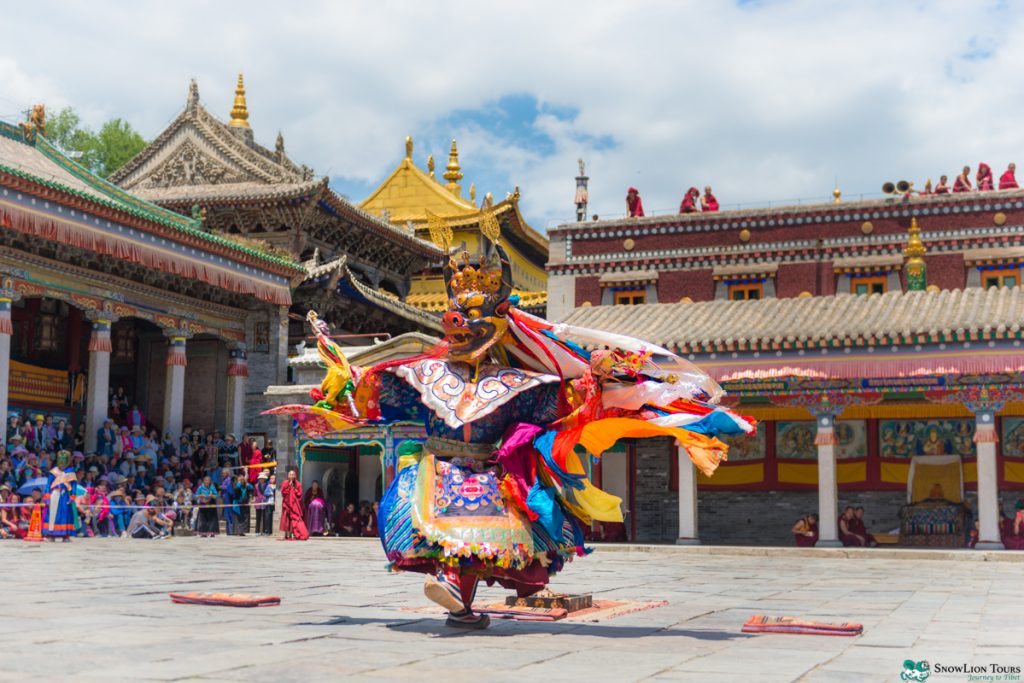
Festival in Kumbum Monastery
Tsongkhapa (1357-1419), born Je Tsongkhapa Lobsang Drakpa, was a Tibetan Buddhist monk, philosopher, and teacher who founded the Gelugpa school of Tibetan Buddhism. Known for his exceptional scholarship and spiritual attainment, Tsongkhapa emphasized the importance of both scholarly study and meditative practice. He authored numerous influential texts, including the “Great Treatise on the Stages of the Path to Enlightenment” (Lamrim Chenmo), which remains a cornerstone of Tibetan Buddhist education. His teachings synthesized the various Buddhist traditions in Tibet, creating a comprehensive system that emphasized ethical conduct, philosophical understanding, and tantric practice. The Gelugpa school, also known as the “Yellow Hat” school, became the dominant tradition in Tibet and Mongolia, with the Dalai Lama lineage emerging from this school. Tsongkhapa’s influence on Tibetan Buddhism cannot be overstated, as his systematic approach to Buddhist practice and his institutional reforms shaped the religious landscape of Tibet for centuries to come.
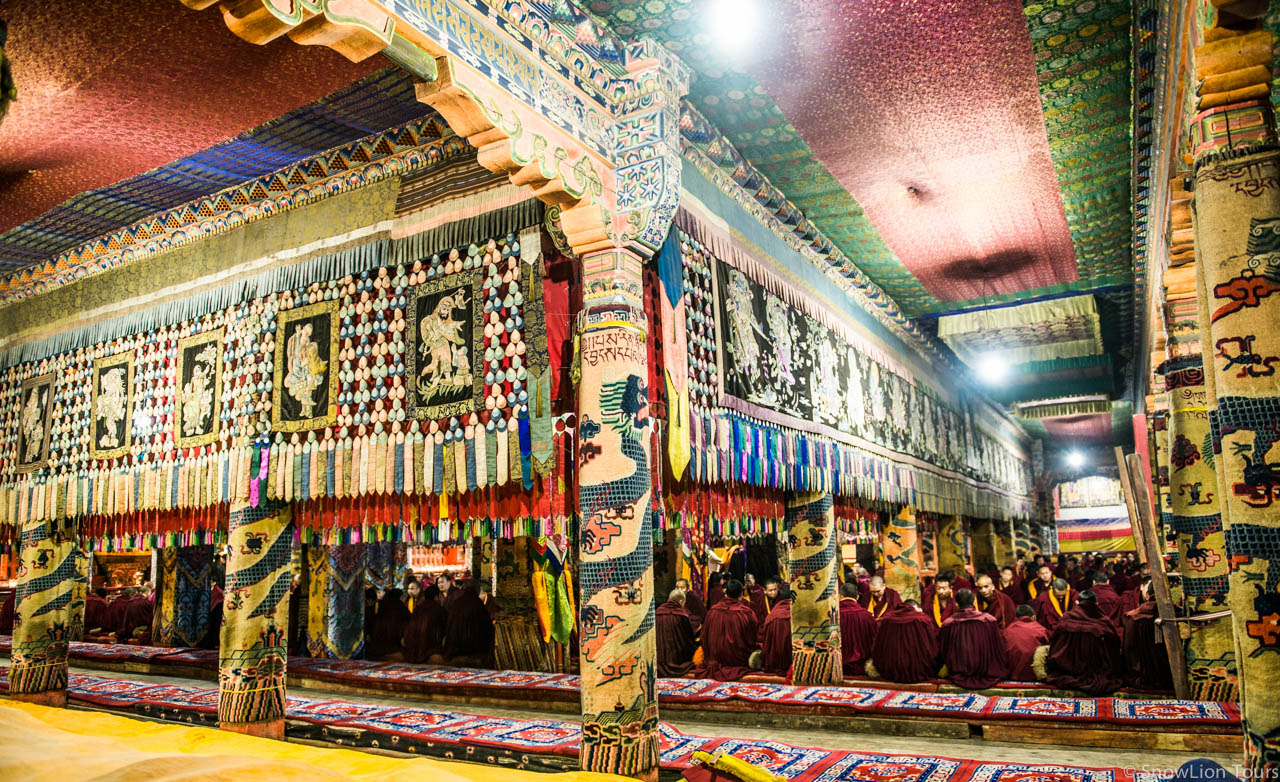
Kumbum Monastery
Kumbum Monastery is particularly famous for its three artistic treasures: butter sculptures, murals, and appliqué embroidery. These intricate works of art not only serve as objects of devotion but also represent the pinnacle of Tibetan artistic achievement. The butter sculptures, created by monk-artists using yak butter, are especially remarkable for their detailed craftsmanship and vibrant colors.
The monastery continues to be a vibrant center of Buddhist learning and practice. Visitors can witness the daily monastic debates, a traditional method of Buddhist philosophical discourse, held in front of the Assembly Hall from 5-6 pm. These debates, characterized by animated gestures and clapping, provide insight into the rigorous intellectual training that monks undergo in their pursuit of Buddhist understanding.
Kumbum Monastery stands as a testament to the enduring legacy of Tsongkhapa and continues to serve as an important pilgrimage site and center of learning for Tibetan Buddhists worldwide. Its combination of sacred history, architectural beauty, and living monastic tradition makes it an essential destination for anyone seeking to understand the depth and richness of Tibetan Buddhist culture.
Recent Posts
- Shoton Festival Begins in Lhasa!
 August 23, 2025
 - Tour Price in Tibet
 August 23, 2025
 - Qinghai Shaman Festival in Rebkong Concludes Successfully
 August 21, 2025
Related Tours
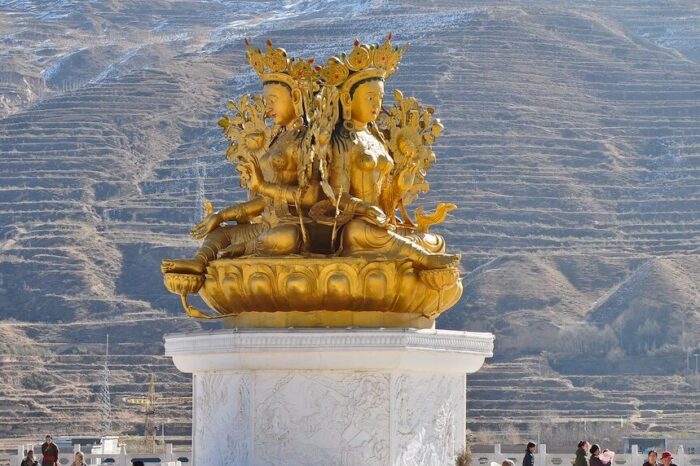
Best of Qinghai
Discover Qinghai’s highlights from Xining to Qinghai Lake, Guide, Kanbula Park, and Tongren. Explore monasteries, stunning landscapes, and Tibetan culture.
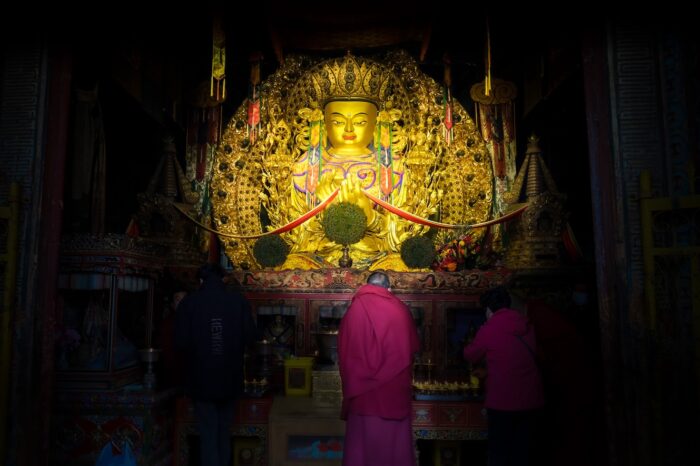
Kumbum and Qinghai Lake Tour
Explore Kumbum Monastery, Tibetan Medical & Cultural Museum, and the breathtaking Qinghai Lake on this immersive cultural and scenic Qinghai tour.
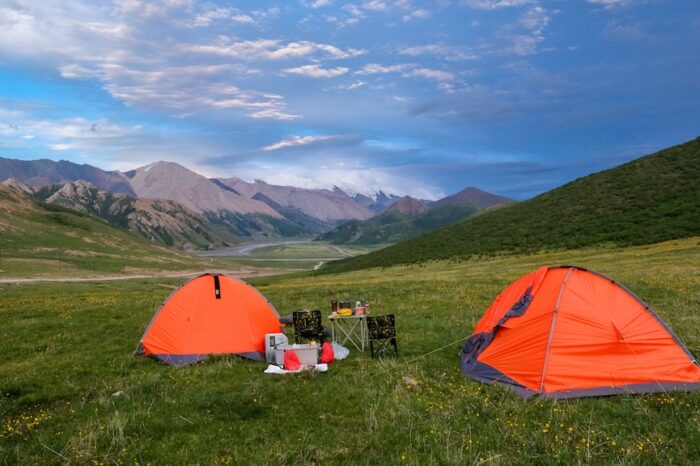
Camping with nomads
Experience authentic nomadic life by camping with Tibetan nomads in Qinghai, enjoying the vast grasslands, local culture, and stunning natural landscapes.
We are recommended by
We are committed to providing authentic, high quality, environmentally sustainable travel services. Join us and experience once in a lifetime holiday.
Recent Trips
.jpg "amdo monlam festival tour")