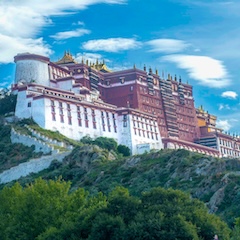
Yumbulakang Palace
Yumbulakang Palace is one of the most symbolic places in the Yarlung Valley, remembered as Tibet’s first palace and closely connected with the earliest Tibetan kings.
About Yumbulakang Palace
Yumbulakang Palace rises above the Yarlung Valley near Tsedang, one of the most important early centers of Tibetan civilization. Its name is often translated as the palace of mother and son, and it is traditionally remembered as the first palace in Tibet. For many Tibetan people, Yumbulakang is not only an old building on a hill; it is a place connected with the beginning of Tibetan kingship, the formation of early Tibetan culture, and the deep memory of the Yarlung dynasty.
The palace is traditionally associated with Nyatri Tsenpo, the first Tibetan king in Tibetan historical tradition. Because of this connection, visiting Yumbulakang gives travelers a chance to stand in a landscape that Tibetans often describe as the cradle of their civilization. The surrounding Yarlung Valley, the nearby royal tombs, and early Buddhist sites make this region one of the most meaningful areas for understanding Tibet before and during the rise of the Tibetan Empire.
Historical and Cultural Significance
Yumbulakang is important because it brings together several layers of Tibetan history. First, it is linked with the legendary beginning of the Tibetan royal line. Second, it is connected with the Yarlung Valley, where Tibetan political power grew before expanding across the plateau. Third, it later became associated with Buddhism, especially after the spread of Buddhism under the great Tibetan kings.
In Tibetan tradition, the earliest scriptures and sacred objects are said to have descended from the sky during the time of King Lha Thothori Nyantsen, long before Buddhism became fully established in Tibet. Whether understood as legend or sacred history, this story shows why Yumbulakang is remembered as a place where Tibet’s royal and religious destinies began to meet. For travelers, this gives the site a special atmosphere: it is both an ancient palace and a sacred landmark in Tibet’s historical imagination.
The building has been rebuilt and restored over time, so visitors should not think of it only as an untouched ancient structure. Its real importance lies in the memory it carries. The palace shape, the hilltop position, and the view over cultivated fields all help visitors imagine the early Yarlung kingdom and the roots of Tibetan identity.
What to See at Yumbulakang
The main attraction is the palace itself, standing on a narrow ridge above the valley. From below, the white walls and tower-like form look both defensive and ceremonial. Inside, visitors can usually see small chapels, religious images, and murals connected with Tibetan kings and Buddhist figures. The interior is modest compared with large monasteries such as Samye or the Potala Palace, but the symbolism is powerful.
The view from the palace is one of the highlights. The Yarlung Valley spreads out below with fields, villages, mountains, and river landscapes. This view helps explain why the area became an early center of Tibetan life: it is fertile, protected, and close to several major cultural sites. Many travelers combine Yumbulakang with Trandruk Monastery, Samye Monastery, and the tombs of the Tibetan kings to understand the larger story of early Tibet.
Why It Matters for Travelers
Yumbulakang is especially meaningful for travelers who want to see more than the famous monuments of Lhasa. It offers a quieter encounter with the beginnings of Tibetan civilization. Instead of grand halls and large crowds, the experience here is more intimate: a hilltop palace, local pilgrims, broad valley views, and a strong sense of ancient memory.
For cultural travelers, Yumbulakang helps connect many themes: the early Tibetan kings, the Yarlung dynasty, the arrival of Buddhism, and the way legends shape sacred geography. It is one of the best places in Tibet to feel how history, myth, and landscape are woven together.
How to Visit
Yumbulakang is usually visited from Tsedang or as part of a longer Central Tibet journey. The walk or ride up to the palace is short but uphill, so visitors should take their time, especially if they have only recently arrived on the Tibetan Plateau. The site is not large, but it deserves enough time to enjoy the views and understand its background.
Travel Tips
Visit with a guide if possible, because the meaning of Yumbulakang is much deeper when its legends and early historical connections are explained. The site is also excellent for photography, especially from outside the palace and from the ridge looking over the valley. As with all religious and cultural sites in Tibet, walk respectfully, avoid disturbing pilgrims, and ask before photographing people or chapel interiors.
Search
Upcoming Tours
Recent Posts
- Mount Kailash Kora updates
 September 26, 2026
 - Tibet Travel Permits
 September 24, 2026
 - Update on China / Tibet–Nepal Land Border Crossings
 September 24, 2026
For More Information
Newsletter
Explore more! Join to get updates on Tibet tours and departures.
We are recommended by
We are committed to providing authentic, high quality, environmentally sustainable travel services. Join us and experience once in a lifetime holiday.
Contact Information
Recent Trips
.jpg "amdo monlam festival tour")