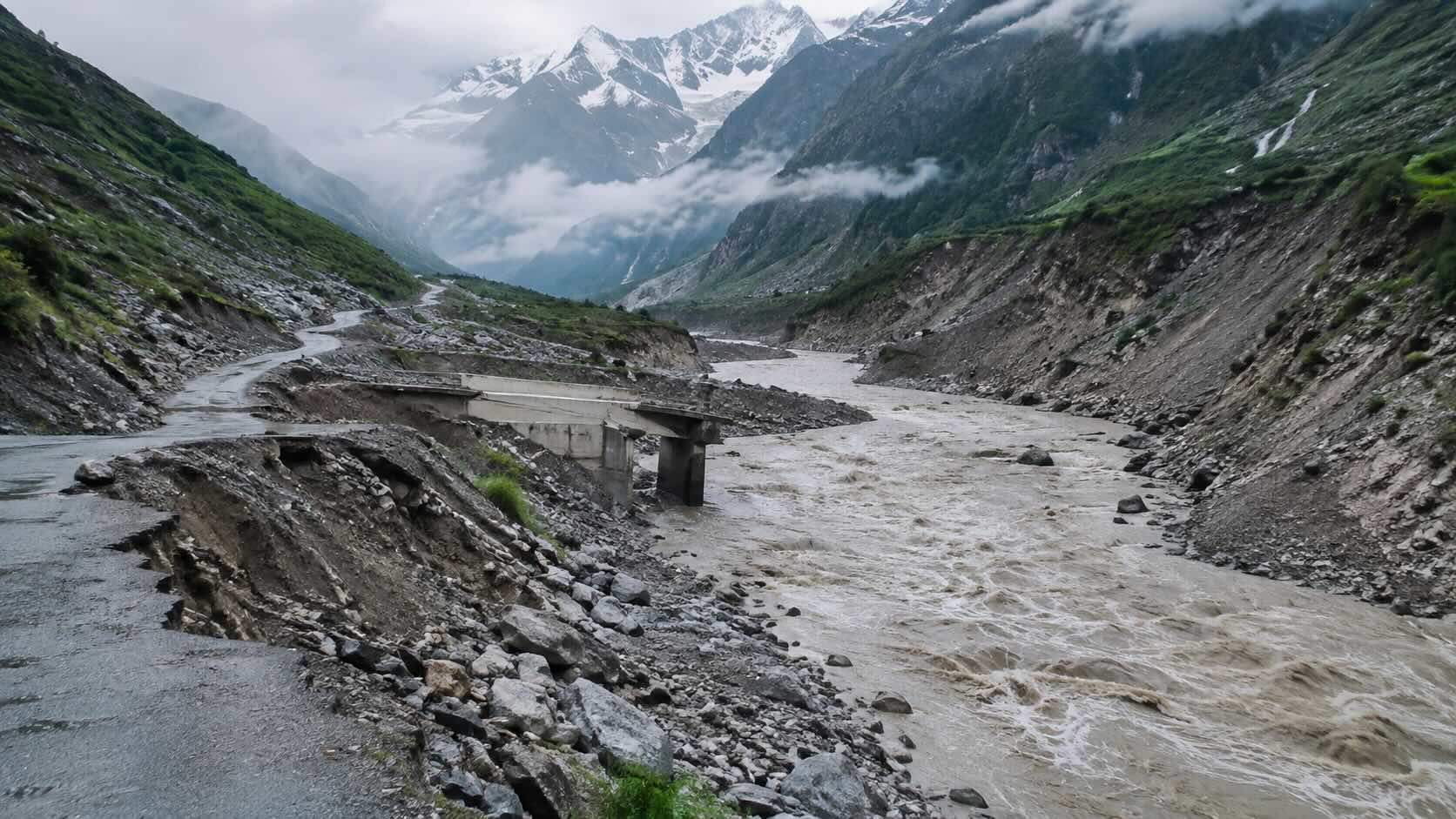
A catastrophic flash flood struck the Nepal– China / Tibet border region on the morning of August 26, 2026, causing severe loss of life and extensive damage to communities, roads, bridges, hydropower facilities and border infrastructure.
The disaster affected Kyirong County in Tibet and Nepal’s Rasuwa district, particularly the areas around Rasuwagadhi, Timure and Syabrubesi. The floodwater and debris travelled through the Lhende and Bhotekoshi river system before continuing downstream toward the Trishuli River.
Search-and-rescue operations are continuing on both sides of the border. The number of people confirmed dead or missing has changed rapidly since the disaster, because communications and road access remain difficult, the full scale of the tragedy is still being established.
What caused the flood?
Early reports raised several possible explanations, including heavy rain, a glacial lake outburst and an earthquake. However, satellite analysis and early assessments by scientists now indicate that a major collapse of glacier ice, rock and debris in the high Lhende catchment was the most likely trigger.
The collapse appears to have fallen into the river valley with enormous force, possibly blocking the river temporarily. The subsequent release sent a powerful mixture of water, mud, rock and ice downstream.
The United States Geological Survey also reported that seismic signals initially identified as a magnitude 4.4 earthquake were later determined to have been generated by a glacial collapse and debris flow.
Experts have stressed that investigations are still underway. Newly formed lakes and river blockages are also being monitored because they may create a risk of further flooding.
Damage to the Gyirong–Rasuwa route
The flood caused major destruction along the Kyirong–Rasuwagadhi corridor, an important route for trade and tourism between Nepal and Tibet.
Roads and bridges were washed away or buried, settlements were inundated, and several hydropower projects and public facilities in Rasuwa were damaged.
Kyirong Port, located directly across the border from Rasuwagadhi, was also struck by the flood and debris flow. This route is therefore expected to remain disrupted while rescue work, safety assessments and repairs continue.
What does this mean for travel to Tibet and Mount Kailash?
Immediate travel through the Kyirong–Rasuwagadhi crossing is seriously affected, and travellers should not attempt to enter the disaster area. Anyone with an upcoming journey should follow official advice and obtain confirmation from their tour operator before travelling.
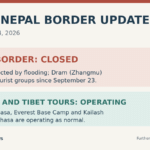
The Dram/Zhangmu crossing, reached from Nepal through Kodari, is a separate border route and has not been affected by this flood. According to the latest information we have received from the relevant authorities, the Dram/Zhangmu border crossing remains open and operational. We anticipate that this crossing will be used as the main entry and exit point for travellers journeying between Nepal and Tibet.
Dram/Zhangmu had already been serving as an alternative route for international overland travel following earlier disruption at Kyirong. Nevertheless, border operations and onward travel arrangements can change quickly during an emergency, so every departure must remain subject to official confirmation.
For tours scheduled later in the year, including during the dry autumn season, it is still too early to make final predictions. Tour operators will need to monitor road repairs, border arrangements and official safety notices, and use alternative routes where authorised and necessary.
A region facing growing high-mountain risks
This disaster is a painful reminder of the vulnerability of Himalayan border communities. Steep terrain, glaciers, unstable slopes and narrow river valleys can turn a high-altitude collapse into a destructive flood far downstream.
Scientists have warned that warming temperatures are contributing to glacier loss and slope instability across the Himalayas, although the role of climate change in any individual event requires careful study.
Our thoughts are with everyone who has lost family members, friends, homes and livelihoods. We also express our deep respect for the rescue teams, local communities and volunteers working in extremely difficult conditions.
SnowLion Tours will continue to monitor official information from Nepal and China Tibet and provide updates relevant to travellers as the situation becomes clearer.

.jpg "amdo monlam festival tour")