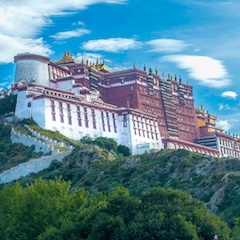
Zoige County
Zoige (Ruoergai): The Highland Marshes of Amdo’s Eastern Frontier
Zoige, known as Dzoige in Tibetan and Ruoergai County in Chinese, encompasses one of the most ecologically significant and culturally authentic nomadic regions in the Amdo area of Ngawa (Aba) Tibetan and Qiang Autonomous Prefecture. Situated in the easternmost sections of the Tibetan Plateau, this vast expanse of highland marshes represents a unique convergence of geography, ecology, and traditional Tibetan pastoral culture.
Geographic Setting and Formation
The Zoige region occupies a distinctive highland basin formed by the Zoige Marshes, strategically positioned between the towering Min Mountains and the eastern extension of the sacred Amnye Machen Mountain range. This geological configuration has created one of the Tibetan Plateau’s most important wetland ecosystems, where alpine marshes stretch across rolling terrain at elevations exceeding 3,500 meters.
The entire Zoige region, including neighboring areas such as Machu County in Gansu Province and Tangkor (located 62km south of Zoige town), forms an interconnected marshland system that serves as a crucial component of the Yellow River watershed. These high-altitude wetlands function as natural sponges, storing vast quantities of water and regulating the flow of tributaries that eventually join China’s Mother River.
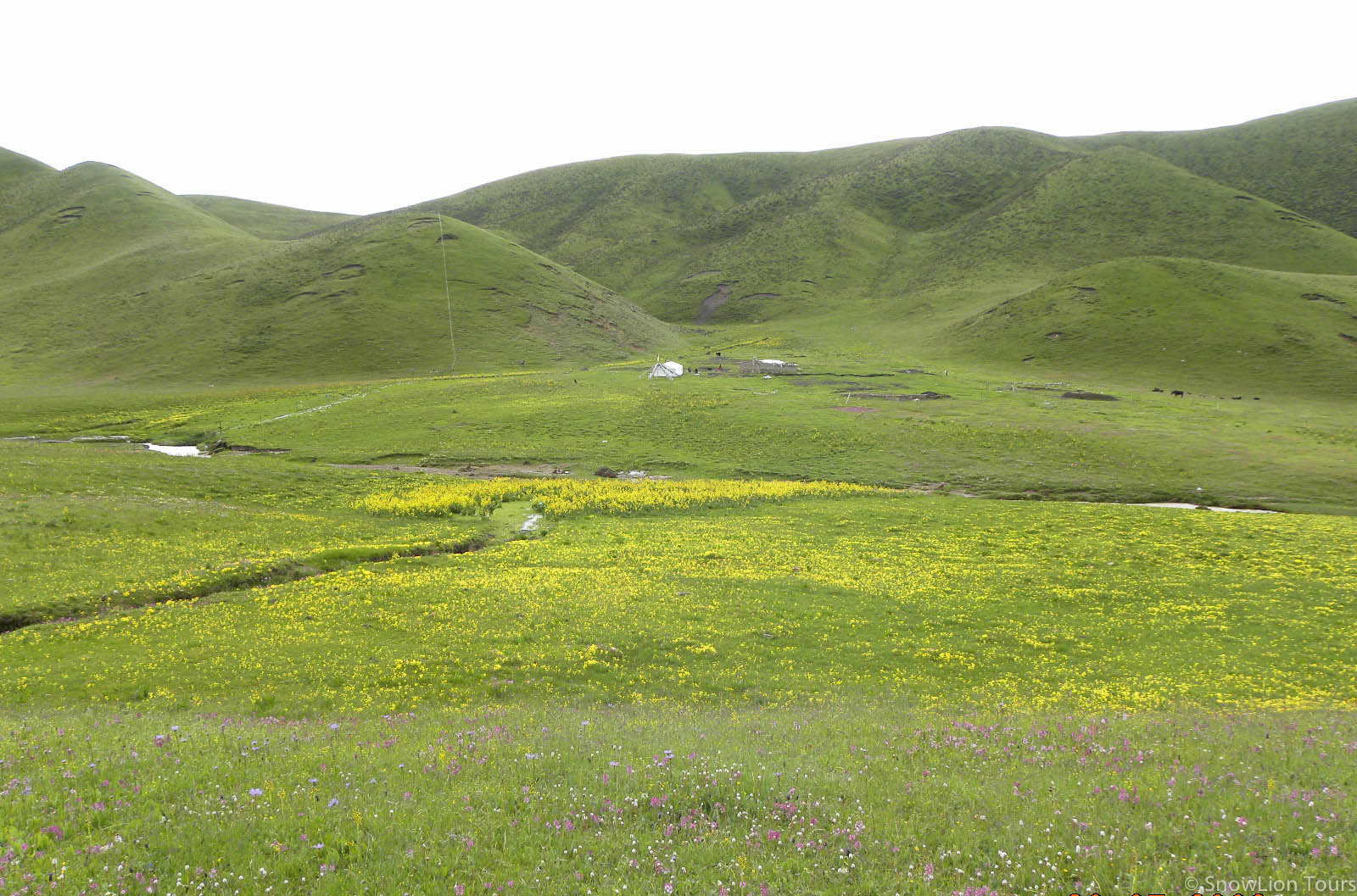
Amdo grassland in summer season, different flowers blanketed the earth.
Nomadic Heritage and Pastoral Adaptations
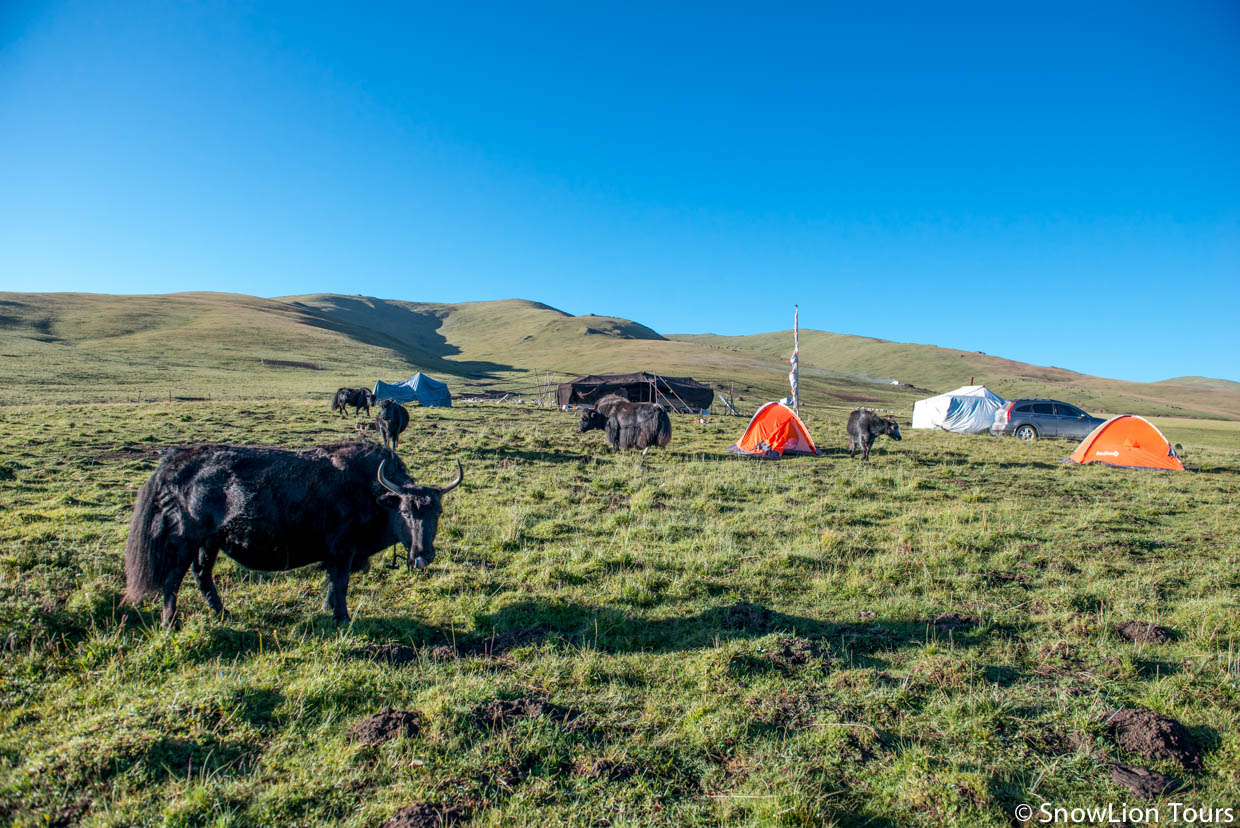
Zoige’s elevated marshlands provide ideal conditions for traditional Tibetan nomadic pastoralism, supporting communities that have maintained their ancestral way of life for countless generations. The region’s abundant grasslands perfectly suit yak herding, and historically supported mixed herds of yaks and sheep that formed the foundation of nomadic economies.
However, contemporary challenges have forced adaptations in traditional herding practices. Increasing wolf populations have led many nomadic families to abandon sheep herding in favor of exclusive yak pastoralism, as yaks prove more capable of defending themselves against predation. This shift reflects the dynamic nature of traditional lifestyles and their ability to adapt to changing environmental conditions while maintaining cultural authenticity.
Biodiversity Hotspot and Conservation Significance
The Zoige marshlands constitute one of China’s most important biodiversity hotspots, supporting numerous endemic and endangered species adapted to high-altitude wetland environments. These pristine ecosystems provide critical habitat for migratory birds, including black-necked cranes, bar-headed geese, and numerous waterfowl species that depend on the region’s lakes and marshes for breeding and feeding.
The area’s ecological importance extends beyond wildlife conservation – the marshes serve as crucial carbon sinks and water regulation systems that influence weather patterns across much of western China. The preservation of these wetlands represents a critical conservation priority with implications far beyond the immediate region.
Tangkor: Gateway to the Nine Bends
Tangkor Township, nestled along the banks of the Yellow River south of Zoige, has gained international recognition for its proximity to the famous Nine Bends of the Yellow River. This small nomadic settlement continues to support thousands of nomads who maintain traditional seasonal migration patterns, moving between summer grazing areas and winter settlements in harmony with natural cycles.
During summer months, nomadic families live in traditional black yak-hair tents, following ancient patterns of movement that optimize grazing resources while allowing grasslands to recover. As winter approaches and temperatures drop to extreme levels, families relocate to permanent winter settlements equipped to withstand the harsh plateau climate.
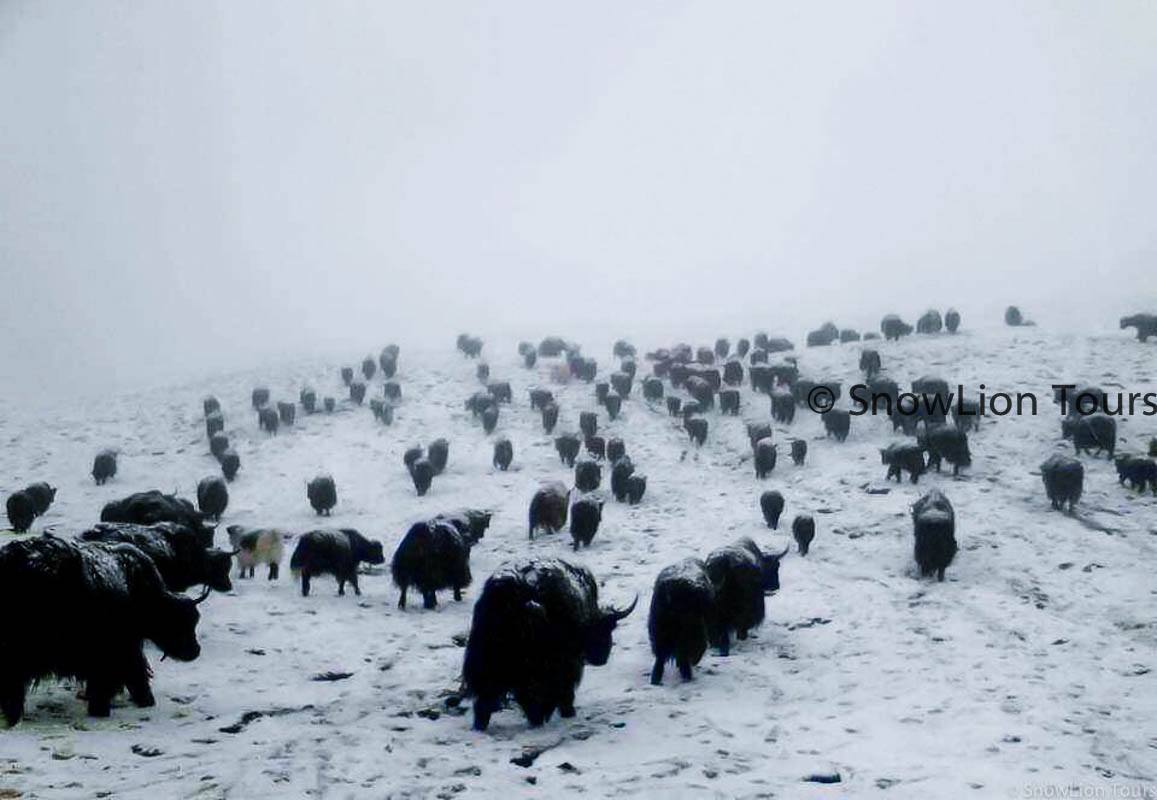
yaks heading to find new dry grassland after a heavy snow in Golok, Qinghai province
The Magnificent Nine Bends
Located just 3km west of Tangkor town, the Nine Bends of the Yellow River represent one of nature’s most spectacular displays of fluvial artistry. These dramatic curves result from the confluence of the Yellow River and Pel River, where the Pel River joins the first bend of the Yellow River, creating a distinctive “S”-shaped formation that has become an iconic symbol of the Tibetan Plateau’s natural beauty.
The river’s serpentine course through the marshlands creates a mesmerizing pattern of water and grassland that changes dramatically with seasons and lighting conditions. From elevated viewing points, visitors can observe the Yellow River’s journey as it flows back into Qinghai Province, continuing its epic journey toward distant seas.
Seasonal Transformations and Optimal Visiting
Zoige reveals different aspects of its beauty throughout the year, with the most spectacular displays occurring during the summer flowering season from July through September. During these months, the vast grasslands transform into a “sea of flowers” as countless alpine wildflowers bloom across the landscape, creating carpets of color that stretch to the horizon.
This flowering period coincides with optimal conditions for visiting nomadic families and grassland camping, offering visitors authentic opportunities to experience traditional Tibetan pastoral life. The mild summer weather, abundant wildlife activity, and spectacular flowering displays make this the premier season for photography, cultural exchange, and outdoor activities.
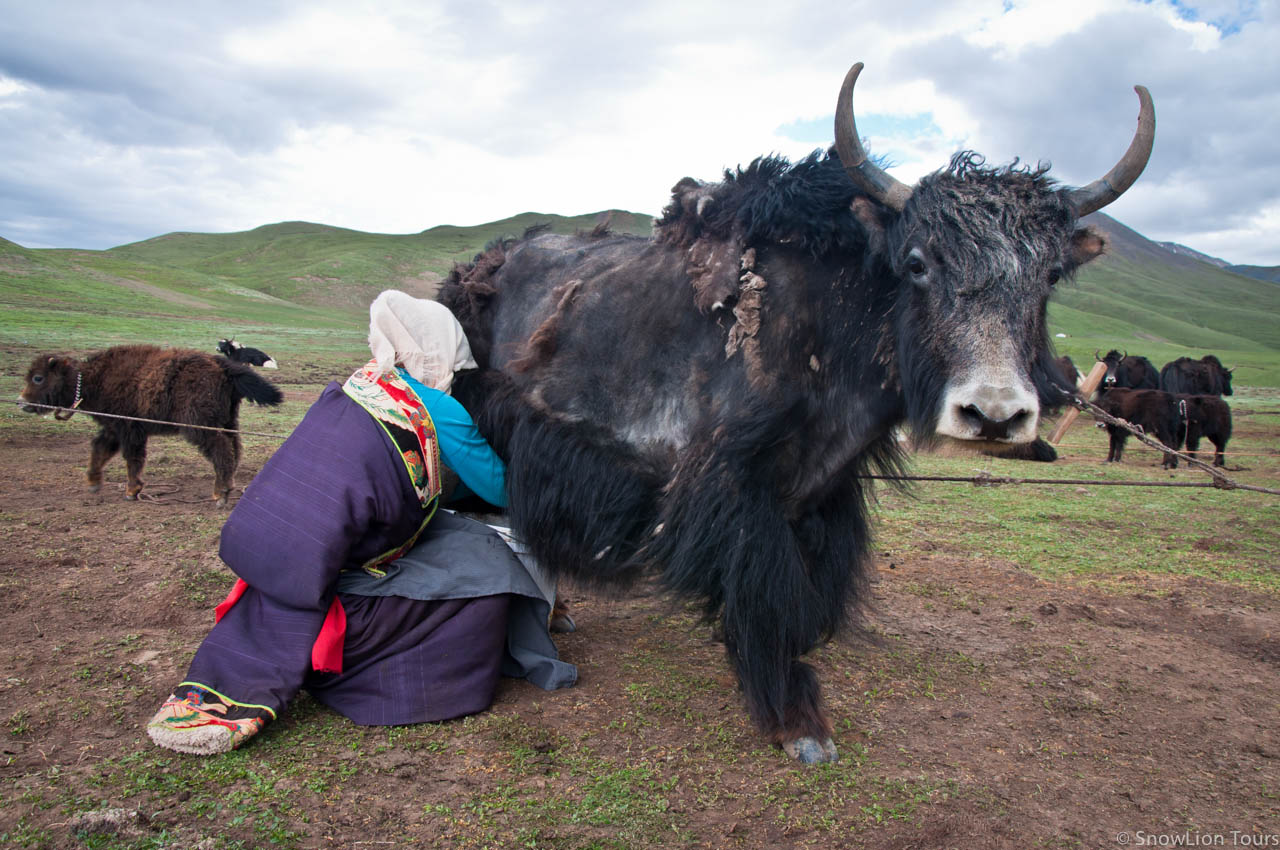
one Tibetan girl milking a yak, most Tibetan nomads live and depends on yaks. Nomads use yak hair to make tent, settles, clothes.etc. and use milk to make butter, cheese, yogurt.etc.
Tourism Development and Infrastructure
The growing recognition of Zoige’s natural and cultural significance has spurred tourism development while maintaining respect for traditional lifestyles. Ruoergai County town, built along the G213 highway, functions as the region’s administrative center and tourism hub. Recent years have seen the construction of several three-star level hotels, providing comfortable accommodation for visitors while supporting the local economy.
Tangkor town has experienced rapid growth due to increasing tourism to the Nine Bends, with visitor numbers flowing into the area from May through October annually. This tourism boom provides economic opportunities for local communities while raising awareness of the region’s cultural and ecological importance.
Strategic Transportation Hub
Zoige’s location makes it a crucial transportation corridor for travelers exploring the broader Amdo region. The area serves as an essential transit point for journeys from Xining to Chengdu, Labrang to Jiuzhaigou National Park, routes to Langmusi, and connections to Aba County. This strategic position enhances Zoige’s importance as both a destination and gateway to other significant sites across the eastern Tibetan Plateau.
Cultural Preservation and Modern Challenges
Zoige represents a remarkable example of successful cultural preservation in the face of modernization pressures. The region’s nomadic communities continue to practice traditional pastoralism while adapting to contemporary realities, demonstrating the resilience and flexibility of Tibetan cultural systems.
The balance between tourism development, conservation needs, and cultural preservation presents ongoing challenges that require careful management. The success of initiatives in Zoige could serve as models for sustainable development across the Tibetan Plateau, showing how traditional communities can benefit from modern opportunities while maintaining their essential cultural character.
A Living Laboratory of Sustainability
Zoige stands as more than a tourist destination – it represents a living laboratory where traditional ecological knowledge, sustainable pastoralism, and conservation science converge. The region’s nomadic communities possess centuries of accumulated wisdom about high-altitude ecosystem management, offering valuable insights for contemporary environmental challenges.
As climate change and development pressures threaten high-altitude ecosystems worldwide, Zoige’s successful integration of traditional lifestyles with conservation goals provides hope and practical examples for protecting both cultural heritage and natural environments. The region demonstrates that authentic cultural preservation and environmental protection can work together to create sustainable models for the future.
Recent Posts
- Shoton Festival Begins in Lhasa!
 August 23, 2025
 - Tour Price in Tibet
 August 23, 2025
 - Qinghai Shaman Festival in Rebkong Concludes Successfully
 August 21, 2025
Related Tours
Panoramic Amdo
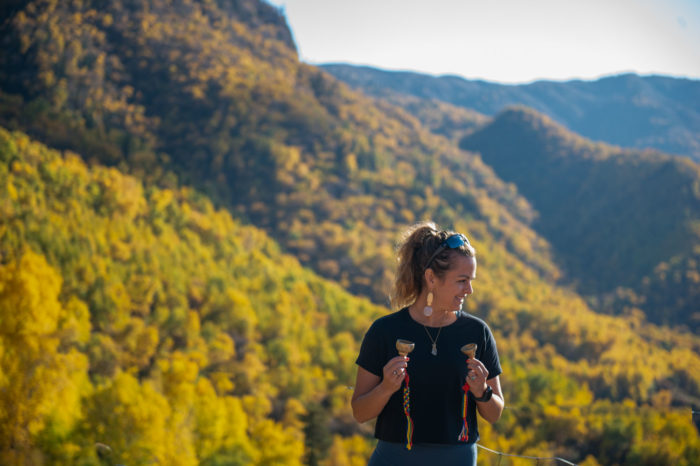
Explore the cultural and nomadic heartlands of undiscovered Eastern Tibet. Journey to the shores of stunning turquoise lakes, visit nomadic herders tending yaks and sheep, and enjoy a picnic among blooming yellow wildflower fields. Take …

Himalayan Nomad Route
Travel from the wild grasslands of Amdo to the beautiful valleys of Gyarong, Tibet. Along the way, take in stunning scenery characteristic of the Tibetan plateau: snaking rivers, rolling hills, craggy snow mountains, and picturesque …
The Old Trade Route
Travel the ancient trade route from Amdo to Kham. Along the way, take in stunning scenery characteristic of the Tibetan plateau: snaking rivers, rolling hills, craggy snow mountains, waterfalls, and picturesque valleys. Visit an artist …
We are recommended by
We are committed to providing authentic, high quality, environmentally sustainable travel services. Join us and experience once in a lifetime holiday.
Recent Trips
.jpg "amdo monlam festival tour")