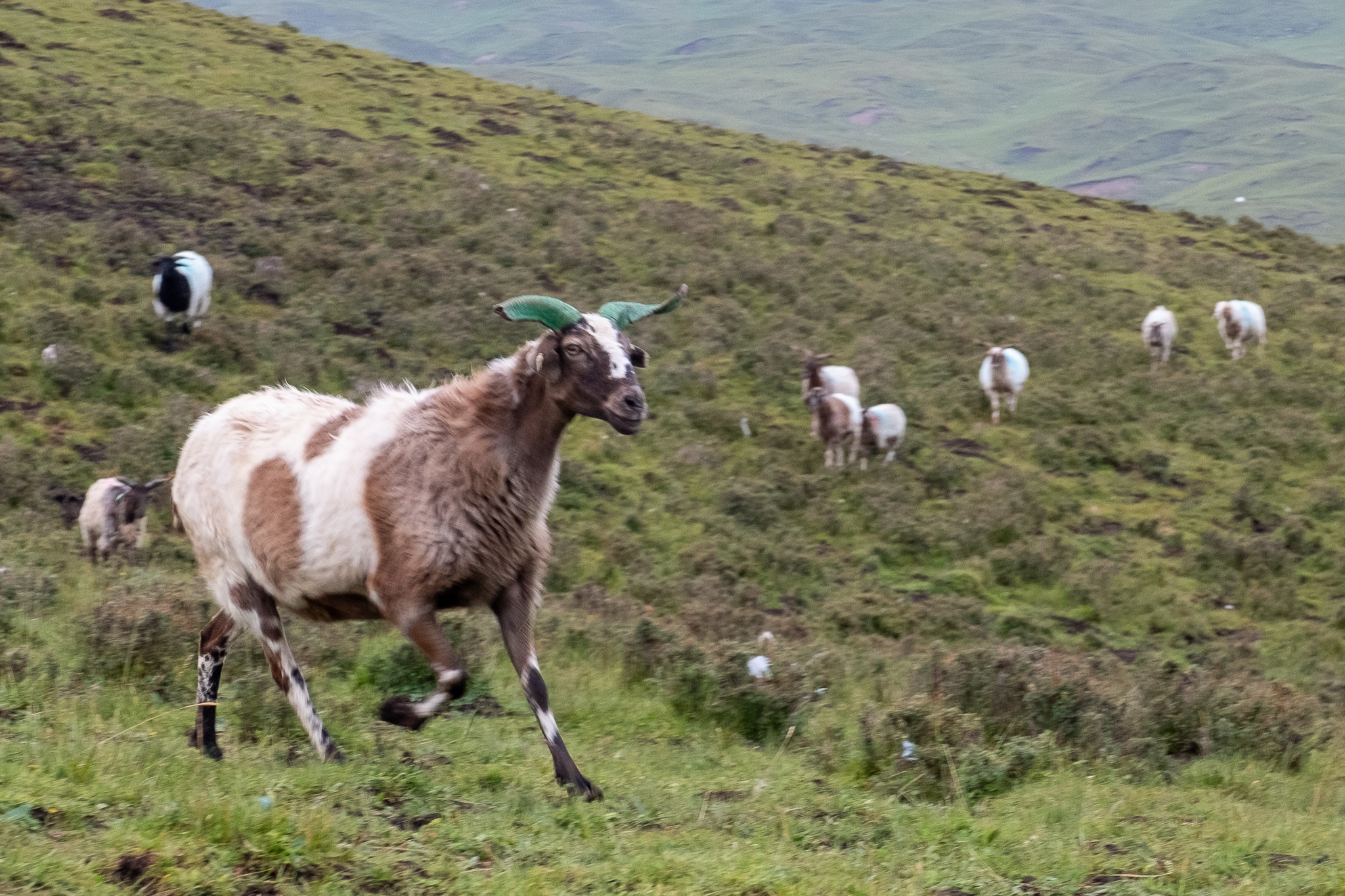
Wildlife of the Tibetan Plateau
Occupying almost a quarter of China’s land territory and commonly called the “third pole” and the “roof of the world,” the Tibetan Plateau has an average elevation exceeding 4,500 meters above sea level. It encompasses all of the Tibet Autonomous Region and the entirety of Qinghai Province, extending into western Sichuan Province and the southern Uygur Autonomous Region of Xinjiang. The region lies between the Kunlun Mountains and its associated ranges to the north, and the Himalayas and Karakoram Range to the south and southwest, respectively; it extends eastward to the Daxue Mountains and, farther south, to the northern and central portions of the Hengduan Mountains.
The Tibetan Plateau stretches 1,800 km north to south and 2,500 km east to west, covering an area of 2,500,000 square kilometers. It originates the headwaters of the drainage basins of most streams in the surrounding regions. Its tens of thousands of glaciers and other geographical and ecological features store water and maintain flow.
Despite its high elevation and low precipitation, the Tibetan Plateau hosts a variety of ecosystems and is home to hundreds of thousands of species. A total of 12,000 species of vascular plants, 5,000 species of epiphytes, 210 species of mammals, and 532 species of birds have been recorded on the plateau. It is also one of the world’s centers of species formation and differentiation. To protect the biodiversity of the plateau, about 80 nature reserves have been designated, of which 45 are national or provincial, covering about 22% of the plateau area. Most of the nature reserves are distributed in the southeastern part of the plateau.
Wolf on the Tibetan Plateau
List of Mammals:
- Tibetan Wolf
- Tibetan Fox
- Tibetan Wild Yak
- Tibetan Antelope
- Pallas’s Cat
- Red Fox
- Asian Badger
- Tibetan Gazelle
- Goitered Gazelle
- Przewalski’s Gazelle
- White-lipped Deer
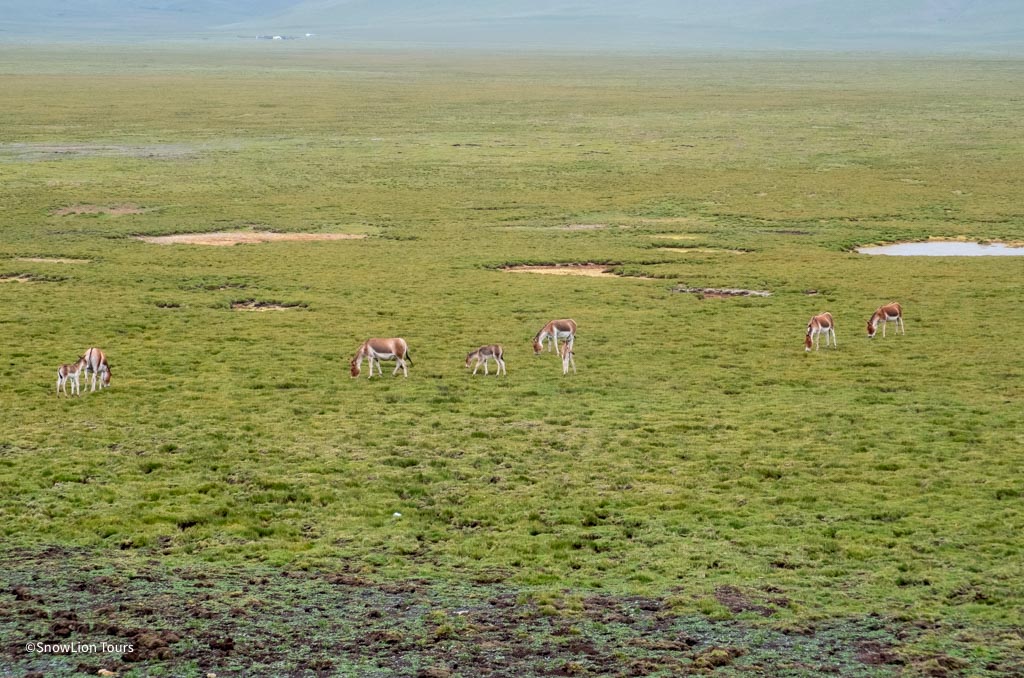
- Tibetan Wild Ass
- Tibetan Argali
- Blue Sheep
- Woolly Hare
- Black-lipped Pika
- Himalayan Marmot
- Snow Leopard
- Tibetan Dwarf Hamster
- Mountain Weasel
- Bactrian Camel
A big Vulture flying over the mountains in Tibet
List of Birds:
- Great Black-headed Gull
- Black-headed Gull
- Blue Hill Pigeon
- Tibetan Lark
- Alpine Accentor
- Tibetan Snowfinch
- Tree Sparrow
- Asian House Martin
- Carrion Crow
- Oriental Turtle Dove
- Eastern Great Rosefinch
- Pale Sand Martin
- Black-necked Crane
- Grey-backed Shrike
- Plain Mountain Finch
- Hume’s Leaf Warbler
- Collared Dove
- Common Raven
- Barn Swallow
- Brown-headed Gull
Wildlife Conservation on the Tibetan Plateau
There are nearly 80 nature reserves and sanctuaries on the Tibetan Plateau. The Changthang Natural Reserve, Hoh Xil Natural Reserve, Arjin Shan (Altun Tagh) Reserve, and the Three Rivers Source Natural Reserve are the dominant terrestrial ecosystems on the Tibetan Plateau. These high grassland reserves are directly linked to the pedospheric, atmospheric, and hydrospheric systems of the whole Tibetan Plateau and the entire Asian continent.
Changthang Nature Reserve
The Changthang, meaning “northern plain” in Tibetan, is a massive high-altitude plateau stretching from Jammu and Kashmir in northern India into Qinghai and Xinjiang provinces. As the highest nature reserve in the world, Changthang has an average altitude of 4,800 meters with high hills and plains interspersed by mountains over 6,000 meters high.
The Changthang Nature Reserve hosts some of the last remaining wild ungulates: Wild Yak, Tibetan Wild Ass, Tibetan Antelope, Blue Sheep, Argali, and Gazelle. The plateau’s large predators include Snow Leopard, Wolf, Lynx, and Tibetan Brown Bear. At the bottom of the food chain are a large number of Pikas.
Hoh Xil Nature Reserve
Hoh Xil, also called Kekexili or Achen Ganggyab in Tibetan, is located in the northeastern extremity of the Tibetan Plateau. It is the largest and highest nature reserve in the world, situated at an average altitude of 4,800 meters. Hoh Xil lies between the Tanggula and Kunlun mountain ranges. It was listed among the “World Heritage Sites” as the largest and highest plateau in the world.
Despite extremely cold weather, Hoh Xil is home to about 230 species of wild animals, more than 20 of which are under national state protection, including Wild Yak, Tibetan Wild Ass, Tibetan Antelope, and Tibetan Brown Bear.
Three Rivers Source Nature Reserve (Sanjiangyuan)
The Source of Three Rivers Nature Reserve, also called Sanjiangyuan in Chinese, contains the headwaters of three great rivers in Asia: The Yellow, Yangtze, and Mekong. The reserve covers the southern and eastern parts of Qinghai Province and is situated between the eastern extensions of the Tanggula and Kunlun mountain ranges. Yushu and Golok are the core areas of this reserve, which is home to a large number of wild animals like Wild Yaks, Tibetan Antelopes, Gazelle, Wild Ass, Argali, and Snow Leopard.
Altun Shan National Nature Reserve
Altun Shan Nature Reserve is an elongated triangular area on the southern edge of the Taklamakan Desert and the northern edge of the Tibetan Plateau. The reserve measures 800 km from east to west and 200 km from north to south. Altun Shan Nature Reserve has an average altitude of 4,500 meters and, due to its arid location, features a mix of cold desert and polar climates.
Altun Shan Nature Reserve hosts a large range of animal species, including Wild Yaks, Tibetan Antelope, and Tibetan Wild Ass, and has a small number of Dholes.
Current Status
The awareness of protecting wildlife and the environment is a moral responsibility for everyone in this world. Any disruption or negative impact on the fragile ecology of the Tibetan Plateau would have global consequences. Overhunting of Tibetan Antelopes and Wild Yaks at the end of the 20th century unbalanced the entire Tibetan Plateau ecosystem. Large construction projects like buildings, highways, and roads are also major causes of the declining wildlife populations on the plateau.
Wildlife Conservation Through Ecotourism
Tourism is becoming very popular in Tibet nowadays due to improved transportation. Ecotourism has proven to be a successful approach for wildlife conservation on the Tibetan Plateau. At Snowlion Tours, we promise to conduct our business with locals and ensure that most of the benefits go to locally owned accommodations and restaurants.
Pallas’s Cat, an endangered animal in Tibet
We arrange a variety of wildlife tours, including wildlife safaris, bird-watching tours, wildlife research tours, wildlife photography tours, and wildlife protection programs.




.jpg "amdo monlam festival tour")