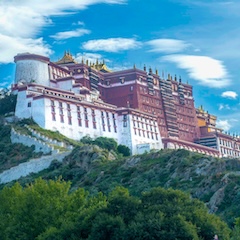
Qutan Si Monastery
Drotsang Dorje Chang Gompa
Qutan Si Monastery, also called Drotsang Dorje Chang, is a Gelugpa monastery in the Tsongkha region of Amdo Tibet, currently located in Drotsang area, 22 km south of Ledu County and 88 km east of Xining in Qinghai Province. It was founded in 1392 by Samlo Lama Sanggye Tashi under his patron, the Ming Hongwu Emperor. It was built on the site of a Karma Kagyu monastery. It is famous for its symmetrical complex of temples in Sino-Tibetan style.
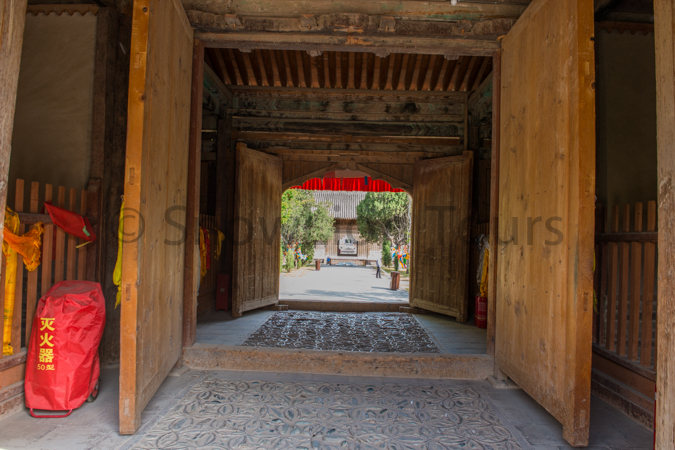
The entrance gate of Qutan Monastery
Lama Sanggye Tashi was later invited to the new Ming Dynasty court in 1389, where he was granted the title of Imperial Preceptor by the Emperor. According to legend, he traveled to Nanjing on a flying white elephant, earning the name Langkarpa Sanggye Tashi, or “The White Elephant-riding Sanggye Tashi.” Upon his return to Drotsang in 1392, Sanggye Tashi established a monastery, Drotsang Lhakhang Gautamde, designated by the Hongwu Emperor as Qutan Si, or Gautama Monastery, so written on a red board in golden letters that continues to hang above the entrance of the front hall.
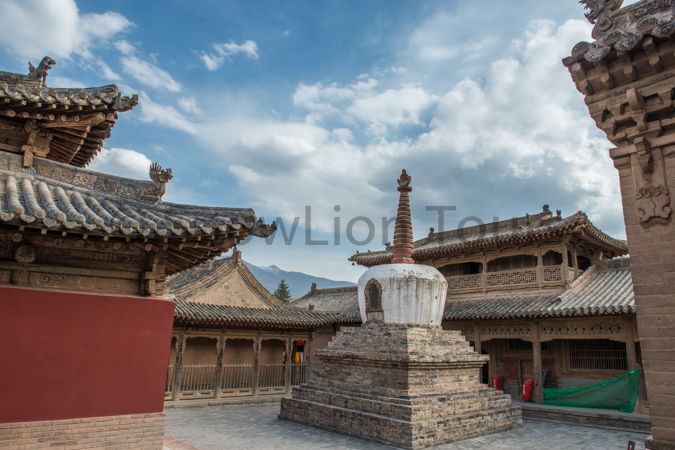
The stupa in Qutan Monastery in Qinghai.
Apart from the Ming and Qing religious murals in the ambulatory, Drotsang Monastery is one of the finest remaining examples of ancient palace architecture. Its architecture is similar to that of the Forbidden City in Beijing, and it is sometimes called “the little Forbidden City.” In common with many other Buddhist temples, it includes the following structures: Diamond Hall, Gautama Hall, Precious Light Hall, Hall of the Flourishing Nation, Bell Tower, Drum Tower, and Stele Pavilion. However, it is best known for its exquisite murals, which not only enrich the main halls but also decorate the inner ambulatory that surrounds the temple’s inner courtyard. The murals in the surrounding ambulatory tell the stories of Buddha’s previous incarnations.
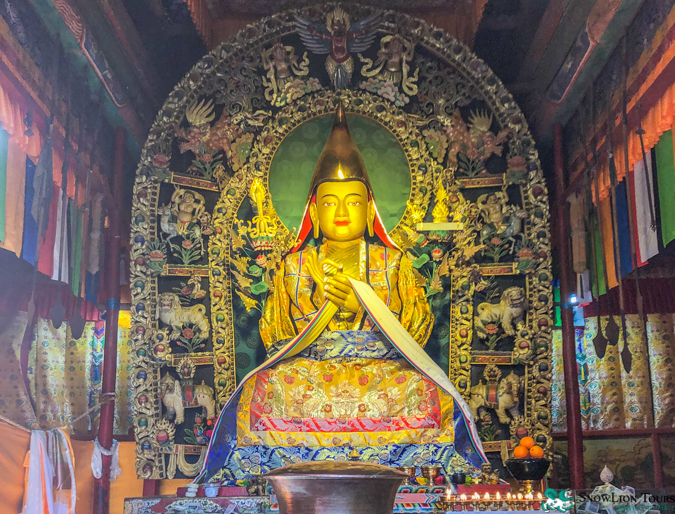
Statue of Je Tsongkapa in the temple in Qutan Si
There are ten plaques from the Ming and Qing Dynasties in Drotsang Temple. A bronze bell was cast during the Xuande period in the Ming Dynasty. Three incense burners, cymbals, ivory beads, sandalwood beads, Milarepa stone statues, gold seals given by the Ming and Qing emperors, cloisonné vases, ivory towers, and many other precious cultural relics are kept in Drotsang Temple.
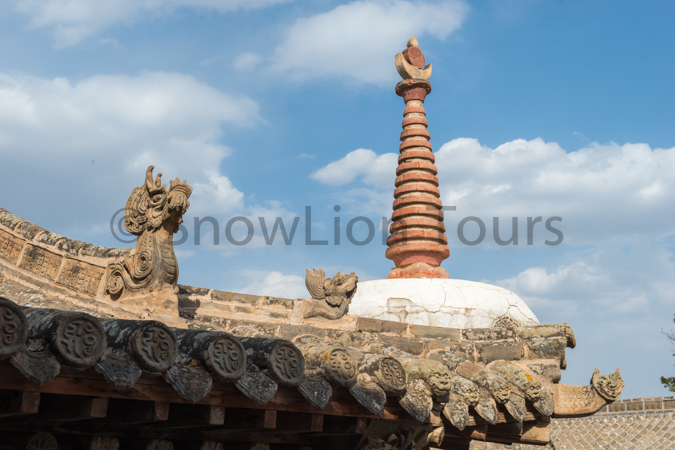
Roof top decoration of Qutan Temple in Qinghai.
There are several old stupas in the courtyard, including the Stupa of Bodhicitta, Stupa of Buddha Descending from Devas (heaven), Stupa of Good Deeds, etc. It is quite an experience to sit in the middle of ancient architectures and stupas, which gives you an impression of time traveling. This is also one of the only few best-preserved monasteries in Qinghai Province; therefore, it is one of the bases for study and research of ancient architecture and attracts students and researchers from China and abroad.
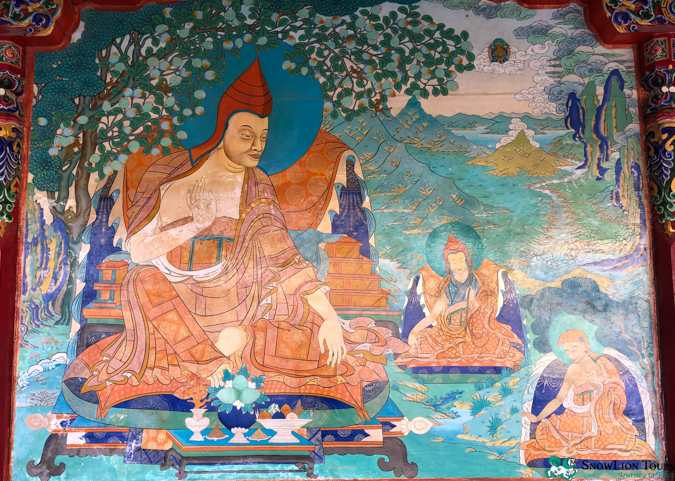
Wall Paintings in Qutan Si Monastery
If you are a regular tourist, you can spend about 2 hours in Qutan Monastery. But if you are interested in ancient arts and architecture, you may spend a whole day.
Qutan Monastery entrance fee is 20 yuan per person with no time limitations inside the temple and monasteries.
Recent Posts
- Mount Kailash Kora updates
 September 26, 2026
 - Tibet Travel Permits
 September 24, 2026
 - Update on China / Tibet–Nepal Land Border Crossings
 September 24, 2026
Related Tours
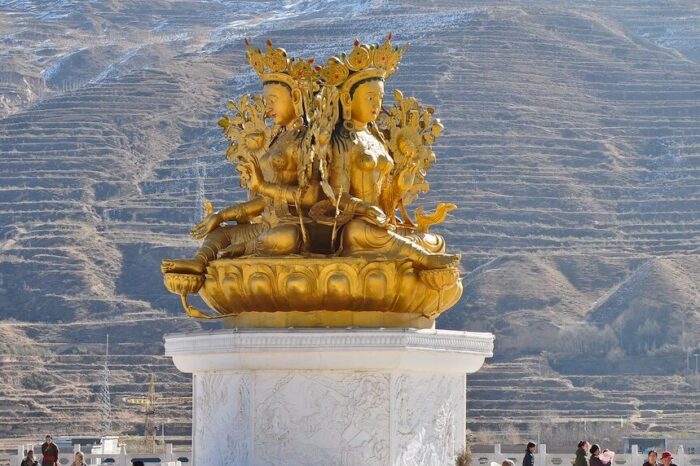
4 Days Winter Tour in Qinghai
This 4-day winter tour is one of the best tours in Qinghai Province during the winter season. It offers a great opportunity to see Qinghai's most beautiful places such as Guide, Rebkong and Kanbula National …
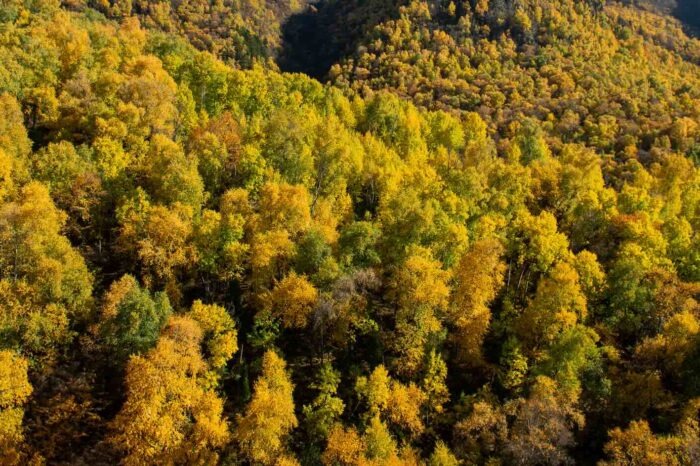
Best of Qinghai
Discover Qinghai’s highlights from Xining to Qinghai Lake, Guide, Kanbula Park, and Tongren. Explore monasteries, stunning landscapes, and Tibetan culture.

Amdo Overland Journey
The Tibetan Plateau, located to the north of the Himalayas, is often referred to as “The Roof of the World.” The Tibetan cultural region is roughly the size of Western Europe, though the Tibet Autonomous …
We are recommended by
We are committed to providing authentic, high quality, environmentally sustainable travel services. Join us and experience once in a lifetime holiday.
Recent Trips

.jpg "amdo monlam festival tour")