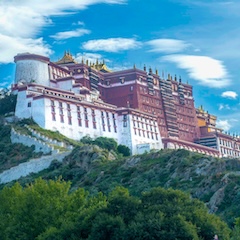
Gomar Monastery
Gomar Monastery – སྒོ་མར་དགོན་
Gomar Monastery is a Gelug sect monastery of Tibetan Buddhism, and its full name in Tibetan is Gomar Kelden Phuntsokling. It is located 5 kilometers north of Tongren County and 175 km south of Xining in Qinghai Province.
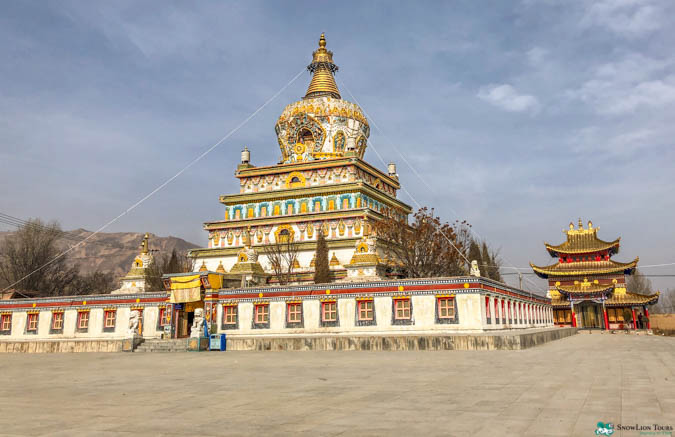
Giant Stupa of Gomar Monastery in Amdo Tibet
It was founded by Lama Yarjang in 1741. Originally, Lama Yarjang built a three-story Maitreya Hall in the temple. Later, the monastery expanded to what it is now. The monastery now contains a Great Assembly Hall, Maitreya Hall, and Protector Hall, all of which were built before 1958. There are about 209 monks and 105 monks’ residences. The building covers a total area of nearly 100 acres.
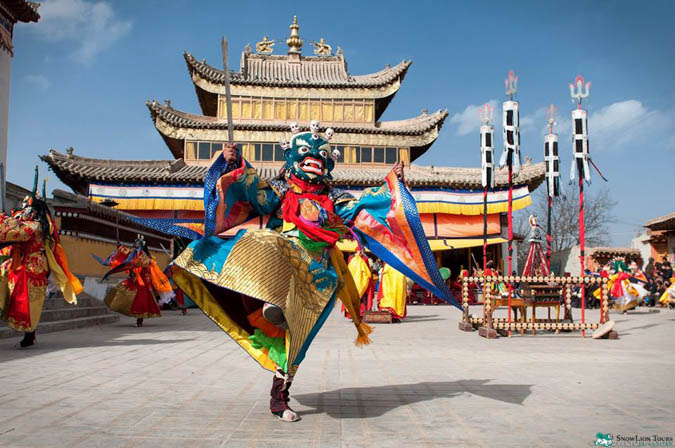
Monks Mask Dance in Gomar Monastery in Qinghai Province.
The original Great Assembly Hall and Maitreya Hall were undamaged by the Cultural Revolution, and Lama Yarjang is still the head of the monastery. Apart from the old temples in the monastery, the newly built Gomar Kalachakra Chorten outside the monastery would be the highlight of the monastery, including its location. This chorten was founded by the abbot of the monastery in 1994. It is a 5-story building with a height of 33 meters. Its base has circular prayer wheels; the modeling of this pagoda is a replication of the Kalachakra that Sakyamuni first turned at Deer Park of Sarnath in ancient India. It took 5 years to complete and is filled with the belongings of the 10th Panchen Lama inside this chorten.
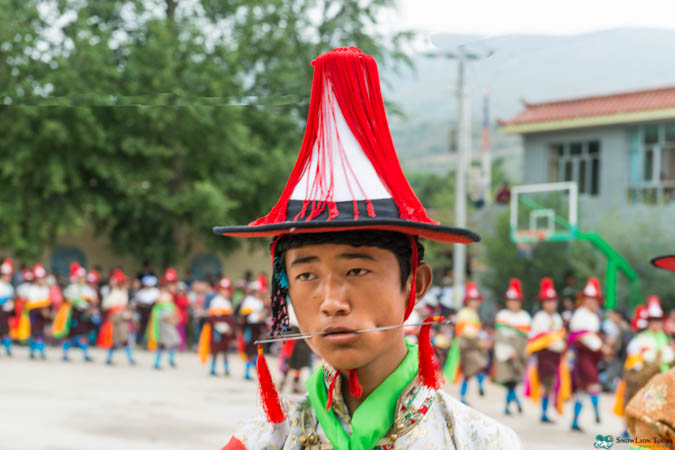
Shaman Festival in Gomar village in Tongren County.
The artistic and architectural standards of this building are much higher than those of normal monasteries in other regions. Gomar Monastery is also famous for its Monlam festival in winter, a great prayer festival held each year at every Gelug monastery across Tibet.
Recent Posts
- Mount Kailash Kora updates
 September 26, 2026
 - Tibet Travel Permits
 September 24, 2026
 - Update on China / Tibet–Nepal Land Border Crossings
 September 24, 2026
Related Tours
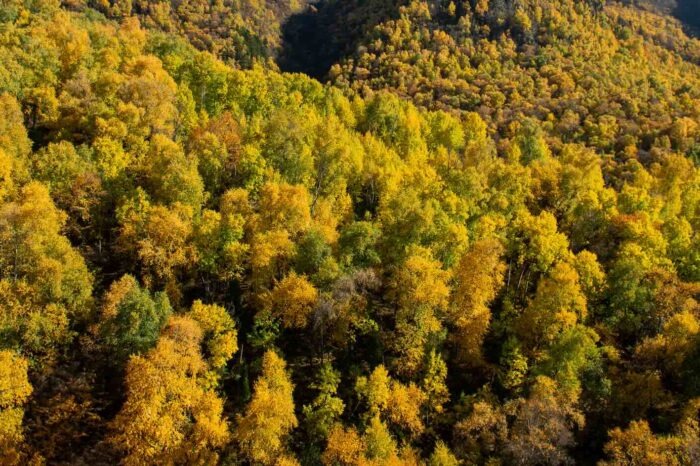
Best of Qinghai
Discover Qinghai’s highlights from Xining to Qinghai Lake, Guide, Kanbula Park, and Tongren. Explore monasteries, stunning landscapes, and Tibetan culture.
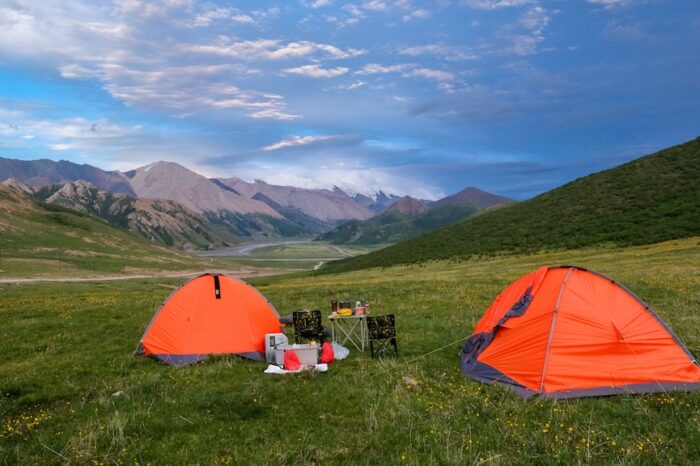
Camping with nomads
Experience authentic nomadic life by camping with Tibetan nomads in Qinghai, enjoying the vast grasslands, local culture, and stunning natural landscapes.
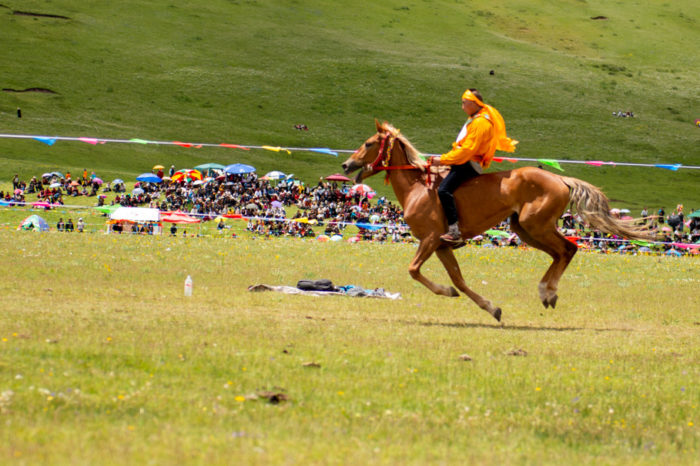
Shaman Festival and Horse Racing Festival in Tibet
Eastern Tibet consists of traditional Tibetan provinces of Amdo and Kham and modern province of Qinghai, Sichuan and Yunnan Province. Most of these two regions are located outside of Tibet Autonomous Region where have no …
We are recommended by
We are committed to providing authentic, high quality, environmentally sustainable travel services. Join us and experience once in a lifetime holiday.
Recent Trips
.jpg "amdo monlam festival tour")