Trika, also known as Guide County or Gui’de, is a warm Yellow River valley destination in Amdo Tibet, known for Danxia cliffs, Tibetan temples, old-town history, orchards, and easy access from Xining.
Trika, known in Chinese as Guide County or Gui’de, is one of the most interesting destinations in Amdo Tibet for travelers starting from Xining. Located in Hainan Tibetan Autonomous Prefecture of Qinghai Province, Trika sits along the upper Yellow River in a relatively low and warm valley compared with many other Tibetan areas. This makes it an easy and rewarding stop for travelers who want Amdo scenery, Tibetan culture, and unusual geological landscapes without going immediately to very high altitude.
In Tibetan, the county is known as Trika. It lies southwest of Xining and southeast of Qinghai Lake, making it a natural route connection between Xining, Kumbum Monastery, Qinghai Lake, Rebkong, Labrang, and the deeper Amdo grassland regions. The area is especially known for the clear Yellow River, colorful Danxia landforms, old-town remains, temples, orchards, wetlands, and valley scenery.
Trika is important because it shows a different side of Amdo Tibet. Many visitors imagine Amdo only as high grassland, nomad tents, monasteries, and open plateau. Trika has all the feeling of Amdo’s borderland diversity: Tibetan villages, Hui and Chinese communities, old trade routes, agricultural valleys, temples, geological parks, and the Yellow River flowing through a warm basin.
The county has long been a meeting place between Tibetan highland culture and the farming and trading corridors around Xining. Its position on the Yellow River made it both useful and symbolic. For Tibetan travelers, the river valley, temples, and local sacred sites form part of Amdo’s cultural geography. For modern visitors, Trika is a good place to understand how Tibetan life in Qinghai can be very diverse from one valley to the next.
Because of its lower altitude and relatively mild climate, Trika is also useful at the beginning of an Amdo itinerary. Travelers can use it as a gentler introduction before continuing to higher regions such as Qinghai Lake, Rebkong, Labrang, Amnye Machen, or Golog.
One of Trika’s most famous attractions is the Guide National Geological Park, known for colorful Danxia landforms. These red, orange, and layered cliffs were shaped by long geological processes and later carved by wind and water. The landscape is striking because the dry red hills often stand beside blue sky, green valley fields, and the Yellow River.
The Danxia area is usually visited on the road between Xining and Guide town. Walking trails and viewpoints allow travelers to see the eroded red cliffs, narrow gullies, and layered sandstone forms. It is not a difficult backcountry hike; it is more of an accessible scenic walk and photography stop. For travelers interested in geology, it shows one of the most visually unusual landscapes in Qinghai.
Trika’s Danxia scenery also connects naturally with SnowLion Tours’ separate Guide Danxia Geo Park destination page. The Geo Park can be visited as a stand-alone stop, but it makes more sense when understood as part of the wider Trika valley: Danxia cliffs, Yellow River water, Tibetan temples, old-town history, and Amdo cultural routes.
The Yellow River is central to Trika’s identity. Here the river flows through a broad valley with fields, orchards, villages, bridges, and wetlands. The contrast between the river’s water and the surrounding dry hills gives Trika a softer and more colorful character than many parts of the plateau.
A walk near the old Yellow River bridge can be especially pleasant in late afternoon or sunset light. The river also helps explain why Trika has long supported farming, fruit growing, and settlement. Compared with high grassland counties, Trika feels warmer, greener, and more settled.
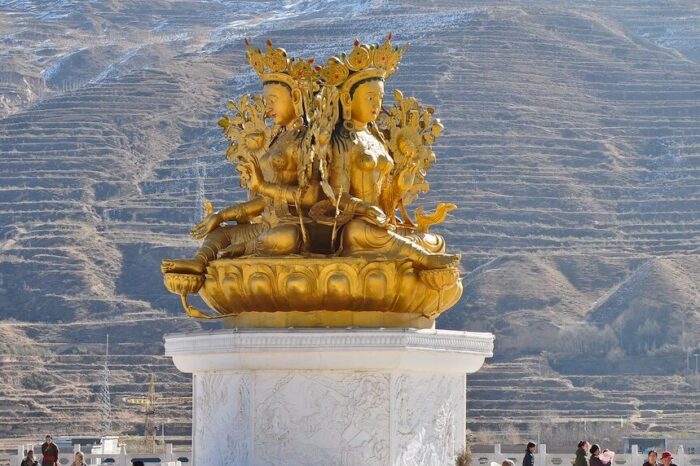
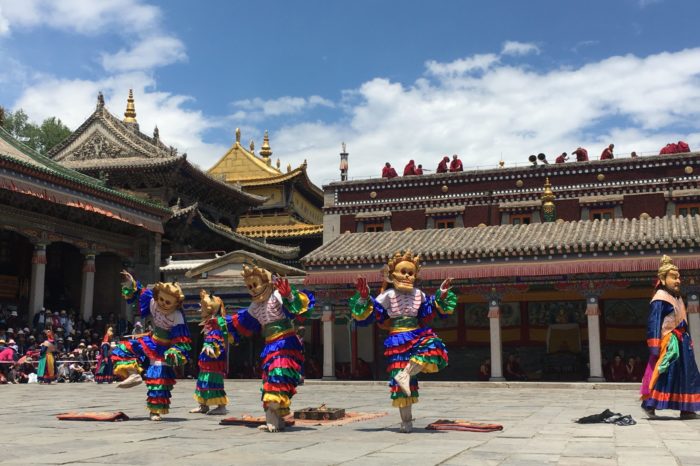
Trika has several cultural sites worth visiting. One important place is the local Jokhang Temple east of Guide town. The name reflects its connection with Jowo Shakyamuni devotion, and the temple is often described locally as being inspired by the famous Jokhang Temple in Lhasa. It gives travelers a glimpse of how major Tibetan religious symbols are carried into Amdo local settings.
The area around the Jokhang Temple is also connected with King Gesar cultural memory. Gesar stories are deeply important across Tibetan regions, especially in Amdo and Kham, where the epic tradition remains part of local identity. For travelers, this adds another layer to Trika: it is not only scenery, but also a place where Tibetan religious and legendary traditions meet.
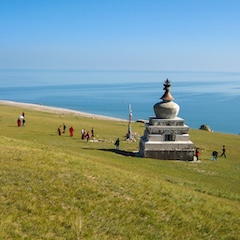
Another site often mentioned in Trika is Minyak Chorten, a historical stupa complex. The original complex suffered damage in the 20th century, and the current structure is a later reconstruction, but it still marks an important local sacred place. Visitors should approach it respectfully as part of the living religious landscape of the county.
Guide old town has historical roots going back to the Ming period, and parts of the old walls and gates have been restored. Although modern Guide town is busy and mixed in style, traces of older settlement remain. The contrast between restored old-town structures, modern markets, Tibetan religious sites, and valley farmland is part of what makes the destination interesting.
The wetland area on the road into Guide is also worth a short stop, especially for photos. It shows the greener side of the valley and gives a quiet contrast to the dry Danxia hills nearby. Trika is also known in Qinghai for fruit growing, especially because its relatively mild climate supports orchards in the Yellow River valley.
Trika is usually visited from Xining by private vehicle or as part of a longer Amdo Tibet route. It can be included in journeys connecting Xining, Kumbum Monastery, Qinghai Lake, Rebkong, Labrang, and Golog. Travelers who have limited time can visit Trika and the Danxia park as a long day trip from Xining, but an overnight stay allows more time for the Yellow River, temples, sunset walks, and local valley life.
For SnowLion Tours itineraries, Trika works well in Amdo cultural and overland journeys because it sits between Xining and several important Tibetan regions. It is also a good choice for travelers who want a lower-altitude stop before moving toward higher plateau areas.
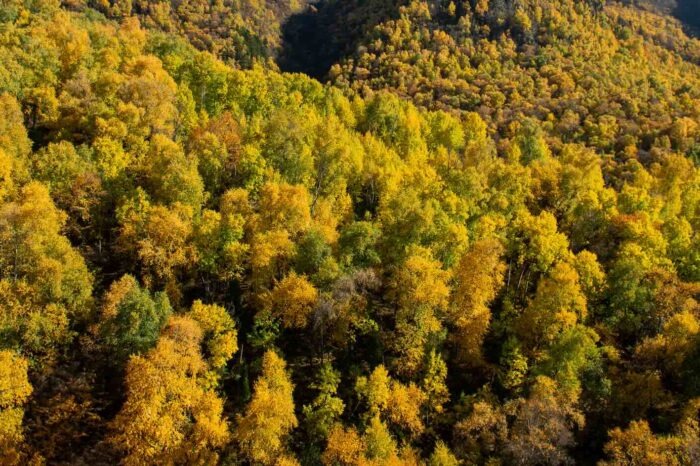
Spring, summer, and autumn are the most comfortable seasons for Trika. Summer brings warmer weather and greener valley views, while autumn is especially good for clearer skies, soft light, and orchard landscapes. Winter is possible, but the scenery is drier and colder, and some travel facilities may feel quieter.
Although Trika is lower than many Tibetan destinations, the sun can still be strong and the air dry, so bring water, sun protection, and layers. If visiting temples, dress respectfully and ask before taking photos inside chapels. At Danxia viewpoints, stay on safe paths because the eroded red earth can be loose and fragile.
Trika is best appreciated slowly. Instead of seeing it only as a roadside stop, give time to the river, temples, old-town traces, and local valley life. These details help reveal why Trika belongs naturally in an Amdo Tibet destination route.
Explore more! Join to get updates on Tibet tours and departures.
This 4-day winter tour is one of the best tours in Qinghai Province during the winter season. It offers a great opportunity to see Qinghai's most beautiful places such as Guide, Rebkong and Kanbula National …
Discover Qinghai’s highlights from Xining to Qinghai Lake, Guide, Kanbula Park, and Tongren. Explore monasteries, stunning landscapes, and Tibetan culture.
A short tour to witness and experience Tibetan Nomadic way of lifeThis 3 day tour offers a unique opportunity not only to see Tibetan spiritual life in some of the most important monasteries in Amdo …