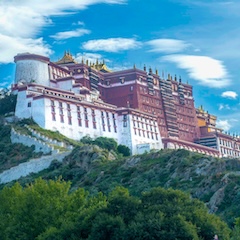
Beijing
Beijing is China’s imperial capital, home to the Forbidden City, Temple of Heaven, Great Wall, hutongs, Lama Temple and deep northern culture.
Beijing Travel Guide
Beijing is not simply a large capital city. It is one of the best places to understand how China thinks about power, ritual, memory and daily life. Imperial palaces, neighborhood lanes, temple courtyards, museums, parks and food streets all sit within the same city, sometimes only a short walk apart.
For many travelers, Beijing is the natural starting point for a wider China journey. It has excellent international flights, fast trains and good onward connections to Xining, Chengdu, Lanzhou and Lhasa. But Beijing is much more than a gateway. It deserves time of its own.
The Forbidden City and Imperial Beijing
The Forbidden City is the heart of old Beijing. For centuries it was the political and ceremonial center of the Ming and Qing dynasties. Walking through its gates and courtyards gives a strong feeling of scale: the long central axis, the red walls, yellow roofs, stone terraces and carefully controlled spaces were all designed to express imperial authority.
Nearby Tiananmen Square, Jingshan Park and Beihai Park add different layers to the city. From Jingshan Hill, the view across the Forbidden City is one of the clearest ways to understand Beijing’s old layout.
Temples, Ritual and Living Faith
The Temple of Heaven is one of Beijing’s most graceful places. Emperors once came here to perform rituals for good harvests, but today the surrounding park is full of local life: people singing, stretching, playing cards and practicing tai chi. It is one of the best examples of how historical sites in China are still used by ordinary people.
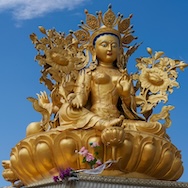
Yonghe Temple, often called the Lama Temple, is especially interesting for travelers who are also visiting Tibetan regions. It is an active Tibetan Buddhist temple in Beijing, with incense, pilgrims, prayer halls and a famous large statue of Maitreya. It gives a useful glimpse into the long relationship between Beijing, Mongolia and Tibetan Buddhism.
The Great Wall and Old Neighborhoods
No visit to Beijing feels complete without seeing the Great Wall. Different sections offer different experiences, from restored and easy-to-visit areas to quieter, more rugged stretches in the mountains. The wall is dramatic not only because of its size, but because of the way it follows ridges across the northern hills.
Back in the city, Beijing’s hutongs show a more intimate side of life. These narrow lanes, courtyard homes, small restaurants and local shops are where the city feels most human. A slow walk through the hutongs often tells you as much about Beijing as the major monuments.
Why Visit Beijing
Beijing is ideal for travelers who want to understand China’s imperial past, modern capital life and northern culture before continuing toward the Silk Road, Amdo, Kham or Tibet.
How to Get to Tibet from Beijing
Beijing is a good Tibet gateway for travelers arriving internationally or combining imperial China with Lhasa. You can fly directly from Beijing Capital Airport to Lhasa, or take the famous long-distance Beijing-Lhasa train across northern China and the Tibetan Plateau. Foreign travelers need a Tibet Travel Permit before boarding any flight or train to Lhasa.
Flights: Beijing – Lhasa – Beijing
Direct flights usually operate from Beijing Capital International Airport (PEK) to Lhasa Gonggar Airport (LXA), mainly with Air China and Tibet Airlines. Current schedules show direct flights from Beijing to Lhasa several times per week, often departing between about 07:45 and 14:55, with a flight time of about 4 hours 25 minutes. Return flights from Lhasa to Beijing also operate directly, commonly from late morning or afternoon into early evening, depending on the date.
Train: Beijing – Lhasa – Beijing
| Route | Train | Departure | Arrival | Time |
|---|---|---|---|---|
| Beijing West to Lhasa | Z21 | 19:48 | 11:46 third day | About 39 hours 58 minutes |
| Lhasa to Beijing West | Z22 | 15:50 | 08:43 third day | About 40 hours 53 minutes |
This is one of China’s great rail journeys. It is long, but it is comfortable for travelers who enjoy slow travel and want to see the landscape change from northern China to the high plateau.
Search
Upcoming Tours
Recent Posts
- Mount Kailash Kora updates
 September 26, 2026
 - Tibet Travel Permits
 September 24, 2026
 - Update on China / Tibet–Nepal Land Border Crossings
 September 24, 2026
For More Information
Newsletter
Explore more! Join to get updates on Tibet tours and departures.
We are recommended by
We are committed to providing authentic, high quality, environmentally sustainable travel services. Join us and experience once in a lifetime holiday.
Contact Information
Recent Trips
.jpg "amdo monlam festival tour")