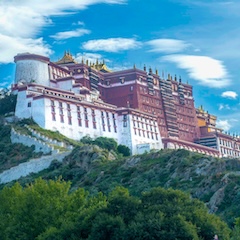
Paro Valley
Bhutan’s sacred arrival valley, home to Tiger’s Nest Monastery, Rinpung Dzong, Kyichu Lhakhang and traditional village life.
Paro Valley is one of Bhutan’s most important cultural landscapes and the first place many travelers see when they arrive in the country. The valley is famous for Paro Taktsang, the Tiger’s Nest Monastery, but its meaning is much wider than a single landmark. Paro brings together early Buddhist history, fortress architecture, traditional villages, rice fields, mountain forests and one of the most beautiful approaches to Bhutanese culture.
Why Paro Matters
Paro has long been one of the main valleys of western Bhutan, protected by mountains and connected to old trade and pilgrimage routes across the Himalayas. The valley’s temples, dzongs and farmhouses show the classic architectural language of Bhutan: whitewashed walls, carved wooden windows, painted beams, inward-facing courtyards and a close relationship between religious and everyday life.
For visitors, Paro is both practical and symbolic. It is home to Bhutan’s main international airport, but it also introduces the spiritual world that shapes the country. Monasteries, prayer flags, village shrines and local rituals are part of the landscape, not separate attractions.
Religious And Historical Significance
Paro Taktsang is connected with Guru Rinpoche, the great Buddhist master who helped establish Vajrayana Buddhism in the Himalayan world. According to tradition, Guru Rinpoche meditated in a cave here after arriving in wrathful form, and the cliffside monastery became one of Bhutan’s most sacred pilgrimage places. The hike to Tiger’s Nest is not only a scenic walk; for Bhutanese people it is a sacred journey into one of the country’s most powerful religious stories.
Kyichu Lhakhang is another deeply important site. It is regarded as one of Bhutan’s oldest temples and is traditionally associated with the seventh-century Tibetan king Songtsen Gampo. Like Jokhang Temple in Lhasa, Kyichu Lhakhang belongs to a sacred geography linking early Buddhism, Tibet and the wider Himalayas.
Rinpung Dzong, the fortress-monastery of Paro, reflects Bhutan’s system of combining religious and administrative life. Dzongs were built for defense, governance and monastic practice, and Paro’s dzong remains one of the finest examples of this tradition.
Main Places To See In Paro
The essential visit is Paro Taktsang. Most travelers need half a day for the hike, with time to rest, take photographs and visit the monastery respectfully. Rinpung Dzong and the traditional bridge below it are excellent for understanding Bhutanese architecture. Ta Dzong, the old watchtower above the dzong, now serves as the National Museum of Bhutan and helps place Paro’s religious art and history in context. Kyichu Lhakhang is quieter but spiritually very important, especially for travelers interested in the early spread of Buddhism.
Paro also rewards slower exploration. Farmhouse visits, valley walks, small temples, viewpoints and local markets all help travelers see how rural Bhutanese life continues beside famous monuments.
How Long To Stay
Two nights in Paro is the minimum for most travelers. One full day can be used for Tiger’s Nest, while another half day or full day can include Rinpung Dzong, Ta Dzong, Kyichu Lhakhang and village visits. If Paro is the final stop of the trip, it is wise to leave a relaxed day before departure.
Best Time To Visit Paro
Spring and autumn are the most popular seasons because the weather is usually clear and comfortable. Spring brings blossoms and a fresh valley landscape, while autumn often gives excellent mountain visibility. Winter can be crisp and quiet, with fewer travelers. Summer is green and atmospheric, though rain and cloud are more common.
Travel Notes
Paro is easy to combine with Thimphu and Punakha on a first Bhutan itinerary. The Tiger’s Nest hike should be planned when travelers are reasonably rested, not immediately after a tiring international journey. Comfortable walking shoes, sun protection and a slow pace are important.
Search
Upcoming Tours
Recent Posts
- Mount Kailash Kora updates
 September 26, 2026
 - Tibet Travel Permits
 September 24, 2026
 - Update on China / Tibet–Nepal Land Border Crossings
 September 24, 2026
For More Information
Newsletter
Explore more! Join to get updates on Tibet tours and departures.
We are recommended by
We are committed to providing authentic, high quality, environmentally sustainable travel services. Join us and experience once in a lifetime holiday.
Contact Information
Recent Trips

.jpg "amdo monlam festival tour")