Bumthang
Central Bhutan’s spiritual heartland, rich in ancient temples, Guru Rinpoche stories, pilgrimage sites and rural valley culture.
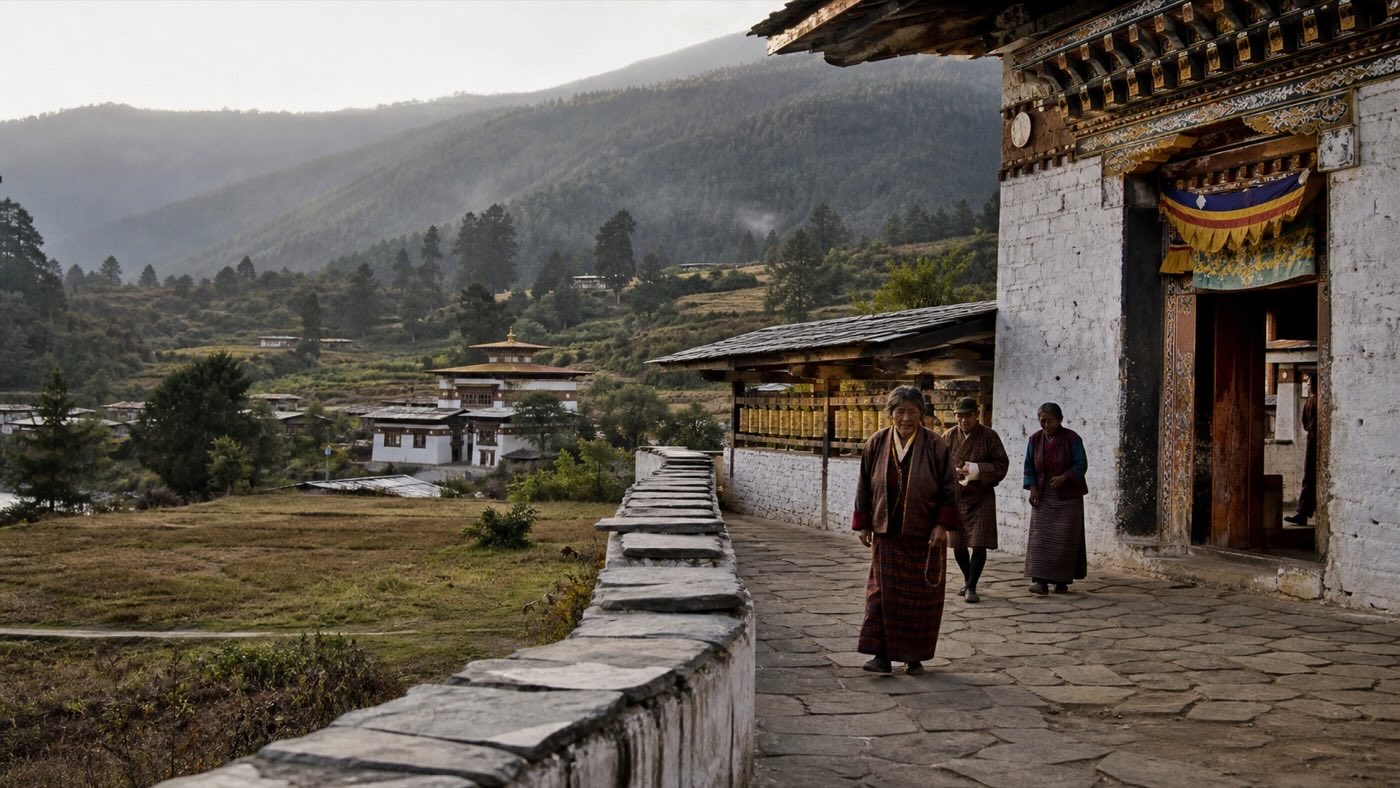
Bumthang is often called the spiritual heartland of Bhutan. Located in central Bhutan, it is a region of wide valleys, forested hills, old temples, village paths, pilgrimage stories and sacred sites connected with Guru Rinpoche and many important Buddhist teachers. For travelers who want to go deeper than the classic Paro-Thimphu-Punakha route, Bumthang is one of Bhutan’s most rewarding destinations.
Why Bumthang Matters
Bumthang is not a single town but a cultural region made up of several valleys. Its slower rhythm, older temples and rural landscapes give it a strong sense of depth. Many Bhutanese religious stories are connected with this area, and local festivals, temples and family traditions remain closely tied to the landscape.
The region is also important for its traditional crafts, weaving, farming and village life. Bumthang shows central Bhutan’s cultural character: quieter, more spacious and deeply religious.
Religious And Historical Significance
Bumthang’s temples are among the most important in Bhutan. Jambay Lhakhang is traditionally regarded as one of the country’s oldest temples and is connected with the early spread of Buddhism in the Himalayan region. Kurjey Lhakhang is associated with Guru Rinpoche, whose presence is central to Bhutanese Buddhism. Tamshing Lhakhang is known for its religious art and links with Pema Lingpa, one of Bhutan’s most important treasure revealers.
Jakar Dzong, often called the Castle of the White Bird, stands above the valley and reflects the dzong tradition of combining monastic, defensive and administrative functions. Together, these places make Bumthang one of the best regions for understanding Bhutanese religious history.
Main Places To See In Bumthang
Key sites include Jambay Lhakhang, Kurjey Lhakhang, Tamshing Lhakhang, Jakar Dzong and traditional villages across the valley. Gentle walks between temples are one of the best ways to experience Bumthang, because the meaning of the region lies as much in the landscape as in individual monuments.
Travelers can also explore local weaving, farm products, small workshops and village homes. Bumthang is less rushed than western Bhutan, so it suits travelers who enjoy cultural depth rather than only famous viewpoints.
How Long To Stay
Bumthang deserves at least two nights because it takes time to reach and has many important sites. Three nights are better for travelers who want temple walks, village visits, festivals or a more relaxed central Bhutan experience.
Best Time To Visit Bumthang
Spring and autumn are generally the best seasons. Autumn is excellent for clear weather, harvest landscapes and festival travel. Winter can be beautiful and quiet but colder. Summer is green, with more rain and cloud.
Travel Notes
Bumthang is usually added to a longer Bhutan itinerary. It can be reached overland from western Bhutan or by domestic flight when schedules allow. Road journeys into central Bhutan are scenic but longer, so the route should be paced carefully.
Recent Posts
- Mount Kailash Kora updates
 September 26, 2026
 - Tibet Travel Permits
 September 24, 2026
 - Update on China / Tibet–Nepal Land Border Crossings
 September 24, 2026
We are recommended by
We are committed to providing authentic, high quality, environmentally sustainable travel services. Join us and experience once in a lifetime holiday.
Recent Trips
.jpg "amdo monlam festival tour")