Golog Tibetan Prefecture
Golog Tibetan Prefecture in Amdo Tibet is known for Amnye Machen, nomad grasslands, monasteries, Yellow River source landscapes and remote Tibetan culture.
About Golog Tibetan Prefecture
Golog Tibetan Autonomous Prefecture, also known as Golok, is located in southern Qinghai Province on the eastern edge of the Tibetan Plateau. It lies in the upper reaches of the Yellow River and is one of the most important Tibetan regions of Amdo.
This is a land of high grasslands, sacred mountains, nomadic culture, monasteries, alpine lakes, and remote valleys. For travelers who want to understand Amdo Tibet beyond the better-known towns of Xining, Rebkong, Labrang, and Yushu, Golog offers a powerful sense of space, devotion, and traditional Tibetan life.
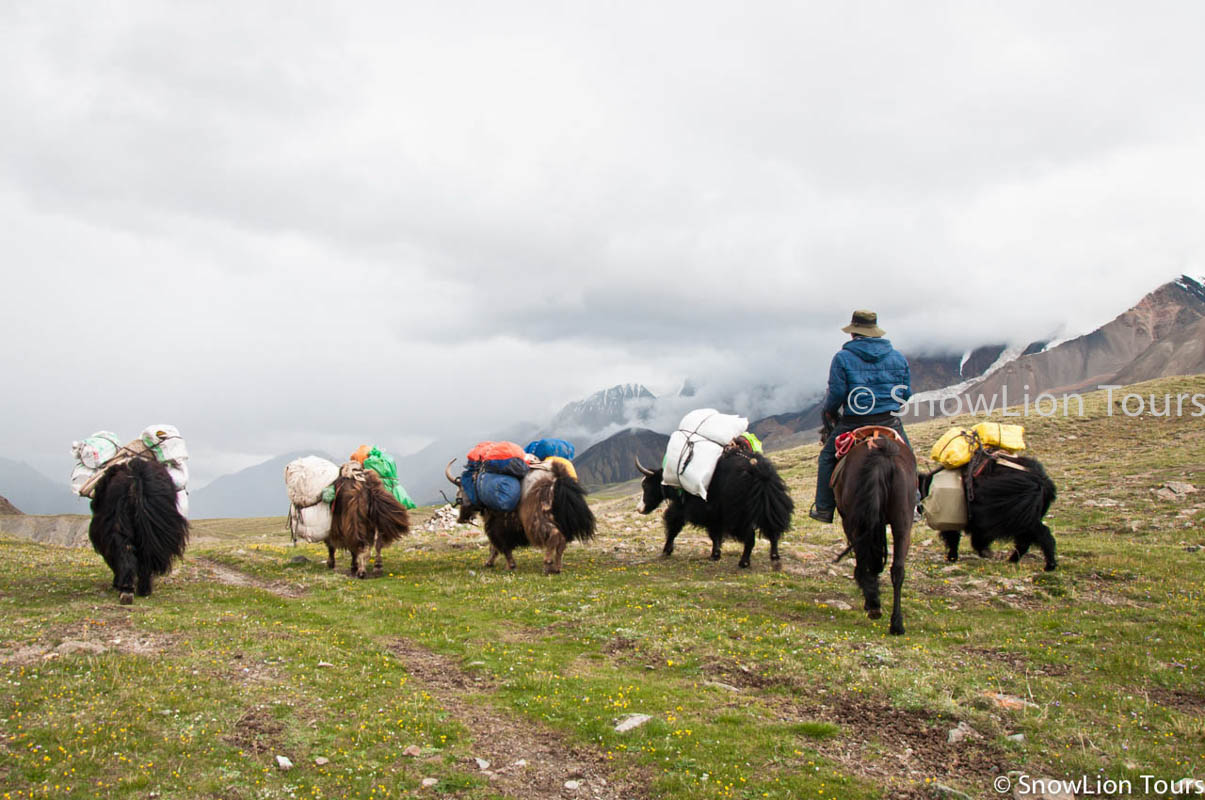
Yaks carrying luggage during a trekking tour around Amnye Machen
Why Golog Is Important in Amdo Tibet
Golog is known for its deep connection with Tibetan nomadic life and the sacred mountain Amnye Machen. The region is less developed for tourism than central Tibet, but that is also part of its character. Wide grasslands, remote monasteries, yak herds, and seasonal nomad camps give Golog a very different feeling from the main Tibet travel routes around Lhasa and Shigatse.
The prefecture includes six counties: Machen, Maduo, Gade, Darlag, Padma, and Jigdril. Tawu, in Machen County, is the prefectural capital and the main town for travelers entering the region from Xining.
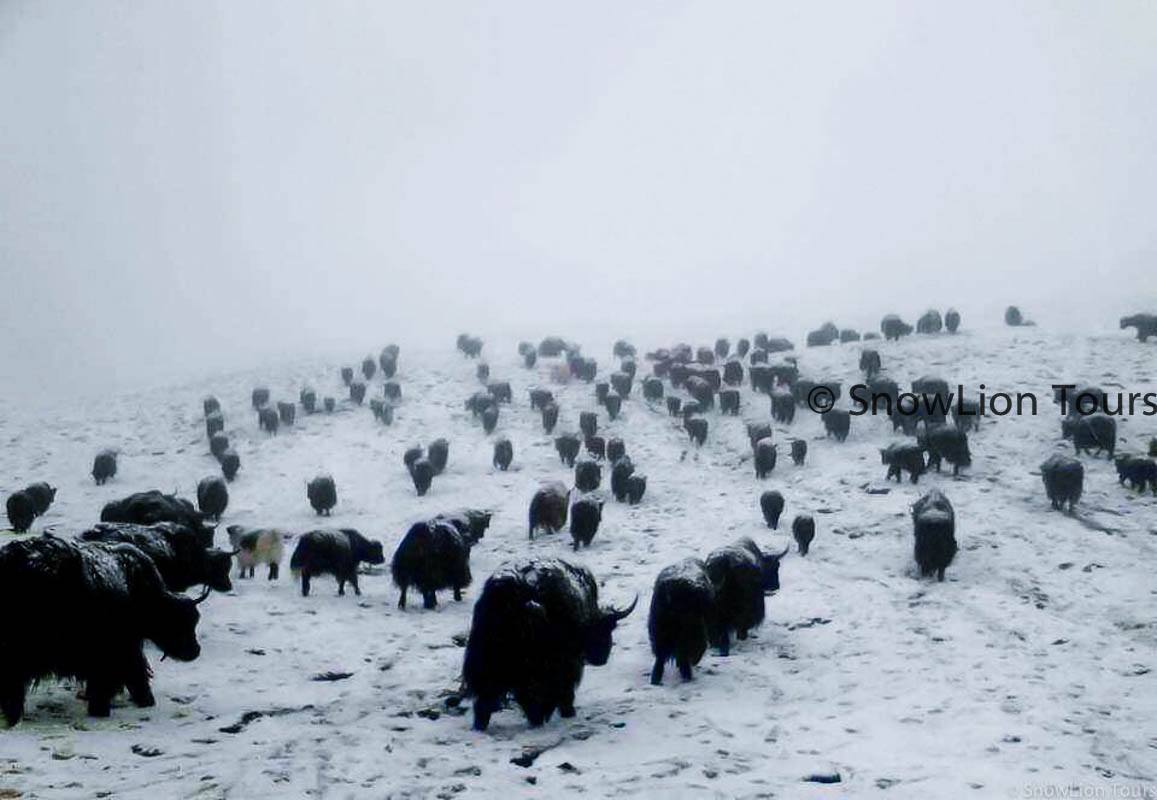
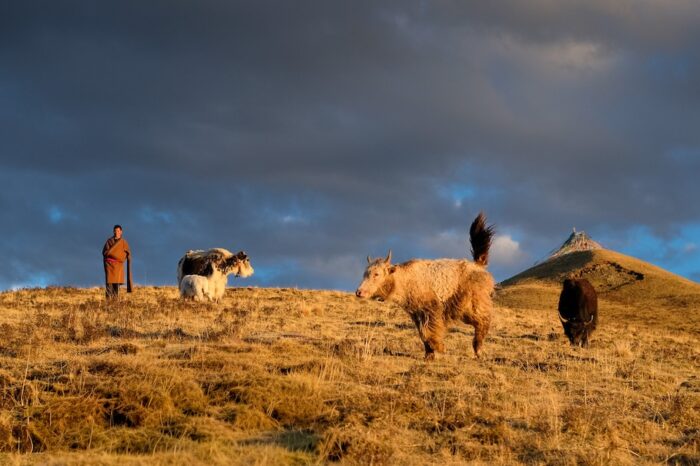
Yaks moving toward new grassland after heavy snow in Golok, Qinghai
Amnye Machen: The Sacred Mountain of Golog
Amnye Machen, also called Machen Gangri, rises to about 6,282 meters / 20,603 feet. It is one of the great sacred mountains of Tibet, along with Mount Kailash, Minyak Gongga, and Kawa Karpo.
For local Tibetans, Amnye Machen is not only a mountain but a sacred presence. Pilgrims make kora around the mountain, while nomadic families live across the surrounding grasslands. The area is also known for Yartsa Gunbu, or caterpillar fungus, which has become an important seasonal income source for many families in parts of Amdo.
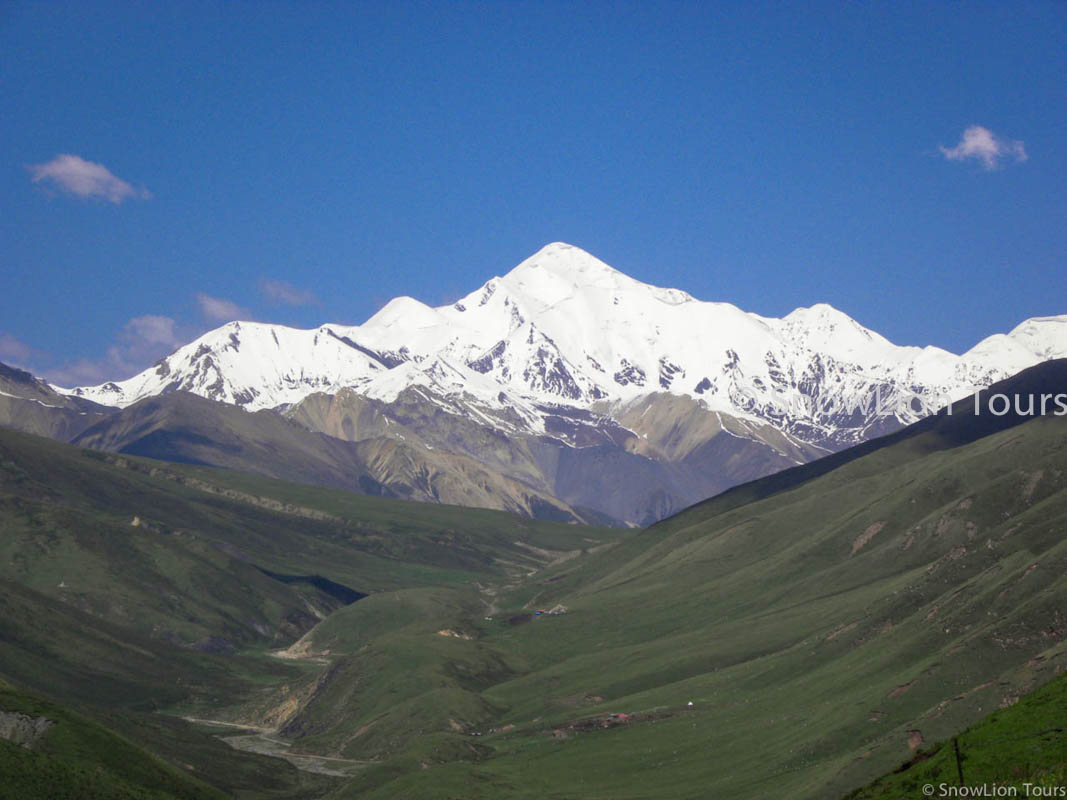
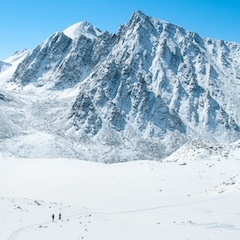
View of Mount Amnye Machen on the last day of the kora
Main Places in Golog
Machen County
Machen County is the administrative center of Golog. Its main town, Tawu, was once a small trading place where nomads exchanged wool, butter, and other dairy products for food and supplies. Today it is the largest town in Golog, with hotels, guesthouses, shops, and government offices.
Machen is the main gateway to Amnye Machen and a useful base for routes around the sacred mountain. Ragya Monastery, one of the important monasteries in the area, can also be visited on the journey between Xining and Machen.
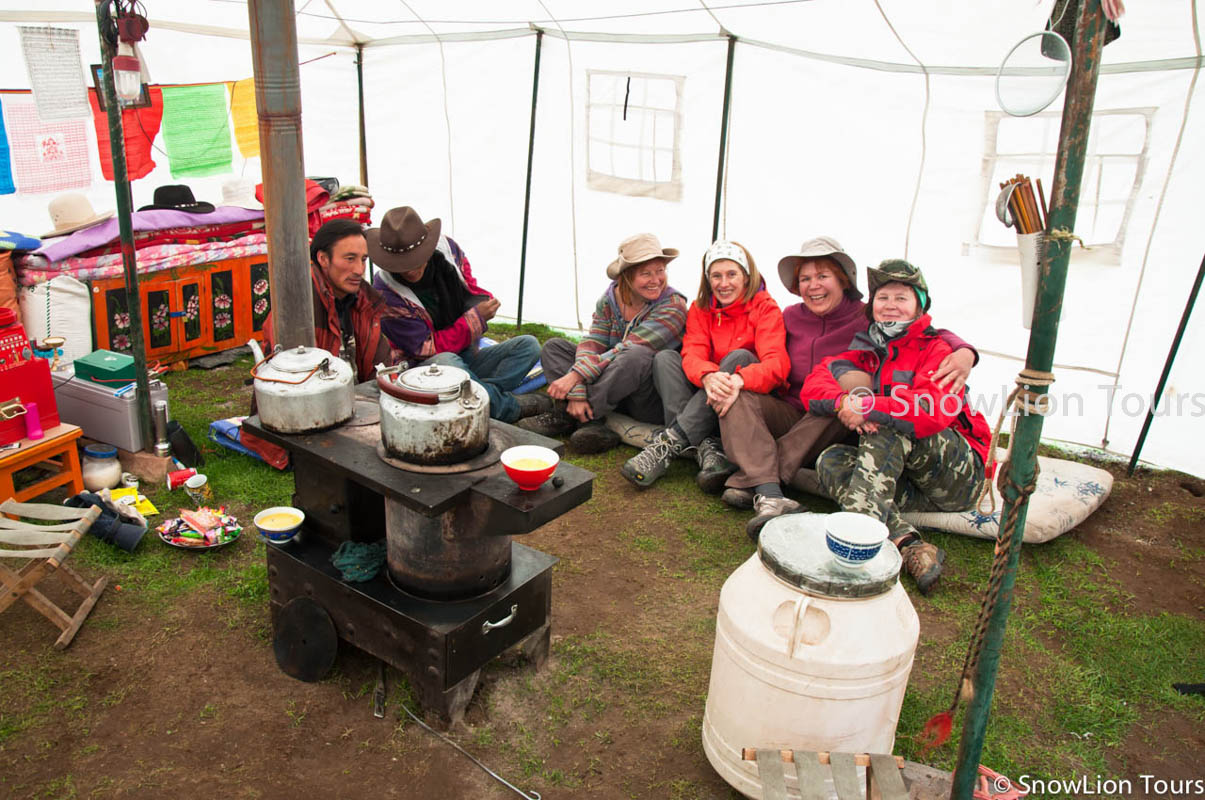
Our group having tea with a nomad family in Golog, Qinghai Province
Maduo County
Maduo is one of the highest counties in Qinghai Province, with an average altitude of around 4,300 meters. It is closely connected with the source region of the Yellow River and the Bayankala watershed.
The county is known for open grasslands, monasteries, wildlife, and the two famous sister lakes, Tso Kyaring and Ngoring Lake. The area may be home to wild donkeys, foxes, wild yaks, black-necked cranes, and other plateau wildlife.
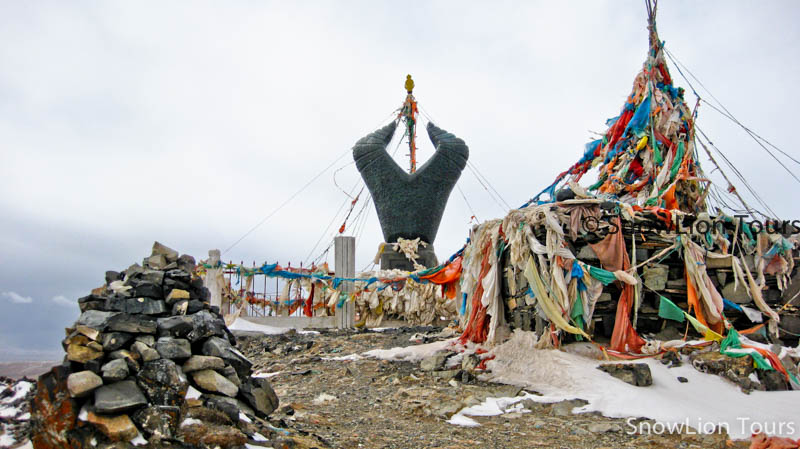
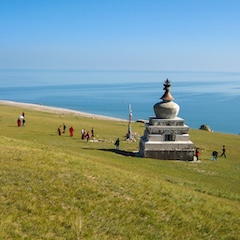
The Yellow River Source monument in Maduo, Golog, Qinghai
Gade County
Gade lies south of the Amnye Machen range, within the bends of the Yellow River. It is a small town surrounded by hills and grasslands, and the wider area is known as an important habitat for rare black-necked cranes.
There are several monasteries in the county, belonging to different Tibetan Buddhist traditions. Travel access in some parts of Golog can change, so it is best to check the latest local situation before planning a trip.
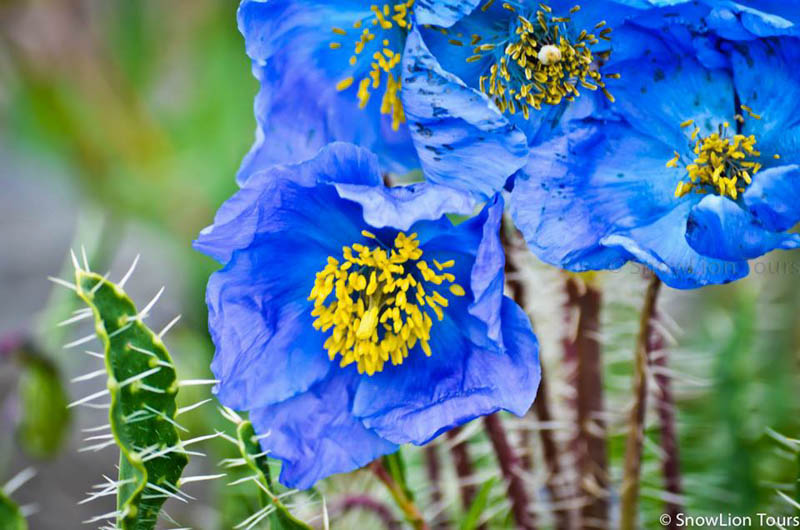
Plateau flowers
Darlag County
Darlag lies south of Xining along routes that connect Qinghai with Sichuan. Its county town, Gyume, sits on the south bank of the Yellow River and has the feel of a small nomadic town built around one main street.
The county has several Nyingma monasteries. Traling Monastery, also known as Tralang Monastery, is one of the important monasteries in the area.
Padma County
Padma County lies near the border with Sichuan Province and has a lower average elevation than many other parts of Golog. Compared with the open grasslands of Machen and Maduo, Padma has more forested mountains and a different landscape character.
The county has many monasteries, including Nyingma, Kagyu, and Jonang traditions. Access for foreign travelers can change, so Padma should be planned carefully with current local advice.
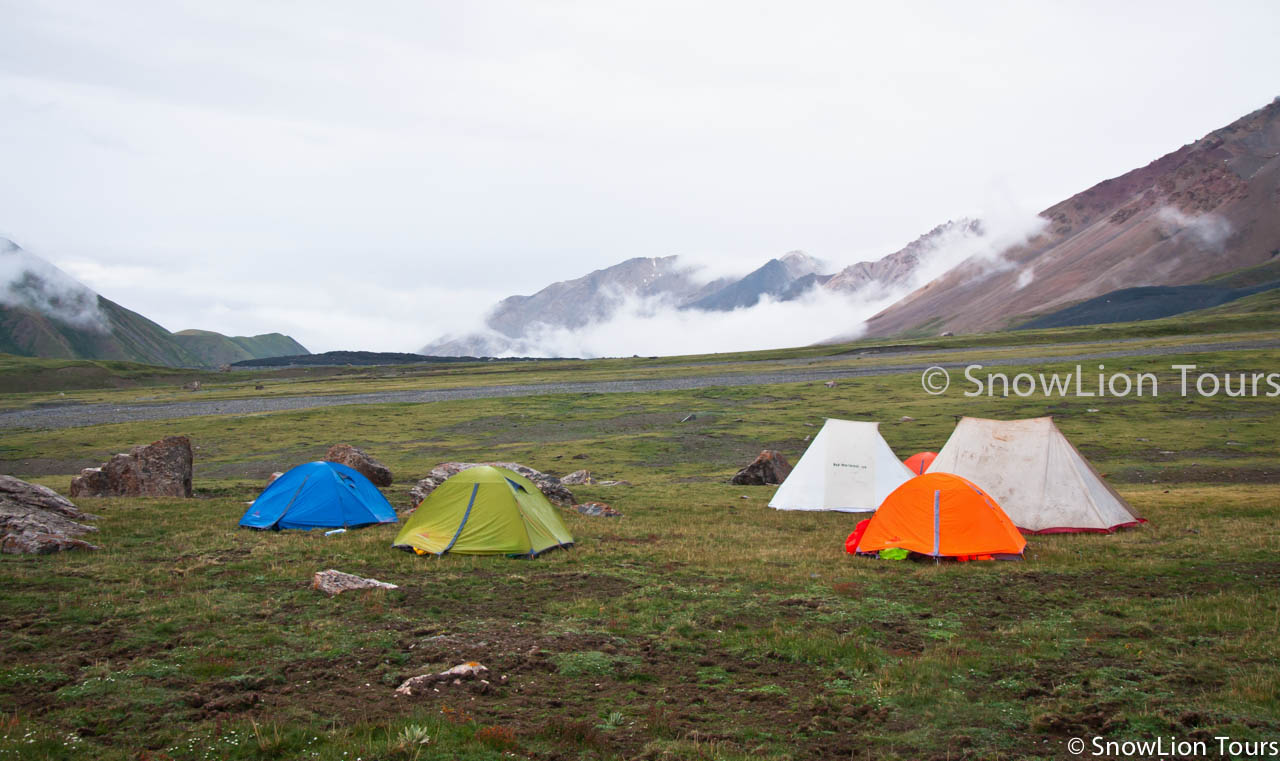
Camping site at the foot of Amnye Machen
Jigdril County
Jigdril County is located in southeastern Golog, near the border with Sichuan. It is famous for Nyenbo Yultse, a dramatic snow-capped mountain landscape surrounded by lakes and trekking routes.
The area has long been important for Tibetan Buddhist practice and pilgrimage. Tarthang Monastery, founded in the 19th century, is one of the notable monasteries connected with the region.
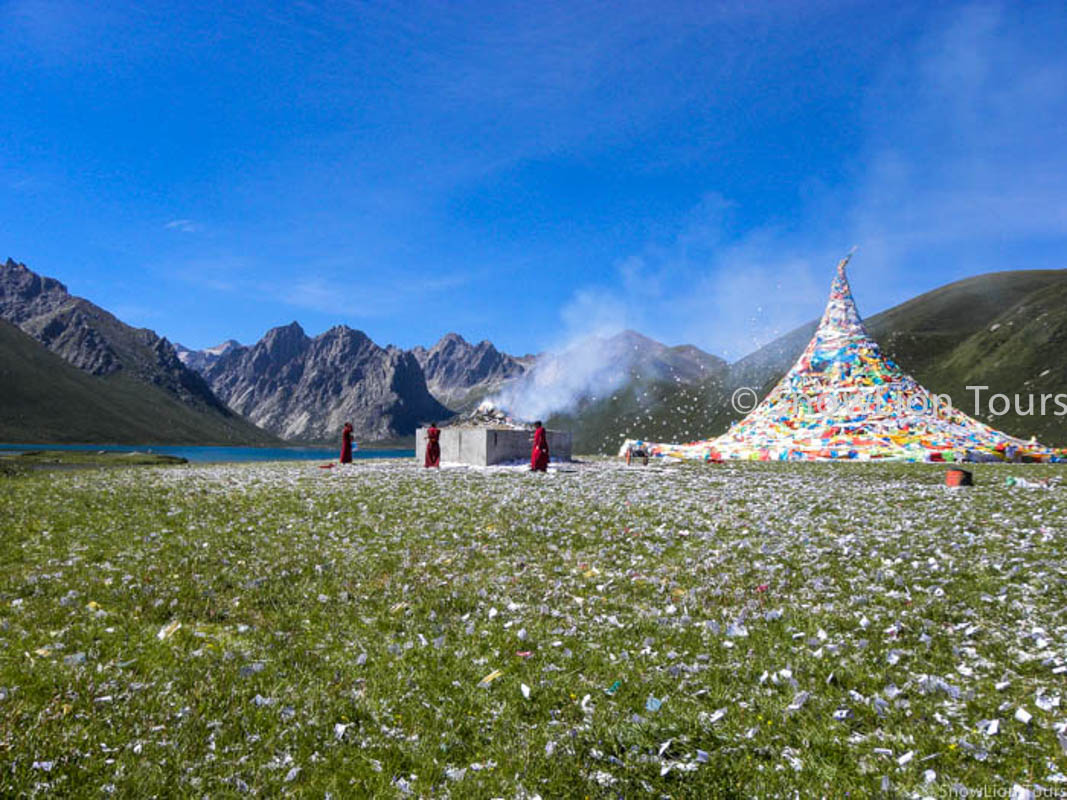
Monks flying windhorse prayer papers at the foot of Mount Nyenbo Yultse
Best Time to Visit Golog
The best time to visit Golog is usually from June to September, when the grasslands are greener, mountain roads are easier, and the weather is more suitable for long-distance driving and trekking. Spring and autumn can also be beautiful, but weather is more unpredictable. Winter is very cold and remote routes may become difficult.
Travel Tips
Golog is high, remote, and culturally sensitive. Travelers should allow enough time for altitude adjustment, keep plans flexible, and avoid rushing through the region. Road conditions, weather, and local access rules can change, so it is best to travel with reliable local guidance.
For travelers interested in Amdo Tibet, Golog combines sacred mountains, nomad culture, monasteries, grasslands, and remote plateau scenery in one of the most powerful regions of eastern Tibet.
Recent Posts
- Mount Kailash Kora updates
 September 26, 2026
 - Tibet Travel Permits
 September 24, 2026
 - Update on China / Tibet–Nepal Land Border Crossings
 September 24, 2026
Related Tours
Discover Qinghai
Discover Kumbum Monastery, Qinghai Lake, Mount Amnye Machen, Kanbula Park, and enjoy guided insights on this unforgettable Qinghai cultural and scenic tour.
Wildlife of Tibetan Plateau
Occupying almost quarter of China’s land territory, commonly called “third pole†and “roof of the worldâ€, the Tibet plateau has an average elevation exceeding 4500m above sea level. It encompasses all of the Tibet Autonomous …
Amdo Overland Journey
The Tibetan Plateau, located to the north of the Himalayas, is often referred to as “The Roof of the World.” The Tibetan cultural region is roughly the size of Western Europe, though the Tibet Autonomous …
We are recommended by
We are committed to providing authentic, high quality, environmentally sustainable travel services. Join us and experience once in a lifetime holiday.
Recent Trips
.jpg "amdo monlam festival tour")