Haa Valley
A quiet western Bhutan valley of traditional villages, old temples, forested slopes, high passes and a slower rural atmosphere.
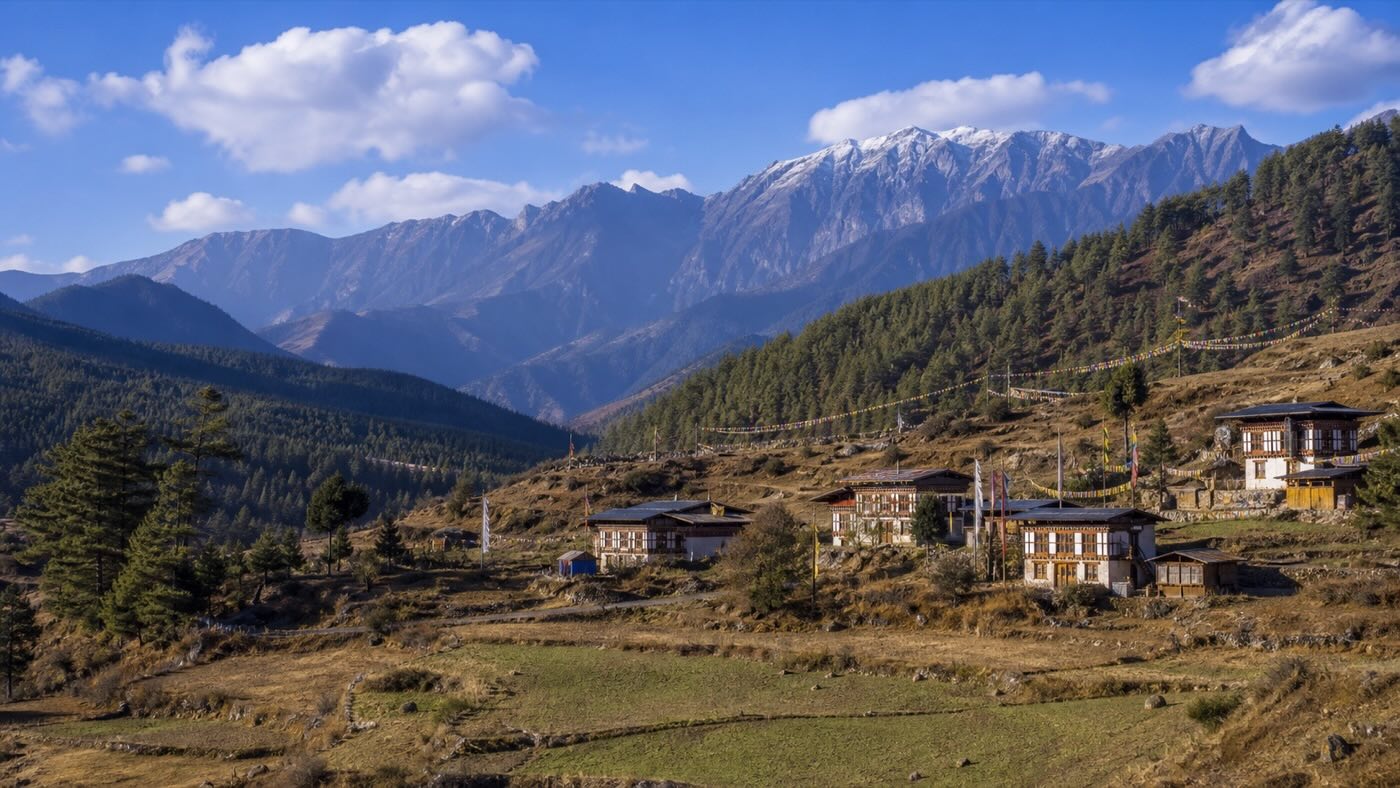
Haa Valley is one of western Bhutan’s quietest and most atmospheric destinations. It lies close to Paro but feels much less visited, with traditional villages, forested slopes, old temples, high passes and a strong rural character. Haa is ideal for travelers who want Bhutan at a slower pace, away from the busiest sightseeing route.
Why Haa Valley Matters
Haa is culturally rich and geographically beautiful. Its villages, temples and mountain roads show a quieter side of western Bhutan, where everyday farming life, local religious practice and highland scenery remain closely connected. Because it is near Paro, Haa can be added without making the itinerary too long, yet it gives the journey a more personal feeling.
The valley is also important for travelers interested in landscape transitions. The drive over Chele La Pass from Paro to Haa can reveal forests, prayer flags, alpine ridges and, on clear days, distant Himalayan views.
Historical Context
Haa Valley has long been part of western Bhutan’s borderland and high-valley world, connected to Paro by mountain passes and to local village networks by seasonal movement, farming and pilgrimage. Its temples, village houses and protective landscape traditions preserve a quieter history than Bhutan’s better-known dzong towns, but that is exactly what makes Haa meaningful.
Religious And Cultural Significance
Haa is known for Lhakhang Karpo, the White Temple, and Lhakhang Nagpo, the Black Temple. These temples are central to the valley’s religious identity and are linked with old stories of sacred geography. Together they show how Bhutanese valleys are often organized around protective temples, local deities, pilgrimage practice and community rituals.
Traditional houses, village fields and local festivals add to Haa’s cultural value. The valley does not need to be dramatic to be meaningful; its strength is in the quiet continuity of rural Bhutanese life.
Main Places To See In Haa Valley
Important places include Lhakhang Karpo, Lhakhang Nagpo, traditional villages, valley walks and viewpoints around Chele La. Travelers may also enjoy simple countryside experiences: walking near fields, visiting small temples, seeing farmhouses and stopping at prayer-flag ridges.
Haa is especially good for travelers who have already visited Paro and Thimphu and want a softer, less crowded extension. It can also be used as a scenic alternative route when road and weather conditions are favorable.
How Long To Stay
Haa can be visited as a long day trip from Paro, but staying one night is better. An overnight stay gives time to experience the valley in evening and morning light and avoids making the visit feel rushed.
Best Time To Visit Haa Valley
Spring and autumn are the best general seasons, with clear weather and comfortable travel conditions. Winter can be quiet and beautiful, though colder. Summer is green, but clouds and rain are more likely, especially around high passes.
Travel Notes
The road over Chele La is one of the highlights of visiting Haa, but weather can affect views and road comfort. Warm layers are useful because the pass is much higher than the valley floor. Haa combines best with Paro, either before or after visiting Tiger’s Nest Monastery.
Recent Posts
- Mount Kailash Kora updates
 September 26, 2026
 - Tibet Travel Permits
 September 24, 2026
 - Update on China / Tibet–Nepal Land Border Crossings
 September 24, 2026
We are recommended by
We are committed to providing authentic, high quality, environmentally sustainable travel services. Join us and experience once in a lifetime holiday.
Recent Trips

.jpg "amdo monlam festival tour")