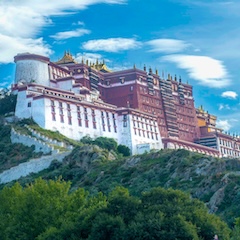
Mount Everest Base Camp
Tibet’s Mount Everest Base Camp: The North Face Experience
Rising to 8,848 meters (29,029 feet) on the border of Tibet and Nepal, Mount Everest—known in Tibet as Chomolangma(“Goddess Mother of the World”)—is the ultimate high-altitude landmark. While the southern approach in Nepal is famous for its trekking route, the northern side located entirely within the Tibet Autonomous Region (TAR) offers an extraordinary blend of dramatic Himalayan landscapes, deep cultural heritage, and smooth overland access right up to the base of the mountain.
Sacred Geography and Exploration History
For centuries before modern mountaineers targeted the peak, the surrounding mountains of the Mahalangur Range held profound spiritual significance for local communities. In Tibetan tradition, Mount Everest is venerated as the sacred home of Miyo Langsangma (mi gyo glang bzang ma), one of the Five Sisters of Longevity (tsering mched lnga). Honored across the plateau, and particularly within the Kagyu lineage, her presence transforms the rugged high-altitude terrain into a sacred landscape.
The northern approach carries a rich history of early 20th-century exploration. Discovered during George Mallory’s 1921 British Reconnaissance Expedition, this Tibetan route provided the world with some of its most iconic mountaineering history—including Mallory’s famous response when asked why he wanted to scale the peak: “Because it is there.”
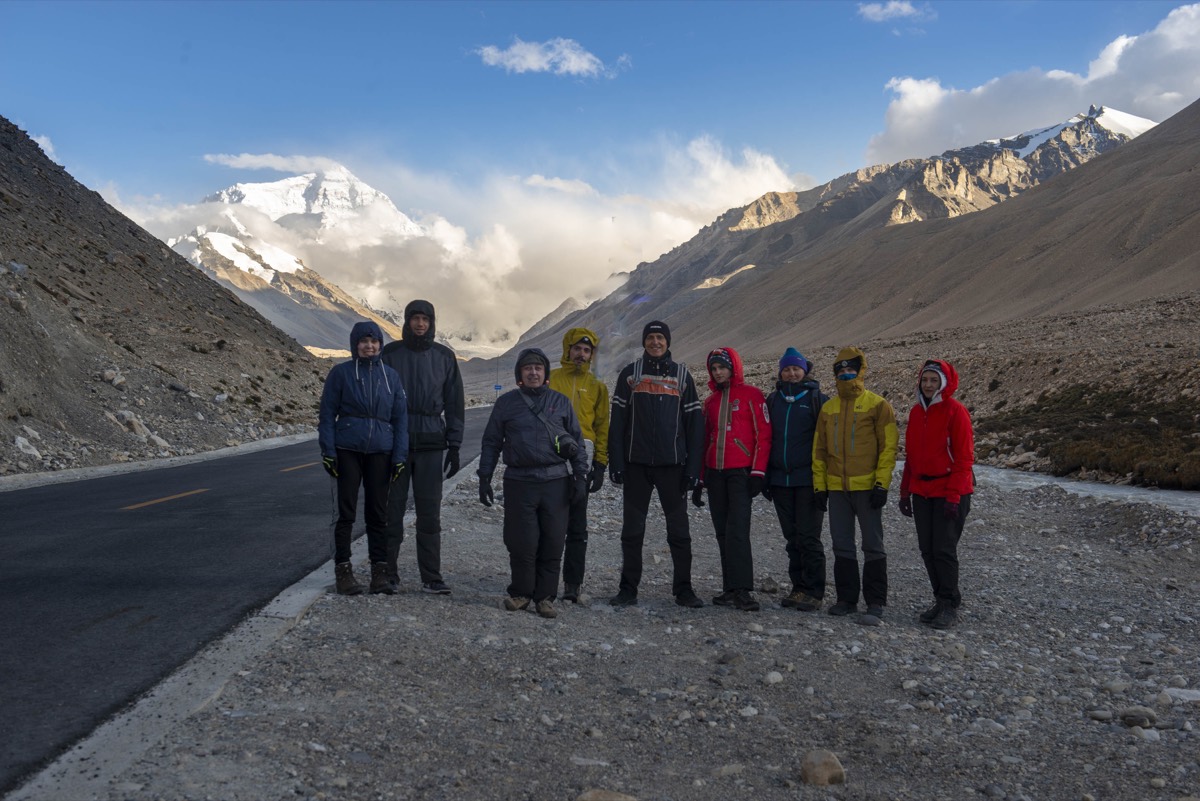
Our tour group at Everest Base Camp
Today, official guidelines divide the northern side in Tibet into two separate areas:
-
Mountaineering Base Camp: Reserved strictly for climbing expeditions holding specialized permits from the Chinese Mountaineering Association.
-
Tourist Base Camp Area: Positioned near Rongbuk, this site allows visitors to experience direct, unobstructed views of the North Face without requiring technical climbing gear or mountaineering permits.
Access, Logistics, and Local Accommodation
Reaching Everest Base Camp (EBC) in Tibet is straightforward compared to past decades. Following the complete paving of the final mountain road from Shegar, the drive along the Friendship Highway from Lhasa provides a smooth journey across high passes and through traditional Tibetan farming valleys.
Authentic Local Stays
For travelers visiting between May and October, staying overnight in a yak hair tent guesthouse offers an authentic experience. Woven from natural yak wool, these traditional nomad tents are remarkably resilient against harsh high-altitude winds. Set up seasonally near Rongbuk, local Tibetan hosts offer warm hospitality in shared spaces complete with central stoves and classic butter tea. During the colder winter months, accommodations shift to the year-round guesthouse at nearby Rongbuk Monastery.

Everest and prayer flags at Rongbuk Monastery
Sacred Sites at High Altitude
At roughly 5,000 meters above sea level, Rongbuk Monastery holds the distinction of being the highest monastery in the world. Consisting of two main temples and a prominent stupa, its upper ridge provides a classic view of the white stupa framed against Everest’s North Face. Nearby, visitors can walk to the historic meditation cave associated with Padmasambhava (Guru Rinpoche), adding cultural depth to the high-altitude landscape.
Tibet Itinerary Styles: From Overland Journeys to Remote Treks
Connecting Lhasa to the Everest region in Tibet can be done via several distinct routes depending on time, budget, and fitness:
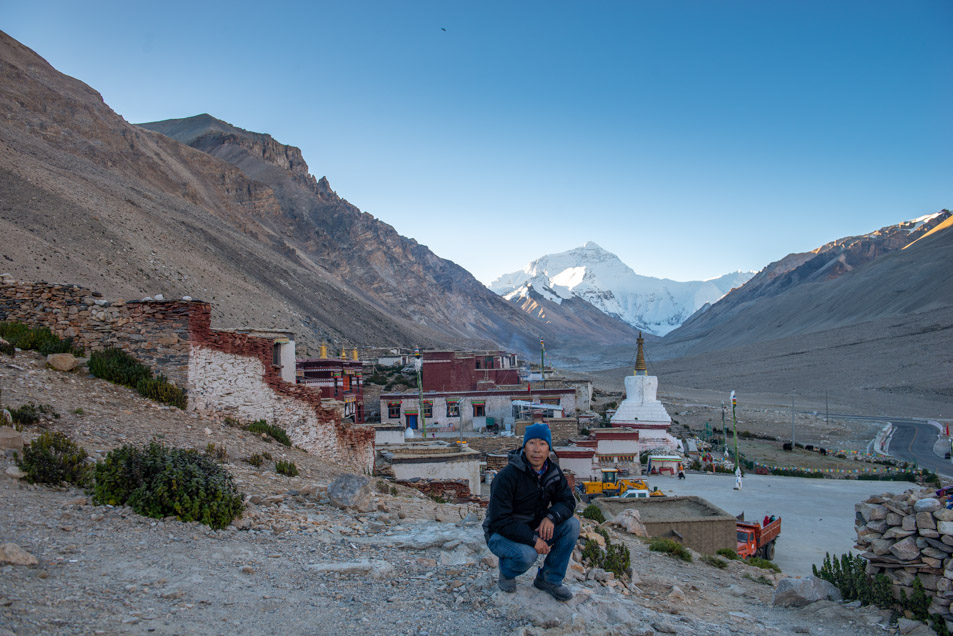
SnowLion Tours Manager at Everest Base Camp.
Essential Travel Regulations
Independent foreign travel is not permitted within the Tibet Autonomous Region. All foreign passport holders must book an organized tour through a licensed Tibetan travel agency to secure the required Tibet Travel Permit and official guide services.
The ideal seasons to visit Tibet’s Everest Base Camp are spring (April to May) and autumn (September to November), when clear skies offer optimal visibility of the mountain before and after the summer monsoon.
Recent Posts
- Mount Kailash Kora updates
 September 26, 2026
 - Tibet Travel Permits
 September 24, 2026
 - Update on China / Tibet–Nepal Land Border Crossings
 September 24, 2026
We are recommended by
We are committed to providing authentic, high quality, environmentally sustainable travel services. Join us and experience once in a lifetime holiday.
Recent Trips
.jpg "amdo monlam festival tour")