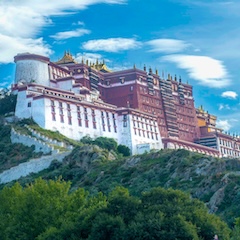
Rawok Lake / Ranwu Lake
Rawok Lake, also known as Ranwu Lake, is one of eastern Tibet’s most beautiful alpine lake landscapes, shaped by glaciers, forests, villages, and snow mountains.
About Rawok Lake / Ranwu Lake
Rawok Lake, also commonly written Ranwu Lake, is one of the most beautiful alpine lakes in eastern Tibet. It lies along the overland route between Chamdo, Bomi, and Nyingchi, surrounded by snow mountains, forests, villages, pastures, and glacier-fed valleys. For travelers crossing eastern Tibet, Rawok is often one of the most memorable landscape stops because the scenery changes dramatically with the season, weather, and light.
The lake is known for its long, calm water surface and mountain reflections. In some seasons the water appears deep blue or green; at other times it turns softer and more silvery under cloud and snow. The landscape feels different from the drier valleys of central Tibet. Here, the influence of eastern Tibet and the Hengduan mountain region creates a greener, wetter, and more dramatic environment.
Landscape and Natural Significance
Rawok Lake is significant because it shows a very different face of Tibet. Many travelers imagine Tibet as high, dry plateau land, but Rawok belongs to a region of deep valleys, glaciers, forests, and snow peaks. The lake is fed by glacial and mountain waters, and the surrounding scenery is shaped by both high-altitude climate and the more humid environment of eastern Tibet.
The nearby mountains, rivers, and villages make Rawok a place where landscape and daily life are closely connected. Local Tibetan communities live in the wider valley, and the lake area forms part of a beautiful travel corridor linking cultural Tibet with some of the plateau’s most impressive natural scenery. Because of this, Rawok is especially valuable for travelers who want to understand the diversity of Tibetan geography.
Cultural Meaning
Although Rawok Lake is best known for its scenery, lakes in Tibet often carry a deeper cultural meaning. Water, mountains, and open sky are not seen only as natural features; they are often part of a sacred landscape. Local people may have their own traditions connected with nearby mountains, protectors, and places of offering. Travelers should approach the area respectfully, remembering that beautiful landscapes in Tibet are often also meaningful cultural spaces.
Rawok is also important as a resting point on long overland journeys. For Tibetan travelers, pilgrims, traders, and later modern travelers, lakes and valley towns along these routes have long served as places to pause, gather supplies, and continue toward Lhasa, Chamdo, Nyingchi, or Kham areas.
What to See
The main attraction is the lake itself, especially the views of the water with snow mountains in the background. Morning and late afternoon are often the best times for light and reflections. Depending on the route and season, travelers may also enjoy nearby villages, river valleys, forests, and glacier views.
Rawok is a good place for photography, but it is also worth taking time simply to walk quietly near the lake and watch how the weather changes. Clouds, wind, and sunlight can transform the scene within minutes.
Best Time to Visit
Spring, summer, and autumn are usually the most comfortable times to visit Rawok Lake. Summer brings greener landscapes, while autumn can offer clearer air and beautiful colors in the wider region. Winter can be striking, but road and weather conditions may be more difficult. Because this is a high mountain area, conditions can change quickly at any time of year.
How to Visit
Rawok Lake is usually included in eastern Tibet overland journeys rather than visited as a short side trip from Lhasa. It fits naturally into routes connecting Lhasa, Nyingchi, Bomi, Ranwu, Chamdo, and Kham regions. Travel permits and route arrangements should be planned carefully because eastern Tibet routes can involve changing regulations, long driving distances, and high mountain passes.
Travel Tips
Bring warm layers even in warmer seasons, as the lake area can be windy and cold. Road journeys in eastern Tibet can be long, so allow flexible time for weather, road conditions, and photo stops. Respect local villages, do not leave trash near the lake, and avoid walking into private pasture or farmland without permission.
Search
Upcoming Tours
Recent Posts
- Mount Kailash Kora updates
 September 26, 2026
 - Tibet Travel Permits
 September 24, 2026
 - Update on China / Tibet–Nepal Land Border Crossings
 September 24, 2026
For More Information
Newsletter
Explore more! Join to get updates on Tibet tours and departures.
We are recommended by
We are committed to providing authentic, high quality, environmentally sustainable travel services. Join us and experience once in a lifetime holiday.
Contact Information
Recent Trips
.jpg "amdo monlam festival tour")