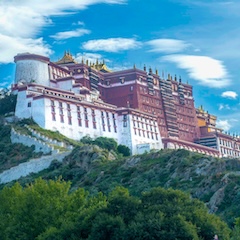
Kathmandu – Mount Kailash – Kathmandu
This Mount Kailash tour from Kathmandu is designed for travelers who want a complete western Tibet pilgrimage beginning and ending in Nepal. The journey crosses the Nepal-Tibet border and continues through dramatic Himalayan landscapes to Lake Manasarovar, Mount Kailash, and the ancient Guge Kingdom. With SnowLion Tours, you travel with experienced Tibetan guides who understand the route, altitude, permits, monasteries, and sacred meaning of the Kailash kora.
Mount Kailash, known as the Precious Jewel of Snows in Tibetan, is considered by Buddhists to be the abode of the deity Chakrasamvara. It is said that if one completes 108 circumambulations, they will reach enlightenment. The great Tibetan poet-saint Milarepa once declared, “There is no place more powerful for practice, more blessed, or more marvelous than this. May all pilgrims and practitioners be welcomed.”
Who This Tour Is Best For
This journey is best for travelers who want a deeper Kailash experience than a simple rush-in/rush-out pilgrimage. It suits people interested in Tibetan culture, sacred landscapes, Buddhist and Hindu pilgrimage sites, high-altitude overland travel, and the three-day Mount Kailash kora. Because the route reaches remote areas of western Tibet, travelers should be comfortable with long drives, basic conditions in some places, and gradual acclimatization at high altitude.
Why Travel With SnowLion Tours
SnowLion Tours is a Tibetan-owned travel company with long experience arranging Mount Kailash and western Tibet journeys. Our team helps travelers understand the route before departure, prepares Tibet travel permits, arranges local logistics, and supports the group through border crossing, altitude changes, monastery visits, and the Kailash kora. We focus on honest preparation, respectful travel, and practical guidance from people who know Tibet closely.
Tibet Permit And Route Notes
All foreign travelers need a Tibet Travel Permit for this journey, and western Tibet also requires additional permits for the Mount Kailash and Guge region. SnowLion Tours arranges the required permits after receiving your passport and visa details. The route from Kathmandu depends on border conditions, local regulations, and seasonal road access, so the final schedule is always confirmed before departure.
Altitude And Fitness
This tour reaches high-altitude areas, including Lake Manasarovar and the Mount Kailash kora route. The itinerary should allow time for acclimatization, but travelers still need to prepare carefully. The kora includes long walking days, cold weather, and the high Dolma La pass. You do not need to be a professional trekker, but you should be healthy, steady on uneven trails, and ready for basic conditions during the pilgrimage section.
Highlights
- Mt.Kailash trek
- Guge Kingdom
- Western Tibet Adventure
- Altitude from 2400-5600m
Details
- 12-day trip begins & ends in Kathmandu
- 11 nights in hotels and guesthouses
- Tibet Part: 2200 USD per person
- Single room(optional): 370 USD per person
Itinerary:
April 28th: Arrival in Kathmandu
You may arrive in Kathmandu at any time, but no later than this date. Upon request, we can meet you at the airport and arrange a transfer to your hotel.
April 29: Kathmandu – Optional Day / Contingency for Arrival
This day is reserved as an optional buffer day to accommodate any international flight delays. Participants are required to arrive in Kathmandu no later than April 28. In the event of flight disruptions, April 29 provides an opportunity to reach Kathmandu and complete final preparations for the Tibet journey beginning the following day.
For those already in Kathmandu, you may choose to spend the day exploring the cultural and spiritual highlights of the Kathmandu Valley. Optional visits include Swayambhunath Stupa (the Monkey Temple), an ancient hilltop shrine offering panoramic views of the city, and Boudhanath Stupa, one of the largest Buddhist stupas in the world and the spiritual center of Tibetan Buddhism in Nepal. Pilgrims circumambulate the stupa while reciting mantras and turning prayer wheels, creating a vivid introduction to Himalayan Buddhist practice. We do arrange this day tour individually upon request.
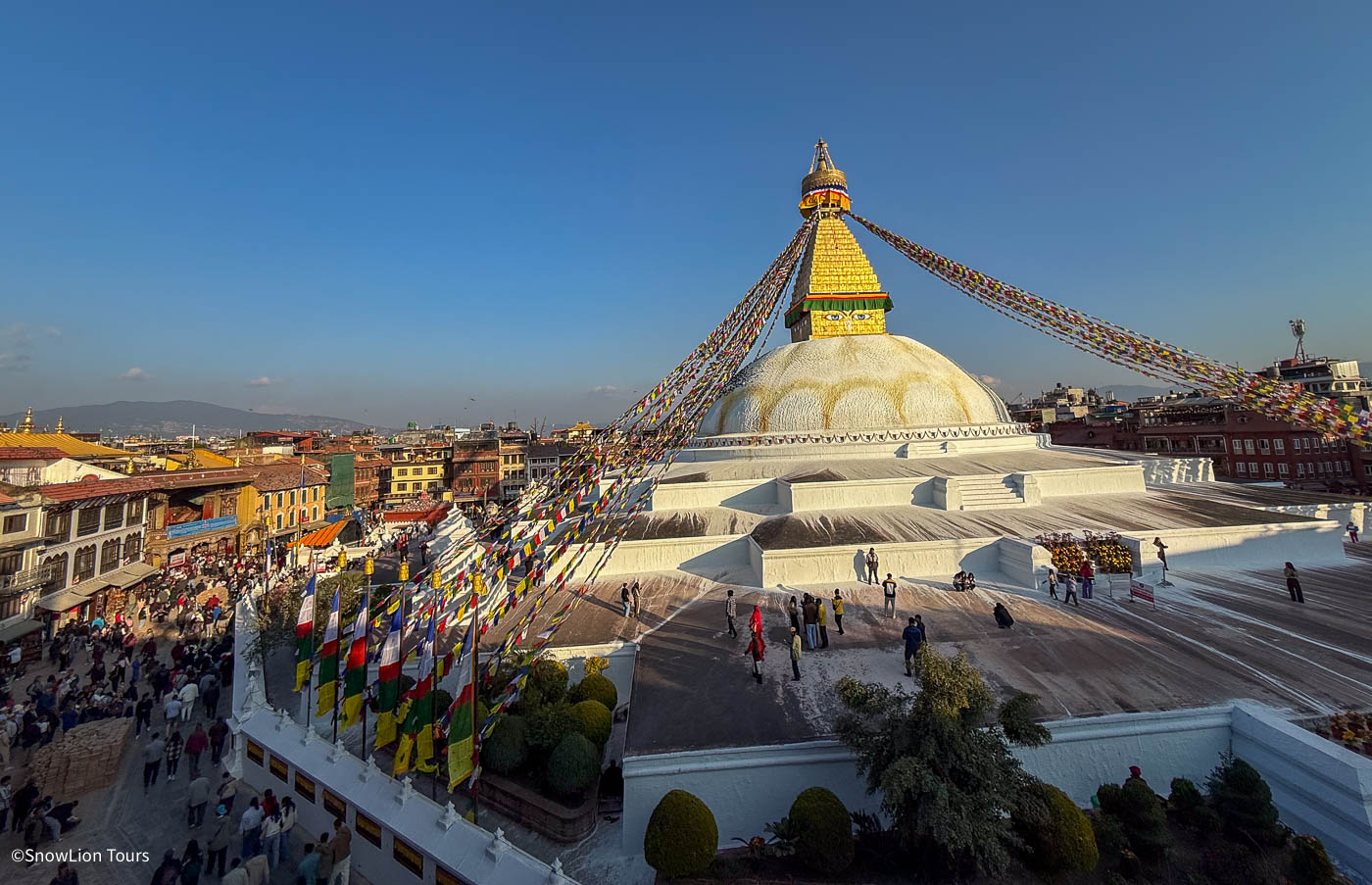
This optional day allows for light sightseeing, rest, and final preparation before the journey to Tibet.
April 30 / Day 1: Drive Kathmandu (1300m) – kyirong border (2300m), 200km, 7 hours
Drive 150km towards northeast with a nice scenic view, you will get to the Nepal –Tibet border town of Kodari. Once you cross the border, our Tibetan guide and driver will be waiting for you at the border and take you to the town of Kyirong. Kyirong is located in the Kyirong Tsangpo River side in a beautiful green valley in the Himalayan ranges, There are spectacular forests, waterfalls, pastures on the both sides of the border. Stay in a hotel in Kyirong.

May 1st / Day 2: Extra day in Kyirong or Upper Kyirong County (3950m)
First we will move from the border to a bigger town of Kyirong via Pakpa Lhakang temple (if time allows). We will stay in Kyirong today to acclimatize altitude for the coming highland road trip. Kyirong is one of the four counties in Tibet which consists of Everest National Preserve. Kyirong is also one of the favorite meditation place for many famous scholars including Indian Master Atisha, Tibetan Yogi Master Milarepa. Milarepa’s folk songs are still singing in the region today. We will do some small hikes around Kyirong to prepare for Kailash Kora, visit Milarepa Monastery (if permits) in Kyirong and Guru Rinpoche cave. Overnight in Kyirong.
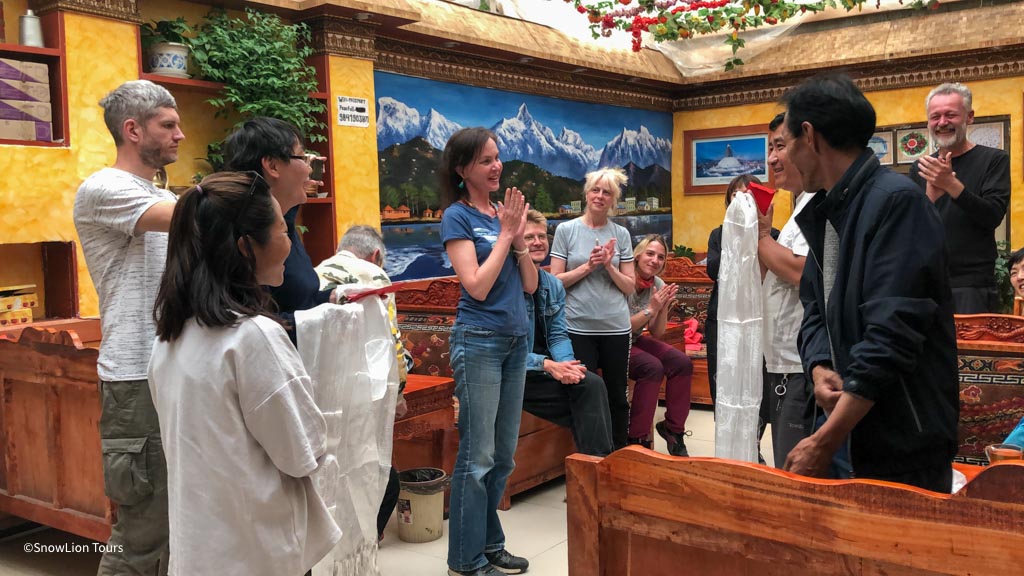
Our guide is welcoming the group at the border.
May 2nd /Day 3: Kyirong – Saga (4450m), 150 km, 4 hours
Driving up towards some of the most remote region in Tibet. Along the way, you will pass through some of the nomads camps with their yaks and sheep herders around the a small lake (4450m) as well as enjoy great views of Himalayas in distance. We will also cross the world famous River Brahmaputra ( “Yarlung Tsangpo” in Tibetan ) to reach Saga (4600m). Overnight in a guesthouse in Saga.
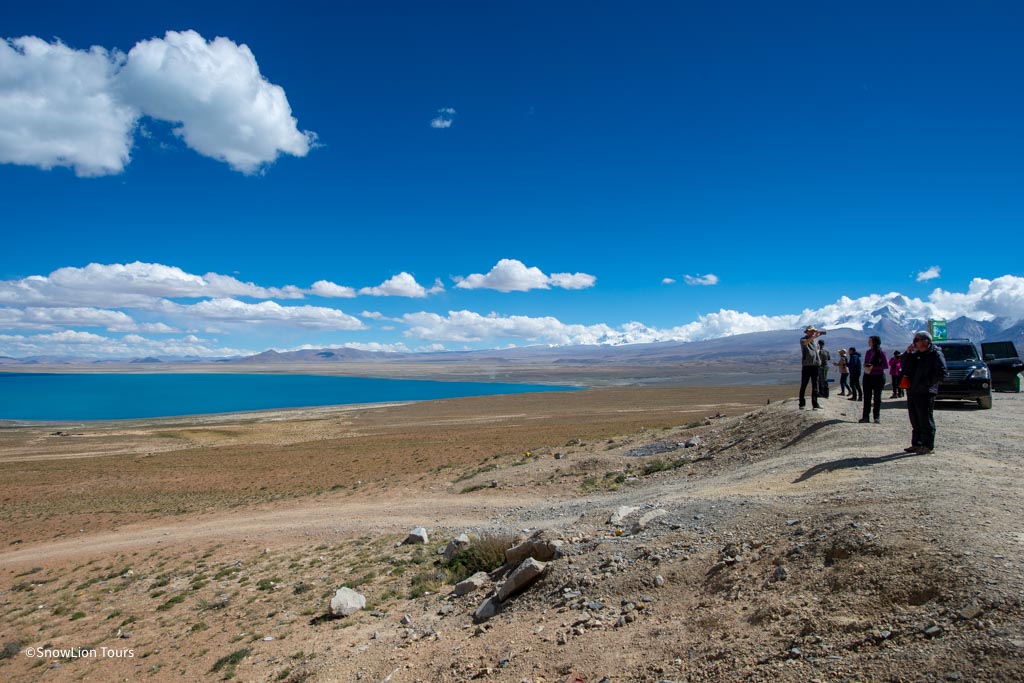
Peikutso Lake and Mount Shishapangma in distance.
May 3rd /Day 4: Saga – Paryang (4700 m) – Lake Manasarovar (4558m)
Drive through a wide valley along a scenic river and look out on the grazing lands of yaks and sheep. Towards the south, you can see sand dunes, rocky mountains, and snow-capped peaks. Depending on the season, nomads and other mobile shopkeepers will be attired in beautiful traditional costume. Join them for a cup of hot tea in their home. Continue to drive West. In the late afternoon, you will catch your first sight of Holy Lake Manasarovar and Mt. Kailash.
In the evening, arrive at Lake Manasarovar, one of the highest freshwater lakes in the world. Its turquoise waters are home to fish and swans. Tibetans revere it as a sacred lake called “Mapham Yumtso,” meaning “the Invincible Lake.” Manasarovar is also sacred to Hindus.
Nearby are two sacred mountains—Mount Kailash and Gurla Mandhata—as well as Lake Rakshas Tal. On a hill above the lake stands Chiu Monastery, an ancient Drukpa Kagyu monastery. Guru Rinpoche (Padmasambhava) meditated for a week in a cave here before leaving Tibet, and the monastery was later built on this site. Hot springs near the monastery are available for bathing. A few kilometers away lies Rakshas Tal, a crescent-shaped lake known for its constant winds and waves. Unlike Manasarovar, it has no fish or vegetation and is regarded locally as representing darker, unknown aspects of consciousness. Spend the night at Lake Manasarovar
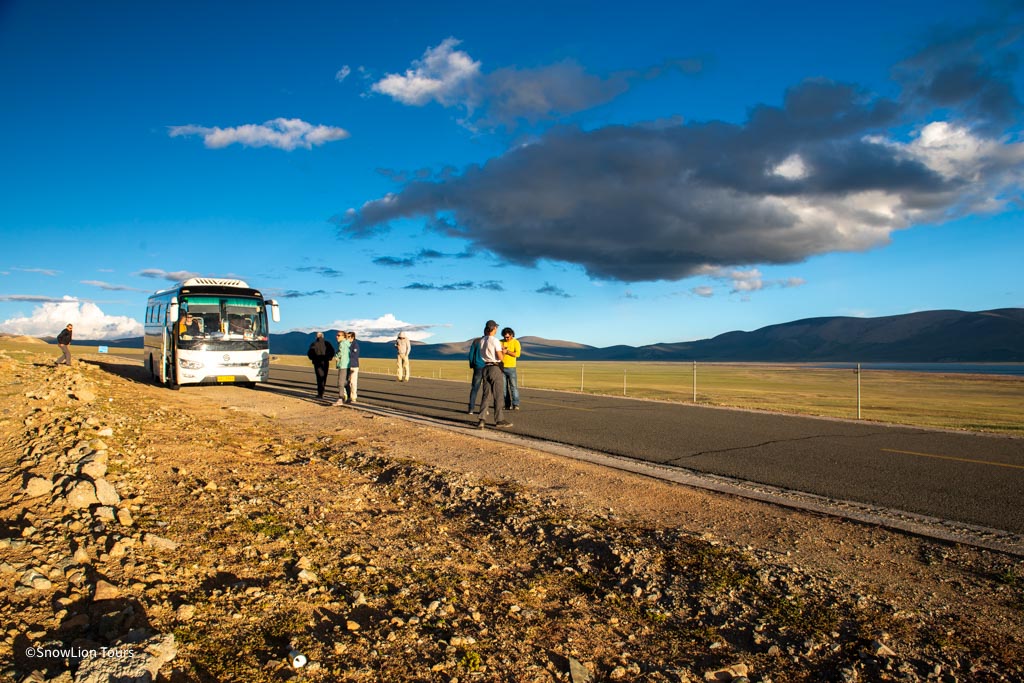
Short stop on the way to Mount Kailash
May 4th /Day 5: Lake Manasarovar – Tirthapuri – Zhada (3630m)
In the morning, we drive west about 90km to Tirthapuri. Tirthapuri is said to be the gate of Mt. Kailash and many pilgrims visit Tirthapuri first and then make the Kailash Kora. Tirthapuri, located on the Sutlej River just above the Tirthaburi hotspring, is famous for being the meditation site of Padmasambhava and his consort and student Yeshi Tsogyel. It was a pure meditation cave site 13 years ago, but later two Buddhist temples were built there. If you make a circumambulation around the monastery, you will see some other mediation caves and stupas scattering on the mountain slope. Afterwards, walk down to the river side and enjoy a natural hotspring. You can join local pilgrims to take a dip at the end of hotspring (Do not was feet at the upstream of hotspring). After that we continue drive west to Zhada. On the way, you will see stunning clay landscape in the wide valley. Overnight in Zhada.
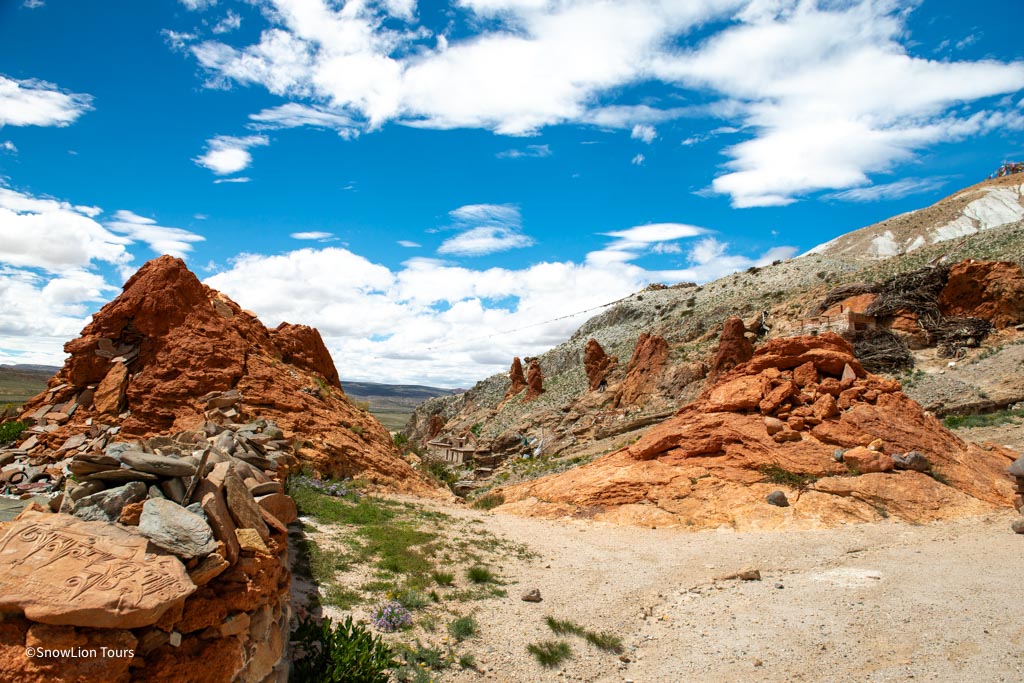
Tirthapuri
May 5th /Day 6: Zhada – Toling – Guge Kingdom – Zhada (3630m)
Today, first we visit Toling Monastery at the end of the town. The Toling Monastery consists of two main temples and several other ruins of ancient stupas. Tholing Monastery which is built by Great Tibetan translator Rinchen Zangpo at the beginning of the 10th century. These Buddhist temples became the religious center of the Guge Kingdom. Once you are there, do not miss a small back door which will lead you to the riverside where you can see ancient Toling Monastery and stupa of Padmasambhava. Afterwards, Drive 250km further west to Guge Kingdom. On the way, we will first drive through colorful mountains and then into the world of white clay land formations. Once we arrive in Guge Kingdom, we will have a whole afternoon to explore the ruins of this ancient kingdom dated back to the 10th century. There are four main temples in the lower reaches of the city, where you can see wall paintings and statues display. Some of them are of the earliest examples of Tantric Buddhist art. Above these temples, you can find the citadel of the kings. After visiting this historical site. We drive back to Zhada town.
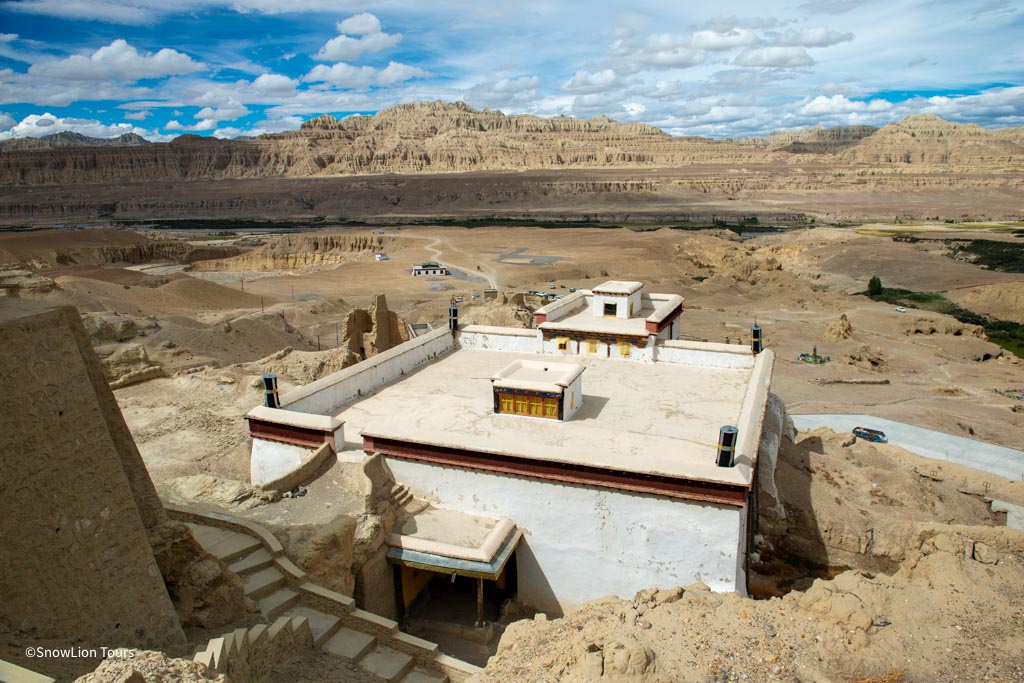
The view from Guge Kingdom
May 6th /Day 7: Zhada – Dongkar/ Piyang – back to Darchen
Today, we will drive back to Darchen, on the way, make a detour to visit one of the ruins of oldest cave temples in Tibet. The Dongkar Piyang site is about 60km from Zanda, located north from Toling at the small village of Dungkar and about 3 km away from Dungkar to Piyang. Dungkar and Piyang are famous for the wall painting and meditation caves, records shows there were more than 4,000 caves in the valley that was once inhabited. Nowadays, there are about 2000 caves remained at the Dungkar and Piyang. Actually seldom of tourist knows about this remote place, so if you are a fans of ancient relic, you may find Dungkar and Piyang are nice place to explore.After visting these 2 places, we will drive back to Darhchen. You can prepare your trek next day.
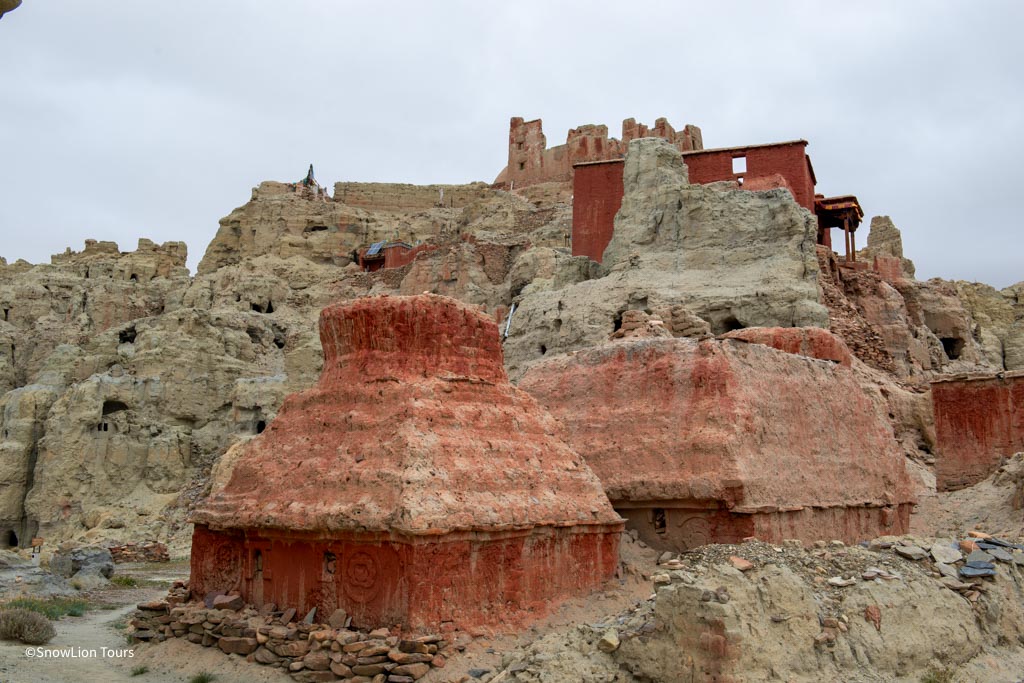
Dongkar Piyang in Tibet
May 7/Day 8: 1st Day of the Mount Kailash kora, trekking distance 19km and 6 -7 hours.
Walk along beautiful rocky cliffs, take deep breaths of fresh air. From time to time, the face of Mt. Kailash will appear. The trail passes the stone piled pass with colorful prayer flags, famous Tarpoche Flagpole, sky burial site and then enters Lha Chu valley. at the gate of this rocky canyon, a small monastery called Chugu Monastery with meditation cave of Tibetan Great Yogi Melaripa is on the left side of this canyon across the river. If you are a good trekker and interested in meditation, you can follow the small trail leading to this monastery at the left side of the river while others may continually go on main trail. Pay a visit to this monastery takes extra one hour.
Afterwards, you can join the main trail cross the bridge below the monastery. Both sides of this canyon are high steep rocky mountains which are representing Bodhisattvas. Fox example, the three high rocky mountains at the left before reach Dirapuk Monastery represent “Rigsum Gonpo” in Tibetan or Three Bodhisattvas ( Manjushri, Avalokiteshvara and Vajrapani). After half hour of walking, you will reach sacred Dira Puk monastery which is located at an elevation of 5,000 meters by mid-afternoon. Here you can see the North face of the Mt. Kailash. This sight is also considered as a birthplace of Shiva – one of the primary forms of God in Hinduism. Spend the night in the monastery guest house.
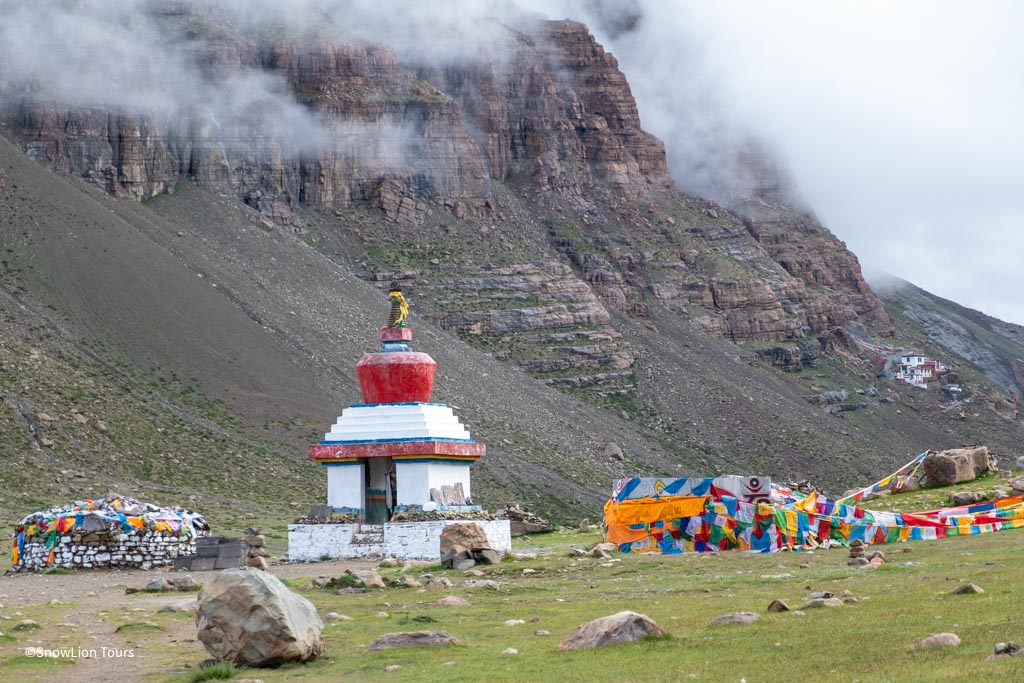
The view of Stupa gate and Chugu Monastery behind.
May 8/Day 9: 2nd day of the Mount Kailash kora – Dolma la pass (5650 m) – Zuthal Puk (4815m), Trekking distance 12km and 7 hours.
This place is the the closest place to view Mt. Kailash in entire kora. It’s right behind the guesthouses, so enjoy this last time close-up view of this holy mountain, then we start the day. Hike across a valley up to the Dolma-La Pass. The trail is much more dramatic today as you are ascending from 5050m to 5650m above sea level. Though this numbers are not big difference but given the altitude in this area, it is the most difficult part of the trek. When you reach at the top, make an offering, take a break (or meditate), and leave behind all your problems and worries. Let the prayer flags at the mountain pass bring the positive energy to you and your families. Afterwards, begin descending. A mirror – like turquoise lake will appear in front of you in the middle of black rocky mountains, which said to be water offering for the holy mountain. By the late afternoon arrive at Zuthal Puk , the cave of miracles where Milerepa once stayed.
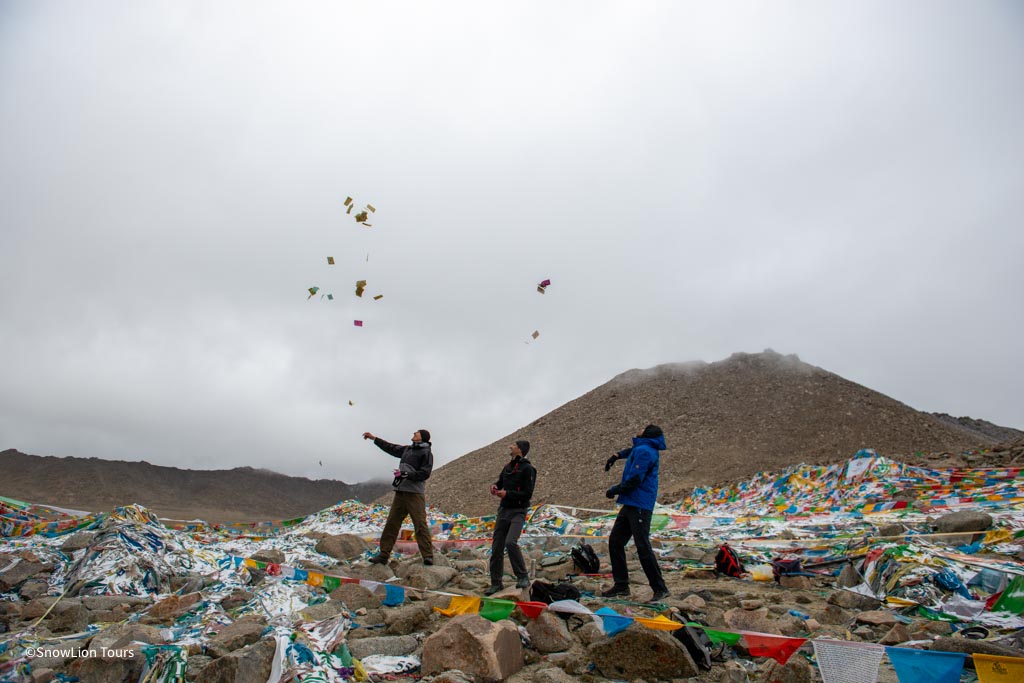
throwing Lungta or windhorse at the Dolma la pass/5200m above sea level.
May 9th /Day 10: 3rd day of the Mount Kailash Trek, view of Mt. Nemo Nani and drive back to Saga
Start the day by following one of the clearest river you have ever seen. The trail is flat and much greener. At the end of the valley before turning right, a stunning view of snow mountain Nemo Nani (altitude 7728m) will appear in your eyes. After finishing your circuit of Mt. Kailash, your car will pick you up and drive back to Saga.
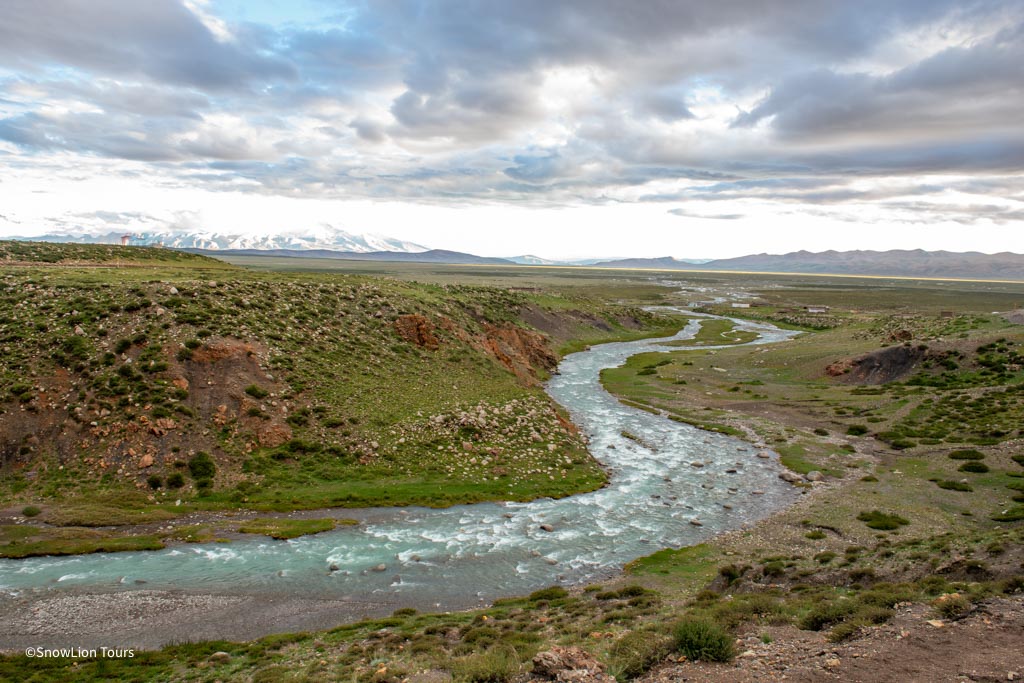
The last part of the Mount Kailash Kora.
May 10th /Day 11: Saga – Gongtang La pass – Kyirong
Today begins the return journey toward Kathmandu, with a stop near the Nepal border. Along the way, enjoy expansive views of the Himalayan ranges. Many travelers experience this long drive as a time to rest and reflect after three days of the remarkable Mount Kailash trek.
Yet this scenic zigzag road often brings unexpected moments: rainbows suddenly appearing ahead of the vehicle, herds of yaks or sheep gently stopping the road and offering close-up encounters, wild animals crossing the highway, tranquil lakes, or snow-covered landscapes glowing at sunrise or sunset. These small surprises bring the journey vividly to life.
After ascending to Gongtang La Pass (5,300 m / 17,400 ft), the highest point of the trip, the road begins its dramatic descent into the valley. As the altitude drops rapidly, the landscape transforms from high-altitude grasslands into lush green forests. The air becomes warmer and richer in oxygen, and you will feel your body gradually relax, signaling a gentle return to lower elevations.
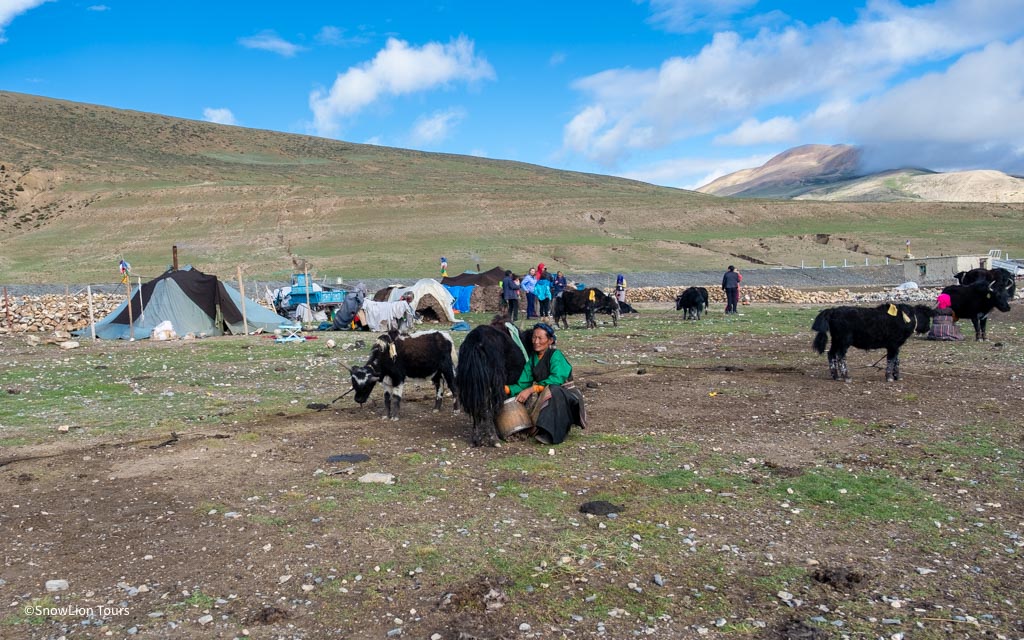
Our group stopped to see nomadic life on the way to Kyirong
May 11th / Day 12: Kyirong – Rasuwa Ghadi – Kathmandu
Continually drive at the foot of Himalayans. The customs open 10am and close by 3:30pm. You may take between 1-2 hours depends on how fast the formalities go. Then after cross the bridge, you need to go through Nepal customs. Finally, you will get to Nepal border town of Rasuwa Gadi . Our guide will help you go through custom and formalities in Chinese side of the frontier Nepal / China. On the way to Kathmandu, you will see Langtang National Park, snow peaks, farm terrains and Rasuwa ethic group of Nepal. Arrive Kathmandu in the evening, it takes about 8-9 hours from Nepal border to Kathmandu. Note: there are parts of the road are unpaved.
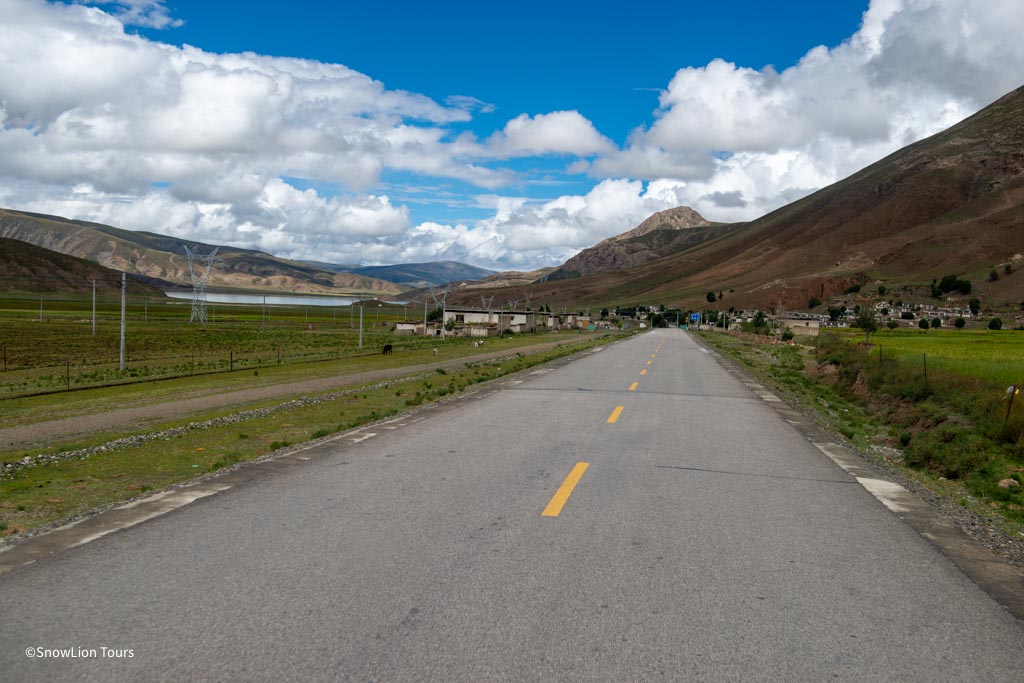
Itineraries are subject to change without prior notice.
Frequently Asked Questions
Can I start a Mount Kailash tour from Kathmandu?
Yes. This tour begins and ends in Kathmandu, then travels overland toward the Nepal-Tibet border and onward to western Tibet, Lake Manasarovar, Mount Kailash, and the Guge region.
Do I need a Tibet Travel Permit for Mount Kailash?
Yes. Foreign travelers need a Tibet Travel Permit, and the Mount Kailash region also requires additional permits. SnowLion Tours arranges the required permits as part of the tour process.
Is the Mount Kailash kora included?
Yes. The tour includes the traditional three-day Mount Kailash kora, weather and local conditions permitting.
How difficult is the Kailash kora?
The kora is physically demanding because of altitude, cold weather, long walking days, and the Dolma La pass. Travelers should prepare with regular walking or hiking and consult a doctor if they have health concerns.
What is the best time for this tour?
The usual travel season is spring to autumn, when roads are more reliable and temperatures are more suitable for western Tibet travel. Exact group dates should be checked each year.
Can SnowLion Tours help with permits and logistics?
Yes. SnowLion Tours arranges Tibet permits, local transport, hotels or guesthouses, guides, and route logistics for the Tibetan side of the journey.
Is this tour suitable for first-time Tibet travelers?
It can be suitable for first-time Tibet travelers who are prepared for high altitude and remote travel. Travelers who prefer easier conditions may want to consider a shorter central Tibet tour first.
Tour Map
Helpful Travel Guides
-
DepartureKathmandu
-
Departure Time8 am
-
Return Time6 pm
-
IncludedTibetan English speaking guidePrivate vehicleHotel and guesthouses in Tibet for 11 nightsBorder transfers to/from KathmanduTibet Travel PermitsAll the entrance tickets listed in the itinerary
-
Not IncludedFood(Lunch and dinner)Tips for guide and driverPersonal expenses
Recent Posts
- Mount Kailash Kora updates
 September 26, 2026
 - Tibet Travel Permits
 September 24, 2026
 - Update on China / Tibet–Nepal Land Border Crossings
 September 24, 2026
Similar Tours
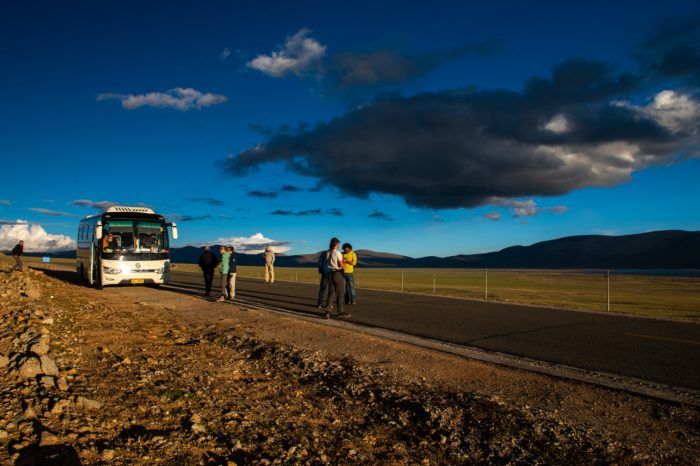
Kathmandu to Lhasa Tour
Travel overland from Kathmandu to Lhasa via Everest Base Camp, sacred lakes, and historic monasteries. A carefully paced Nepal–Tibet journey with experienced Tibetan guides.
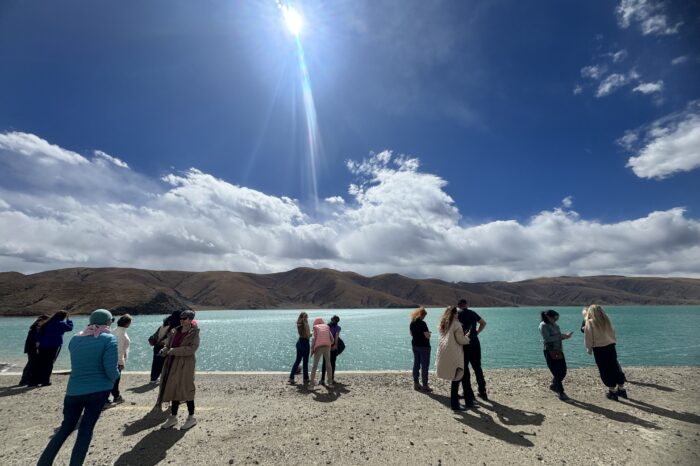
Kathmandu to Mount Kailash Tour
Journey from Kathmandu to sacred Mount Kailash and Lake Manasarovar, crossing the Himalayas into western Tibet, completing the legendary three-day Kailash Kora, and experiencing breathtaking landscapes, ancient monasteries, and profound spiritual traditions.
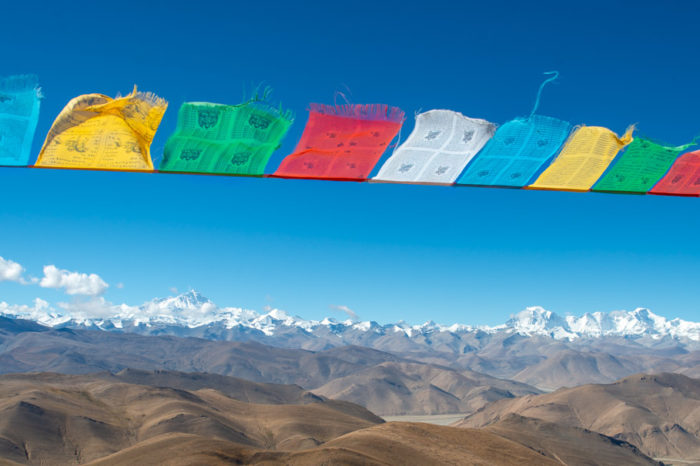
Himalayan Journey
Journey from Lhasa to Everest Base Camp and Kathmandu, crossing dramatic Himalayan landscapes, turquoise alpine lakes, ancient monasteries, and the spectacular Kyirong Valley, where Tibetan culture and breathtaking mountain scenery create an unforgettable adventure.

.jpg "amdo monlam festival tour")