First-Aid Kit for Tibet: What to Pack for Regular Tours and Trekking Tours
Traveling in Tibet is unforgettable, but it is also different from traveling in many lower-altitude destinations. Lhasa sits at about 3,650 meters, and many classic Tibet journeys continue to Yamdrok Lake, Shigatse, Everest Base Camp, Mount Kailash, western Tibet or remote trekking routes. The air is dry, the sun is strong, distances are long, and medical facilities can be far apart outside major towns.
A good first-aid kit does not mean packing a hospital into your bag. It means carrying the right basics for common travel problems: altitude symptoms, headaches, stomach upset, dehydration, small wounds, blisters, sunburn, sore throat, cough, cold weather irritation and personal medical needs. For trekking and remote journeys, the kit should be more complete and should be supported by a trained guide, oxygen access and a clear evacuation plan.
This guide is for general travel planning only. Travelers should speak with a doctor or travel clinic before going to Tibet, especially if they have heart, lung, blood pressure, diabetes, pregnancy-related, neurological or chronic medical conditions.
Why Tibet Needs A Different First-Aid Kit
The main difference is altitude. Even a normal cultural tour in Lhasa begins higher than many mountain towns elsewhere in the world. Travelers may feel headache, poor sleep, reduced appetite, mild nausea or tiredness during the first day or two. These symptoms can be mild, but they should never be ignored if they worsen.
The second difference is remoteness. On overland tours and treks, the nearest clinic may be hours away. Roads, weather and permits can affect evacuation. This makes prevention important: acclimatize slowly, drink enough water, avoid alcohol at first, keep warm and tell your guide early if you feel unwell.
Basic Personal First-Aid Kit For Regular Tibet Tours
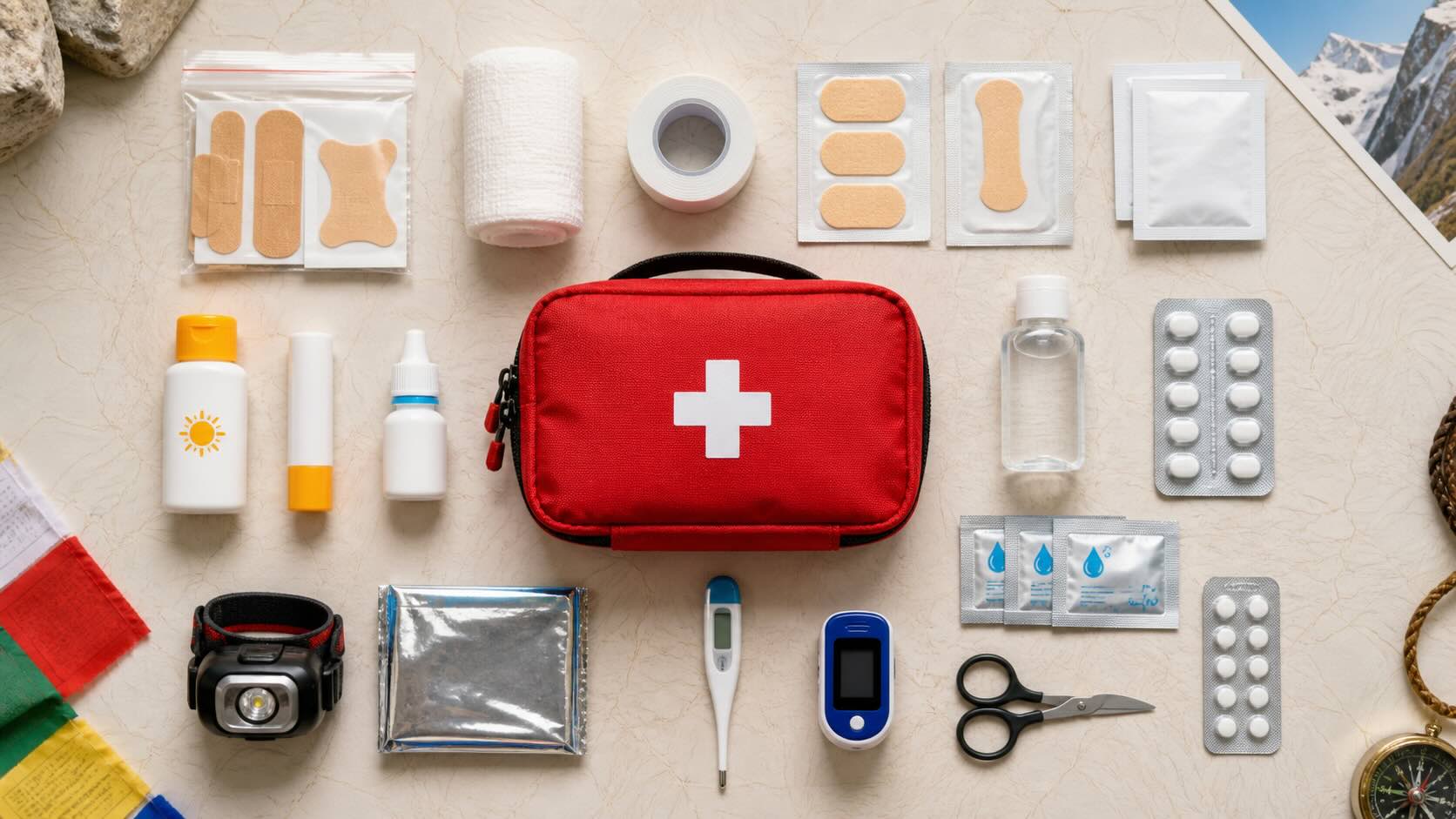
For most cultural tours in Lhasa, Shigatse, Gyantse, Yamdrok Lake, Namtso or shorter overland routes, each traveler should carry a small personal kit.
Pack:
- Personal prescription medicines, enough for the full trip plus extra days
- Copies of prescriptions, using generic medicine names where possible
- Pain and fever medicine such as acetaminophen/paracetamol or ibuprofen
- Medicine for mild diarrhea, such as loperamide
- Oral rehydration salts or electrolyte powder
- Antacid or stomach-settling medicine
- Motion sickness medicine for long drives
- Antihistamine for allergies, itching or mild reactions
- Throat lozenges or cough drops, useful in Tibet’s dry air
- Cold medicine or decongestant, if suitable for you
- Small digital thermometer
- Bandages, adhesive plasters and gauze pads
- Antiseptic wipes or small antiseptic solution
- Medical tape
- Tweezers
- Small scissors, packed in checked luggage if flying
- Hand sanitizer
- High-SPF sunscreen
- Lip balm with sun protection
- Sunglasses and a sun hat
- Moisturizing eye drops
- Any personal items such as asthma inhaler, EpiPen, insulin, glucose tablets or migraine medicine
Keep important medicine in your carry-on bag, not checked luggage. CDC travel guidance recommends keeping medicines in original labeled containers and bringing enough for the whole trip, plus extra in case of delays.
Altitude Medicine For Tibet
Do not self-medicate casually at high altitude. Before traveling, ask your doctor whether you should carry altitude medication.
Common doctor-prescribed medicines may include:
- Acetazolamide, often used for prevention or treatment of acute mountain sickness
- Dexamethasone, used in some emergency altitude illness situations
- Medicines for high-altitude pulmonary edema only for travelers with specific risk or expedition needs, prescribed by a doctor
The Wilderness Medical Society and CDC both emphasize that gradual ascent is one of the most important ways to reduce altitude illness risk. Medicine can help, but it does not replace acclimatization, rest, descent when needed or emergency care.
Important warning signs include:
- Headache that becomes severe or does not improve
- Repeated vomiting
- Confusion or unusual behavior
- Loss of coordination or trouble walking straight
- Severe breathlessness at rest
- Blue lips or very low oxygen saturation
- Wet cough or chest tightness
- Extreme weakness
If these occur, do not continue upward. Tell your guide immediately. Serious altitude illness requires urgent action, often oxygen, descent and medical evaluation.
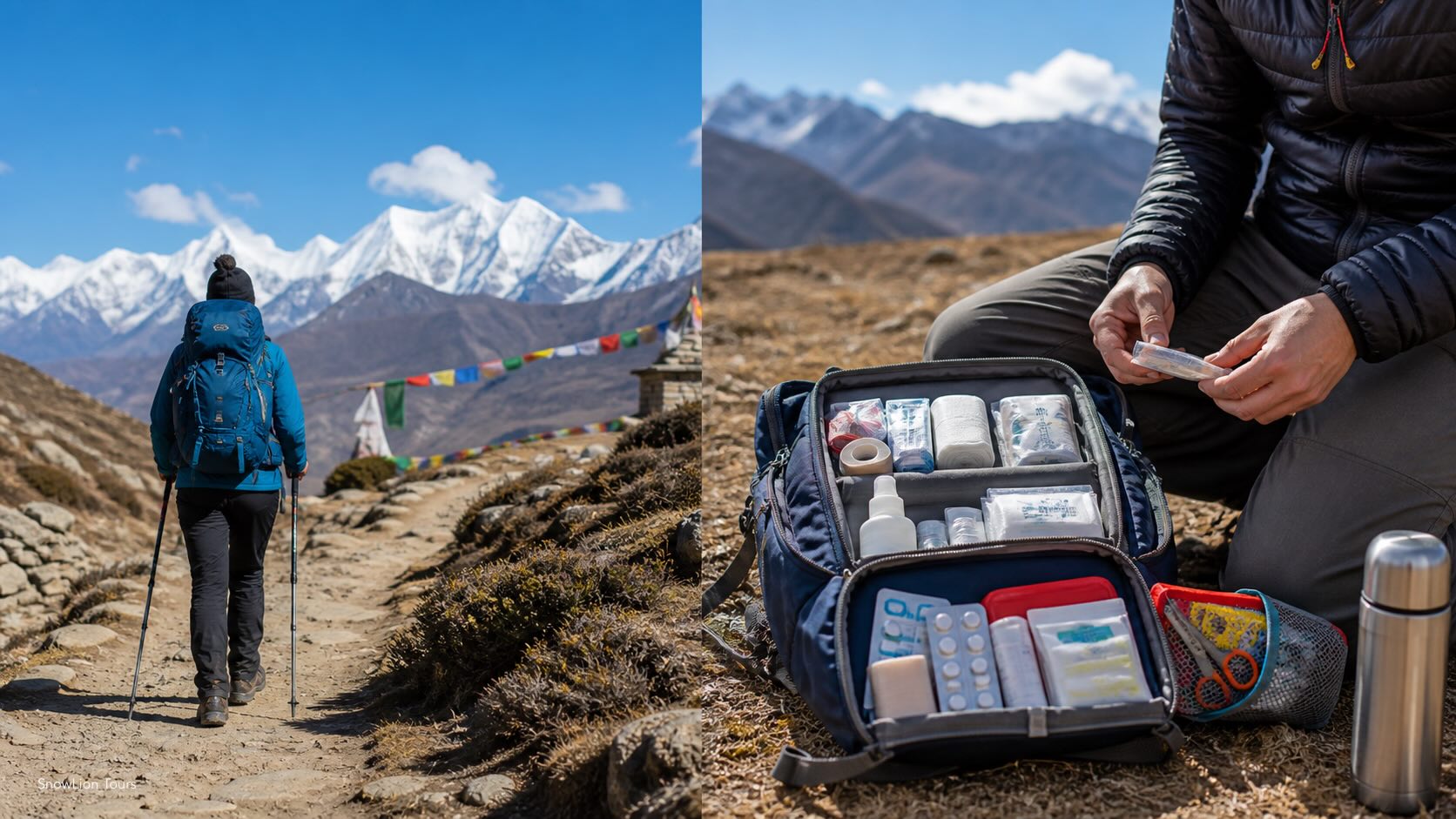
First-Aid Kit For Tibet Trekking Tours
For trekking routes, remote monastery walks, high passes, Kailash kora, Everest region travel or western Tibet journeys, add more trekking-specific items.
Pack:
- Blister plasters or hydrocolloid blister dressings
- Moleskin or sports tape for hot spots
- Elastic bandage for sprains
- Knee or ankle support if you commonly need one
- Sterile gauze and larger wound dressings
- Small wound-cleaning solution
- Antibiotic ointment, if recommended by your doctor
- Anti-chafing balm
- Small roll of duct tape or repair tape
- Safety pins
- Lightweight emergency blanket
- Headlamp with extra batteries
- Water purification tablets or filter
- Extra electrolyte powder
- Personal snacks for low appetite days
- Spare warm gloves and socks
- Foot powder if prone to sweating or blisters
For high-altitude trekking, prevention matters more than treatment. Good boots, warm layers, hydration, sun protection and a slow pace will prevent many common problems.
Group First-Aid Kit For Guides And Remote Trips
For regular sightseeing tours, travelers carry personal medicine, while the tour operator should have basic emergency supplies and access to local medical help. For trekking or remote overland journeys, the guide/group kit should be more complete.
A responsible group kit may include:
- Pulse oximeter
- Digital thermometer
- Blood pressure monitor for longer or higher-risk trips
- Oxygen access where appropriate
- Larger wound dressings and bandages
- Elastic wraps
- Sterile gloves
- Trauma shears
- Emergency blanket
- Oral rehydration salts
- Basic splinting material
- Communication device or reliable phone access
- Written emergency contacts
- Evacuation plan
- Group medical information forms
- First-aid manual
- Doctor-prescribed altitude emergency medicines, used only according to medical guidance
For major expeditions or very remote high-altitude trekking, some groups may consider a portable altitude chamber/hyperbaric bag, but this is heavy and usually only practical for specialized expeditions.
Stomach Problems And Food Safety
Stomach upset is one of the most common travel issues. Carry oral rehydration salts, because dehydration is more serious at altitude. Loperamide may help for non-bloody diarrhea during travel days, but fever, bloody diarrhea or severe dehydration needs medical attention.
Simple habits help:
- Drink safe bottled, boiled or purified water
- Avoid untreated tap water
- Wash or sanitize hands before eating
- Eat freshly cooked food
- Avoid overeating on the first day at altitude
- Carry light snacks if appetite is low
Some travelers ask their doctor for an antibiotic for moderate to severe traveler’s diarrhea before departure. This should be prescribed based on the traveler’s health history and destination.
Sun, Wind And Dry-Air Protection
Tibet’s high-altitude sun is strong even when the weather feels cool. UV exposure is higher at altitude, and wind can dry the skin quickly.
Pack:
- Sunglasses with UV protection
- High-SPF sunscreen
- Lip balm with SPF
- Moisturizer
- Eye drops
- Buff, scarf or face covering for wind and dust
- Wide-brimmed hat or cap
Sunburn, cracked lips and dry throat are very common in Tibet. These are small problems, but they can make travel uncomfortable if ignored.
Cold Weather And Trekking Protection
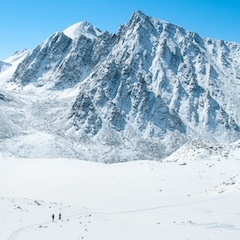
Even in warmer months, high passes, lakes, Everest region, Mount Kailash and western Tibet can be cold, windy and exposed.
For trekking or remote trips, carry:
- Layered clothing
- Warm hat
- Gloves
- Rain/wind shell
- Dry socks
- Thermal base layer
- Emergency blanket
- Hand warmers if traveling in cold seasons
Cold stress can worsen fatigue and make altitude symptoms feel more uncomfortable. Staying warm is part of staying healthy.
Personal Medical Documents To Carry
Each traveler should carry:
- Passport copy
- China visa copy
- Tibet permit copy, usually handled by the guide/operator
- Travel insurance details
- Emergency contact information
- Blood type, if known
- List of allergies
- List of current medicines
- Summary of major medical conditions
- Doctor’s letter for controlled medicines, injectables or special equipment
- Copies of prescriptions
Keep a digital copy and a printed copy. On remote trips, your guide should know about serious allergies or medical conditions before the journey begins.
What Not To Do
Do not start strong prescription medicine without medical advice.
Do not hide altitude symptoms from your guide.
Do not continue higher if symptoms are getting worse.
Do not rely only on oxygen as a way to keep pushing upward.
Do not pack loose pills without labels.
Do not assume every medicine available at home is legal or easy to buy abroad.
Do not put all medicine in checked luggage.
Simple Packing Plan
For a regular Lhasa and Central Tibet tour, bring a compact personal medical kit, sun protection, stomach medicine, pain medicine, rehydration salts and any personal prescriptions.
For Everest Base Camp, Mount Kailash, Ngari or remote overland tours, add stronger cold protection, extra electrolytes, more wound care supplies and doctor-approved altitude medicine.
For trekking tours, add blister care, elastic bandage, water purification, headlamp, emergency blanket, foot care items and extra personal medication.
Final Advice
A first-aid kit is useful, but the best safety tools in Tibet are a well-planned itinerary, proper acclimatization, honest communication with your guide and early response to symptoms. Pack thoughtfully, travel slowly, protect yourself from sun and cold, and speak with a travel doctor before your trip if you have any health concerns.


.jpg "amdo monlam festival tour")