Chimphu Meditation Caves above Samye are among the most sacred retreat places in Tibet, closely associated with Guru Rinpoche and early Tibetan Buddhist practice.
Chimphu Meditation Caves, also written Chimpu or Chimphu Hermitage, are located in the hills above Samye Monastery. While Samye represents the institutional beginning of Tibetan Buddhism, Chimphu represents the retreat and meditation side of the same sacred landscape. The caves, hermitages, small chapels, prayer flags, and mountain paths make Chimphu one of the most atmospheric pilgrimage places in Central Tibet.
Chimphu is closely associated with Guru Rinpoche, the great tantric master who played a central role in establishing Buddhism in Tibet. Tibetan tradition remembers the area as a place where Guru Rinpoche meditated, taught, subdued obstacles, and blessed the landscape. Because of this, Chimphu is not just a scenic hike above Samye; it is a living sacred geography shaped by centuries of meditation practice.
The importance of Chimphu comes from its role as a retreat place. In Tibetan Buddhism, caves and mountain hermitages are not simply remote shelters. They are places where great masters practiced intensely, where spiritual realization was cultivated, and where later generations come to receive blessings. Chimphu belongs to this tradition. It is especially meaningful for those interested in the Nyingma school and the early spread of Buddhism in Tibet.
The site is also connected with some of the most important names in early Tibetan Buddhism, including Guru Rinpoche, King Trisong Detsen, and great disciples and practitioners of the early period. Many pilgrims believe the caves hold blessings from these masters. Some caves and chapels are associated with meditation, visionary experience, hidden treasures, and the spiritual protection of the Samye region.
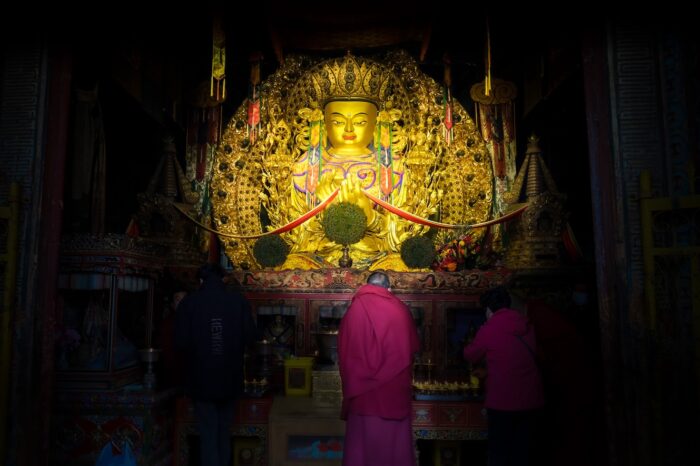
Compared with large monasteries, Chimphu feels more personal and intimate. Visitors may see monks, nuns, hermits, or local pilgrims moving quietly between chapels and retreat caves. The atmosphere is less formal than a monastery courtyard and more connected with solitude, prayer, and direct practice.
The main experience at Chimphu is walking through the hillside pilgrimage area. There are small chapels, caves, prayer flags, mani stones, and viewpoints looking down toward the valley and Samye. Some parts require walking uphill, and the paths can be uneven, so visitors should go slowly and wear comfortable shoes.
The caves themselves are usually small and simple, but their meaning is deep. Many travelers find Chimphu powerful because it does not feel like a polished tourist site. It feels like a place still used for devotion and retreat. The sound of prayer, the smell of juniper smoke or butter lamps, and the quiet mountain setting all add to the experience.
Chimphu and Samye are best understood together. Samye is the great monastery founded with royal support, Buddhist scholarship, and ritual structure. Chimphu is the nearby retreat landscape where meditation and spiritual practice continue in a more secluded form. Together they show two essential sides of Tibetan Buddhism: the monastery and the hermitage, learning and meditation, public worship and private realization.
For travelers, visiting both places gives a much richer understanding of early Tibetan Buddhism than visiting Samye alone. The journey from the monastery to the caves also helps show how sacred sites in Tibet are often connected through landscape, not only through buildings.
Chimphu is ideal for travelers who want to experience a quieter and more spiritual side of Tibet. It is meaningful for pilgrims, photographers, hikers, and anyone interested in meditation traditions. The site rewards patience: the more slowly you walk, the more you notice the details of the path, the prayer flags, the small shrines, and the people who still come here for practice.
Chimphu is usually visited from Samye or Tsedang. Because it involves uphill walking at altitude, take water, move slowly, and allow more time than you expect. Dress respectfully, keep your voice low around retreat areas, and avoid photographing people in meditation or prayer without permission.
Explore more! Join to get updates on Tibet tours and departures.
The year 2026 is the Year of the Horse according to the Tibetan lunar calendar. This is the year during the 12-yearlong astrological cycle that is understood to magnify the beneficial effects of pilgrimage manifold. …
Starting in the Tibetan capital, explore the countless rooms of the grand Potala Palace, receive a blessing from the Jowo Buddha at the holy Jokhang Temple, and barter with locals at the lively Barkhor market. …
In the sacred city of Lhasa, visit the grand Potala Palace, the holy Jokhang Temple, and the colorful Barkhor Square. Watch monks debate at Sera Monastery and join pilgrims in exploring the temples and prayer …