Gangtey Nature Trail
The scenic walk from Gangtey Gompa through village paths, pine forest and the open landscapes of Phobjikha Valley.
General Information
The Gangtey Nature Trail is the well-known short walk associated with Gangtey Gompa and Phobjikha Valley. It offers a chance to step away from the road and experience the valley at walking pace, moving between village surroundings, woodland and open views. It is a good companion to a monastery visit and a rewarding choice for travelers who want a modest walk within a cultural itinerary.
Where the Trail Goes
A commonly described route begins near the hilltop monastery, descends toward Semchubara village and continues through forest before opening toward the valley and the Khewa area. The precise finish can vary with the route and vehicle pickup. Ask your guide to explain the day’s version before you start.
Published distances differ because descriptions use different endpoints. Bhutan’s Department of Tourism describes a route of about four to five kilometres, while a Bhutanese operator gives a longer version of around 5.5 kilometres. Allow roughly one and a half to two hours for a relaxed walk, with more time for stops; a shorter version may take closer to an hour.
Landscape and Cultural Context
The interest lies in the changing setting rather than a single dramatic summit. Near Gangtey, the monastery and village establish the human context. Woodland sections bring a more enclosed atmosphere, before open ground reveals the breadth of Phobjikha’s glacial landscape. Looking back toward the monastery helps connect the religious centre with the valley around it.
This is also a lived-in agricultural landscape. Stay on the agreed route, leave gates as you find them and avoid crossing fields simply to improve a photograph. Ask before photographing residents or entering homes and farmyards. A friendly encounter is more valuable when it happens without imposing on someone’s work.
Difficulty and What to Bring
The trail is generally a gentler option than the climb to Tiger’s Nest, but it still includes uneven ground, slopes and sections that can be muddy. It should not be presented as entirely flat or suitable for every level of mobility. Confirm the route if traveling with young children or anyone who finds descents difficult.
Comfortable walking shoes with grip, a warm layer, water and rain protection are sensible. At the valley’s elevation, a leisurely pace is preferable to rushing. Arrange the pickup point before setting out so the group knows whether the walk is one-way or includes a return section.
Seasons and Black-necked Cranes
Late autumn and winter bring the possibility of seeing black-necked cranes in Phobjikha, but sightings are never guaranteed from the trail. Watch quietly from appropriate viewpoints and follow local instructions about protected areas. Do not enter roosting or feeding grounds to approach the birds.
Spring offers another appealing walking season, while summer brings greener surroundings and a greater chance of rain. Winter mornings can be very cold. Choose the start time with your guide according to weather, ground conditions and the rest of the day’s activities.
How to Include the Walk
Visit Gangtey Monastery first, walk the trail at an easy pace and leave time for the crane information centre or a relaxed afternoon in Phobjikha Valley. Staying two nights gives more flexibility than fitting everything around a long transfer. The Nature Trail is a short valley walk; longer Gangtey treks and routes to other villages require separate planning.
Search
Upcoming Tours
Recent Posts
- Mount Kailash Kora updates
 September 26, 2026
- Tibet Travel Permits
 September 24, 2026
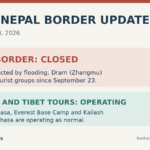
- Update on China / Tibet–Nepal Land Border Crossings
 September 24, 2026
For More Information
Newsletter
Explore more! Join to get updates on Tibet tours and departures.
We are recommended by
We are committed to providing authentic, high quality, environmentally sustainable travel services. Join us and experience once in a lifetime holiday.
Contact Information
Recent Trips