Phobjikha Valley
A peaceful glacial valley known for Gangtey Monastery, nature walks and the winter migration of black-necked cranes.
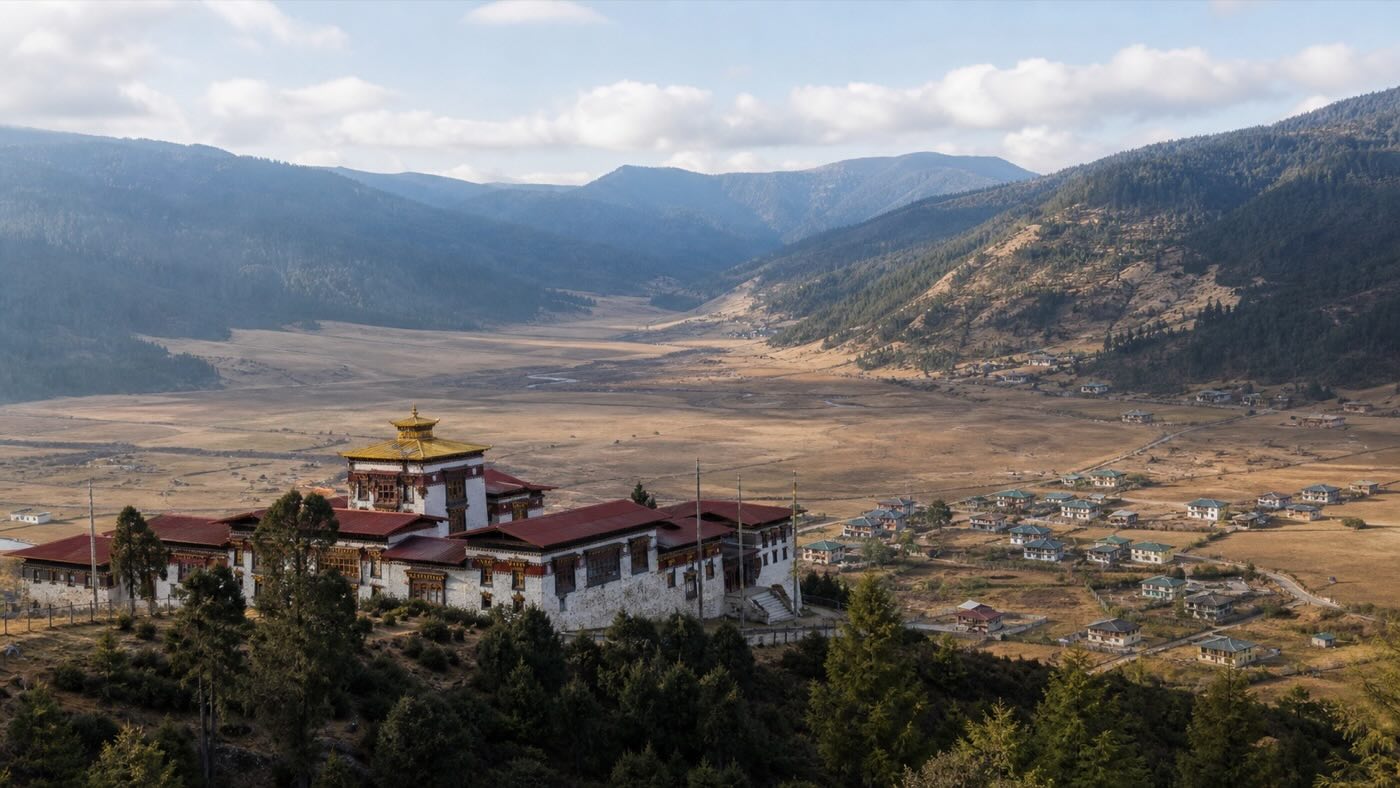
Phobjikha Valley, also called Gangtey Valley, is one of Bhutan’s most peaceful and distinctive landscapes. It is a broad glacial valley surrounded by forested ridges, known for Gangtey Monastery, soft valley walks and the black-necked cranes that migrate here in winter. The atmosphere is spacious, quiet and very different from Bhutan’s fortress towns.
Why Phobjikha Valley Matters
Phobjikha is important both culturally and environmentally. It is one of Bhutan’s best examples of a destination where conservation, village life and religious culture meet. The valley’s open wetlands and farmland provide winter habitat for black-necked cranes, birds that hold special meaning across the Himalayan world.
For travelers, Phobjikha offers a slower and more nature-focused Bhutan experience. The valley is not about rushing from monument to monument; it is about walking, observing, listening and understanding how people live with a protected landscape.
Historical Context
Phobjikha’s history is closely tied to the Gangtey religious tradition and the old movement of people, herders and monastic communities through Bhutan’s high valleys. The valley’s settlement pattern, monastery life and seasonal relationship with the land show how Bhutanese communities adapted to altitude, pasture, forest and sacred geography over many generations.
Religious And Cultural Significance
Gangtey Monastery is the spiritual center of the valley and one of the important Nyingma monasteries in Bhutan. Its position above the open valley gives it a commanding but peaceful presence. The monastery is closely connected with local religious life, festivals and community identity.
The arrival of black-necked cranes in winter is treated with great respect. Local stories and conservation practice show how religion and ecology often overlap in Bhutan. Visitors should observe cranes from a respectful distance and follow local guidance, especially during the winter season.
Main Places To See In Phobjikha
The main cultural site is Gangtey Monastery. The Gangtey Nature Trail is one of the best gentle walks in Bhutan, passing through forest, villages and open valley scenery. The crane information center and viewpoints help travelers understand the valley’s conservation importance. In winter, crane watching is a major highlight, but it should always be done responsibly.
How Long To Stay
One night gives a basic introduction, but two nights are much better. With two nights, travelers can see the valley in morning and evening light, walk slowly, visit Gangtey Monastery and enjoy the quiet atmosphere without rushing.
Best Time To Visit Phobjikha Valley
Late autumn and winter are especially important because of the black-necked cranes. Autumn often has clear weather and beautiful valley colors. Spring is pleasant for walking and cultural travel. Summer is green, but rain and cloud are more common.
Travel Notes
Phobjikha combines well with Punakha and can also be part of a longer route toward central Bhutan. The valley is higher and cooler than Punakha, so warm clothing is useful even outside winter. Travelers interested in nature, photography and quiet places usually find Phobjikha especially rewarding.
Recent Posts
- Mount Kailash Kora updates
 September 26, 2026
 - Tibet Travel Permits
 September 24, 2026
 - Update on China / Tibet–Nepal Land Border Crossings
 September 24, 2026
We are recommended by
We are committed to providing authentic, high quality, environmentally sustainable travel services. Join us and experience once in a lifetime holiday.
Recent Trips
.jpg "amdo monlam festival tour")