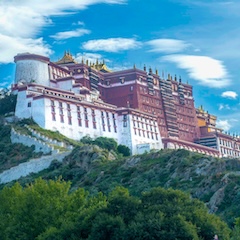
Saga Dawa Kailash Kora
This Saga Dawa Kailash tour is a special festival pilgrimage through central and western Tibet, timed around the holiest period in the Tibetan Buddhist calendar. Beginning in Lhasa, the journey allows gradual acclimatization before traveling across Yamdrok Lake, Gyantse, Shigatse, Sakya, Everest Base Camp, Lake Manasarovar, and Mount Kailash. The heart of the tour is the three-day Kailash kora and the Saga Dawa full-moon celebration near the sacred mountain, when pilgrims gather for one of Tibet’s most meaningful spiritual occasions.
Mt. Kailash, which is known as the Precious Jewel of Snows in Tibetan, is considered by Buddhists to be the abode of the deity Chakrasamvara. It is said that if one does 108 circumambulations, one will reach enlightenment. The great Tibetan poet-saint Milarepa once declared, “There is no place more powerful for practice, more blessed, or more marvelous than this. May all pilgrims and practitioners be welcomed!
What Is Saga Dawa?
Saga Dawa is the most sacred month in the Tibetan Buddhist calendar. It commemorates the birth, enlightenment, and passing into parinirvana of Buddha Shakyamuni. During this period, many Tibetans visit monasteries, make offerings, walk koras, light butter lamps, and perform acts of generosity. Around Mount Kailash, Saga Dawa is especially powerful because the mountain is one of the most important pilgrimage places in Tibet.
Why Join A Saga Dawa Kailash Tour?
This journey is best for travelers who want more than a standard Mount Kailash itinerary. The route combines Lhasa’s great monasteries, the north face of Everest, Lake Manasarovar, and the Kailash kora with the atmosphere of a living pilgrimage season. Travelers can witness Tibetan religious practice at its most active, while still following a carefully paced route for altitude and overland travel.
Festival Timing And Route Notes
Saga Dawa follows the Tibetan lunar calendar, so the exact festival timing changes each year. The route and daily plan may also shift depending on permits, weather, road conditions, and local festival arrangements. SnowLion Tours confirms the final schedule before departure and helps travelers prepare for the practical realities of traveling in remote western Tibet during an important pilgrimage period.
Kailash Kora, Altitude, And Fitness
The Kailash kora is physically demanding because of high altitude, cold weather, long walking days, and the Dolma La pass. This itinerary starts in Lhasa and travels gradually westward to support acclimatization before the kora. Travelers should still prepare with regular walking or hiking and be ready for simple guesthouse conditions during the pilgrimage section.
Permits And Group Logistics
Foreign travelers need a Tibet Travel Permit and additional permits for Everest, Lake Manasarovar, and Mount Kailash. SnowLion Tours arranges the Tibet-side permits after receiving the required documents. Because Saga Dawa is a special fixed-date pilgrimage, travelers should book early enough for permit preparation, train or flight planning, and group coordination.
Travelers comparing Kailash departures can also view our Tibet group tours, the Full Moon Mt. Kailash Kora, and Kathmandu-start routes such as Kathmandu to Mount Kailash Tour. For document planning, read about Tibet Travel Permits.
Highlights
- Holy lake Manasarovar and Peiku Tso
- Saga Dawa Festival 2026
- Kailash Kora
- Mount Everest Base Camp
Details
- 15 day trip begins and ends in Lhasa
- Hotels and guesthouses
- 3 Day Mt. Kailash Trek
- Altitude from 3000-5600m
Itinerary:
May 21 / Day 1: Arrival in Lhasa [3,658 m]
Welcome to Lhasa! Arrival in the capital of Tibet and meeting of the full group. Transfer to the hotel and rest for acclimatization to the high altitude.
May 22 / Day 2: Lhasa
In the morning, visit Drepung Monastery, located 10 km from Lhasa. Drepung is the largest Buddhist monastery and monastic university of the Gelug school of Tibetan Buddhism. It was founded in the early 15th century by Jamyang Chöje, a disciple of Je Tsongkhapa, the great reformer and founder of the Gelug tradition. Before the construction of the Potala Palace, Drepung also served as the residence of the Dalai Lamas.
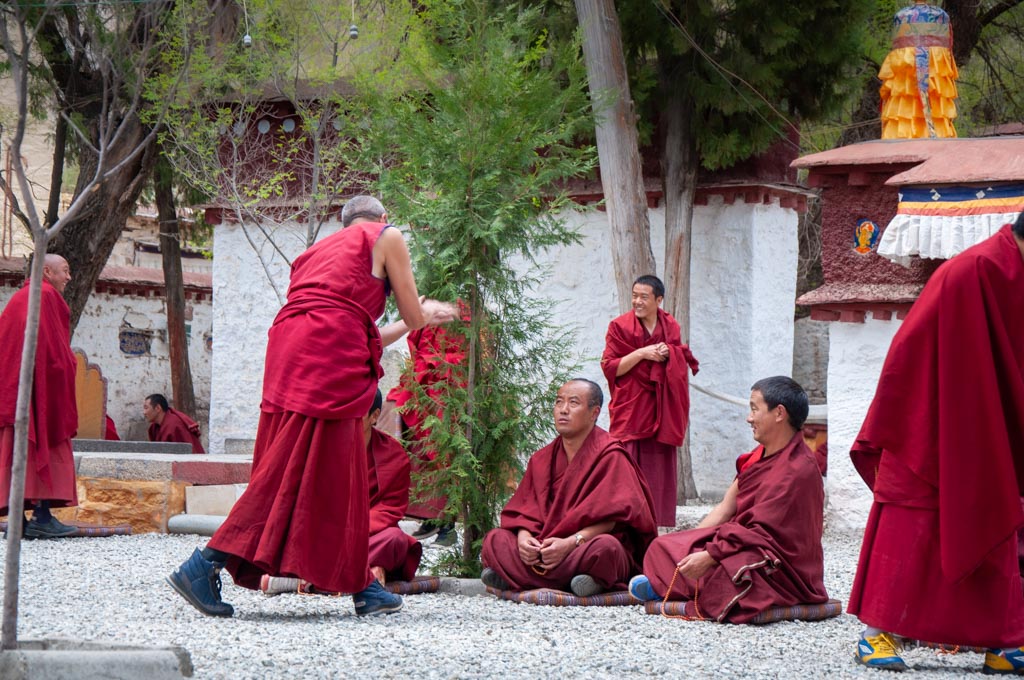
In the afternoon, visit Sera Monastery, founded in the early 15th century by Sakya Yeshe, another disciple of Je Tsongkhapa. Here you will witness the famous philosophical debates of the monks. After the debates, you may take a kora (ritual circumambulation) around the monastery.
Debating session at Sera
May 23 / Day 3: Lhasa
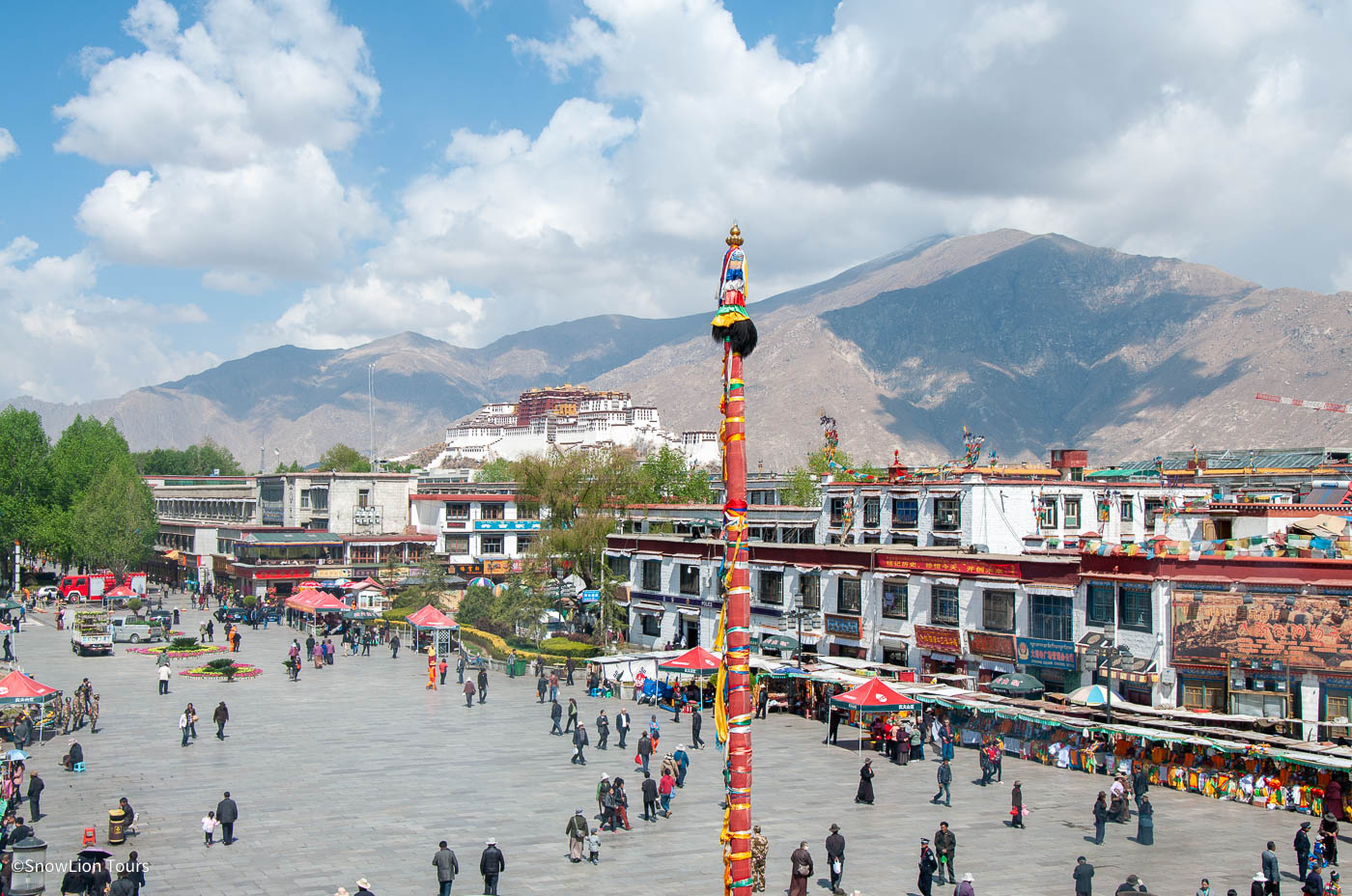
In the morning, excursion to the Potala Palace, the former winter residence of the Dalai Lamas. The palace has 13 floors and reaches a height of 118 meters, containing around one thousand rooms and approximately 200,000 images and statues of Buddhist masters and deities. Special attention is given to the stupas containing the relics of the Fifth and Thirteenth Dalai Lamas. Today, the Potala Palace attracts thousands of pilgrims who perform kora, recite mantras and prayers, and make prostrations.
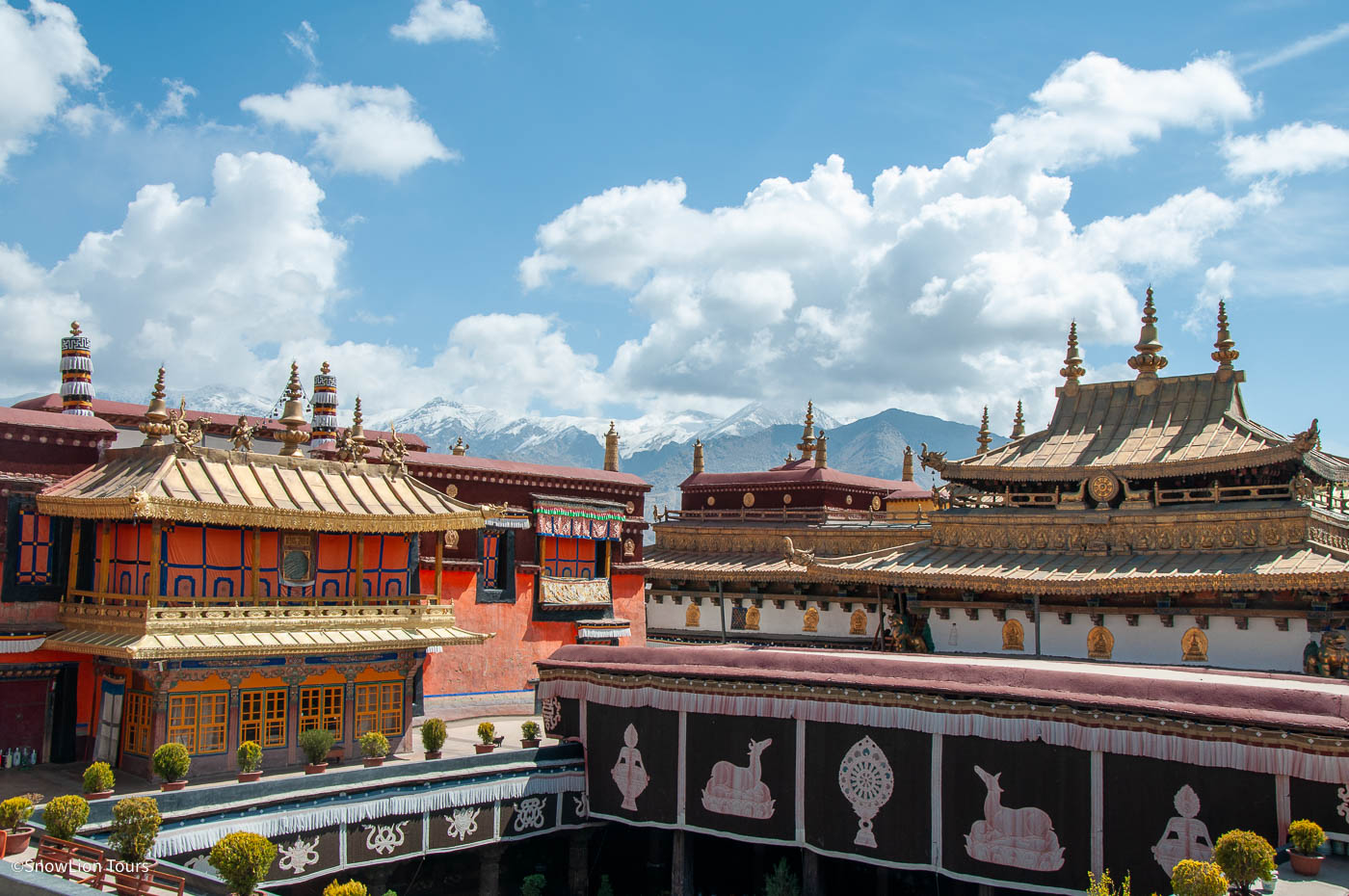
After lunch, visit the Jokhang Temple, home to the sacred statue of Jowo Buddha, followed by a walk around Barkhor Square, where hundreds of Tibetans perform ritual circumambulations around the temple. Then visit Ramoche Temple, the second most important temple after Jokhang, which houses a sacred statue of the Buddha at the age of eight, brought from Nepal in the 7th century.
May 24 / Day 4: Lhasa – Yamdrok Lake [4,442 m] – Gyantse [3,900 m]
Morning drive to Yamdrok Yumtso, one of the four most sacred lakes in Tibet. On the lakeshore, if time allows, visit Samding Monastery, whose abbess represents the first and most renowned female tulku (reincarnate lama lineage).
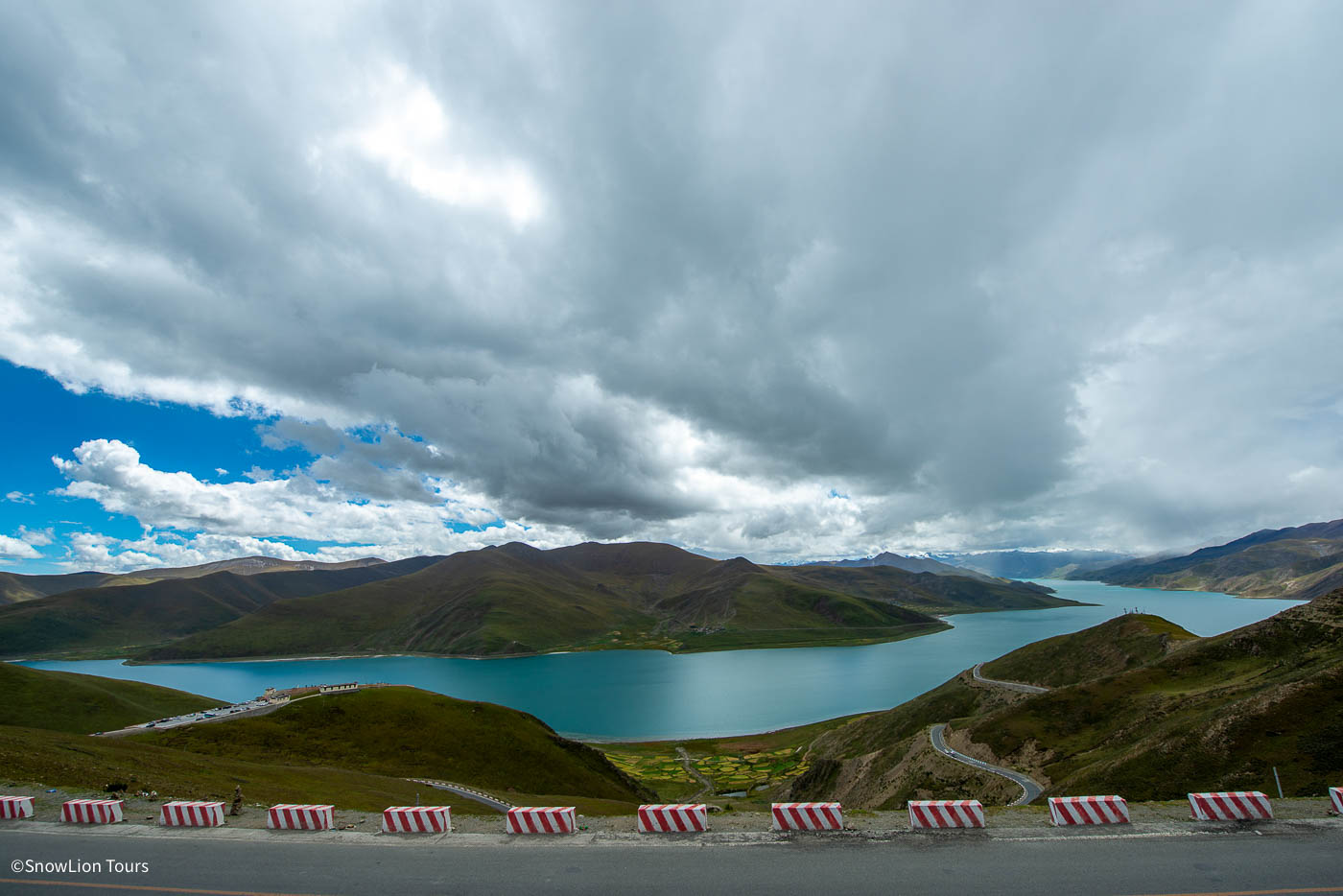
Continue via the mountain passes Karo-la and Simi-la to Gyantse. Visit the famous Pelkor Chöde Monastery with its ancient Kumbum Stupa, built in the 15th century. Pelkor Chöde was once the largest non-sectarian Buddhist educational center. Next to the main temple stands the largest stupa in Tibet, the Kumbum, containing numerous chapels that can be visited by ascending clockwise from level to level. Overnight in Gyantse.
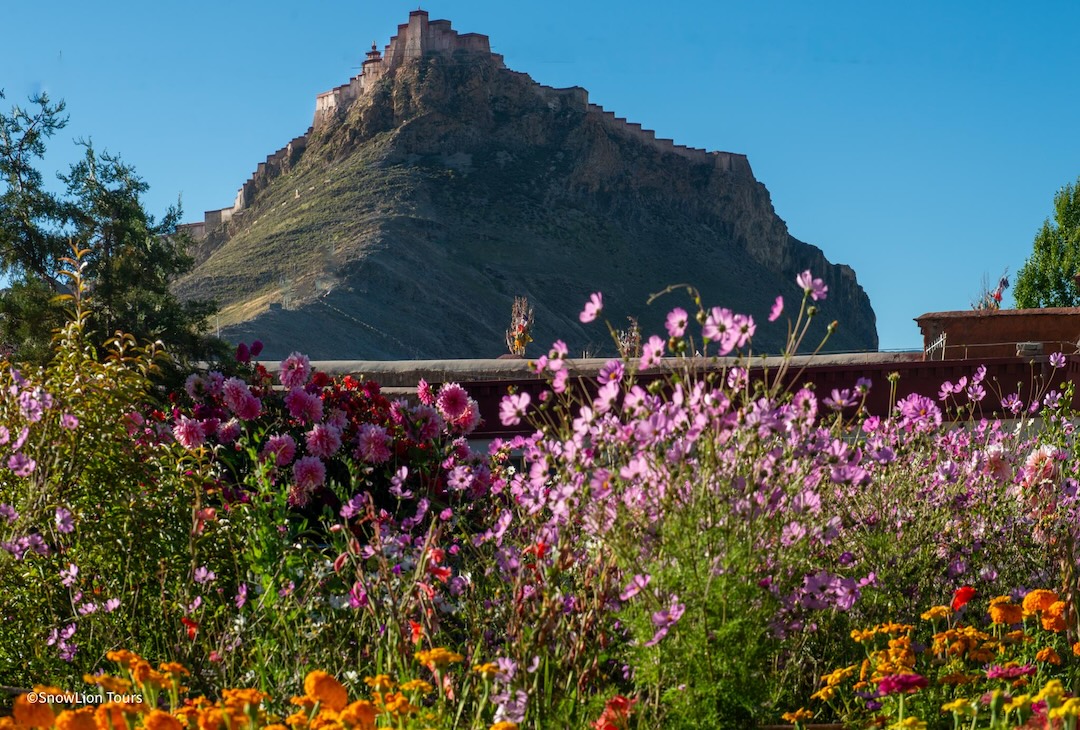
Gyantse Dzong
May 25 / Day 5: Gyantse – Shalu Monastery – Shigatse [3,836 m] – Sakya
Morning drive to Shigatse, the second-largest city in Central Tibet. En route, visit Shalu Monastery, located 78 km west of Gyantse and 22 km south of Shigatse. Founded in 1003 by the Tibetan abbot and teacher Sherab, Shalu became one of the earliest major monasteries and learning centers during the great revival of Buddhism in Tibet and an important center of the Sakya tradition.
In the afternoon, drive to Sakya Monastery (11th century), the principal monastery of the Sakya school of Tibetan Buddhism, around which a small town has developed. The Sakya school played a crucial role in the political history of Tibet from the 13th century onward.
May 26 / Day 6: Sakya – Rongbuk Monastery [5,000 m] – North Face of Everest [5,250 m]
Drive across the Tso-la Pass (4,500 m) and Gyatso-la Pass (5,252 m) to Rongbuk Monastery (approx. 5,000 m), a Nyingma monastery and the highest monastery in the world. From here, breathtaking views of Mount Everest open up. Time to explore the monastery and meditate while gazing at the world’s highest peak, framed by stupas and prayer wheels.
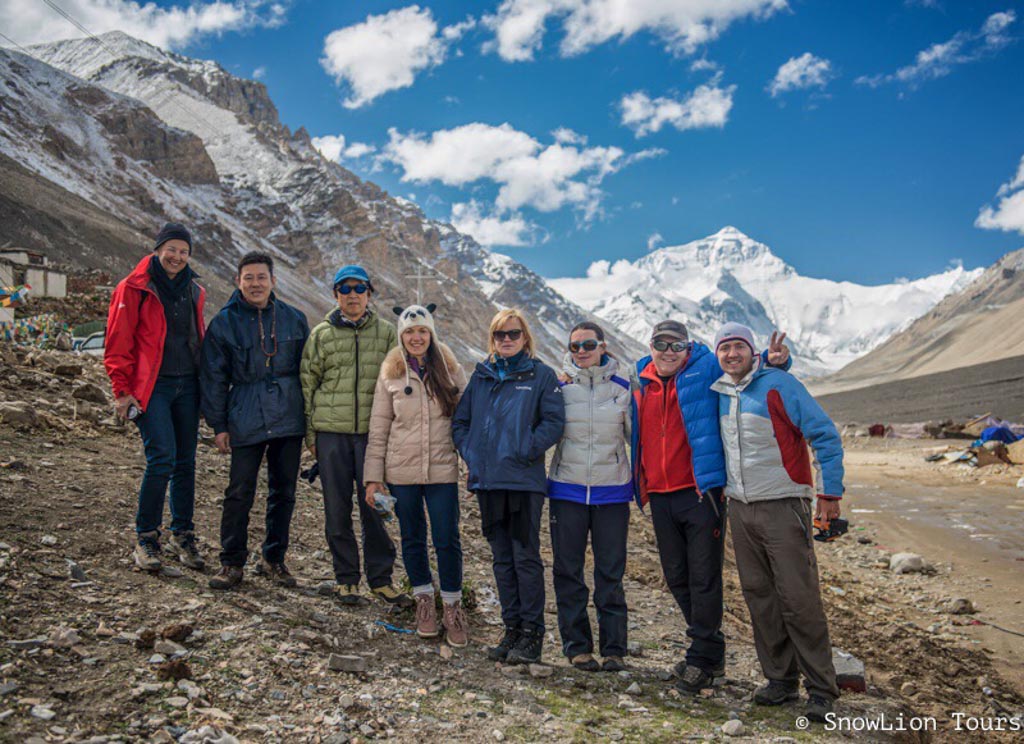
Our group poses a photo at the Everest Base Camp
May 27 / Day 7: North Face of Everest – Old Tingri – Lake Peiku Tso & Shishapangma – Saga [4,640 m]
After a final look at Everest, continue along high mountain roads crossing 4,000–5,000 m passes. Stop at the sacred Peiku Tso Lake, one of the most beautiful lakes in the region, offering magnificent views of the Himalayan range, including Mount Shishapangma. Along the way, you will see small lakes and nomad camps with herds of yaks and sheep. Late in the evening, arrive in Saga, a small settlement near the Yarlung Tsangpo (Brahmaputra) River. Overnight in Saga.
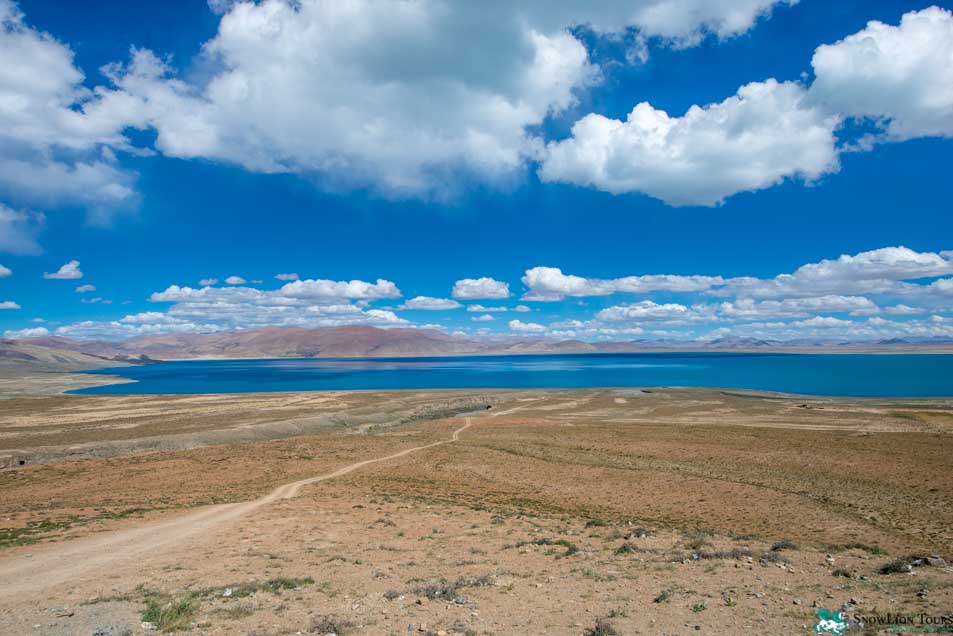
Peikutso Lake
May 28 / Day 8: Saga – Paryang [4,700 m] – Darchen [4,575 m]
The road passes through scenic valleys with expansive views of mountains and nomadic pastures. As you travel southwest, landscapes gradually change, revealing sand dunes, rocky hills, and snow-covered peaks. Depending on the season, you may encounter nomads and traveling traders in colorful traditional clothing.
Lunch stop in Paryang, one of the highest towns in the world, where the sky feels within arm’s reach. There are several Tibetan and Chinese restaurants and small shops selling snacks and drinks.
By late afternoon, the first views of the sacred Lake Manasarovar and Mount Kailash appear. Arrival in Darchen by evening. Preparation for the Kailash kora.
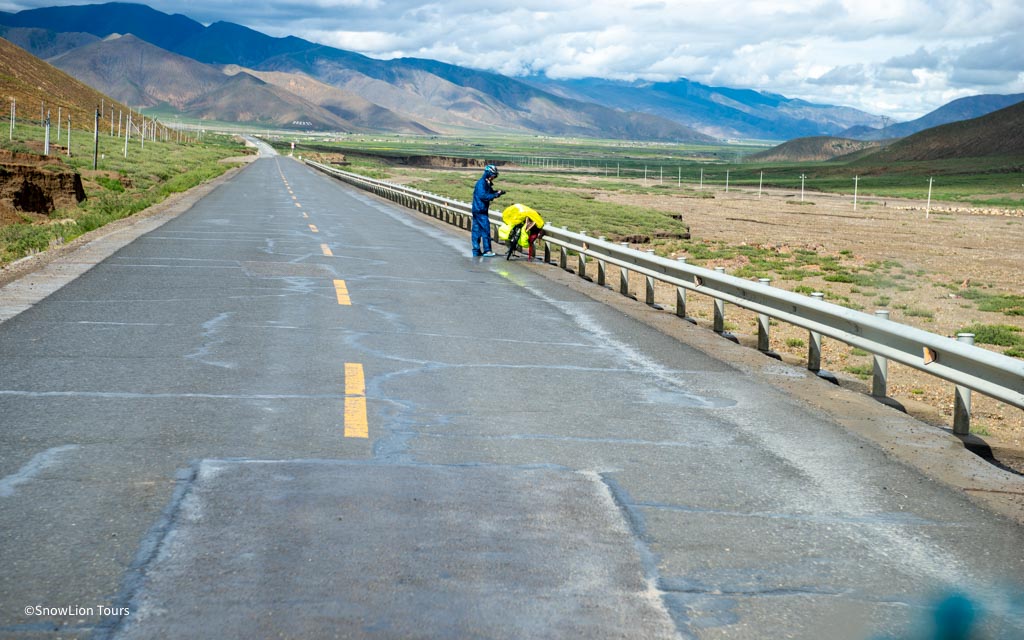
May 29 / Day 9: First Day of the Kailash Kora – Dirapuk Monastery
The full kora (ritual circumambulation) around Mount Kailash is 53 km. The first day is relatively easy. The trail passes the “Cemetery of the 84 Mahasiddhas,” and on the mountainside to the left stands Choku Monastery of the Kagyu school, which houses a sacred relic—a conch shell of the Buddhist master Naropa.
In the afternoon, reach Dirapuk Monastery for overnight stay. Nearby is the historic cave of Gotsangpa, a lama of the Drikung Kagyu tradition. According to legend, the goddess Singye Dongma, taking the form of a female yak, led him here to shelter from heavy rain. Dirapuk lies directly opposite the north face of Mount Kailash, offering majestic views of the sacred mountain.
Here you may also see Hindu pilgrims worshipping Shiva, who is believed to reside atop Mount Kailash, seen as a reflection of Mount Meru, the cosmic axis of the universe. For Buddhists, Kailash is the abode of Buddha Shakyamuni in the form of the wrathful deity Chakrasamvara. Overnight in a guesthouse at the monastery.
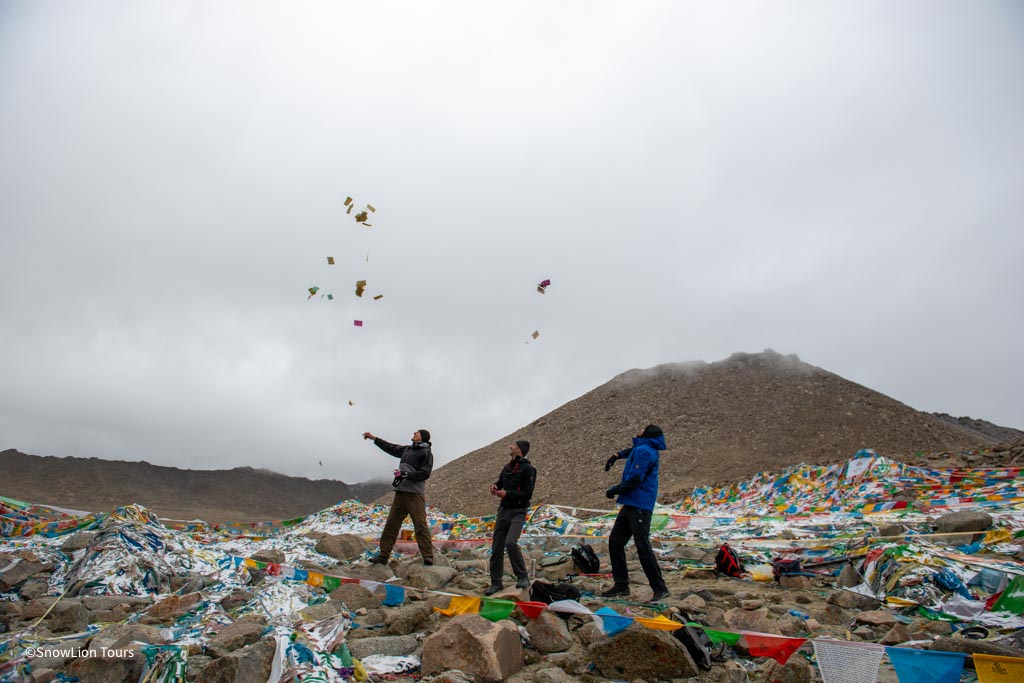
May 30 / Day 10: Second Day of the Kailash Kora – Dolma-la Pass [5,650 m] – Zutulpuk Monastery
The most challenging day, featuring the ascent to Dolma-la Pass (5,637 m), dedicated to the goddess Tara (Dolma in Tibetan). The pass is one of the most sacred points of the pilgrimage route, adorned with thousands of prayer flags fluttering in the wind.
Descending from the pass, the trail leads to Zutulpuk Monastery (“Cave of Miracles”), famous for the cave where the great yogi Milarepa meditated. According to tradition, impressions of his shoulders and upper back can still be seen in the rock. Traces attributed to Padmasambhava, Yeshe Tsogyal, the legendary King Gesar, and his horse are also shown here. Overnight in a guesthouse at the monastery.
Kailash Tour Day 2
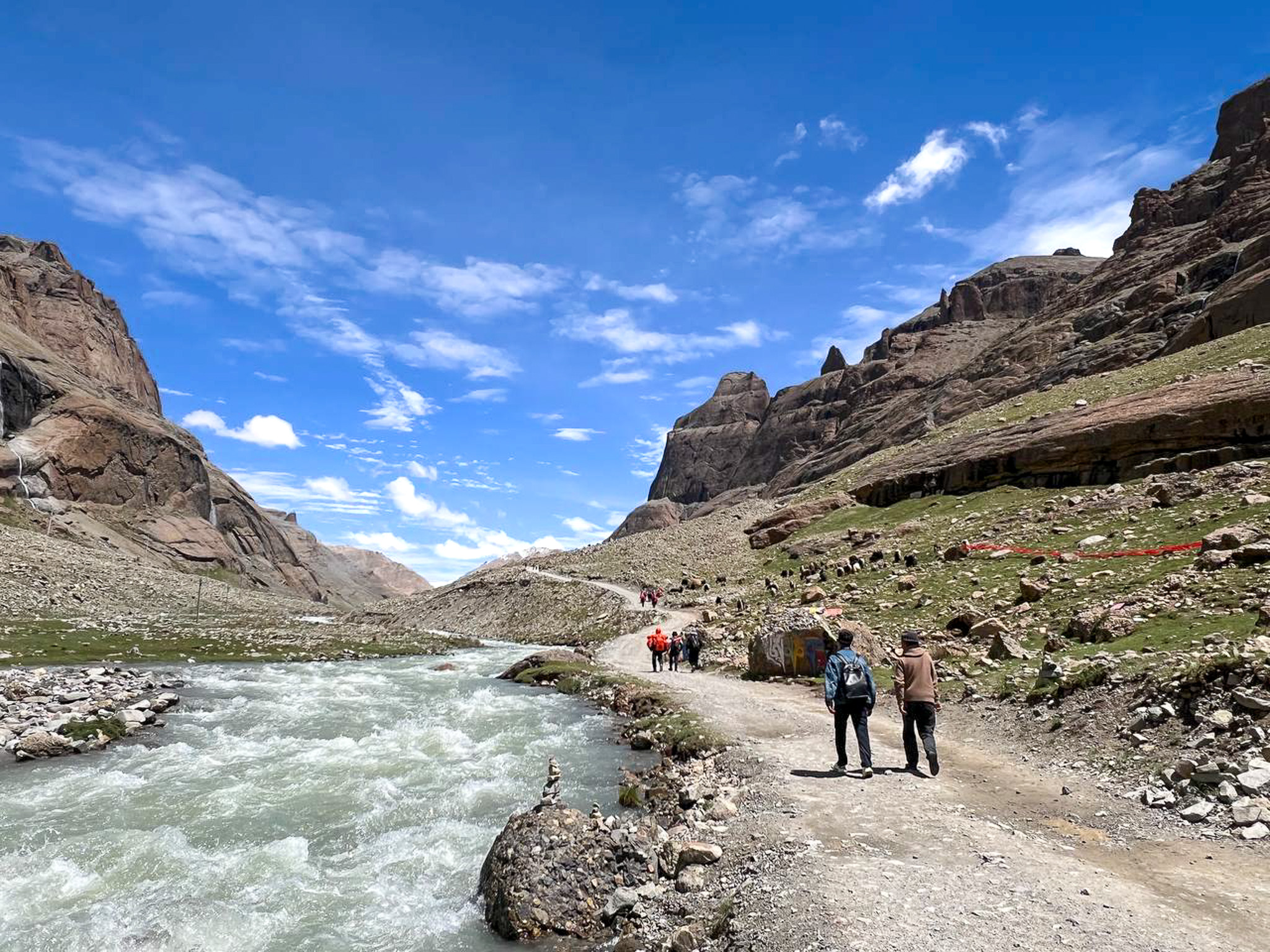
May 31 / Day 11: Third Day of the Kailash Kora – View of Mount Nandi (Nemo Nani) – Saga Dawa Festival (Full Moon)
The day begins along one of the чистest rivers you may ever see. The trail is gentle and rich in vegetation. At the end of the valley, before turning right, a stunning view opens of Mount Nandi (Tibetan: Nemo Nani), rising to 7,728 m.
After completing the kora around Mount Kailash, transfer to Tarboché, the starting point of the pilgrimage route. On this day, one of Tibet’s most important festivals—Saga Dawa—is celebrated, commemorating the birth, enlightenment, and parinirvana of Buddha Shakyamuni. You will have a rare opportunity to participate in these profound celebrations on the holiest day of the Buddhist calendar.
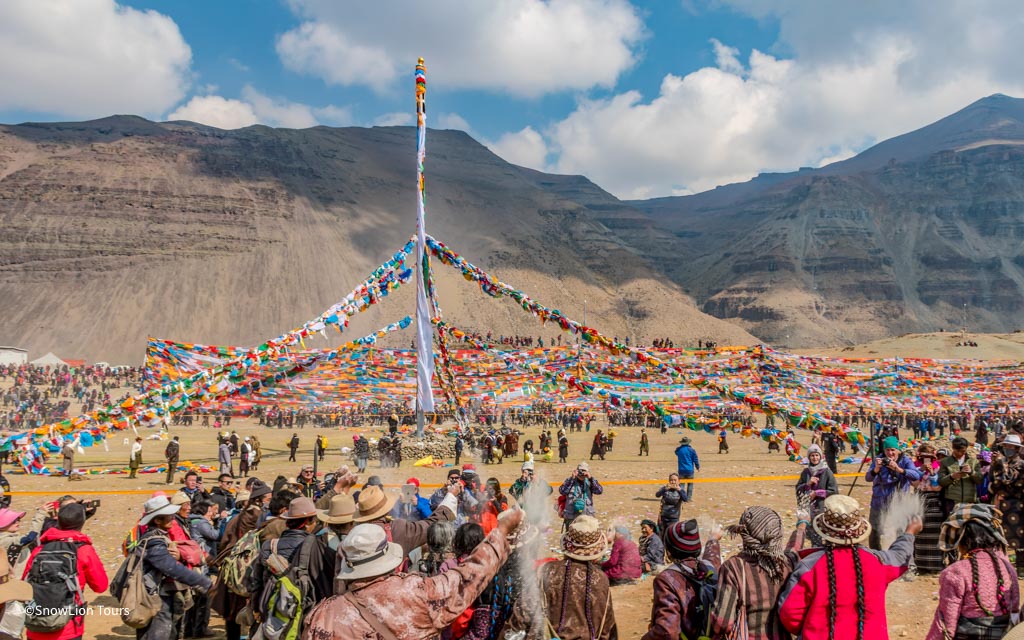
The scene of Saga Dawa Festival at the foot of Mount Kailash in Tibet.
June 1 / Day 12: Darchen / Manasarovar – Saga
Morning at Lake Manasarovar, one of the highest freshwater lakes in the world, known for its turquoise waters, fish, and swans. Tibetans call it Mapham Tso, the “Unconquerable Lake.” It is also sacred to Hindus. Nearby lie Mount Kailash, Mount Gurla Mandhata, and Lake Rakshas Tal, crescent-shaped and often windy and overcast, devoid of fish or algae, symbolizing the darker, unknown side of consciousness.
On a hill by Manasarovar stands Chiu Monastery, of the Drukpa Kagyu tradition. According to tradition, Guru Rinpoche (Padmasambhava) meditated in a cave here for a week before leaving Tibet after 55 years, and the monastery was later built on this site.
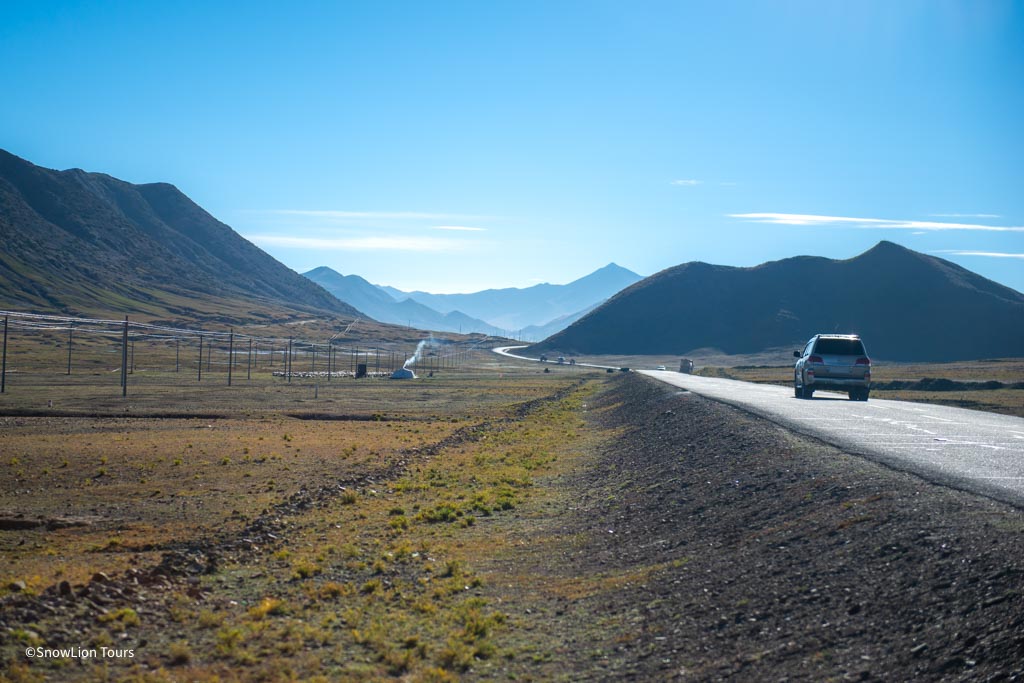
Road on the way back from Kailash
June 2 / Day 13: Saga – Shigatse
The return journey from Western Tibet reveals unforgettable panoramas. A full day on the road due to speed restrictions, with short stops for walks and photography. Late evening arrival in Shigatse.
June 3 / Day 14: Shigatse – Lhasa
In Shigatse, visit Tashilhunpo Monastery, the traditional seat of the Panchen Lamas. The monastery houses a massive 26-meter-high statue of Maitreya Buddha, adorned with gold and precious stones. Founded in 1447 by the First Dalai Lama, Tashilhunpo is one of the four main monasteries of the Gelug school and contains remarkable frescoes, ancient manuscripts, sacred relics, and the gilded stupas of the Panchen Lamas.
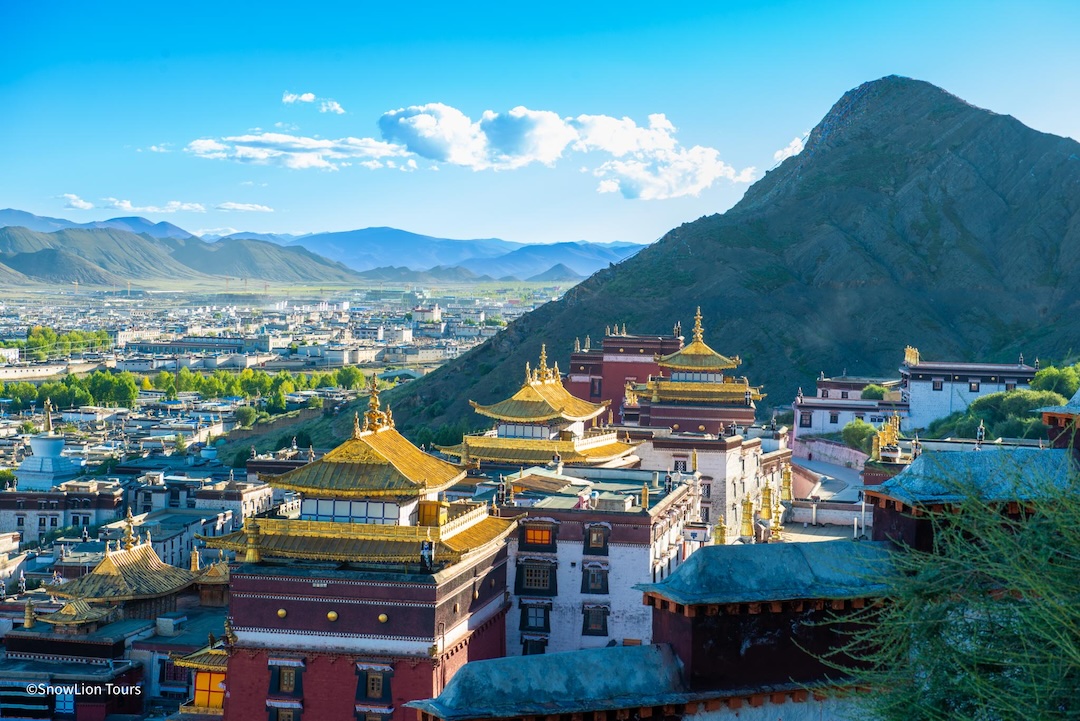
Tashilhunpo Monastery in Shigatse
In the evening, return to Lhasa. Free time for shopping, restaurants, and tea houses.
June 4 / Day 15: Departure from Lhasa
Transfer to the airport or railway station. Farewell to Tibet!
Itineraries are subject to change without prior notice
Frequently Asked Questions
What is a Saga Dawa Kailash tour?
A Saga Dawa Kailash tour is a Mount Kailash pilgrimage arranged around Saga Dawa, the most sacred month in the Tibetan Buddhist calendar. It usually includes Lhasa, important monasteries, Lake Manasarovar, and the three-day Mount Kailash kora.
Why is Saga Dawa important at Mount Kailash?
Saga Dawa is associated with Buddha Shakyamuni’s birth, enlightenment, and passing into parinirvana. Mount Kailash is one of Tibet’s holiest pilgrimage sites, so the period has deep spiritual meaning for Tibetan pilgrims and visiting travelers.
Does this tour include the Kailash kora?
Yes. The tour includes the traditional three-day Mount Kailash kora, weather and local conditions permitting.
Does the route start in Kathmandu or Lhasa?
This page’s itinerary begins and ends in Lhasa. Travelers who want a Kathmandu-start Kailash route should compare SnowLion Tours’ Kathmandu to Mount Kailash options.
Is Everest Base Camp included?
Yes. The itinerary includes the north face of Everest and Rongbuk Monastery before continuing west toward Lake Manasarovar and Mount Kailash.
Do I need a Tibet Travel Permit for Saga Dawa?
Yes. Foreign travelers need a Tibet Travel Permit, and the route also requires additional permits for Everest and western Tibet. SnowLion Tours arranges the Tibet-side permits for booked travelers.
How difficult is the Saga Dawa Kailash kora?
The kora is demanding because of altitude, cold weather, long walking days, and the Dolma La pass. Travelers should be reasonably fit and prepared for simple accommodation during the pilgrimage section.
When should I book this tour?
Because Saga Dawa is a fixed-date pilgrimage and permits take time, it is best to book early. Earlier planning also helps with flights or trains to Lhasa and group logistics.
Helpful Travel Guides
-
DepartureLhasa
-
Departure TimeMay 21st
-
Return TimeJune 4th
-
IncludedTibet Travel PermitsBorder pick up and drop offHotels in major townsGuesthouses in remote areas and koraPrivate vehicleEntrance ticketsTibetan English speaking guide
-
Not IncludedFood(lunch and dinner, breakfasts in guesthouses)Tips for guide and driverYaks and portersOther personal expenses (hotspring, riding horses)
Recent Posts
- Mount Kailash Kora updates
 September 26, 2026
 - Tibet Travel Permits
 September 24, 2026
 - Update on China / Tibet–Nepal Land Border Crossings
 September 24, 2026
Similar Tours
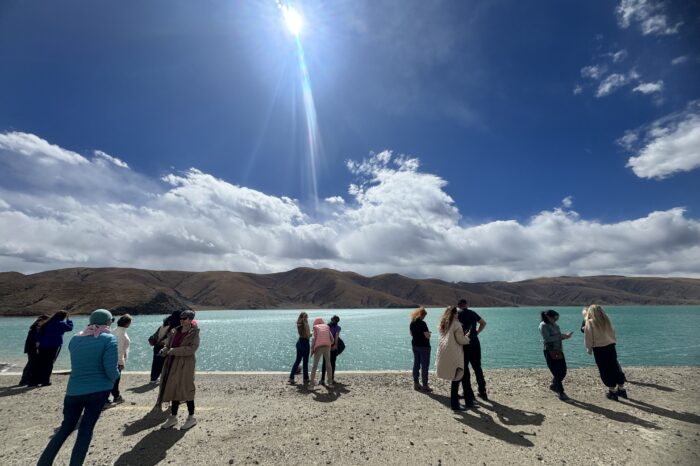
Kathmandu to Mount Kailash Tour
Journey from Kathmandu to sacred Mount Kailash and Lake Manasarovar, crossing the Himalayas into western Tibet, completing the legendary three-day Kailash Kora, and experiencing breathtaking landscapes, ancient monasteries, and profound spiritual traditions.
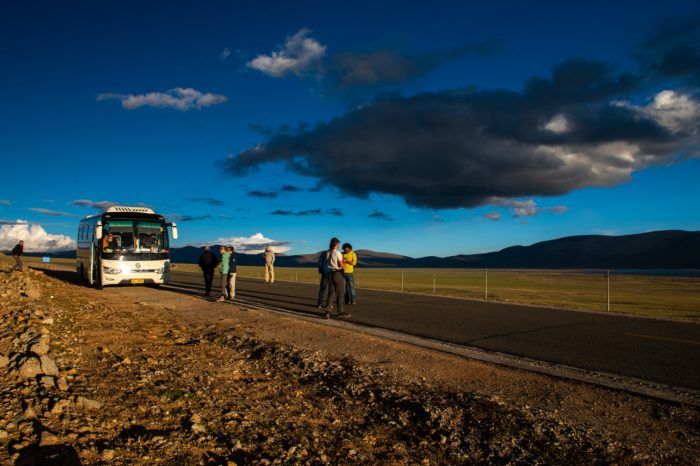
Kathmandu to Lhasa Tour
Travel overland from Kathmandu to Lhasa via Everest Base Camp, sacred lakes, and historic monasteries. A carefully paced Nepal–Tibet journey with experienced Tibetan guides.
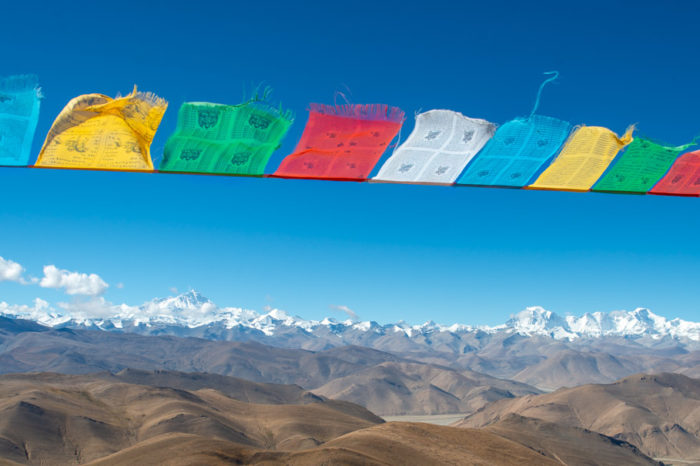
Himalayan Journey
Journey from Lhasa to Everest Base Camp and Kathmandu, crossing dramatic Himalayan landscapes, turquoise alpine lakes, ancient monasteries, and the spectacular Kyirong Valley, where Tibetan culture and breathtaking mountain scenery create an unforgettable adventure.

.jpg "amdo monlam festival tour")